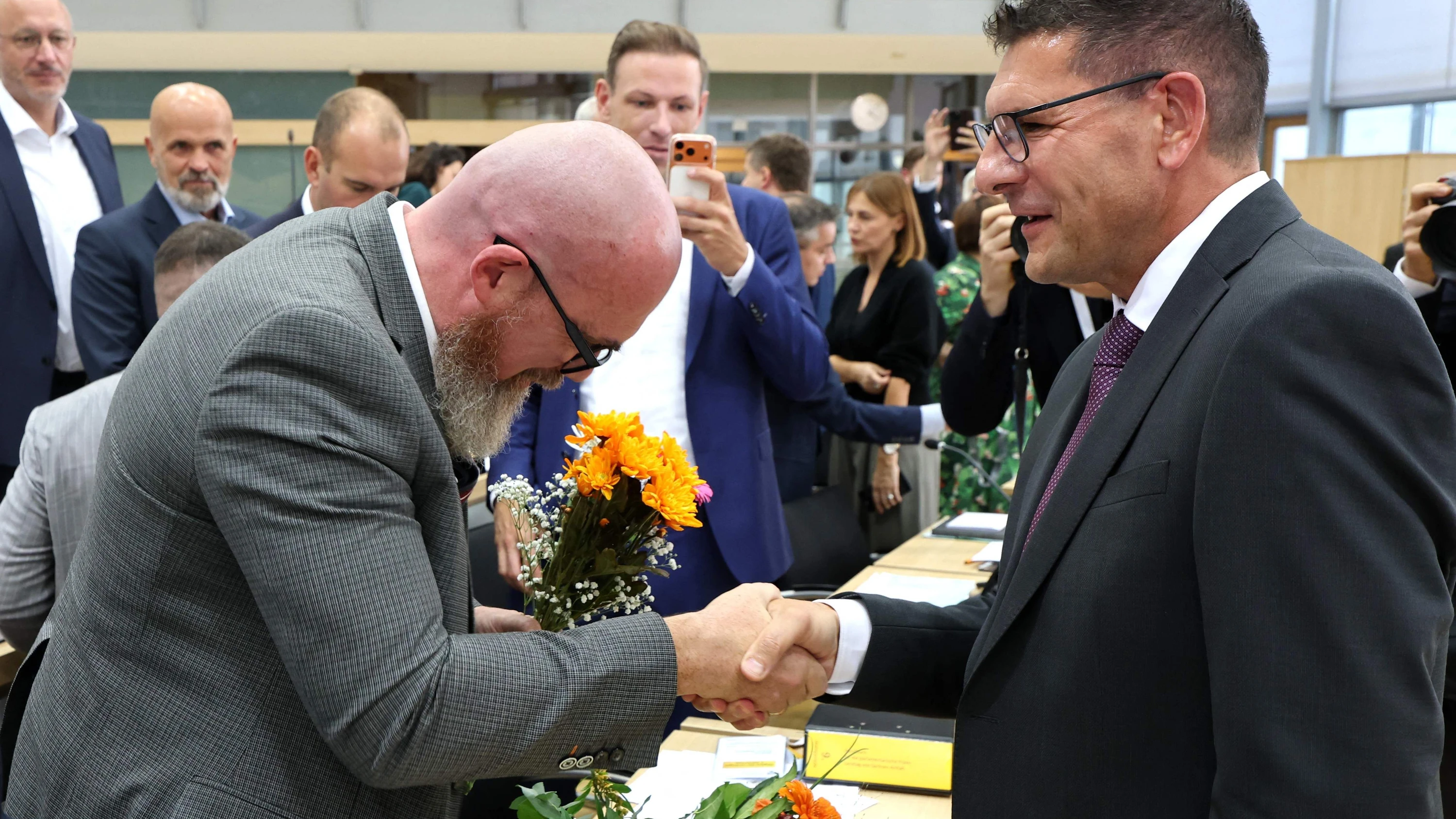
The state parliament of Saxony-Anhalt elected AfD politician Tobias Rausch as its president on Tuesday, making him the first member of the far-right party to lead a German state legislature since 1945. Rausch secured 48 votes in the secret ballot, exceeding the 44 expected from the combined AfD and BSW factions, which had publicly declared support for his candidacy. The additional votes sparked speculation about defection from other parties, with attention focusing on the CDU, whose leadership had instructed members to abstain.
SPD lawmakers staged a protest march in Berlin following the vote, gathering at the Bebelplatz, the site of Nazi book burnings in 1933. Defense Minister Boris Pistorius, an SPD member, condemned the election as a "unique breach of taboo in parliamentary democracy" and accused democratic politicians of enabling far-right extremists. "Whoever allowed this has violated the democracy of our great country," Pistorius said .
The CDU’s state leader, Sven Schulze, presented Rausch with a bouquet of flowers after the vote, while SPD lawmakers gave him a copy of the German constitution and a white rose. The CDU’s federal parliamentary leader, Thorsten Frei, called the extra votes for Rausch "highly concerning" but declined to speculate on their origin, citing the secret nature of the ballot .
Rausch’s election precedes a December vote to elect Saxony-Anhalt’s premier, with AfD candidate Ulrich Siegmund aiming to form a government. The AfD and BSW are negotiating potential cooperation, though BSW has so far ruled out voting for Siegmund in the first round .