Loading…
 Friday, August 28Friday, August 28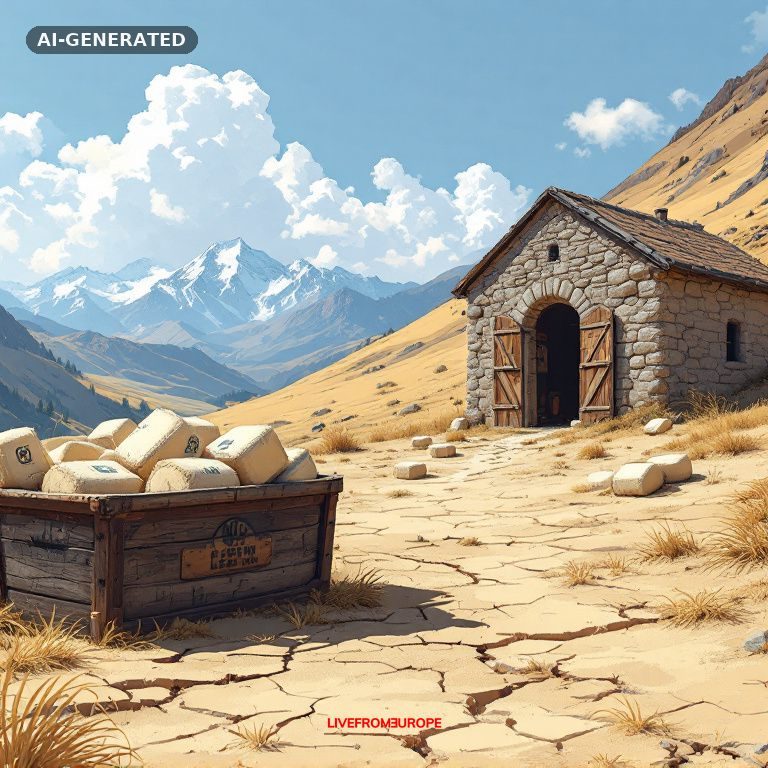
France temporarily relaxed strict production rules for several protected cheeses on Wednesday due to historic drought conditions, according to reports from Le Monde and the BBC. The French government granted exceptions for Abondance, Beaufort, and Comté—three pressed, cooked cheeses made from raw milk with EU-protected designation of origin status—allowing farmers to feed cattle with hay and silage sourced outside their designated regions or in greater quantities than normally permitted.
Under standard regulations, Abondance and Beaufort producers in the Savoy region must ensure at least 50% of their cows’ diet comes from local pasture grass. The new measures reduce this requirement to 15% and permit the use of external feed sources. For Comté, produced in the Jura Mountains, farmers may now substitute local green maize with maize grown elsewhere. The changes were approved by France’s National Institute of Origin and Quality (INAO), which oversees protected designation rules.
The drought, described by INAO as historic, has left French soils at their driest levels since records began in 1959, according to Météo France. More than 75% of the country has been affected by drought since mid-August, with soil moisture deficits reaching record highs nationwide since early July. The lack of rainfall and sustained high temperatures have severely reduced available pasture, forcing the temporary adjustments.
Similar exemptions are expected for other protected cheeses, including Cantal, Bleu d’Auvergne, Fourme d’Ambert, Bleu du Vercors-Sassenage, Reblochon, and Rocamadour goat cheese. INAO has also approved temporary rule changes for other protected products, such as certain Calvados and cider varieties from Normandy, Crémant d’Alsace sparkling wine, lamb meat from Poitou-Charentes, and Reine-Claude plums.
France and EU regulations allow such temporary relaxations during exceptional weather conditions. Comparable measures were introduced after the severe drought of summer 2022. The current adjustments apply only to production methods, not to the geographic origin of the final products, which must still comply with their designated regions.
The protected designation system requires all production steps—from animal feed sourcing to processing methods—to occur within strictly defined areas to preserve traditional characteristics tied to *terroir*, the French concept linking a product’s qualities to its place of origin. France has nearly 50 cheeses with protected designation status, each subject to rigorous standards to maintain their certification.
Follow us for live European news

Ausnahmen von strengen Regeln für französische Käsebauern wegen Dürre Für die Käseherstellung in Frankreich besonders strenge Regeln. Aufgrund der Dürre dürfen Bauern ihren Kühen ausnahmsweise Futter geben, das weiter weg entfernt angebaut wurde.
die presse · about 3 hours ago
Akkora volt az aszály Franciaországban, hogy lazítottak a sajtkészítési szabályokon Történelmi időket élünk.
444.hu · about 3 hours ago
Dürre: Regeln für französische Käsebauern gelockert
orf.at · about 3 hours ago
Zemědělské podniky snižují náklady na produkci mléka. V Liboměřicích sází na automatické dojení Zemědělci se potýkají s nízkými výkupními cenami mléka. Některé podniky se proto snaží srazit výdaje na jeho produkci. Jedna z možností je automatizace výroby. V družstvu Agro Liboměřice třeba používají dojicí točnu.
irozhlas.cz · about 4 hours ago
Ilmastonmuutos | Kuivan kesän seuraus: Ranska höllentää tunnettujen juustojen valmistuksen sääntelyä Kuivuudesta johtuvat väliaikaiset sääntöpoikkeukset koskevat esimerkiksi Abondance-, Beaufort- ja Comté-juustoja sekä Crémant dAlsace -kuohuviiniä.
helsingin sanomat · about 4 hours ago
Vinobraní o dva týdny dříve. Hrozny kvůli suchu nedorostly do velikosti, kterou by si vinaři přáli Vinařům na jihu Moravy letos začíná vinobraní o dva týdny dřív, než bylo běžné v předchozích letech. Hrozny totiž kvůli vedrům dozrály rychleji. Kvůli extrémním suchům jsou ale menší. Výsledky sklizně tak část vinařů vyhlíží s obavami.
irozhlas.cz · about 5 hours ago