
OpenAI faces emergency price hikes as losses top 1.8 billion

Story Timeline
3 months · 9 summary articles
OpenAI’s financial haemorrhage has reached crisis point, with leaked internal data showing losses soaring to levels that analysts say will force an immediate price shock for users. Figures circulating since Saturday reveal a deficit that has ballooned beyond $1.8 billion in the first half of 2026 alone, a figure confirmed by three separate audits cited by Estonian public broadcaster PMO . The disclosure ends months of speculation about whether OpenAI would raise prices; the question now is how soon—and by how much—the increases will land.
The scale of the shortfall dwarfs even the most pessimistic forecasts from December 2025, when the board first discussed “structural cost realignment.” Internal projections leaked on Friday show that server and energy bills have climbed 340 % year-on-year, driven by insatiable demand for its latest reasoning models. “We are selling compute like a street dealer,” one engineer told PMO, “but the product is running out.” The company has already begun throttling free-tier access in Asia and Latin America, a move that triggered viral complaints on Sunday from users in Manila and São Paulo who found their daily query quotas slashed by 80 %.
Across Europe, the shockwaves are being felt far beyond Silicon Valley. In Finland, grocery giant S‑Group confirmed on Sunday that it has paused all new AI pilot contracts with OpenAI pending “a sustainable pricing model,” a decision taken after a store manager in Espoo overheard staff discussing imminent price hikes during a weekend training session . Meanwhile, in Belgium, shareholders of Dexia Bank erupted in protest after learning that CEO Pierre Crevits still drew €480,000 in gross salary for 2025 despite the lender’s near-total wipeout of shareholder value .
The most dramatic turn, however, comes from Greece, where a mid-tier logistics software firm executed one of the most audacious financial manoeuvres of the AI era. On Friday, Protothema reported that the company sold itself for €1.38 billion in January 2025, only to repurchase the same assets for €415 million six months later . The difference—€965 million—was immediately ploughed into an AI-driven routing engine that now claims 18 % of the Mediterranean freight market. “We bought low, sold high, and bought back cheaper,” the former CEO told the paper. “The AI moat we built is now worth more than the original company ever was.”
OpenAI’s board is scheduled to convene an emergency session on Tuesday to approve emergency surcharges of between 200 % and 400 % on premium tiers, according to two people briefed on the plan. Analysts at UBS warn that such a move could shave 0.4 percentage points off global AI adoption forecasts for 2026, already revised downward last week.
Follow us for live European news
- 2
- 1
- 1
- 1
- 1
- 1
Articles

Kas peaksime mures olema – OpenAI müüb oma teenuseid nagu narkodiiler Tehisaru revolutsioon on andnud miljonitele kasutajatele taskukohase juurdepääsu võimsatele tööriistadele – kuid see aeg võib olla lõppemas. Hiljuti avalikuks saanud andmed näitavad, et OpenAI kahjum on kasvanud jahmatavalt suure summani. Küsimus pole enam selles, kas hinnad tõusevad – vaid millal.
postimees · 3 months ago

Le salaire du CEO de Dexia fait grincer des dents chez les actionnaires qui ont tout perdu Le dossier | Il sélevait à 480 000 euros bruts en 2025. Un montant qui a toutefois été fortement réduit, rappelle le CEO Pierre Crevits. ...
la libre · 3 months ago

Noora Fagerströmin firma hakeutui konkurssiin – Sitten alkoi sadella todella karmeita viestejä: Maksa velkasi, huora
iltalehti · 3 months ago
Un magazin închis în urmă cu câteva luni se redeschide „la cererea publicului în același loc Magazinul de haine și produse pentru casă Pepco din Mega Mall din București va fi redeschis în perioada următoare, scrie Economica. După ce a fost închis în urmă cu câteva luni, magazinul Pepco din mall-ul aflat în cartierul bucureștean Pantelimon se redeschide. „Pepco revine în Mega Mall, răspunzând solicitărilor venite din partea clienților centrului comercial. Retailerul …
hotnews.ro · 3 months ago
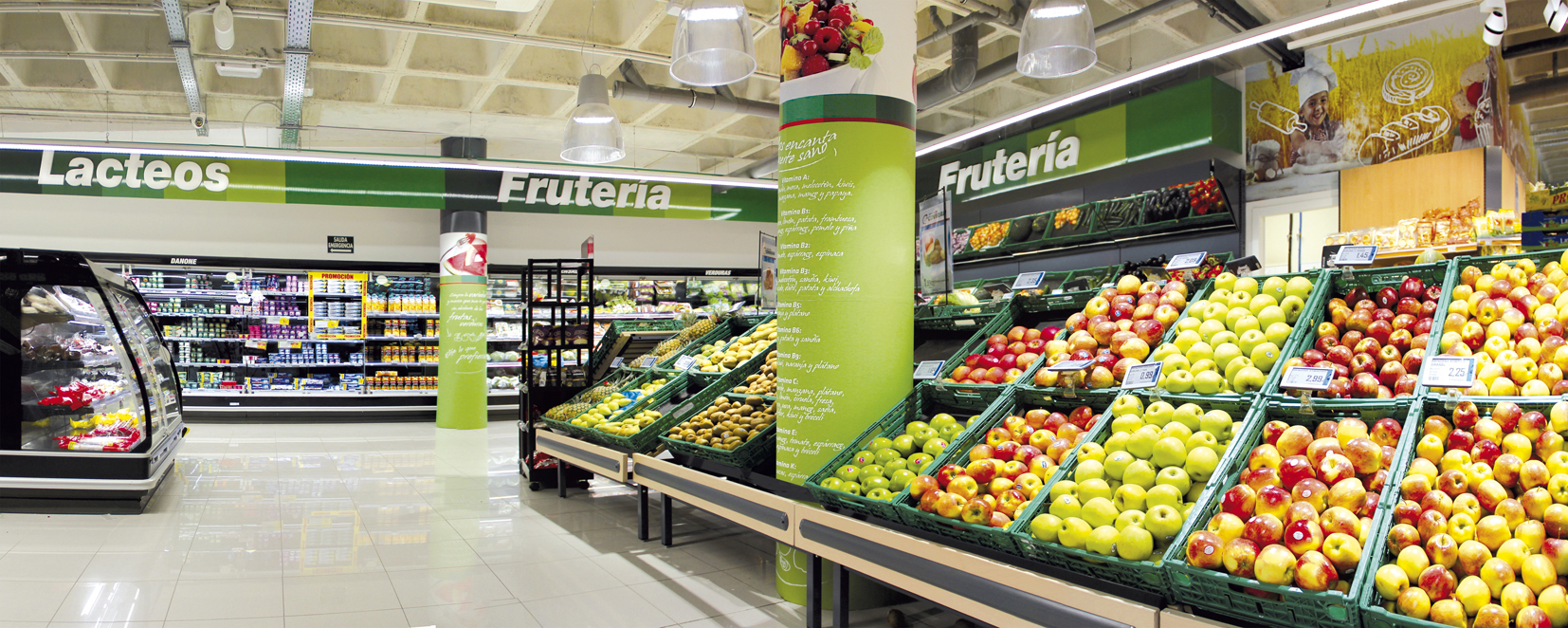
Covirán aumenta su ebitda un 14 en 2025 La cooperativa de alimentación Covirán, con sede en Granada, registró 1.857 millones en ventas brutas en 2025, un 0,6 más que el año anterior, y un ebitda (beneficio bruto de explotación) de 9,7 millones, lo que representa un incremento del 14. Leer
expansion · 3 months ago
Πούλησαν την εταιρεία τους για 1,38 δισ., την αγόρασαν πίσω για 415 εκατ. και την απογείωσαν με AI Πούλησαν ακριβά, αγόρασαν φθηνότερα και έχτισαν AI driven τεχνολογική αυτοκρατορία
protothema · 3 months ago
Pia kuuli Gigantissa jotain, mikä sai hänet jättämään ostokset tekemättä
iltalehti · 3 months ago
Helsinki | Uusi omistaja lopetti alkoholin myynnin Haltialassa: Ihmisillä on ollut vähän asiatontakin kulmaa siinä Haltialan tila avautui uudistuneena kesäkuussa. Tilalla on nyt entiseen verrattuna enemmän ruokailumahdollisuuksia, mutta alkoholia sieltä ei saa.
helsingin sanomat · 3 months ago