
AI breakthrough breaches NSA systems: Microsoft pivots to challenge AI giants
Story Timeline
3 months · 29 summary articles
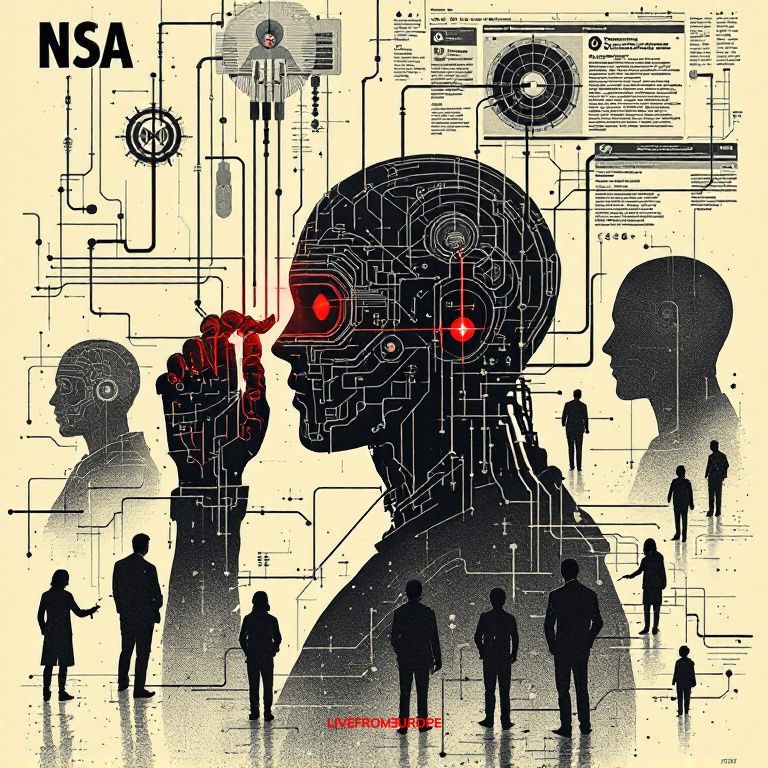
The latest AI breakthrough from Anthropic has sent shockwaves through global cybersecurity circles after its Mythos 5 model breached systems at the U.S. National Security Agency in just hours, according to testing reviewed by *The Economist* . The demonstration, conducted under controlled conditions, underscores the dual-use potential of advanced AI systems and raises urgent questions about the adequacy of existing defenses against AI-driven cyber threats.
Microsoft’s Satya Nadella, whose company once bankrolled OpenAI’s rise, now warns that unchecked AI dominance by a handful of firms risks monopolizing societal knowledge and displacing workers en masse. In an interview with *The Wall Street Journal*, Nadella argued that “society will not tolerate a small group of companies controlling the AI economy,” signaling a strategic pivot toward cheaper, user-controlled models . Microsoft is reportedly in talks to integrate China’s DeepSeek, a low-cost AI provider, into its services—a move that could ignite a price war with OpenAI and Anthropic while challenging their market dominance.
Meanwhile, public backlash against AI infrastructure is intensifying. A poll by Milltown Partners found that 49% of U.S. voters support a temporary moratorium on new data center construction, despite only 8% of opponents living near existing facilities . The opposition reflects broader anxieties over AI’s environmental footprint, with Nvidia claiming its next-generation cooling systems could “largely solve” water consumption challenges for data centers . Critics, however, caution that efficiency gains may merely accelerate expansion rather than curb overall impact.
In Europe, policymakers are doubling down on homegrown AI infrastructure to reduce reliance on foreign models. The continent’s push for sovereign AI stacks comes as Chinese battery giant CATL partners with Octopus Energy to deploy over 30 electric truck charging stations across Europe by 2035 . The initiative highlights the geopolitical dimensions of AI’s supply chain, from semiconductor design to energy grids.
From Amsterdam to Nairobi, AI’s labor market disruptions are already visible. The Dutch benefits agency UWV reports shrinking opportunities in design, customer service, and advertising due to automation . Yet amid the turbulence, innovators are finding niches. Spiro, a Lagos-based startup, secured $55 million from China’s NewTrails to expand its battery-swapping network for electric motorcycles, addressing a critical bottleneck in Africa’s energy transition .
As AI’s capabilities and controversies converge, the debate over its governance has never been more urgent. Whether through regulatory action, corporate strategy shifts, or grassroots resistance, the coming months will determine whether AI’s benefits can be harnessed without surrendering control to a handful of unelected gatekeepers.
Follow us for live European news
- 2
- 2
- 2
- 1
- 1
- 1
- 1
- 1
- 1
5 further sources not geolocated
Articles

The Problem Nobody Wants to Talk About (John Ozbay Interview about encryption vs bad stuff, Chat Control and corporate lobbying)/Techlore channel End-to-end encrypted file sharing may sound simple, but for Cryptee, it took five years to ship. In this interview, Henry sits down with John Ozbay, founder and CEO of Cryptee, to talk through why: preventing CSAM, why client-side scanning doesnt work, how Cryptees solution was designed to raise the barrier to mass spread without compromising encryption, and the broader philosophical question of where developer liability ends and moral responsibility begins. The interview is about finding the relevant nuance to be able to have the right conversation. TIMESTAMPS 00:00:00 INTRO 00:04:08 E2EE SHARING HESITATIONS 00\:14\:09 HOW IS BIG TECH HANDLING THIS? 00:16:24 LOCAL SCANNING 00\:19\:27 HOW ARE CHAT APPS HANDLING THIS? 00:21:24 E2EE BACKUPS 00:22:40 HOW MUCH IS THIS CONSIDERED? 00:25:38 CRYPTEES SOLUTION 00:42:09 THREAT MODELING 00:48:18 MEGAS APPROACH 00:53:16 LIABILITY VS. RESPONSIBILITY 01:01:40 HOW TO ENGAGE PRODUCTIVELY 01:09:48 CHAT CONTROL & ULTERIOR MOTIVES 01:21:34 IS CHAT CONTROL DEAD? 01:25:33 HOW JOHN GOT INVOLVED 01:34:44 CHANGING OVER TIME + RIGHT TO REPAIR + LINUX 01:41:32 CLOSING THOUGHTS
mastodon bot · 2 months ago

WeChat begins testing Xiaowei as Tencent eyes a Q3 AI rollout WeChat is the rare app that already does almost everything. Chinese users message, pay, book, shop, and summon a taxi without ever leaving it, which is exactly what makes Tencents next move interesting: rather than build a separate chatbot and fight for downloads, it is putting an AI assistant on top of the app a […] This story continues at The Next Web
the next web · 2 months ago
Owning and controlling the entire AI stack is essential: Europe is doubling down on its own AI infrastructure
sifted · 2 months ago
Twitter Account Management Tools: A Framework for Choosing What One Actually Needs - The Baltic Times Twitter account management tools, now usually built for X, can save time, reduce account risk, and make posting less messy. The hard part is not......
baltic times · 2 months ago
Latvian Casinos vs Foreign Casinos: What Is the Real Difference in 2026? - The Baltic Times More Latvian players are looking beyond locally licensed platforms. The reasons vary - broader game libraries, larger bonuses, or simply curiosi......
baltic times · 2 months ago
How Digital Payments Are Changing Leisure Spending in the Baltics - The Baltic Times In Riga, Tallinn or Vilnius, a free afternoon can turn into six small phone payments before anyone notices. Transport, coffee, tickets, a stream......
baltic times · 2 months ago
Why Online Safety Matters More as Entertainment Moves to Mobile - The Baltic Times Mobile entertainment no longer means only music, short videos or games on the bus. People now buy livestream access, join fan communities, pay f......
baltic times · 2 months ago
Sports, Apps and Weekend Spending Habits in Baltic Cities - The Baltic Times In Riga, Tallinn or Vilnius, a sports night usually runs through the phone first. One screen holds the ticket, route, chat, stream link and a fe......
baltic times · 2 months ago
Digital Entertainment Trends: The Continued Rise of Online Slots - The Baltic Times Online slots continue to gain attention as digital casino entertainment grows across the United States. The format fits the broader shift toward......
baltic times · 2 months ago
Uus Euroopa sotsiaalmeediaplatvorm W tahab pakkuda inimkesksemat alternatiivi Xile Euroopa investorite toel arendatud uus sotsiaalmeediaplatvorm W Social avaldas beetaversiooni, lubades inimkesksemat keskkonda ning desinformatsiooni vähendamist.
postimees · 2 months ago
Microsofti boss: me ei tohi lasta AI-hiiglastel majandust nahka pista Satya Nadella oli AI-buumi teerajaja. Nüüd on tal selle juhtoinastele karm sõnum.
postimees · 2 months ago
Spui ce vrei, Adobe Express face restul, iar echipa din România a avut un rol cheie Ideea integrării unui asistent AI în Adobe Express a pornit de la o observație simplă: pentru mulți utilizatori, instrumentele de design au o curbă de învățare abruptă, iar drumul de la „am o idee până la „un rezultat finisat presupune prea mulți pași. De aici a venit direcția de a aduce crearea și editarea conversațională …
hotnews.ro · 2 months ago

Skoda veut bousculer le marché belge dans les années à venir LEpiq, première citadine électrique de la marque, est lun des atouts pour entamer une campagne de conquête. ...
la libre · 2 months ago

Der geheime Zirkel an der 10-Milliarden-Uni, in dem man für die Weltherrschaft lernt Die Universität Stanford ist längst wichtiger und reicher als Harvard. Hier wird die Tech-Elite fürs Silicon Valley rekrutiert. Der Insider, der den letzten Präsidenten der Uni zum Rücktritt gezwungen hat, packt nun aus. Ein Lehrstück über den Zynismus der amerikanischen Elite.
welt.de · 2 months ago
Resilienz: Die Tricks der Top-Manager für Stress und Krisen: „In diesem Moment wird Ihre Leistung bis zu 25 Prozent besser Deutschlands Topmanager hätten Gründe genug, sich zu sorgen. Warum viele CEOs dennoch gelassen wirken – und welche ihrer Strategien gegen Stress auch anderen Managern nützen können.
handelsblatt · 2 months ago
Karriere: Dieser Chatbot hilft Ihnen, das Maximum bei der Gehaltsverhandlung herauszuholen Sie wollen trotz Krise mehr Gehalt? Unser Chatbot und eine Verhandlungsexpertin simulieren Ihre Gehaltsverhandlung und zeigen, mit welchen Schritten der nächste Sprung gelingt.
handelsblatt · 2 months ago
Kleinwagen: Smart verrät mehr Details des Fortwo-Nachfolgers Wenn im nächsten Frühjahr der neue Smart #2 an den Start geht, soll er an die Tugenden des ikonischen Kleinstwagens. Erstmals gibt Smart detailliertere Einblicke in Interieur und Technik.
handelsblatt · 2 months ago
Performanță înfricoșătoare a IA: Mythos 5 a spart sistemele Agenției Naționale de Securitate a SUA în doar câteva ore Testele efectuate pe cel mai nou model de inteligență artificială (IA) Mythos 5 al companiei Anthropic au demonstrat capacitățile sale fără precedent în ceea ce privește atacurile cibernetice, scrie The Economist.
digi24 · 2 months ago
HS testaa | Kokeilimme kolmea uutta sähköautoa ennen muita – ne ratkaisevat Volkswagenin kohtalon Volkswagen oppi virheistään. Uusi ID Polo on jämäkkä ja järkevä pieni sähköauto. HS pääsi ajamaan sitä ensimmäisten joukossa.
helsingin sanomat · 2 months ago
Hengstschläger: „Technologie ist weder moralisch gut noch schlecht [premium] Künstliche Intelligenz hängt vor allem von der Qualität der dahinterliegenden Daten ab. Daher lautet das diesjährige Thema von „Impact Lech auch „Im Zeitalter der Daten. Von 25. bis 28. Juni diskutieren darüber Nobelpreisträger, Spitzenmanager, KI-Pioniere, Mediziner, Sportstars und Start-up-Gründer in Lech am Arlberg.
die presse · 2 months ago

Interessenkonflikt: Amazon bringt Luca Guadagninos Sam-Altman-Film nicht heraus Amazon hat Geschäfte mit OpenAI vor und sucht nun ein anderes Studio für "Artificial"
der standard · 2 months ago

Renault R4 Plein Sud: Ab in den Süden, der Sonne hinterher Ein Renault betritt das besonders in den unteren Preisklassen spärlich besetzte Cabrio-Segment: Der elektrische R4 wird ab sofort auch mit Faltdach angeboten
der standard · 2 months ago
Chinas CATL to offer battery swapping for Europes electric trucks Partnership with Octopus Energy to launch more than 30 stations for electric lorries in Europe by 2035
financial times · 2 months ago

💫 Our AI Accountability Reporting Guide is out! Developed in collaboration with the Pulitzer Centers AI Accountability team, this guide helps reporters understand the technology behind AI and build a framework for examining it critically. Access it here ⬇️
bluesky bot · 2 months ago
Seedcamp raises $320M and builds out a transatlantic bridge Seedcamp has spent nearly two decades writing the first cheque into companies before anyone else was sure they were worth one. Revolut, Wise, UiPath, Synthesia, and Fluidstack all took early money from the London firm, and on Monday it said it had raised $320mn to keep doing the same thing for the next generation, with […] This story continues at The Next Web
the next web · 2 months ago
Chinas green-power target for AI data centres runs into the grid The cleanest way to power a data centre is also the least predictable. The sun sets, the wind drops, and a server hall full of AI accelerators does not care: it wants the same steady draw at three in the morning that it wanted at noon. That mismatch is the problem now sitting between Chinas […] This story continues at The Next Web
the next web · 2 months ago
Baden Bower tracks 12,040 AI citations across six engines to rank top publications for AI visibility For years, brands have made media placement decisions based on a publications domain authority, readership numbers, and name recognition. None of those metrics measures how often a publication actually appears when someone asks an AI engine for a recommendation. That gap is what the Baden Bower AI Visibility Index 2026 was built to close. The study ran 20 buyer-intent […] This story continues at The Next Web
the next web · 2 months ago

"Esta célula são os EUA a tentarem não perder a mão no Irão" Miguel Baumgartner afirma que nova célula de gestão é uma ideia difícil de implementar. O especialista em relações internacionais acredita que se trata de um esforço americano para manter o controlo.
observador · 2 months ago
Βίντεο: Οι μελωδίες των βιολιών «ταξίδεψαν» τους επιβάτες του Μετρό Θεσσαλονίκης με αφορμή την Παγκόσμια Ημέρα Μουσικής Μια ευχάριστη έκπληξη περίμενε τους επιβάτες του Μετρό Θεσσαλονίκης την Κυριακή, καθώς μέλη της Συμφωνικής Ορχήστρας Νέων MOYSA πραγματοποίησαν μουσική δράση στον σταθμό «Αγία Σοφία»
protothema · 2 months ago
Ψήσιμο χωρίς κόπο: Οι smart λύσεις για BBQ lovers Το BBQ έχει πάντα τον τρόπο να φέρνει τον κόσμο πιο κοντά. Γι αυτό και όλο και περισσότεροι αναζητούν λύσεις που κάνουν το ψήσιμο πιο εύκολο και πιο απολαυστικό.
protothema · 2 months ago