
Italy bans face-covering Islamic veils in schools and caps non-Italian-speaking students at 30% per class
Story Timeline
2 days · 3 summary articles
Italy bans face-covering Islamic veils in schools and caps non-Italian-speaking students at 30% per class
Italy bans full-face veils in schools and caps non-Italian-speaking students at 30% per class
ContinuationItaly's Meloni proposes school quotas for foreign-born students amid migration push
Italy’s conservative government on Thursday approved a decree banning face-covering Islamic veils, including burqas and niqabs, in schools and capping the number of non-Italian-speaking students per classroom at 30%.
Prime Minister Giorgia Meloni called the measures “tools of common sense that do not divide,” arguing they would prevent “ghetto classes” and ensure equal opportunities for all students. The decree takes effect immediately but requires parliamentary approval within 60 days, a step Meloni’s coalition is expected to secure given its legislative majority.
The classroom cap applies to foreign students with limited Italian proficiency: in primary schools, it targets non-citizens not born in Italy or who did not attend at least two years of preschool; in secondary schools, it covers non-citizens with fewer than three years in Italy’s school system. Education Minister Giuseppe Valditara said the rule would affect about 1,000 classrooms, or 0.3% of the national total, though official data shows 7.6% of classes currently exceed the 30% threshold for foreign pupils.
Meloni framed the burqa ban as “a matter of security,” stating that face coverings deny women and girls “fundamental rights and the very integration that is so often loudly championed.” Hijabs, which do not cover the face, remain permitted. Critics, including opposition leader Elly Schlein, condemned the measures as “a new witch hunt at the expense of children,” while Save the Children warned the caps risked creating “first-class” and “second-class” students by forcing some to transfer schools.
Parents of students struggling with integration may be required to attend free Italian language courses, with fines of up to €1,000 for non-compliance. Valditara emphasized that inadequate language skills “hinders educational progress” and that parental involvement is critical for academic success .
Follow us for live European news
- 3
- 3
- 2
- 2
- 2
- 1
- 1
- 1
- 1
- 1
9 further sources not geolocated
Articles

Вам предложили менторство. Как быть дельным наставником, не потерять все вечера и вырасти самому «Если рядом с вами нет джунов, вы не сеньор». Эту фразу Жером Петаццони, в прошлом инженер Docker, услышал на конференции в 2014 году и пересмотрел своё отношение к наставничеству. Сейчас нечто похожее может быть указано прямо в карьерной лестнице компании. Но чтобы менторство засчитали, о нём лучше договориться заранее, пока джуны ещё не пишут вам в одиннадцать вечера.
dev.by · about 3 hours ago
Most Cypriot 15-year-olds lack basic reading skills, PISA finds Cypruss 15-year-olds ranked last in the European Union for reading and science in the OECDs Programme for International Student Assessment (PISA) 2025 study, with 62 per cent lacking basic reading skills, against 31 per cent across the EU. Forty-three per cent lacked basic skills in all three subjects tested, compared with 21 per cent in […]
in-cyprus · about 3 hours ago
Copilul refuză hanorac dimineața, deși afară sunt 10 grade. Îl obligi să îl poarte sau îl lași în pace? Diminețile și serile sunt deja reci, dar copilul e încă setat pe modul „vacanță și pe temperaturile de august din Grecia. „Nu-mi iau hanorac, mi-e cald, îți spune, pregătit să iasă pe ușă îmbrăcat în tricou. Ți-l imaginezi dârdâind în stația de autobuz și cerând seara ceai cu miere, în timp ce strănută și își …
hotnews.ro · about 3 hours ago
Baasjes van risicohonden moeten straks mogelijk verplicht op cursus Niet de honden zelf, maar de baasjes moeten mogelijk op cursus. Als het aan staatssecretaris Erkens van Landbouw ligt, wordt zon cursus verplicht voor eigenaren van risicovolle honden, die vaker betrokken zijn bij bijtincidenten.
rtl nieuws · about 3 hours ago
Leerlingen vinden dat lhbtqia+-idee door strot wordt geduwd: Uitleg blijft nodig Scholieren kijken steeds negatiever naar homoseksualiteit, bleek uit onderzoek. "Het wordt me door de strot gedrukt", zeggen leerlingen over voorlichting over de lhbtqia+-gemeenschap. Toch is uitleg noodzakelijk, juist van heteroseksuele mensen, vertellen leraren aan NU.nl.
nu.nl · about 3 hours ago
Résultats Pisa: «Les parents ne peuvent pas être les supplétifs de lécole» En insistant sur la nécessaire implication des parents dans les apprentissages de leurs enfants comme réponse aux mauvais résultats Pisa, on prend le risque de renforcer les inégalités sociales et de masquer les difficultés profondes de lécole aujourdhui, estime le sociologue Pierre Périer.
mediapart · about 3 hours ago

Orthographe : « Le choix de sanctionner les fautes de français au bac et au brevet aura des effets, mais pas celui daméliorer la maitrise de la langue » Les sanctions lors des examens décidées par le ministre de léducation, Edouard Geffray, susciteront avant tout de la peur et accentueront les inégalités, souligne Rémi Soulé, docteur en sciences du langage, dans une tribune au « Monde ». Le linguiste a fait le choix dans ce texte dappliquer la réforme de lorthographe.
le monde · about 3 hours ago

Im Kindergarten fiel das Mädchen positiv auf. Dann kam es in die Schule. Und alles änderte sich Im Kindergarten galt ihre Tochter als lebensfroh, in der Schule hatte sie Probleme: Die Diagnose ADHS brachte für Berit Hullmann Klarheit. Hier erklärt die Autorin, was sie über ADHS gelernt hat – und welche Änderungen im Alltag enorm helfen.
welt.de · about 3 hours ago
Meloni spricht von „Instrument, das Integration fördert: Italien beschließt Burkaverbot und Sprachquote in Schulklassen Italiens rechte Regierung verbietet Verschleierung an Schulen. Künftig sollen auch nur maximal 30 Prozent der Kinder einer Klasse Ausländer mit mangelnden Italienischkenntnissen sein.
tagesspiegel · about 3 hours ago
Новым эмигрантам проще или сложнее, чем тем, кто уехал четыре года назад? А чем они отличаются друг от друга? И жив ли конфликт «уехавших» и «оставшихся»? Интервью исследовательницы российской эмиграции Маргариты Завадской В 2026-м россияне снова массово уезжают из страны. Они окажутся в начале длинного пути построения новой жизни практически с нуля. В то же время многие мигранты уже успели сменить несколько стран — и все еще не нашли место, где останутся надолго. Другие же обрели настоящий новый дом, а третьи и вовсе вернулись обратно в Россию. Об адаптации за рубежом, конфликте «уехавших» и «оставшихся», а также отличиях разных волн эмиграции мы поговорили с политологом Маргаритой Завадской, старшим научным сотрудником Финского института международных отношений и одной из соосновательниц проекта OutRush, посвященного исследованиям российской эмиграции.
meduza · about 3 hours ago

Irish colleges should focus on teaching abroad, not attracting foreign students – Minister State already has insufficient accommodation for those in higher education, James Lawless says
irish times · about 3 hours ago

Seven Up ! : au Royaume-Uni, épilogue dune fascinante expérience sociologique de 63 ans En 1964, devant la caméra, quatorze enfants de 7 ans ont été invités à raconter leur quotidien, leurs envies, leurs rêves. Puis de nouveau à 14 ans, à 21 ans, et tous les sept ans. Ces 15 et 22 septembre, les spectateurs britanniques les retrouvent une ultime fois, à près de 70 ans. Pour ce journaliste de The i Paper, cest lheure de tirer le bilan.
courrier international · about 3 hours ago

Letters to the editor on... new citizenship rules, sinning against ecology and Dublin after dark Our readers have their say on the weeks news.
thejournal · about 3 hours ago

Italy bans burqas and niqabs in schools and limits non-Italian speaking students Failure to comply will be punished with a fine of up to 1,000 euros.
thejournal · about 3 hours ago
External exam grading reduces socioeconomic gap in Danish writing scores, study finds Removing students own teachers from grading written Danish exams has reduced socioeconomic differences in scores, a University of Copenhagen study found. Researcher Jesper Fels Birkelund said the grading gap between students from more and less advantaged families fell by 15 to 20 percent in written composition. Taking the teacher out of the equation means that […]
cphpost · about 3 hours ago

Four parties backed a ban on headscarves for girls under 14, and a child pays the price. source/editor : Alaa Alkhatib
mastodon_EUwatch · about 3 hours ago
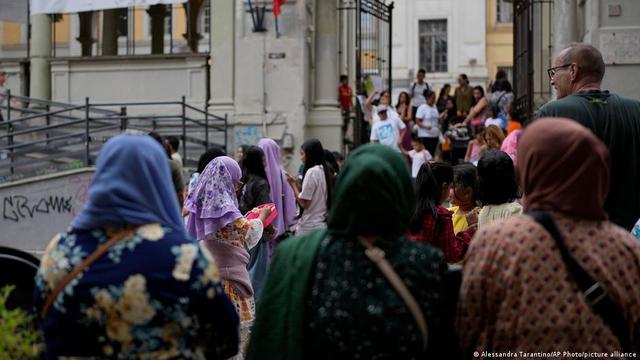
Prime Minister Giorgia Melonis government has passed new school rules capping the number of students who dont speak fluent Italian and banning face coverings.
mastodon_EUwatch · about 3 hours ago

The Italian government on Thursday approved a decree-law that places a 30 percent ceiling on certain non-Italian-speaking pupils in first-year classes of primary, middle and secondary schools, expands Italian-language support, and bans full-face cove source/editor : Antonia Kotseva
mastodon_EUwatch · about 3 hours ago

Italy bans burqas and niqabs in schools, caps numbers of foreign students per class. Italy is a frontline country for migration and integration is a hot campaign issue ahead of next years general election u.afp.com/S9TB
bluesky_AFP English · about 3 hours ago
Studenci spędzający więcej czasu w serwisach społecznościowych gorzej śpią Studenci spędzający więcej czasu w serwisach społecznościowych gorzej śpią tryton pt., 09/25/2026 - 09:11 2 minuty
nauka w polsce · about 3 hours ago
Bliscy myśleli, że jest opóźniony w rozwoju. Nauczyciele mówili Einsteinowi, że niczego nie osiągnie Pierwsze słowa wypowiedział nieporadnie, gdy miał trzy lata; służąca nazywała go gamoniem, wyleciał z podstawówki i usłyszał od nauczyciela, że niczego w życiu nie osiągnie. Tylko dziadkowie byli zachwyceni małym Albertem.
newsweek polska · about 3 hours ago
Kiedy zlecenie staje się etatem. Pierwsze interpretacje głównego inspektora pracy Pytanie, czy współpraca z samozatrudnionym albo zleceniobiorcą nie okaże się stosunkiem pracy, można od 8 lipca tego roku zadać wprost głównemu inspektorowi pracy. Do początku września wydał on kilkanaście interpretacji rozstrzygających tę kwestię.
rzeczpospolita · about 3 hours ago
"Financial Times": Jedna firma na lata? 20-latkowie mają inny pomysł Częściej niż starsi pracownicy zmieniają stanowiska, firmy, a nawet branże - pokolenie Z nie czeka na awans. Nie oznacza to jednak, że szukają tylko wyższego wynagrodzenia.
interia · about 3 hours ago
Report: The future contribution of older people to the labour market depends on their skills, not on an increase in employment - The Baltic Times Due to an ageing and shrinking population, the role of older people in the labour market is growing. However, Estonia cannot expect a si......
baltic times · about 3 hours ago
VIDEO ⟩ Koolis sõrme kaotanud tüdruku ema kulutas Tallinnaga peetud tulutus võitluses üle 11 000 euro Tallinna koolis osa sõrmest kaotanud seitsmeaastase lapse ema kulutas linnalt kahju hüvitamist nõudes tulutult üle 11 000 euro ja otsustas tulutu võitluse lõpetada.
postimees · about 3 hours ago

Dann könnte das historische Pisa-Debakel nur der Anfang sein Beängstigende Prognose: Forscher zeigen mithilfe einer Simulation, wie Schulleistungen in Deutschland ohne starkes Gegensteuern ins Bodenlose stürzen werden. Und sie liefern einen Befund, was vor allem Abhilfe schafft.
welt.de · about 3 hours ago
Führungskräfte: Hochqualifiziert, erfolgreich, arbeitssuchend – Vier Betroffene berichten In der Krise finden auch Menschen, deren Karrieren bislang steil nach oben gingen, keinen Job mehr. Vier Betroffene erzählen, vor welche Herausforderungen sie das stellt.
handelsblatt · about 3 hours ago
Protest fără precedent în școlile din țară. Mii de elevi se vor îmbrăca în negru, nemulțumiți de proiectul privind uniforma obligatorie Mii de elevi vor veni luni îmbrăcați în negru, în semn de protest față de proiectul de lege care ar putea introduce uniforma obligatorie în școli. Protestul este organizat la nivel național de Consiliul Național al Elevilor. Proiectul a trecut de Senat și a fost trimis Camerei Deputaților, care este for decizional.
digi24 · about 3 hours ago

Junge Migranten deutlich häufiger ohne Job oder Ausbildung Jugendliche der ersten Migrationsgeneration sind deutlich häufiger ohne Job oder Ausbildung. Eine Studie zeigt große Unterschiede nach Herkunft und Geschlecht
der standard · about 3 hours ago
Austrias Headscarf Ban Shows What Happens When Law Replaces Integration Four parties backed a ban on headscarves for girls under 14, and a child pays the price.
social europe · about 3 hours ago