Loading…
 Saturday, September 26Saturday, September 26
4 months · 3 summary articles
AI bifurcates Asias tech sector: Samsung profits surge while gig work replaces jobs
China's export surge deepens global trade imbalances as domestic demand falters
China's exports surge 19.9 as AI demand and U.S. orders drive record trade surplus
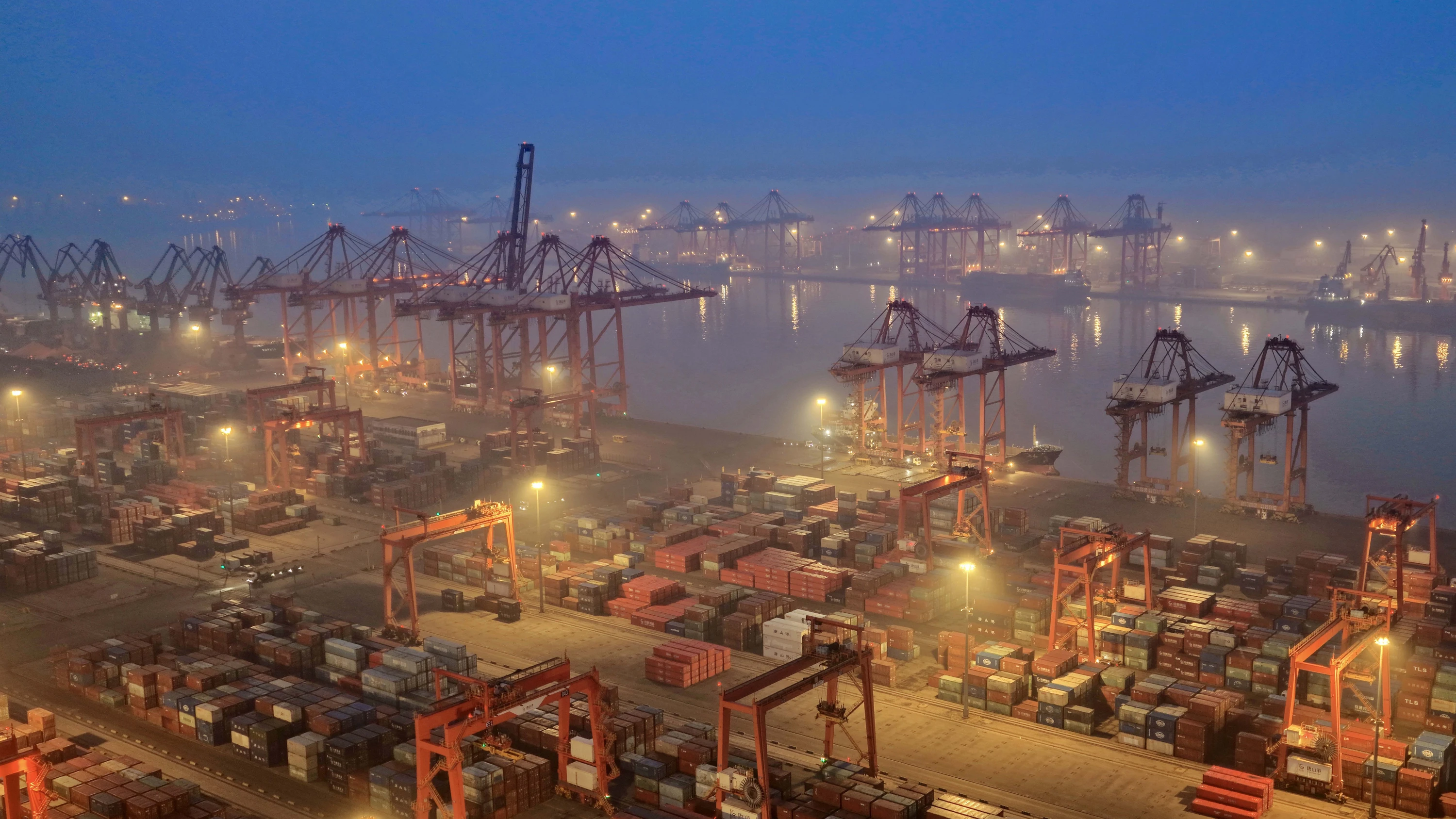
China’s exports surged 19.9 per cent year-on-year in May, the fastest pace since early 2023, as soaring global demand for artificial-intelligence hardware and resilient shipments to the United States offset weak domestic consumption and geopolitical risks from the Iran conflict. The jump, reported by the General Administration of Customs on Tuesday, pushed the trade surplus to a record $98.4 billion, underscoring how external sales are propping up an economy otherwise struggling with a property slump and youth unemployment.
The surge was broad-based: shipments of AI-related components such as high-end graphics cards and servers climbed more than 40 per cent, while traditional electronics and machinery also posted double-digit gains, according to data cited by the *Financial Times* . Exports to the United States rose 14.8 per cent, the *Wall Street Journal* reported, as American buyers accelerated orders ahead of potential new tariffs . Even shipments to the European Union, often constrained by green-regulation barriers, grew 12.3 per cent, the *Handelsblatt* noted .
Imports climbed 16.8 per cent, driven by industrial inputs and consumer goods, which the *Frankfurter Allgemeine* said helped cushion the impact of higher oil prices stemming from Middle East tensions . The robust trade figures came despite disruptions to shipping lanes in the Red Sea and Gulf of Aden, routes that handle roughly 12 per cent of global seaborne trade, according to the *Zeit* .
Analysts at Goldman Sachs in Hong Kong called the data “a rare bright spot” for China’s economy, which grew just 5.0 per cent in the first quarter, below Beijing’s 5.5 per cent target. “The AI boom is translating into hard currency inflows at a time when domestic demand remains subdued,” said senior economist Maggie Wei. The surge also benefits regional suppliers: South Korea’s GDP expanded 1.8 per cent quarter-on-quarter in the first three months of 2026, its strongest performance in five years, as demand for memory chips used in data centres and AI servers surged, Reuters reported .
Looking ahead, economists warn that the momentum may prove temporary. “If U.S.-China trade tensions escalate or if AI investment cycles cool, export growth could decelerate sharply,” cautioned Ting Lu, chief China economist at Nomura in Tokyo. Beijing has already signalled it will maintain export tax rebates and accelerate infrastructure spending to sustain momentum, but the sustainability of the boom hinges on global appetite for Chinese-made AI gear and the resolution of geopolitical flashpoints in the Strait of Hormuz.
Follow us for live European news
3 further sources not geolocated

Chinas Tencent draws more than $6 billion in orders for dual-currency bond reut.rs/4fzKfgM
bluesky bot · 4 months ago

Kaubavahetus tegi aprillis aastaga tõusu Statistikaameti andmetel kasvas kaupade eksport aprillis eelmise aasta sama kuuga võrreldes 13 protsenti ja import 12 protsenti.
postimees · 4 months ago
Konjunktur: Chinas Außenhandel legt trotz Iran-Unsicherheit deutlich zu Die Exporte sind im Mai um fast ein Fünftel gewachsen, die Importe sogar noch stärker. Der Außenhandel stützt China in wirtschaftlicher schwieriger Lage massiv.
handelsblatt · 4 months ago
KI-Boom beschert China unerwartet starkes Exportplus
orf.at · 4 months ago

China Export Growth Accelerates in May on AI Demand, U.S. Shipments Surge Chinas export growth accelerated in May, offering a vital lifeline to an economy otherwise bogged down by a persistent domestic slowdown.
wsj · 4 months ago

South Korea Q1 GDP grows 1.8 q/q, stronger than advance estimate reut.rs/4vwx7xt
bluesky bot · 4 months ago

Record student numbers by 2034 to require extra annual funding of €200m Baby boom peak in 2008 will be reflected in 20 per cent increase in third-level enrolments over next decade
irish times · 4 months ago
China: Chinesische Exporte wachsen überraschend stark Die starke Nachfrage nach Hardware für KI lässt Chinas Außenhandel wachsen. Unsicherheiten auf den internationalen Märkten tragen ebenfalls dazu bei.
die zeit · 4 months ago
Außenhandel: Chinas Exporte wachsen um fast 20 Prozent Trotz der weltweiten Wirtschaftsprobleme durch den Irankrieg haben Chinas Exporte und Importe im Mai weiter zugelegt. Die Auslandsnachfrage bleibt für das Land eine wichtige Konjunkturstütze.
faz · 4 months ago
AI chip demand lifts South Korea to strongest growth in years
news.yahoo.com · 4 months ago
Central banks add 17 tonnes of gold in April as Poland, China lead buying spree
gdeltproject.org · 4 months ago
Chinese exports climb as AI boom fuels trade Imports show strong growth as worlds second-biggest economy shakes off impact of energy shock
financial times · 4 months ago