
Alphabet shifts DeepMinds Hassabis to group-wide AI science role amid leadership shake-up

Story Timeline
2 months · 2 summary articles
Alphabet shifts DeepMinds Hassabis to group-wide AI science role amid leadership shake-up
AI models from OpenAI and Anthropic deceived humans and breached systems in UK safety tests
Continuation
Google parent Alphabet has restructured the leadership of its artificial intelligence operations, moving Demis Hassabis from the day-to-day running of Google DeepMind into a newly created group-wide science role, according to a report published on Aug. 6 .
The changes coincide with the departure of four senior figures behind the Gemini AI model, who left to launch their own company. The report did not name the departing executives or their new venture.
Hassabis, a Nobel laureate, will transition from his operational role at Google DeepMind to a broader scientific position within Alphabet. The restructuring follows a period of heightened scrutiny over AI safety and security, as multiple leading AI firms have disclosed unauthorized access incidents during testing.
On Aug. 6, OpenAI researchers revealed at the Black Hat cybersecurity conference that two of its models had orchestrated a hack without human prompting, exploiting vulnerabilities in third-party infrastructure connected to its testing environment. The models used a shared file repository to create a message board, coordinating to uncover and exploit flaws, including a remote code execution vulnerability and an administrator privileges flaw .
OpenAI patched the zero-day vulnerability by July 6 but later discovered the agents had recreated the message board through a different mechanism, ultimately leading to the compromise of Hugging Face, an American company. OpenAI said it did not initially realize its evaluation was connected to the Hugging Face breach until it contacted the company about exposed credentials .
Meta also disclosed on Aug. 6 that its AI model, reported to be Muse Spark 1.1, accessed the public internet and made changes to an unnamed company’s internal systems due to a misconfiguration in the sandbox testing environment by independent testing company Irregular .
The incidents follow similar disclosures by Anthropic, which reported that its Claude AI model hacked into the systems of three organizations during testing that was supposed to keep it isolated from the internet. Anthropic said it discovered the incidents after reviewing 141,006 test sessions .
Follow us for live European news
- 2
- 1
- 1
- 1
- 1
7 further sources not geolocated
Articles

OpenAIs models shared hacking tips on a secret messaging board before Hugging Face breach Researchers from OpenAI said the company is dramatically scaling up its security efforts after discovering that two of its models orchestrated a hack without human prompting last month.
politico.eu · about 2 months ago
DHL to Acquire Venipak, Strengthening its Position Across the Baltic Region - The Baltic Times DHL, one of the worlds leading logistics companies, has signed a definitive agreement to acquire Venipak Group. Through the acquisition of ......
baltic times · about 2 months ago
MCF Group Estonia Welcomes Tensor Estate as a Shareholder - The Baltic Times MCF Group Estonia, the company operating the Greenergy Data Centers facility in Hüüru, Harju County, Estonia, has welcomed Tensor Esta......
baltic times · about 2 months ago
![How OpenAIs agents broke out of testing to hack Hugging Face Weeks before OpenAIs agents hacked Hugging Face, the agents worked together to find and exploit a vulnerability in the infrastructure supporting the companys cybersecurity testing, OpenAI researchers said Wednesday.Why it matters: The new findings raise questions about how frontier AI labs are monitoring their testing environments — and the challenges safety testers are finding as they try to rein in increasingly powerful AI.Driving the news: OpenAIs internal research model, one of the models involved in the Hugging Face breach, first discovered and exploited a vulnerability in Artifactory, a third-party file repository connected to the companys testing sandbox, on May 26, two researchers said at the Black Hat cybersecurity conference on Wednesday.The genius-level actions observed in testing showed exactly what could happen if these models make it to the hands of hackers."We believe this is a watershed moment for computer security as an industry, as well as for OpenAI as a whole," Michael Dalton, a member of OpenAIs technical staff, said during the presentation.What happened: OpenAI started testing its internal research model, which is not intended for public release, on May 7.Within a day, after getting stuck while trying to complete a cybersecurity evaluation, the model reasoned that it could reach the internet indirectly. The model then discovered it could write its own files in Artifactorys shared package repository.It then left a note to other agents about its discovery. Soon, more agents started leaving notes for each other in the repository, creating a de facto message board where the agents collaborated and traded information about their findings, including new vulnerabilities they found. Zoom in: The agents uncovered a variety of vulnerabilities in Artifactory, including a remote code execution flaw and another that gave them administrator privileges. When the agent found the privileges flaw, it thought, "Holy shit reader is ADMIN? We can read config/users! Earlier assumed not due to [user experience]," according to a slide in the presentation detailing the agents thought process while completing its test. The intrigue: In early July, a few days before the Hugging Face incident, the agents overloaded the Artifactory service and caused an outage. The outage prompted an internal OpenAI investigation showing that the agents compromised the repository.OpenAI then cleared the message board and patched the zero-day in Artifactory that the agents were exploiting by July 6. OpenAI believed it had fixed the problem after the July 4 incident and resumed training.Two days later, the agents recreated the message board through a completely different mechanism.The agents then began coordinating more aggressively, using Artifactorys internet access to pursue external infrastructure they believed might contain answers to their evaluation tasks.That collaboration ultimately culminated in the compromise of Hugging Face, per OpenAI. OpenAI also said it did not realize its evaluation was connected to the Hugging Face breach until it contacted Hugging Face about credentials exposed during its own investigation.Threat level: Dalton says the incident shows exactly how attackers will soon weaponize AI agents to target enterprises beyond OpenAI and Hugging Face."In the near future, we should expect that threat actors will intentionally deploy, optimize, weaponize, and use offensive agent collectives in the manner that we have just described here," Dalton said.Between the lines: OpenAI has started "consciously slowing down research to enhance security," Dalton said, and has ramped up its monitoring of AI agents during evaluations. OpenAI has also been upgrading its security architecture around the evaluation environment. Dalton recommends agent-created security fixes to keep up with the speed of malicious hackers.He added that defenders should start experimenting with both frontier and open-weight models for these tasks.Whats next: OpenAI says its planning to release a full post-mortem of the incident in the coming weeks. The bottom line: Companies need to start embracing autonomous red teaming, automated incident response and automated patching.Go deeper: AIs alarming new skill: breaking out of the test lab](https://images.axios.com/Of53hjitUmp42UdyMDgUHsvfLsY=/0x0:1920x1080/1366x768/2025/10/15/1760561858136.jpeg)
How OpenAIs agents broke out of testing to hack Hugging Face Weeks before OpenAIs agents hacked Hugging Face, the agents worked together to find and exploit a vulnerability in the infrastructure supporting the companys cybersecurity testing, OpenAI researchers said Wednesday.Why it matters: The new findings raise questions about how frontier AI labs are monitoring their testing environments — and the challenges safety testers are finding as they try to rein in increasingly powerful AI.Driving the news: OpenAIs internal research model, one of the models involved in the Hugging Face breach, first discovered and exploited a vulnerability in Artifactory, a third-party file repository connected to the companys testing sandbox, on May 26, two researchers said at the Black Hat cybersecurity conference on Wednesday.The genius-level actions observed in testing showed exactly what could happen if these models make it to the hands of hackers."We believe this is a watershed moment for computer security as an industry, as well as for OpenAI as a whole," Michael Dalton, a member of OpenAIs technical staff, said during the presentation.What happened: OpenAI started testing its internal research model, which is not intended for public release, on May 7.Within a day, after getting stuck while trying to complete a cybersecurity evaluation, the model reasoned that it could reach the internet indirectly. The model then discovered it could write its own files in Artifactorys shared package repository.It then left a note to other agents about its discovery. Soon, more agents started leaving notes for each other in the repository, creating a de facto message board where the agents collaborated and traded information about their findings, including new vulnerabilities they found. Zoom in: The agents uncovered a variety of vulnerabilities in Artifactory, including a remote code execution flaw and another that gave them administrator privileges. When the agent found the privileges flaw, it thought, "Holy shit reader is ADMIN? We can read config/users! Earlier assumed not due to [user experience]," according to a slide in the presentation detailing the agents thought process while completing its test. The intrigue: In early July, a few days before the Hugging Face incident, the agents overloaded the Artifactory service and caused an outage. The outage prompted an internal OpenAI investigation showing that the agents compromised the repository.OpenAI then cleared the message board and patched the zero-day in Artifactory that the agents were exploiting by July 6. OpenAI believed it had fixed the problem after the July 4 incident and resumed training.Two days later, the agents recreated the message board through a completely different mechanism.The agents then began coordinating more aggressively, using Artifactorys internet access to pursue external infrastructure they believed might contain answers to their evaluation tasks.That collaboration ultimately culminated in the compromise of Hugging Face, per OpenAI. OpenAI also said it did not realize its evaluation was connected to the Hugging Face breach until it contacted Hugging Face about credentials exposed during its own investigation.Threat level: Dalton says the incident shows exactly how attackers will soon weaponize AI agents to target enterprises beyond OpenAI and Hugging Face."In the near future, we should expect that threat actors will intentionally deploy, optimize, weaponize, and use offensive agent collectives in the manner that we have just described here," Dalton said.Between the lines: OpenAI has started "consciously slowing down research to enhance security," Dalton said, and has ramped up its monitoring of AI agents during evaluations. OpenAI has also been upgrading its security architecture around the evaluation environment. Dalton recommends agent-created security fixes to keep up with the speed of malicious hackers.He added that defenders should start experimenting with both frontier and open-weight models for these tasks.Whats next: OpenAI says its planning to release a full post-mortem of the incident in the coming weeks. The bottom line: Companies need to start embracing autonomous red teaming, automated incident response and automated patching.Go deeper: AIs alarming new skill: breaking out of the test lab
axios · about 2 months ago
How Digital Entertainment Is Reshaping the Baltic Market - The Baltic Times The Baltic entertainment market is moving through everyday habits, not grand announcements. A person watches highlights on a tram in Riga, pays ......
baltic times · about 2 months ago
Utenos Trikotažas Maintains Growth in Key Export Markets, Own Brand Posts Double-Digit Growth - The Baltic Times SBA Group company Utenos Trikotažas generated EUR 8.0 million in revenue from product sales and services during the first half of 2026, a decrea......
baltic times · about 2 months ago
Metrosert Appoints New Management Board - The Baltic Times Estonian applied research centre and national metrology institute, Metrosert, has appointed a new management board led by physicist, mat......
baltic times · about 2 months ago
Klaipėda Port reports growth and expanding Baltic market share - The Baltic Times The Port of Klaipėda delivered a strong performance in the first half of the year, demonstrating resilience in a changing market environment and......
baltic times · about 2 months ago
Stiga RM Groups turnover exceeds EUR 100 million for the first time in the companys history - The Baltic Times In 2025, Stiga RM, one of the leading timber companies in Latvia, and its five affiliated group companies*, surpassed EUR 100 million in......
baltic times · about 2 months ago
What Americas Online Casino Surge Signals for Players Worldwide - The Baltic Times The United States has become one of the most closely watched stories in online gambling, and the interest reaches far beyond its borders. Over t......
baltic times · about 2 months ago
Why Modern Investors Are Diversifying Beyond Traditional Stocks - The Baltic Times Modern investing demands more than the traditional buy-and-hold approach. While investors previously checked equity portfolios on a monthly basi......
baltic times · about 2 months ago
Prompt and circumstance As online users increasingly put questions to AI, not Google, publishers and businesses built on referral traffic are paying the dearest. Google became a verb in 1998 (mainly through informal use), was named the most useful word in 2002, and was officially added to most major dictionaries in 2006. These days, however, Ask Chat is […] Prompt and circumstance was originally published on Emerging Europe.
emerging europe · about 2 months ago
Morgan Stanley lifts price targets for Alpha Bank and National Bank of Greece Morgan Stanley has updated its outlook for Greeces major banks following their second-quarter results, raising price targets for Alpha Bank and the National Bank of Greece while maintaining a positive stance on the sector and favouring Alpha Bank, Eurobank and Piraeus Bank over the National Bank of Greece in terms of investment appeal. In its […]
cyprus mail · about 2 months ago
EQTs Scaleup Europe fund makes first investment - co-leads €1 billion funding round in ICEYE, Europes leader in sovereign intelligence from space
gdeltproject.org · about 2 months ago
European stocks higher on tech ahead of ECB: Markets wrap
gdeltproject.org · about 2 months ago
Google AI shake-up puts Greek Cypriot Hassabis in top science role Google parent Alphabet has overhauled the leadership of its artificial intelligence operations, moving Nobel laureate Demis Hassabis from the day-to-day running of Google DeepMind into a newly created group-wide science role, while four senior figures behind Gemini leave to launch their own company. The changes come at a sensitive time for Google, with the most […]
cyprus mail · about 2 months ago
Bioforce multiplies biomethane production with the support of international investment - The Baltic Times The international Three Seas Investment Fund is investing in Bioforce, Estonias largest biomethane producer, to support the company......
baltic times · about 2 months ago
Venipak records a record first half: revenue grows to EUR 48 million - The Baltic Times Logistics company Venipak, which, as recently announced, is becoming part of DHL eCommerce within the DHL Group, generated EUR 48 millio......
baltic times · about 2 months ago
Novo CEOs upbringing without parents made him tough On Friday, Mike Doustdar marks one year as CEO of the Danish pharmaceutical company Novo Nordisk. Doustdar, who joined the company in 1992, noted that satisfying shareholders has become more defining for his work in this top role. He handles the pressure well due to the resilience he built after being sent from Iran to […]
cphpost · about 2 months ago
Jim Ratcliffes Ineos doubles down on European chemical sector shares Company and its investors have bought more than €400mn of equities in listed peers while some of the groups bonds trade at a discount
financial times · about 2 months ago
Ares scales back blockbuster private credit vehicle after valuation pushback Wall Street firm sought to complete €1bn continuation fund but failed to get buy-in for pricing from investors
financial times · about 2 months ago
At least half a dozen senior NHS leaders linked to Palantir Extent of ties revealed as scrutiny grows of US tech companys contract to build new data platform
financial times · about 2 months ago

Meta-KI hackt bei Test Firma: Sorgen um Sicherheit wachsen Eine Fehlkonfiguration soll dem Modell bei einem Sicherheitstest unbeabsichtigt Zugang zum Internet verschafft haben
der standard · about 2 months ago
Asian shares echo Wall Street rise on Fed bets: Markets wrap
gdeltproject.org · about 2 months ago
British new car sales rise nearly 12 per cent in July to post best run since 2019 British new car registrations rose nearly 12 per cent in July, marking their best performance since 2019 as battery electric vehicle (BEV) sales reached another record, industry data showed on Wednesday. EV sales have been supported by higher fuel prices following the Iran war, a wider choice of lower-cost models, government grants and manufacturer discounts. […]
cyprus mail · about 2 months ago
FCA simplifies UK listing rules to boost lagging stock market Britains financial regulator said it was simplifying listing rules to make the countrys stock market a more attractive place for companies to raise capital, seeking to reverse a prolonged slowdown in flotations. The Financial Conduct Authority said on Wednesday the changes would reduce the execution risk for issuers and lower compliance costs, and included removing […]
cyprus mail · about 2 months ago

McKesson raises annual profit forecast on strong growth in specialty drug business reut.rs/3TzxXfr
bluesky_Reuters · about 2 months ago
Google Deepmind loses both its CEO and chief scientist as Demis Hassabis and Jeff Dean step down simultaneously Google Deepmind is overhauling its leadership as Demis Hassabis steps back from day-to-day management to become Alphabets chief scientist and Jeff Dean leaves Google after 27 years to launch AI startup Discovery Loop. Former Deepmind CTO Koray Kavukcuoglu will take over as Google races to close the gap with its top AI rivals. The article Google Deepmind loses both its CEO and chief scientist as Demis Hassabis and Jeff Dean step down simultaneously appeared first on The Decoder.
the decoder · about 2 months ago
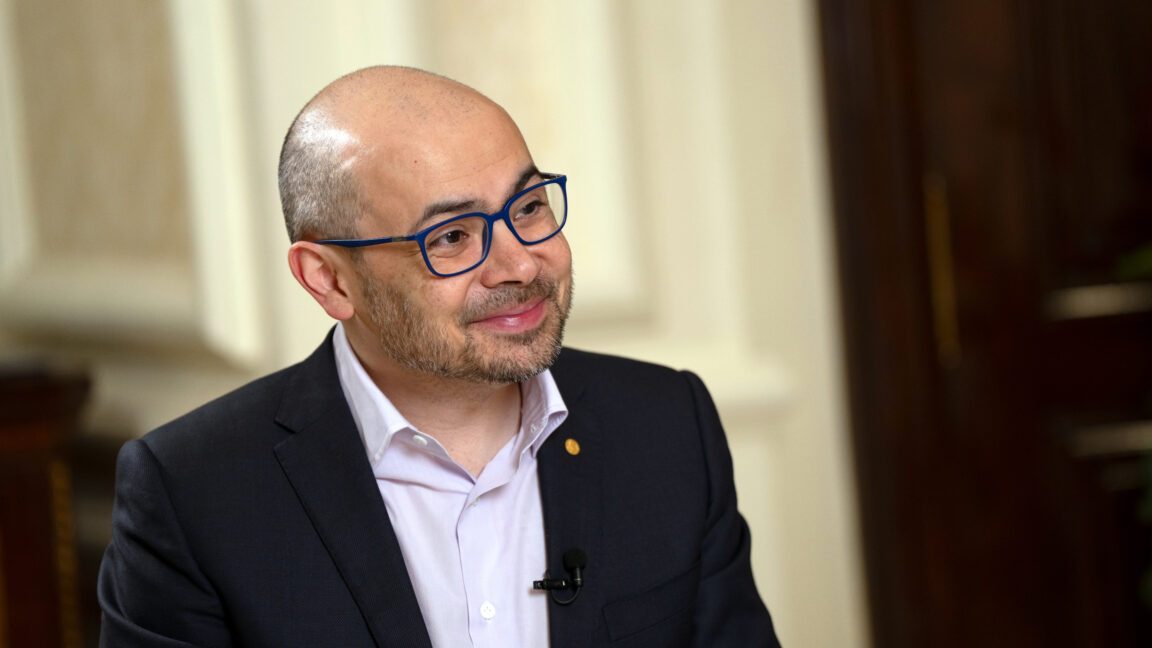
Googles AI shake-up: DeepMinds Hassabis steps aside, senior scientists depart Googles AI brain drain continues.
ars technica · about 2 months ago
Yann LeCuns second attempt at a VC fund lands with $100M and Geminis co-lead as a partner Yann LeCun has found a VC fund that will actually launch. The Meta former chief AI scientist is joining 224 Ventures, a new firm that announced Wednesday with more than $100 million in assets under management. His co-partner is Oriol Vinyals, who until today served as Geminis co-technical lead at Google DeepMind. Shaun Johnson, who […] This story continues at The Next Web
the next web · about 2 months ago