 Saturday, June 27Saturday, June 27
1 day · 2 summary articles
Deutsche Bahn admits Stuttgart 21 Tiefbahnhof needs three more billion euros and five extra years
Deutsche Bahn delays Stuttgart 21 Tiefbahnhof until 2031 and raises budget to 14.5 billion
Stuttgart 21’s new Tiefbahnhof will not open until 2031—five years later than the last official target—and will cost €14.5 billion, the Deutsche Bahn confirmed on 26 June 2026, as its chief executive Evelyn Palla described “gravierende Mängel” in planning and control that have driven the project deeper into delay and debt.
The revised schedule, published simultaneously by Handelsblatt, Süddeutsche Zeitung and ORF, replaces the previous completion date of 2026 and raises the budget from €11.5 billion to €14.5 billion—an increase of €3 billion announced only hours before the shift was confirmed. Palla told reporters the additional costs stem from “Fehler in der Vergangenheit,” including flawed geotechnical assumptions and repeated coordination failures between contractors and the state of Baden-Württemberg.
The project’s central shaft in Stuttgart’s city centre remains a 120-metre-deep construction site, its completion now pushed back to at least 2031. The delay will also affect regional and long-distance services, as the old above-ground station must remain operational until the new underground node is certified. Baden-Württemberg’s transport minister Winfried Hermann said the state would reopen talks on cost-sharing, warning that further increases could not be ruled out.
Critics in the state parliament’s inquiry committee, which has met monthly since 2023, accused the Bahn of withholding internal audit reports that flagged schedule slippage as early as 2021. A leaked 2024 document cited in the Süddeutsche Zeitung showed planners had already anticipated a 2029 opening before quietly shelving the scenario.
With tunnelling machines idle for weeks during winter 2025-26 due to ground-water surges, the project’s contractors have filed for arbitration, seeking compensation for idle-time costs. The Bahn’s supervisory board is scheduled to vote on 10 July 2026 on a revised risk-mitigation plan that includes additional geotechnical drilling and a third-party project-management office. Palla said she would present the plan to the federal transport ministry the same week.
Follow us for live European news

Kiírták a mentőszolgálat főigazgatói pályázatát Öt évre szól a megbízatás, ami még egyszer legfeljebb öt évvel hosszabbítható meg.
444.hu · 1 day ago
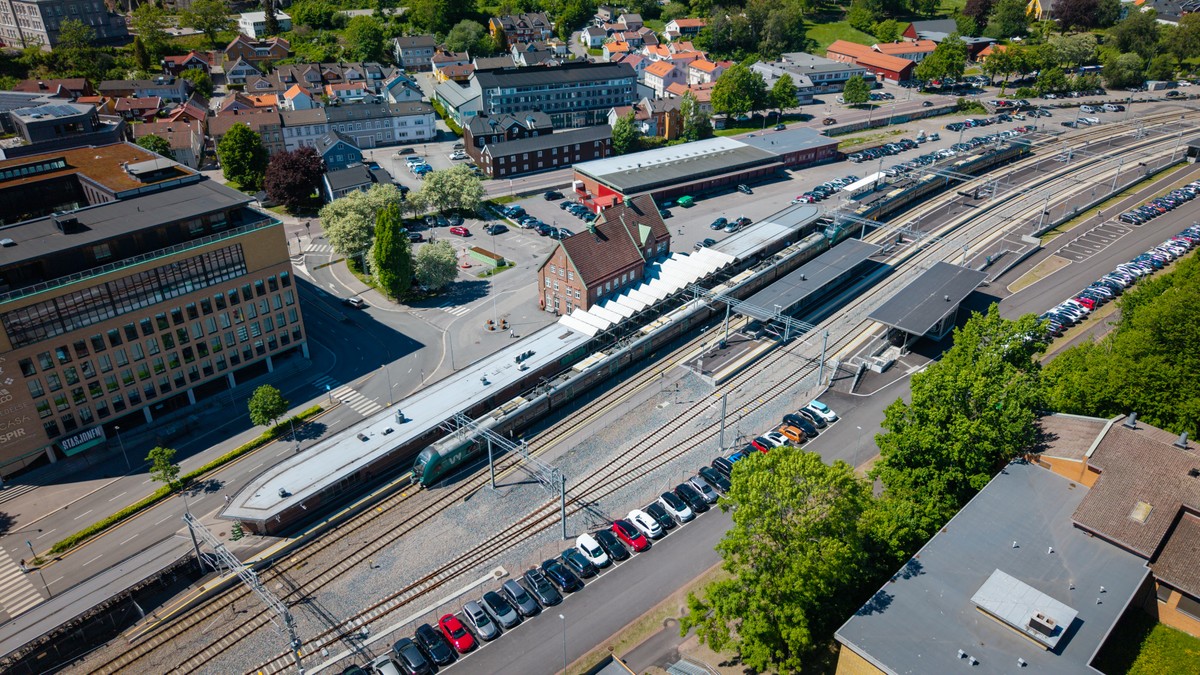
Vestfoldbanen-planer blir enda mer forsinket Planene for flere tog i timen på Vestfoldbanen blir forskjøvet, da det er mangel på tog.
nrk · 1 day ago
Nachruf auf Hans Albert Brennenstuhl: Die Partei brauchte ihn im ZK Seine Lebenspläne erfüllten sich mit der Zeit. Die Fünfjahrespläne der SED hingegen nicht
tagesspiegel · 1 day ago
Alstrom verzichtet auf Beschwerde: Durchbruch im Streit um S-Bahn-Vergabe – Berlin kann endlich neue Züge bestellen Das jahrelange Ringen um die Berliner S-Bahn-Ausschreibung ist wohl vorbei. Der unterlegene Zugbauer Alstom hat angekündigt, nicht mehr vor das Berliner Kammergericht zu ziehen.
tagesspiegel · 1 day ago
Neue Dauerausstellung fürs Potsdam Museum: Hauschef Thomas Steller gerät erneut in die Kritik Im Kulturausschuss wurden die aktuellen Überlegungen für eine neue Schau im Potsdam Museum vorgestellt. Nicht nur eine erneute Verschiebung sorgte bei der Stadtpolitik für Unmut.
tagesspiegel · 1 day ago
Stuttgart 21: Stuttgarter Tiefbahnhof wird noch mal mehrere Milliarden teurer Fünf Jahre wird noch mindestens am neuen Stuttgarter Bahnhof gebaut. Das führt nun auch zu höheren Kosten für Stuttgart 21. Um welche Summen es geht – und wer sie bezahlen muss.
handelsblatt · 1 day ago
Bahnprojekt: Viel später, viel teurer: Das Debakel um Stuttgart 21 Seit Jahren klafft in der Stuttgarter Innenstadt die riesige Baustelle des neuen Stuttgarter Tiefbahnhofs. Warum dort noch fünf Jahre gebaut wird - und wer die Kosten dafür trägt.
handelsblatt · 1 day ago
Stuttgart 21 wird noch einmal drei Milliarden Euro teurer Die Hängepartie um das Bahnprojekt Stuttgart 21 geht weiter. Nach neuesten Planungen der Bahn soll der neue Tiefbahnhof in der Stuttgarter Innenstadt drei Milliarden Euro teurer werden – und erst 2031 in Betrieb gehen.
welt.de · 1 day ago
Stuttgart 21 wird teurer und noch später fertig – Bahn-Chefin zeigt sich „erschüttert Die Probleme rund um das Bahn-Großprojekt Stuttgart 21 reißen nicht ab. Der neue Hauptbahnhof wird nicht nur noch teurer, sondern auch noch später fertig als gedacht. Die Bahn spricht selbst von gravierenden Mängeln bei Planung und Steuerung.
welt.de · 1 day ago
Verschiebung um fünf Jahre: Bahnchefin Palla räumt Versäumnisse bei Stuttgart 21 ein Erst 2031 soll der neue Stuttgarter Tiefbahnhof in Betrieb gehen - und damit fünf Jahre später als bislang geplant. Die Bahnchefin sagt: In der Vergangenheit sind Fehler gemacht worden.
handelsblatt · 1 day ago
Wahlkampf unter dem Uhrturm: Die Leiden der Grazer Innenstadt [premium] Die Entwicklung der Grazer Innenstadt ist zum Wahlkampfthema geworden. Denn die Stadt wächst – aber die Besucherfrequenz und die Zahl der Handelsbetriebe sinken. In der Altstadt hat sich eine gewisse Tristesse festgefressen.
die presse · 1 day ago
Stuttgart 21: Deutsche Bahn verschiebt Inbetriebnahme erneut
orf.at · 1 day ago
Bahn: Stuttgart 21: Noch einmal drei Milliarden Euro teurer Das Großprojekt wird nicht nur zwölf Jahre später fertig als geplant, sondern soll auch wesentlich mehr kosten: 14,5 statt 11,5 Milliarden Euro. Sind nun wenigstens diese Zahlen belastbar?
sueddeutsche · 1 day ago