
Philippines quake kills 61 as wildfires rage amid recovery efforts
Story Timeline
3 months · 2 summary articles
Greece warns stronger quake may follow 6.2-magnitude tremor
Philippines quake kills 61 as wildfires rage amid recovery efforts
A deadly 7.8-magnitude earthquake struck the southern Philippines on Monday, killing at least 61 people and leaving 40 others missing as rescue teams struggle to reach isolated villages on the island of Mindanao. The tremor, the strongest of 2026 globally, flattened entire communities in Sarangani province, where nearly 64,000 homes were damaged or destroyed, according to the UN Office for the Coordination of Humanitarian Affairs (OCHA) .
Emergency workers continue to recover bodies from the rubble days after the disaster, with some areas remaining inaccessible due to landslides and damaged infrastructure. Local authorities confirmed the death toll rose from initial reports, as search teams discovered additional victims in remote barangays. "The situation is still critical," said a spokesperson for the Philippine Red Cross. "We are prioritising areas where communities are cut off from communication and supplies."
The quake struck at 11:30 local time on 9 June, triggering tsunamis along the coast and collapsing buildings in multiple towns. Sarangani’s provincial governor declared a state of calamity on Tuesday, warning that the humanitarian impact could worsen as aftershocks persist. The Philippine Institute of Volcanology and Seismology recorded over 200 aftershocks, including several above magnitude 6.0, complicating rescue operations.
International aid has begun to arrive, with the European Union pledging €2 million in emergency funding and the United States sending a disaster assessment team. The Philippine government has deployed military helicopters to deliver food, water, and medical supplies to stranded residents. "We are doing everything possible to reach every affected family," said Defence Secretary Gilberto Teodoro.
Meanwhile, the Philippines faces compounded challenges as the country braces for an intense wildfire season. On Sunday, authorities raised the alert to "maximum danger" in 26 municipalities across nine districts, including areas still recovering from the quake . Firefighters in A Coruña, Spain, meanwhile, reported progress in containing a 350-hectare blaze that forced evacuations on Friday, with residents allowed to return home as winds subsided and rains aided containment efforts .
The disaster in the Philippines underscores the growing strain on emergency services worldwide, as climate change intensifies both seismic and wildfire risks. With thousands displaced and critical infrastructure damaged, the road to recovery remains uncertain for communities already grappling with limited resources.
Follow us for live European news
- 1
- 1
- 1
- 1
- 1
1 further source not geolocated
Articles

Incêndios. Há 26 concelhos do país em perigo máximo País prepara-se para nova época de incêndios
observador · 3 months ago
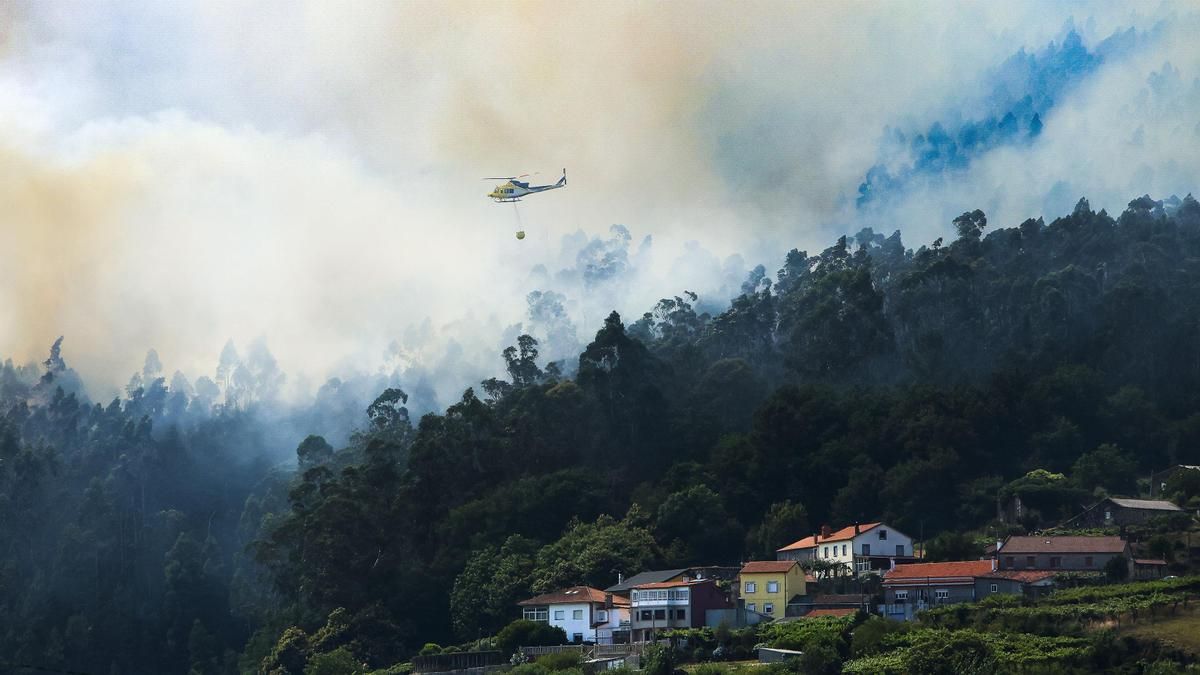
El incendio de Padrón, en A Coruña, evoluciona favorablemente tras calcinar más de 350 hectáreas A primera hora de este domingo, las persobas desalojadas han podido regresar a sus viviendas. La Xunta mantiene activas las medidas de protección y controlArde sobre quemado: los grandes incendios forestales tienen memoria El incendio de Padrón (A Coruña), declarado en la tarde del viernes en la parroquia de Herbón y que se ha extendido ya al vecino municipio de Teo, ha calcinado hasta ahora un total de 350 hectáreas, según las estimaciones realizadas por la Consellería do Medio Rural durante este domingo. A última hora del sábado, esta cifra se situaba en 330. La situación ha mejorado respecto a la tarde del sábado, cuando un flanco se reactivó y se evacuó como prevención ante la proximidad del fuego a dos núcleos de Carcacía, Sobrerribas y Cruxeiras de Abaixo, principalmente por la intensidad del humo. Además, llegó a cortarse la circulación por dos vías: desde Carcacía a Padrón y desde Vilar do Bispo a Lampai. Durante la noche, la situación en los núcleos de población afectados mejoró mucho en cuanto a la dirección e intensidad del viento. Por ello, a primera hora de este domingo, las personas desalojadas han regresado a sus viviendas, según ha informado el 112 Galicia. No obstante, la Xunta mantiene activas las medidas de protección y control sobre los núcleos de población que pueden verse afectados por el incendio. La administración gallega declaró el sábado por la tarde la situación 2 de emergencia, que requiere de la intervención de medios estatales por su proximidad a núcleos de población, en concreto, a los de Cruxeiras de Abaixo e Sobrerribas, en Carcacía. Durante la noche, mejoró mucho la situación. Las lluvias localizadas, junto con el trabajo, pudo hacer que la situación sea tranquila y que la ciudadanía pueda hacer una vida normal, ha explicado Europa Press el alcalde padronés, Anxo Arca. Con todo, ha pedido a los vecinos a que dejen las vías de comunicación libres para que los medios de extinción puedan realizar su trabajo. A mediodía de este domingo, no se aprecian llamas en el fuego y los medios de extinción movilizados trabajan en perimetrar con bulldozer todo el área. Somos optimistas. Eso no quita que tengamos todos los medios centrados y atentos a lo que pueda ir sucediendo, ha detallado el regidor. Además, durante este mediodía, el director xeral de Defensa do Monte, Manuel Francisco, acompañado por la delegada territorial de la Xunta en A Coruña, Belén do Campo, acudirán hasta el Puesto de Mando Avanzado situado frente al Hotel Scala. El fuego se declaró el viernes, día con altas temperaturas en Galicia, muy elevadas para la época del año, por encima de los 30 grados, lo que llevó a la Xunta a activar el nivel de alerta 3 (rojo) por episodio de calor.
eldiario.es · 3 months ago

Rettungsarbeiten erschwert: Nach Beben auf Philippinen: Zahl der Toten steigt auf 61 Das weltweit stärkste Beben des Jahres traf am Montag Teile der Insel Mindanao im Süden der Philippinen. Auch Tage später werden dort immer noch Leichen geborgen. Einige Dörfer sind nicht erreichbar.
tagesspiegel · 3 months ago

Awantura na SOR w Szczecinie. 75-letni pacjent "zaatakował ratownika i demolował salę" 75-latek doznał zaburzeń świadomości i w stanie silnego pobudzenia doprowadził do szkód w szczecińskim szpitalu. Placówka wydała oświadczenie, w którym poinformowała, że - wbrew pojawiającym się pogłoskom - pacjent nie czekał długo na pomoc.
gazeta.pl · 3 months ago
Brände: Angebranntes Essen löst Feuerwehreinsätze aus In Leegebruch und in Fürstenwalde muss die Feuerwehr ausrücken. Der Grund in beiden Fällen: Essen auf dem Herd.
tagesspiegel · 3 months ago

Its shaped who we are now: young people affected by Grenfell fire fight for justice and healing Locals who were children nine years ago say they want to carry on the legacy that older people startedYusra Cherbika was 12 years old when Grenfell fire happened a stones throw away from her home. She and her family were evacuated on the night of the blaze and spent over a year living in a hotel where she had to continue studying and revising for her exams.At school, she faced empty chairs for classmates who hadnt returned after the fire – for weeks, no one knew if they were dead or alive. One of her friends never came back. Continue reading...
theguardian · 3 months ago

9h. 26 concelhos do país estão em perigo máximo de incêndio Vários concelhos do interior norte e centro e Algarve estão também em perigo muito elevado de incêndio rural. Ainda, 53 anos depois os New York Knicks sagram-se campeões.
observador · 3 months ago
Nach Beben auf Philippinen: Zahl der Toten stieg auf 61 40 Personen werden noch vermisst. Das Beben der Stärke 7.8 hatte am Montag die Provinz Sarangani erschüttert. Laut Ocha wurden fast 64.000 Häuser beschädigt oder zerstört
der standard · 3 months ago