Loading…
 Saturday, September 26Saturday, September 26
2 months · 12 summary articles
Two firefighting helicopters collided Sunday while battling a wildfire in the Psatha area west of Athens, according to Greece’s fire service. Search and rescue teams were immediately mobilized to locate and assist the crews, the service said.
The collision occurred as Greece confronted a worsening wildfire crisis, with flames spreading across multiple fronts amid gale-force winds reaching 100 kilometers per hour. Civil Protection Minister Evangelos Tournas said the winds created "extremely difficult conditions," often preventing aircraft from drawing water or conducting drops due to turbulence. Firefighters on the ground battled blazes in Attica, Boeotia, Fokida and on the island of Cephalonia, where a new front broke out shortly before midnight Saturday.
Prime Minister Kyriakos Mitsotakis described the conditions as "extreme," with winds fueling fires that have destroyed over 12,000 hectares nationwide. In the greater Athens region, flames threatened the western outskirts after scaling a mountain overnight, prompting evacuations in Porto Germeno and other villages. Local authorities reported scores of homes damaged or destroyed. Earlier this week, fires on Crete and Paros affected another 6,000 hectares, and three firefighters died in the line of duty—two in Crete and one in the Peloponnese.
Meanwhile, France’s largest wildfire near Bordeaux remained contained after forcing 224,000 people to evacuate, though active pockets still burned across 420 square kilometers. Nearly 3,000 firefighters were deployed against that blaze and a second, uncontained fire in Provence, which has scorched 1,800 hectares. In Spain, major fires in Zamora and Castellón were largely contained, though new blazes broke out in recent days.
Europe’s wildfire crisis has already displaced roughly a third of a million people from homes and tourist sites this summer. The continent entered 2026 after its worst fire year on record, with more than 10,000 square kilometers burned in 2025, according to the European Union’s Copernicus Climate Change Service. Scientists at World Weather Attribution found that human-caused climate change made the extreme fire-weather conditions behind this year’s French blazes at least twice as likely .
Follow us for live European news
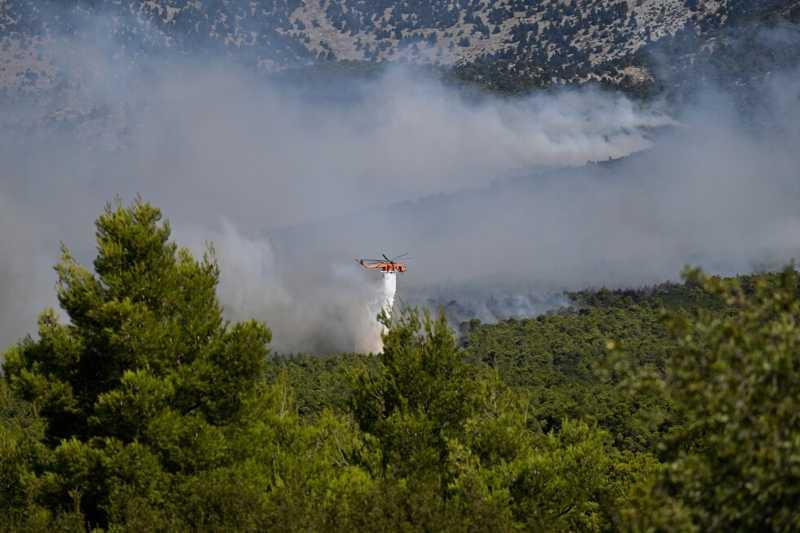
2 firefighting planes collide midair near AthensTwo firefighting helicopters collided Sunday while battling a wildfire near Athens. Footage showed one helicopter crashing to the ground. #News #France #Athens #Europe
mastodon bot · about 2 months ago

From Athens to Bordeaux, Europes wildfire emergency rages on | News
gdeltproject.org · about 2 months ago
The week in pictures: European wildfires, a woolly mammoth and a migrant influx at Spains Ceuta Fires burned across much of Europe, an earthquake in Japan killed dozens, record-low water levels in Bulgaria exposed the remains of a woolly mammoth, and tens of thousands sought to cross into the Spanish enclave of Ceuta before eventually returning home: FRANCE 24 looks back at some of the weeks most striking images.
france24 · about 2 months ago
Europes wildfires update: two helicopters collide while battling fire in Greece After weeks of fighting wildfires, France has managed to stop the spread of the blazes. Spains situation is improving but flames are still spreading while Greece struggles with multiple fires and high winds in different parts of the country.
euronews · about 2 months ago
Greece battles wildfires, Hungary shuts nuclear power plant due to drought Greek firefighters battled on Sunday to control a huge wildfire that has destroyed over 100 homes northwest of Athens, while a fresh blaze forced evacuations on the popular tourist island of Kefalonia. Europe has been ravaged by wildfires this summer after a period of record-breaking heatwaves and little rain – conditions that scientists say have […]
cyprus mail · about 2 months ago
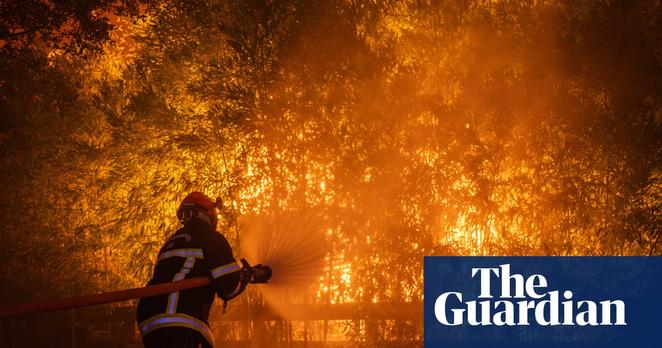
#Europe burns: a graphical guide to the #wildfires #climate
mastodon bot · about 2 months ago

Western Europes wildfire crisis retreats as Greece evacuates hundreds near Athens | Wildfires #Europe
mastodon bot · about 2 months ago
Video: Fire destroys 7 caravans at Amsterdam camping park Fire destroyed seven caravans early Sunday at the t Landje caravan park on Westpoortweg in Amsterdams Western Port area after breaking out around 5:40 a.m.
nltimes.nl · about 2 months ago
Europe wildfire emergency eases | Northwest Arkansas Democrat-Gazette
gdeltproject.org · about 2 months ago
Evacuations in Greece as Europe tackles wildfires
gdeltproject.org · about 2 months ago

DIRECT – Incendies en Europe : en Grèce, deux hélicoptères qui intervenaient contre un incendie entre en collision Les incendies continuent de mobiliser les secours à travers lEurope. Suivez en direct les dernières informations sur les principaux foyers, lévolution de la situation et les mesures prises par les autorités face à la progression des flammes. ...
la libre · about 2 months ago
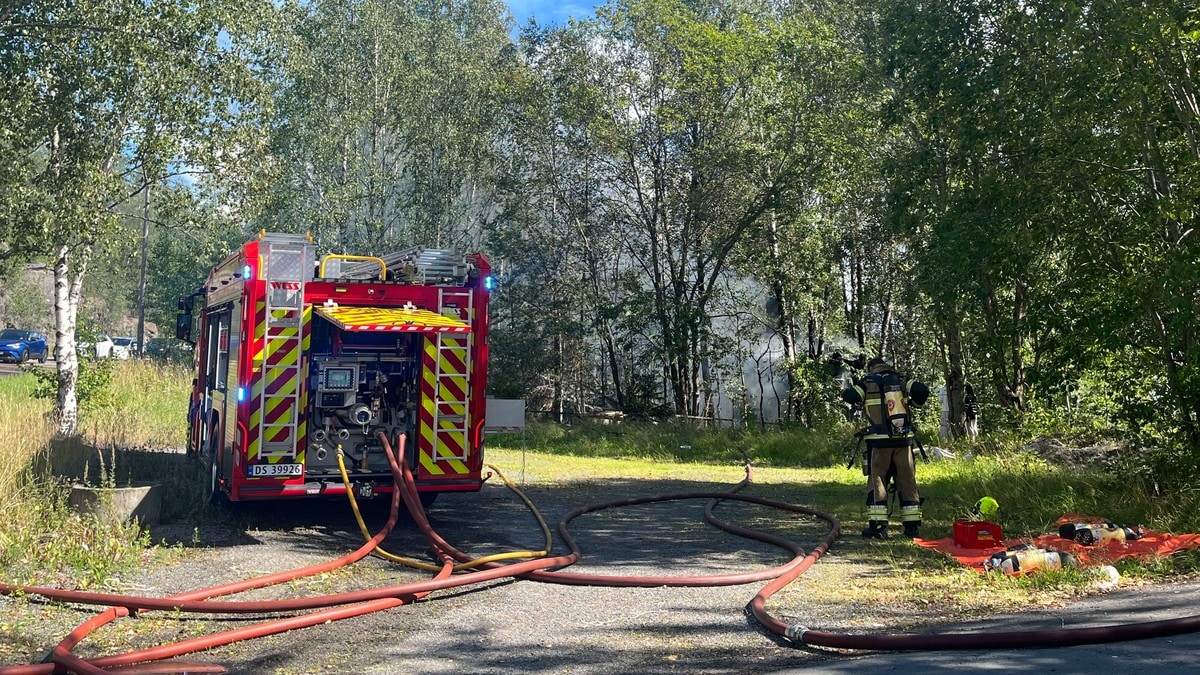
Kontroll på brann i Oslo – ikke spredningsfare Politi og brannvesen har rykket ut til en adresse i Oslo øst etter melding om en brann. – Vi har fått opplysninger om at det brenner i en enebolig som er fullt overtent, opplyser vaktkommandør Hans Erik Tysdal til NRK. Ifølge politiet var det stor fare for spredning til en skog i nærheten. I en ny oppdatering klokken 14.13 skriver de at brannvesenet har kontroll på brannen, og at det ikke lenger er fare for spredning. Brannvesenet fikk flere meldinger om brannen like før klokken 14.
nrk · about 2 months ago
Chemical plant on fire in France Around 30,000 residents of five municipalities in Frances Moselle department have been urged to remain indoors following a major fire at an industrial facility where chemical substances were stored.
ukrinform · about 2 months ago
Dry, hot summers are putting Dutch dikes at risk and threatening German river trade The Netherlands and Germany are suffering the consequences of a European heat wave that has brought dought and sparked devastating wildfires in France, Spain, Portugal, Crete and elsewhere
abcnews · about 2 months ago
Kontroll på brann i Oslo – etterslukking vil ta flere timer Det har brent kraftig i et bygg i Oslo øst. Det er ikke lenger fare for spredning.
nrk · about 2 months ago
Wildfire near Bordeaux contained as 1,500 firefighters battle blaze in Provence
gdeltproject.org · about 2 months ago
From Athens to Bordeaux, Europes deadly wildfire emergency rages on
gdeltproject.org · about 2 months ago

Firefighters in France and Spain are struggling to find enough airplanes to pour water on devastating wildfires. Preventing future blazes might depend on finding enough goats. 🔗 www.politico.eu/article/euro...
bluesky_Politico Europe · about 2 months ago
Greeces wildfires worsen as strong winds spread blazes Greece confronted a worsening wildfire crisis on Sunday, with fires burning on several fronts, swaths of forest and agricultural land destroyed and officials warning that powerful winds could fuel further devastation in the days ahead.
france24 · about 2 months ago
DIRECT – Incendies en Europe : lEspagne confrontée au départ de deux nouveaux feux de forêt, la situation saggrave à Athènes Les incendies continuent de mobiliser les secours à travers lEurope. Suivez en direct les dernières informations sur les principaux foyers, lévolution de la situation et les mesures prises par les autorités face à la progression des flammes. ...
la libre · about 2 months ago
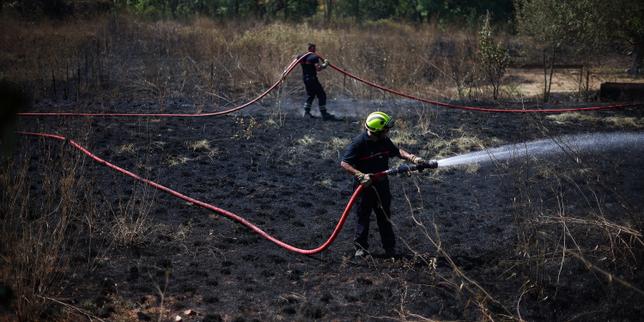
EN DIRECT, incendies : « Pas dévolution du périmètre du feu » dans le Var ; en Gironde, le feu toujours fixé mais sous surveillance Vendredi et samedi, les habitants de Correns, dans le Var, ont été confinés en raison dun incendie. « Cétait très anxiogène, on ne pouvait plus sortir ou rentrer dans le village », a décrit la maire du village. Dimanche, les habitants étaient partiellement déconfinés. En Gironde, le feu reste « contenu dans son périmètre malgré des secteurs actifs persistants sur Lège et Le Porge », a fait savoir la préfecture dimanche.
le monde · about 2 months ago
French wildfire near Bordeaux contained
gdeltproject.org · about 2 months ago
DIRECT – Incendies en Europe : le feu stabilisé après avoir ravagé 1.800 hectares dans le Var, la situation saggrave à Athènes Les incendies continuent de mobiliser les secours à travers lEurope. Suivez en direct les dernières informations sur les principaux foyers, lévolution de la situation et les mesures prises par les autorités face à la progression des flammes. ...
la libre · about 2 months ago
Fire toll mounts in Greece as blazes spread Greece on Sunday faced multiple fronts and a growing damage toll with wildfires believed to have devastated swathes of forest and agricultural land, and the prime minister warning of "extremely difficult" days ahead.
france24 · about 2 months ago

He instead calls on readers to resist—to live in the space between Everything will be OK and Everything is fucked, between denial and despair. #Europe #wildfires www.newyorker.com/news/the-led...Why Is Europe Burning?
mastodon bot · about 2 months ago
France: Most of 224,000 evacuees allowed to return home after devastating fires Here in France, a wildfire in the mountainous southeastern Var department, which had been brought under control three days ago, flared up again on Friday, forcing authorities to evacuate nearly 2,500 people overnight. Meanwhile, our reporter James Andre visited Gironde, where Frances biggest wildfire in more than 70 years was recently brought under control.
france24 · about 2 months ago
Drought keeps wildfire risk high in Netherlands despite no recent large fires Despite chronic drought across the Netherlands, no major wildfires have broken out in
nltimes.nl · about 2 months ago
Ukraine Deploys Firefighters to France Amid EU Wildfires
gdeltproject.org · about 2 months ago
Greece: Blazes continue to spread across the country The effects of human-made climate change are being felt across Europe during this sweltering summer, from record heat-related deaths in Austria, Britain, France and Germany, to tinderbox conditions fuelling historic wildfires in Spain, France and elsewhere. Charlotte Hughes takes a look at the situation in Greece.
france24 · about 2 months ago
Waldbrände: Mehr als 500 Feuerwehrkräfte im Einsatz: Feuer in Griechenland breiten sich aus Mehrere Ortschaften in Griechenland werden zur Evakuierung aufgerufen, in Frankreich hingegen sind die Brände unter Kontrolle. Unterdessen wird außerhalb Europas ein Notstand ausgerufen.
handelsblatt · about 2 months ago