Loading…
 Saturday, September 26Saturday, September 26
4 months · 5 summary articles
More than 500 000 French high-school pupils sat down on Thursday morning to the anticipated French exam, the first major hurdle of the 2026 baccalaureate, as the education ministry urged examiners to apply stricter standards on spelling, syntax and grammar. The written test, which runs from 08:00 to 12:00 local time, is the same for all streams—general, technological and vocational—though the coefficient varies by series. Education minister Amélie Oudéa-Castéra told regional rectors in a circular on 9 June that “the quality of written expression must be restored,” adding that “every avoidable error will be penalised.”
The call for greater rigour comes as teachers report a widening crisis of motivation for reading and literature among 16- and 17-year-olds. In a survey published by *Le Monde* on Thursday, 62 % of French literature teachers said the current list of set texts—unchanged since 2021—fails to engage students, while 71 % argued that the formalised commentary and dissertation formats prescribed by the national curriculum discourage spontaneous reading. “We are grading essays that read like algorithmic outputs rather than personal responses,” said Claire Martin, a lycée teacher in Lyon. “The system rewards technique over curiosity.”
Thursday’s written exam is followed on Thursday and Friday by the oral assessment of foreign-language communication skills, a two-day sequence that completes the first session of the 2026 baccalaureate. Candidates must demonstrate comprehension, interaction and production in one of eight languages—English, Spanish, German, Italian, Portuguese, Russian, Arabic or Chinese—before a panel of two examiners. The format, introduced in 2021, allocates 10 minutes of preparation and 10 minutes of speaking, with a maximum score of 20 points.
Ministry data show that 518 000 pupils are registered for the first session, a 2.3 % increase on 2025, driven largely by demographic growth in Île-de-France and Provence-Alpes-Côte d’Azur. The overall pass rate is expected to remain above 90 %, though officials caution that stricter marking in French could lower the proportion of “mention très bien” grades. The second session, for candidates who fail or are absent, is scheduled for 15–19 July.
Follow us for live European news
1 further source not geolocated

Backpack on flag day: 182,000 secondary school students find out if theyre graduating Over 182,000 secondary school students will find out on Thursday whether they have passed their final exams. If they did, they can celebrate by hanging their school bag on a flag.
nltimes.nl · 4 months ago
Twin Valley High School awards diplomas to 248
gdeltproject.org · 4 months ago
The UK universities that require no qualifications to enrol Six institutions admitted more than 50 of their home student intake in 2024-25 without qualifications such as A-levels or GCSEs
financial times · 4 months ago
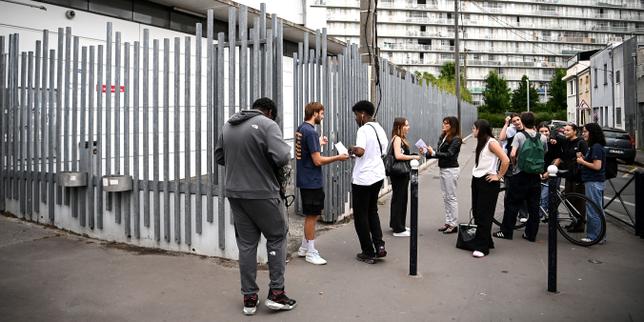
Bac de français : les enseignants face au défi croissant de donner le goût de la lecture et de la littérature aux élèves Alors que les élèves planchent, jeudi, sur lépreuve anticipée de français, des professeurs de lettres déplorent que le formalisme des exercices demandés ainsi que la liste des œuvres classiques étudiées ne favorisent pas lenvie de lire, en crise, au sein de leurs classes.
le monde · 4 months ago

Irish childrens reading and maths got worse after pandemic, study finds Gap between the reading scores of children in Deis versus non-Deis schools widened after pandemic, report says
irish times · 4 months ago
Bac 2026 : plus de 500 000 élèves de première planchent ce jeudi matin sur le français Lépreuve anticipée pourrait être notée plus sévèrement cette année, le ministre de lEducation nationale ayant appelé les correcteurs à plus dexigence sur lorthographe, la syntaxe et la grammaire.
liberation · 4 months ago
Bacalaureat 2026: elevii susțin joi și vineri proba orală la limba străină. Cum se face evaluarea Examenul de Bacalaureat 2026 continuă joi, 11 iunie, cu proba de evaluare a competențelor de comunicare orală într-o limbă de circulație internațională, în cadrul primei sesiuni din acest an. Testarea va avea loc pe parcursul a două zile, urmând să se încheie vineri.
adevarul · 4 months ago
Bacalaureat 2026: Încep probele de competențe într-o limbă de circulație internațională. Cum se desfășoară evaluarea
digi24 · 4 months ago
Die STANDARD Wortsuche vom 11. Juni Montag bis Freitag: Begriffe aus einem aktuellen STANDARD Artikel verbergen sich horizontal, vertikal oder diagonal im Buchstabengitter
der standard · 4 months ago