
France's baccalaurat accommodations surge overwhelms system as EU grapples with disparities
Story Timeline
4 months · 11 summary articles
The number of French high-school students requiring special accommodations for this year’s baccalauréat has surged to 76,400, or 10.5% of terminale candidates, according to figures published on Monday. The exponential rise—driven by requests for extra time, frequent breaks and the use of laptops—has overwhelmed exam organisers and raised questions about whether the measures still match students’ actual needs .
Logistical bottlenecks are already visible. Regional education authorities report delays in delivering adapted exam papers and arranging extra rooms, while some centres have had to hire additional invigilators at short notice. “We are seeing requests for tiered time that are three or four times longer than the original exam duration,” said a senior official at the ministry of education, who asked not to be named. The ministry has earmarked an extra €12 million to cover the costs, but critics argue the system is struggling to keep pace with demand.
In Romania, the first day of the digital-skills assessment for the 2026 Bacalaureat exposed a stark mismatch between infrastructure and training. Although the country boasts faster average broadband speeds than many Western European states, students sat the exam with paper-based instructions because many schools lack functional computers or reliable networks. “We have medieval-era equipment but Silicon Valley expectations,” said education minister Sorin Cîmpeanu. Only 34% of candidates achieved the minimum proficiency level, prompting calls for a national digital-literacy overhaul.
Across the EU, the contrasting experiences highlight divergent approaches to inclusion and technological readiness. In Portugal, the national exams began on Monday under a new grading system championed by the Associação Nacional de Directores de Agrupamentos de Escolas Públicas, which says all 1,200 test centres are ready . Meanwhile, in Greece, the special-subject examinations in English got under way on schedule, with 112,000 candidates sitting papers in 1,050 venues .
Educators warn that without coordinated EU-level standards for both physical accommodations and digital competence, disparities will widen. The European Commission is expected to propose a framework by September, but for the class of 2026 the exams are already in full swing.
Follow us for live European news
- 1
- 1
- 1
- 1
- 1
Articles
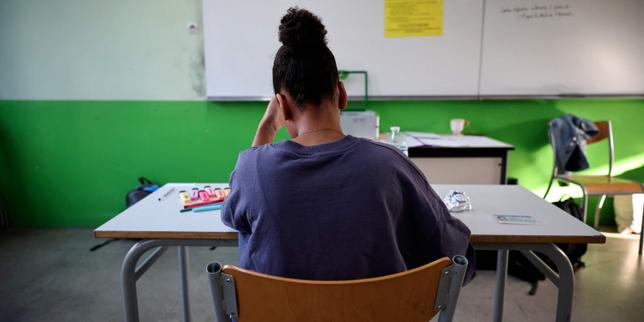
Bac 2026 : tiers-temps, pauses, ordinateur… lexplosion des aménagements dépreuves aux examens Le nombre délèves à besoins particuliers ou en situation de handicap bénéficiant dun aménagement au baccalauréat a crû de manière exponentielle, pour atteindre désormais 76 400 candidats en terminale, soit 10,5 . En plus des problèmes logistiques se pose la question de la pertinence des compensations proposées.
le monde · 3 months ago

More in store for the hardware crunch Times is so hard (disk drive), and its getting even harder
financial times · 3 months ago

4h. Exames nacionais começam com novo método classificação Associação Nacional de Diretores de Agrupamentos de Escolas Públicas diz que está tudo a postos para o início dos exames nacionais. Ainda, Trump afirma que fundo para Irão não faz parte do acordo.
observador · 3 months ago
România, campioană la analfabetism digital: „Avem dotări ca-n Evul Mediu, dar așteptări ca-n Silicon Valley Luni, 15 iunie, a fost dat startul unei noi etape a examenului de Bacalaureat 2026, cea dedicată evaluării competențelor digitale. Cu toate că România beneficiază de o viteză a internetului superioară multor state occidentale, tinerii nu dezvoltă suficiente competențe digitale.
adevarul · 3 months ago
Πανελλαδικές 2026: Ξεκινά σήμερα με τα Αγγλικά η εξέταση των Ειδικών Μαθημάτων, αναλυτικά το πρόγραμμα
protothema · 3 months ago