
SpaceX Falcon 9 rocket part to crash into moon in 2026: NASA to monitor impact site

A part of a SpaceX Falcon 9 rocket is expected to crash into the moon on August 5, 2026. The rocket's upper stage has been orbiting uncontrollably since it was used to launch two lunar landers in January 2025. SpaceX has not commented on the situation, while NASA is monitoring the expected impact site with its Lunar Reconnaissance Orbiter.
The rocket part is the upper stage of the Falcon 9 rocket, which was used to launch the Blue Ghost lander by Firefly Aerospace and the Resilience lander by the Japanese startup ispace on January 15, 2025. Since then, the rocket stage has been in an uncontrolled orbit. Calculations suggest that the impact will occur on August 5, 2026.
NASA's Lunar Reconnaissance Orbiter will fly over the expected impact site before and after the anticipated crash to gather more information about the event. William Cooke, a manager at NASA, stated that it is still unclear whether the impact will be visible from Earth. "I think it will be very, very difficult to see, if not impossible," Cooke said.
This is not the first time that space debris has been expected to crash into the moon. About four years ago, a similar incident occurred when a part of an old Chinese rocket was believed to have hit the moon. However, China denied these reports. There have been several planned impacts on the moon for scientific purposes in the past.
The Blue Ghost and Resilience landers were launched on January 15, 2025, as part of separate missions to the moon. The Blue Ghost lander is developed by Firefly Aerospace, a US-based company, while the Resilience lander is developed by ispace, a Japanese startup. Both landers were designed to conduct scientific experiments and demonstrate new technologies on the lunar surface.
The uncontrolled orbit of the Falcon 9 upper stage highlights the growing issue of space debris and the challenges of managing it. As more countries and companies launch missions to space, the amount of debris in orbit is increasing, posing risks to both operational spacecraft and celestial bodies like the moon.
NASA's Lunar Reconnaissance Orbiter has been in orbit around the moon since 2009, providing valuable data about the lunar surface and environment. The orbiter's observations of the expected impact site could provide insights into the effects of space debris on the moon and help inform future missions and policies.
While the impact of the Falcon 9 upper stage is not expected to have significant consequences for the moon or ongoing lunar missions, it serves as a reminder of the importance of responsible space exploration and debris management. As the space industry continues to grow, addressing the issue of space debris will be crucial to ensuring the sustainability of space activities.
In the meantime, scientists and space enthusiasts around the world will be watching the skies on August 5, 2026, to see if the impact of the SpaceX rocket part on the moon can be observed from Earth. However, according to NASA's William Cooke, the event may be very difficult, if not impossible, to see with the naked eye.
The expected impact of the SpaceX rocket part on the moon is a unique opportunity for scientists to study the effects of space debris on the lunar surface. The data collected by NASA's Lunar Reconnaissance Orbiter before and after the impact could provide valuable insights into the dynamics of such events and their potential implications for future lunar missions.
As the date of the expected impact approaches, space agencies and companies around the world will be closely monitoring the situation and preparing to gather as much data as possible from the event. The information obtained from this incident could help inform future policies and practices for managing space debris and ensuring the safety and sustainability of space exploration.
In conclusion, the expected crash of a SpaceX Falcon 9 rocket part into the moon on August 5, 2026, is a significant event that highlights the challenges and opportunities of space exploration in the 21st century. As scientists and space agencies prepare to observe and study the impact, the event serves as a reminder of the importance of responsible space exploration and the need for international cooperation to address the growing issue of space debris.
Follow us for live European news
- 3
- 2
- 2
- 1
- 1
- 1
4 further sources not geolocated
Articles

A Holdba csapódhat egy SpaceX-hordozórakéta levált része augusztus elején Azt egyelőre nem tudni, hogy a becsapódás látható lesz-e a Földről.
444.hu · about 19 hours ago
Teil von SpaceX-Rakete könnte auf Mond aufschlagen
orf.at · about 20 hours ago
Video footage released by Denis Shtilerman (Fire Point) shows the testing of a solid-fuel rocket. #Russia
mastodon bot · about 20 hours ago
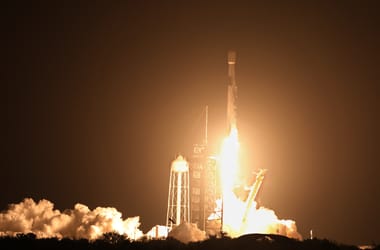
A Holdba csapódhat egy SpaceX-rakéta levált része augusztus elején Egyelőre nem tudni, hogy a becsapódás megfigyelhető lesz-e a Földről.
hvg.hu · about 20 hours ago
Két spanyol utasszállító repülő azonos magasságon repült egymással szemben az Atlanti-óceán felett A gépek fedélzeti ütközéselkerülő rendszere akadályozta meg az esetleges katasztrófát.
444.hu · about 20 hours ago
Cum funcționează Eärendil, oglinda spațială care poate lumina Pământul pe timp de noapte. Lansarea primului satelit a primit undă verde Comisia Federală pentru Comunicații din SUA (FCC) a autorizat compania Reflect Orbital din California să construiască o oglindă spațială uriașă pe care urmează să o lanseze pe orbita terestră. Satelitul experimental Eärendil-1 va fi capabil să reflecte lumina Soarelui asupra unor locații specifice de pe Pământ în timpul nopții, însă proiectul a atras deja multe critici din partea astronomilor și a activiștilor de mediu.
digi24 · about 20 hours ago
Teil von SpaceX-Rakete könnte ungeplant auf Mond aufschlagen Der Aufschlag der Oberstufe der Rakete „Falcon 9 dürfte sich am 5. August ereignen. Das von Elon Musk gegründete Raumfahrtunternehmen schweigt zu den Nasa-Berechnungen bisher.
die presse · about 20 hours ago
Astronomii au detectat în premieră atmosferă pe o planetă asemănătoare cu Pământul Oamenii de ştiinţă au detectat atmosferă pe exoplaneta LHS 1140 b, aflată la 40 de ani-lumină şi descoperită în 2017, informează joi agenţia de presă EFE. Această descoperire reprezintă o etapă esenţială în procesul de căutare a planetelor asemănătoare cu Pământul, aflate dincolo de sistemul nostru solar, care ar putea adăposti viaţă.
digi24 · about 20 hours ago
Fizicienii au creat o gaură neagră din lumină și au testat una dintre cele mai misterioase teorii ale lui Stephen Hawking Oamenii de știință au făcut o descoperire revoluționară privind fizica radiației lui Hawking, creând în laborator o gaură neagră miniaturală din lumină, scrie Live Science. Fizicienii au reușit să obțină cea mai faimoasă strălucire a unei găuri negre dintr-un fir de fibră optică și, pentru prima dată, au observat cum acea lumină reacționează asupra găurii negre simulate care a produs-o.
digi24 · about 20 hours ago
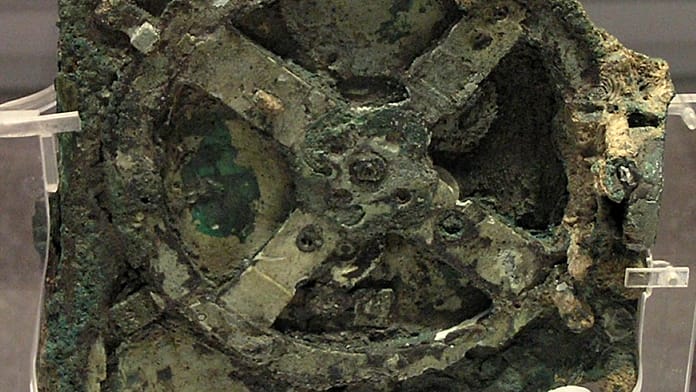
Antikythera mechanism: Greek computer that predicted eclipses 2,000 years ago A shipwreck off the Greek island Antikythera revealed in 1901 a bronze mechanism over 2,000 years old that tracked lunar and solar cycles and eclipses, now seen as the first analogue computer.
euronews · about 20 hours ago
SpaceX shares slide towards IPO price in confidence test SpaceXs slip close to its initial public offering price risks turning a marquee stock-market debut into a confidence test, potentially unsettling retail investors and complicating decisions for other companies weighing high-profile listings. Elon Musks company, spanning rockets to AI, debuted on June 12 and soared in the ensuing days, at one point valuing the company […]
cyprus mail · about 21 hours ago
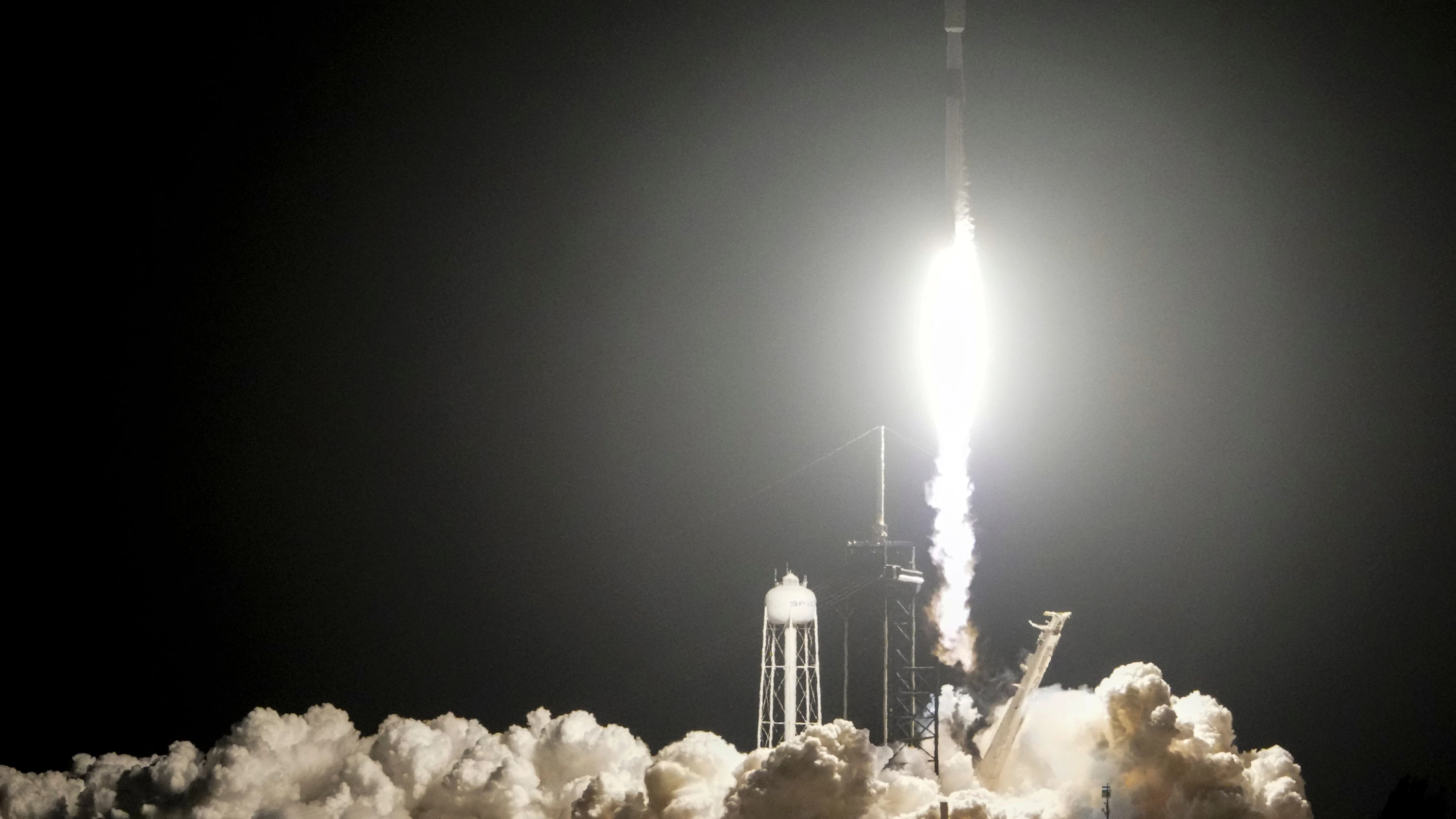
Mögliche Kollision: Teil von SpaceX-Rakete könnte ungeplant auf Mond aufschlagen Vor rund vier Jahren war erstmals eine ungeplante Kollision eines Raketenteils mit dem Mond bekanntgeworden. Im August soll es Wissenschaftlern zufolge einen ähnlichen Vorfall geben.
faz · about 21 hours ago

Indias first privately-developed rocket reaches orbit on dramatic debut launch "On the first attempt, reaching orbit, I never thought it was possible."
ars technica · about 21 hours ago
TÄNA AJALOOS ⟩ Üks väike samm inimesele, tohutu hüpe inimkonnale 1969 – Kuu pinnale laskusid esimesed inimesed, USA astronaudid Neil Armstrong ja Edwin Aldrin.
postimees · about 21 hours ago
Weltraum-Schrott: Teil von SpaceX-Rakete könnte ungeplant auf Mond aufschlagen Vor rund vier Jahren war erstmals eine ungeplante Kollision eines Raketenteils mit dem Mond bekanntgeworden. Im August soll es Wissenschaftlern zufolge einen ähnlichen Vorfall geben.
tagesspiegel · about 22 hours ago

SpaceX moves Starship launch attempt to Thursday reut.rs/4vA7ZWf
bluesky_Reuters · about 23 hours ago

Pentagon und SpaceX verhandeln über die Nutzung von Rechenzentrums-Kapazitäten Mit der Rechenleistung will das US-Verteidigungsministerium KI-Anwendungen betrieben
der standard · 1 day ago
NASA tulevased Kuu-baasid võtavad kuju: lepingud on juba sõlmitud NASA eraldab ligi 600 miljonit dollarit neljaks uueks Kuu-missiooniks, mis sillutavad teed inimeste püsivale kohalolekule ja tulevastele Marsi-lendudele. Koostöös erapartneritega viiakse Kuule teadusinstrumendid, et uurida sealset kiirgust, kaardistada ohtlikku pinnatolmu ja luua lasernavigatsiooni võrgustik.
postimees · 1 day ago