Loading…
 Sunday, August 30Sunday, August 30
3 months · 12 summary articles
Federal Chancellor Friedrich Merz (CDU) convened the E5 leaders in Berlin on Thursday for a high-stakes summit that immediately exposed deep rifts over Europe’s future, while the German capital’s police force warned it is stretched to breaking point by escalating protection duties linked to international tensions. The two parallel crises dominated the agenda as Merz sought to position Germany as the continent’s indispensable mediator, but the simultaneous collapse of public order capacity in Berlin underscored the fragility of his ambitions.
At the E5 gathering, Merz faced pointed questions over whether Germany can still unite a fractured Europe amid the Ukraine war and rising protectionism. The Chancellor’s invitation to Paris, Rome, Warsaw, Madrid and Berlin was intended to reassert Berlin’s leadership, yet reporting from the summit suggests the bloc remains deeply divided on energy security, defence spending and migration. “Who leads here?” asked *Die Zeit*, highlighting the absence of consensus even as Merz pushes for a common European front.
Meanwhile, the Berlin police issued a stark warning that their resources are “at the limit” after a surge in protection orders for politicians, embassies and critical infrastructure. Officers are being routinely diverted from routine patrols to high-risk assignments, including threats linked to international conflicts, while the force grapples with staff shortages and rising public disorder. “More and more colleagues are being pulled off the streets for protection details,” a Berlin police spokesperson told *Tagesspiegel*, adding that the force is now operating with “reduced operational readiness.”
The dual pressures come as Merz also hosted Germany’s 16 state premiers in Berlin to address the country’s worsening fiscal crisis. Municipalities and Länder have intensified calls for immediate financial relief, arguing that chronic underfunding is crippling local services and deepening regional inequality. “The chorus of demands for relief is now louder than ever,” reported *Tagesspiegel*, while *Handelsblatt* noted that the meeting was intended to break a deadlock over revenue-sharing and infrastructure investment.
Political observers suggest Merz’s dual role—navigating Europe’s fractures while managing Germany’s domestic unravelling—has left him vulnerable to criticism from within his own party. *Welt* reported that CDU rivals are already positioning themselves for a post-Merz era, though the Chancellor retains significant institutional backing. Analysts also warn that Merz’s hardline stance on migration and fiscal discipline may be inadvertently fuelling the rise of the far-right AfD, with Belgian outlet *De Morgen* arguing that his strategy is “making the AfD only bigger.”
As the E5 summit adjourns and the Länder meeting continues behind closed doors, the twin crises of governance and security are testing Merz’s leadership like never before. With Berlin’s streets patrolled by officers stretched thin and Europe’s leaders still at odds over the continent’s direction, the Chancellor’s claim to a steady hand looks increasingly precarious.
Follow us for live European news
1 further source not geolocated

Polizei: Mehr Schutzaufträge: Berliner Polizei am Limit Schusswaffen, Erpressung, Gefahren durch internationale Konflikte. Immer mehr Berliner Polizisten werden für Schutzaufträge abgezogen. Gibt es Alternativen?
tagesspiegel · 2 months ago
Treffen in Berlin: Merz und Länderchefs diskutieren über Finanzen Kommunen und Länder rufen laut nach Entlastung. Wird es nun bei dem Treffen in Berlin Fortschritte geben? Auch andere Themen stehen auf der Agenda.
handelsblatt · 2 months ago
E5-Treffen: E5 Treffen in Berlin: Kann Deutschland Europa zusammenbringen? Bundeskanzler Friedrich Merz (CDU) hat die E5 nach Berlin eingeladen. Wer führt hier Europa? Und: »gefühlte Temperatur« und Hitzestress
die zeit · 2 months ago

US-Magazin kürt die besten Länder der Welt – und setzt Deutschland auf Platz 4 Krisenstimmung in Deutschland – und trotzdem Weltklasse? Bei dem Ranking eines bekannten US-Magazins landet die Bundesrepublik bei den Top-Plätzen. Was die Studie verrät – und wer ganz oben steht.
welt.de · 2 months ago

Merz hat fertig? Da könnten sich einige täuschen Viele Journalisten denken, Friedrich Merz hat fertig. Immer mehr Konkurrenten in der Union wetzen die Klingen. Trotzdem darf man den Bundeskanzler nicht abschreiben. Denn er hat einen Grund, tiefenentspannt zu bleiben.
welt.de · 2 months ago

Hong Kong arrests booksellers suspected of selling seditious publications reut.rs/43QPu4D
bluesky bot · 2 months ago

3 IYSSE representatives elected to Berlin Humboldt University student parliament
gdelt bot · 2 months ago
Treffen in Berlin: Merz und Länderchefs diskutieren über Finanzen Kommunen und Länder rufen laut nach Entlastung. Wird es nun bei dem Treffen in Berlin Fortschritte geben? Auch andere Themen stehen auf der Agenda.
tagesspiegel · 2 months ago
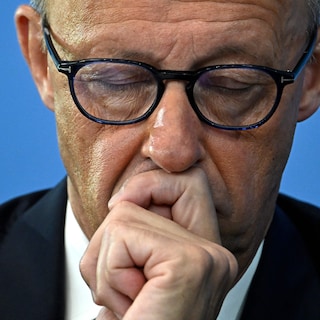
We zien een langzame, gevaarlijke verschuiving: de strategie van Friedrich Merz maakt de AfD alleen maar groter
de morgen · 2 months ago
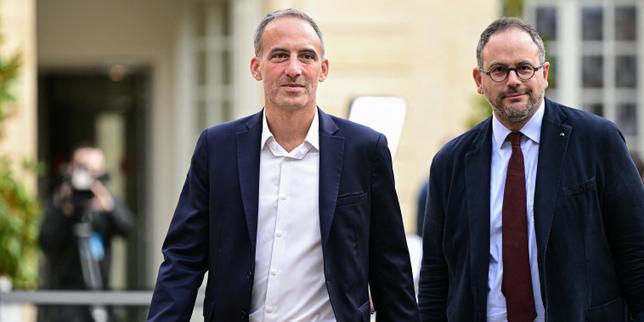
Aurélien Rousseau quitte la campagne de Raphaël Glucksmann Le député des Yvelines sort de léquipe du fondateur de Place publique, pour des raisons personnelles. Il nest, à ce stade, pas remplacé à ce poste.
le monde · 2 months ago