Loading…
 Saturday, September 26Saturday, September 26
4 months · 25 summary articles
Brussels, 19 June 2026 – The European Union is grappling with internal divisions over who should represent the bloc in potential negotiations with Russian President Vladimir Putin, as Ukrainian President Volodymyr Zelenskyy urges accelerated EU membership for his country.
At the EU summit in Brussels on Friday, Zelenskyy met with European Council President Antonio Costa and European Commission President Ursula von der Leyen. He pushed for the opening of the five remaining negotiating clusters on Ukraine's accession to the EU and requested the first tranche of EU financial support for defense .
The EU's response to Zelenskyy's requests was mixed. While the bloc reaffirmed its "firm and unwavering support" for Ukraine and called for a full, unconditional ceasefire from Moscow, internal disagreements surfaced over the path forward .
Hungarian Prime Minister Péter Magyar, attending his first EU summit since his election, managed to slow down the process of Ukraine's integration into the EU. In exchange for his support on a common declaration of EU support for Ukraine, Magyar secured a slowdown in Ukraine's accession process .
Meanwhile, a power struggle is unfolding within the EU over who should represent the bloc in negotiations with Putin. EU Council President Charles Michel has been reaching out to Moscow, but has faced pushback from German Chancellor Olaf Scholz and French President Emmanuel Macron. Not all 27 EU members are pleased with Michel's approach .
The division within the EU was further highlighted by Czech Prime Minister Andrej Babis, who proposed a negotiation format involving Germany and France to end the war in Ukraine. Babis argued that Zelenskyy cannot negotiate without Europe, which is funding the war effort .
Russian Foreign Minister Sergey Lavrov, in an article published on Friday, discussed Ukraine, Europe, and global security, likely outlining Russia's position on the ongoing conflict and its relations with the EU .
The EU's internal divisions come at a critical time, as Ukraine appears to be turning the tide of the war in its favor. French President Emmanuel Macron noted during the G7 summit in Evian that the remobilization of the Western camp has brought Kyiv back to the top of the diplomatic agenda .
Despite the EU's call for a ceasefire and its support for Ukraine, the bloc remains divided on how to engage with Moscow. The lack of a unified approach raises questions about the EU's ability to effectively mediate in the conflict and represent Europe's interests on the global stage.
As the EU summit continues, the bloc's leaders must navigate these internal divisions and determine a cohesive strategy for supporting Ukraine and engaging with Russia. The outcome of these discussions will have significant implications for the future of Europe's security and the resolution of the ongoing conflict in Ukraine.
Follow us for live European news
3 further sources not geolocated

Ukraine-Krieg: EU gespalten: Wer soll mit Putin reden? Der EU-Ratspräsident streckt die Fühler nach Moskau aus - und wird von Merz und Macron zurückgepfiffen. Das kommt nicht bei allen 27 Mitgliedern gut an. Wer soll nun die Stimme Europas sein?
handelsblatt · 3 months ago
Lovitură pentru Kiev la summitul UE: Peter Magyar a intervenit în ultimul moment și a eliminat o mențiune privind aderarea Ucrainei La iniţiativa prim-ministrului ungar Peter Magyar, o referire la accelerarea aderării Ucrainei la UE a fost eliminată în ultimul moment din documentul final al summitului şefilor de stat şi de guvern ai Uniunii, a afirmat şeful executivului de la Budapesta într-o postare pe Facebook joi seară, a consemnat MTI.
digi24 · 3 months ago
Câți ucraineni și moldoveni vor ca țările lor să adere la UE. Rezultatele celui mai recent sondaj publicat de Comisia Europeană Un procent de 65 dintre ucraineni şi de 58 dintre cetăţenii moldoveni sprijină aderarea ţărilor lor la Uniunea Europeană (UE), potrivit unui sondaj publicat vineri de Comisia Europeană, în urma deschiderii oficiale, luni, a primului bloc tematic (cluster) cu ambele ţări.
digi24 · 3 months ago
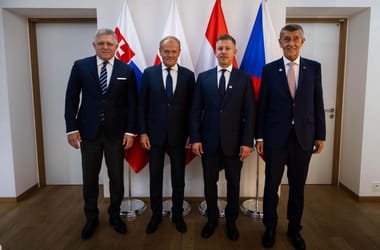
Politico-elemzés: Ki lehet Orbán után az új kerékkötő az EU-ban? Négy frissen kinevezett miniszterelnök csatlakozott az EU vezetőinek asztalához, ennek várható következményeit vette sorra a lap EU-szakírója.
hvg.hu · 3 months ago
Macrons Evian summit shows the limits Trump places on the G7 Macrons Evian summit shows the limits Trump places on the G7 Expert comment jon.wallace 19 June 2026 France achieved as much as could have been expected at its G7 Summit, but this was well short of what the world needs. A new approach is needed. French President Emmanuel Macron appears to have had two goals for Frances Evian G7 summit which concluded on 17 June. First, to facilitate a constructive dialogue between President Donald Trump and the G7s other members (or G6) on a limited number of issues. And second, to strengthen cooperation between the G7 as a whole and leading emerging economies. In the event, he achieved both these goals. In contrast to last years Kananaskis Summit, Trump did not leave early. There were no public spats of the kind that marred the 2018 Canadian G7 summit. And the guest countries attending – Brazil, Egypt, India, Kenya and the Republic of Korea – took part in at least half the sessions, explicitly endorsing some of the policy statements. But Evian also shows the limits of what can be achieved at the G7 with President Trump in the US chair. A new format is urgently needed to address pressing global challenges. Main outcomesArguably Frances biggest success was that Trump joined the opening session with Ukraines President Volodymyr Zelenskyy. Trump signed up to a statement which reaffirmed the G7s unwavering support for Ukraine, committed to increase the supply of air defence systems, and promised to strengthen sanctions against Russia, including on its oil and gas sector.The G6 supported Trumps agreement to end its war with Iran, despite the memorandum of understandings vagueness and critical unresolved issues. And they avoided repeating their criticism of the decision to launch the war. In return the US gave a qualified endorsement of a UK–France naval initiative designed to assist a resumption of maritime traffic in the Strait of Hormuz. The summit also produced statements on several French economic priorities, although these were often constrained by US America first positions. A summit declaration recognized the risk from growing macroeconomic imbalances, a key factor underpinning the global financial crisis of 2007-9. However, no specific offer was made to try and persuade China, the other essential player, to help address these imbalances. Nor did G7 countries make their own domestic policy proposals to help address the problem – a particular issue for the US, with respect to its burgeoning fiscal deficit. There was only a bland statement that countries with large and persistent external deficits should undertake policies that include supporting domestic savings and fiscal consolidation and a commitment to continue discussions in the G20. Since President Trump started his second term…many of the most important issues facing the world economy are excluded from the groups agenda. Another declaration promoted collective approaches by the G7 and its allies in responding to Chinas dominance of critical minerals supply. This contrasted with the strongly bilateral approach that characterized a US-hosted critical minerals ministerial in February. The G7 statement set out high level goals on industrial cooperation, market structure, transparency, stockpiling and recycling. It also announced a non-binding G7 Minerals Resilience and Production Alliance. A statement on creating a safe digital space for children and youth focused, for the most part, on calls for the digital technology industry to take (essentially voluntary) action to protect young people from online harms. G7 leaders also requested that finance ministers and central bank governors further discuss emerging opportunities and potential risks arising from artificial intelligence, including in the financial sector. But the urgent need for stronger public guardrails on AI development generally – and the desire of many countries to establish sovereignty over the way digital products developed by the US and China are used in their jurisdictions – were not addressed. The apparent support of the CEOs of Open AI, Anthropic and Google DeepMind for enhanced G7 cooperation and equitable access to AI products would, however, have been welcome to the G6 and partner countries. A further statement reiterated the importance of development finance while calling for reform of the way it is delivered. How did France do it?To deliver these outcomes France refined the approach adopted by Canadian Prime Minister Mark Carney for the Kananaskis G7 Summit in 2025. To try and ensure President Trumps attendance, President Macron moved the summit date – avoiding a clash with the presidents birthday celebrations on 14 June. The agenda was structured to avoid all subjects where the US would not engage or where its position was likely to be unacceptable to G6 countries – such as climate change, the future of the world trading system, maintaining monetary and financial stability and the need for broad-based digital technology governance. And France invited Kenya to the summit rather than South Africa, after Trump threatened to boycott the summit if South Africa attended. Related work Saving global economic governance from the Trump shock France was also helped by the timing of the US ceasefire agreement with Iran. Trumps poor domestic poll ratings, the approaching midterm elections, and the Supreme Courts restrictions on his ability to deploy tariff hikes at will may also have contributed to the US presidents relatively constructive approach to the summit. Meanwhile France deepened the involvement of guest, or partner, countries. They were invited to send representatives to preparatory sherpa meetings. And the summit outcomes were structured around nine declarations, allowing partners to choose which to back. In the event, all partners endorsed the statement on creating a safe digital space for young people, while support for the other G7 statements varied. The limits of todays G7France achieved as much as might reasonably have been expected from this summit. But the flaws in the G7 format with President Trump representing the US were again highlighted in Evian. That weakness is not about the reduced size of the G7 economies relative to the world economy – the group is still large enough in economic terms and has the technological and financial capabilities to be highly influential. But it can only wield its influence if members share core values, trust each other sufficiently and there are no policy areas which are barred from discussion. None of these conditions have held since President Trump started his second term. As a result, many of the most important issues facing the world economy today are excluded from the groups agenda.
chatham house · 3 months ago
Europes AI labelling rules arrive With a voluntary code and a hard deadline. Covered unlabelled deepfakes and AI-generated public-interest content are about to become a compliance risk in Europe. The European Commission published the final Code of Practice on marking and labelling of AI-generated content on June 10, a voluntary playbook arriving roughly seven weeks before the AI Acts transparency […] Europes AI labelling rules arrive was originally published on Emerging Europe.
emerging europe · 3 months ago
Președintele Nicușor Dan de la Consiliul Europei: România vrea mai mulți bani pentru agricultură și coeziune în viitorul buget al UE Președintele Nicușor Dan a transmis vineri, 19 iunie, că la Consiliul European s-au discutat despre Ucraina, Orientul Mijlociu și viitorul buget al Uniunii Europene după 2028, iar România a urmărit câteva obiective importante.
adevarul · 3 months ago
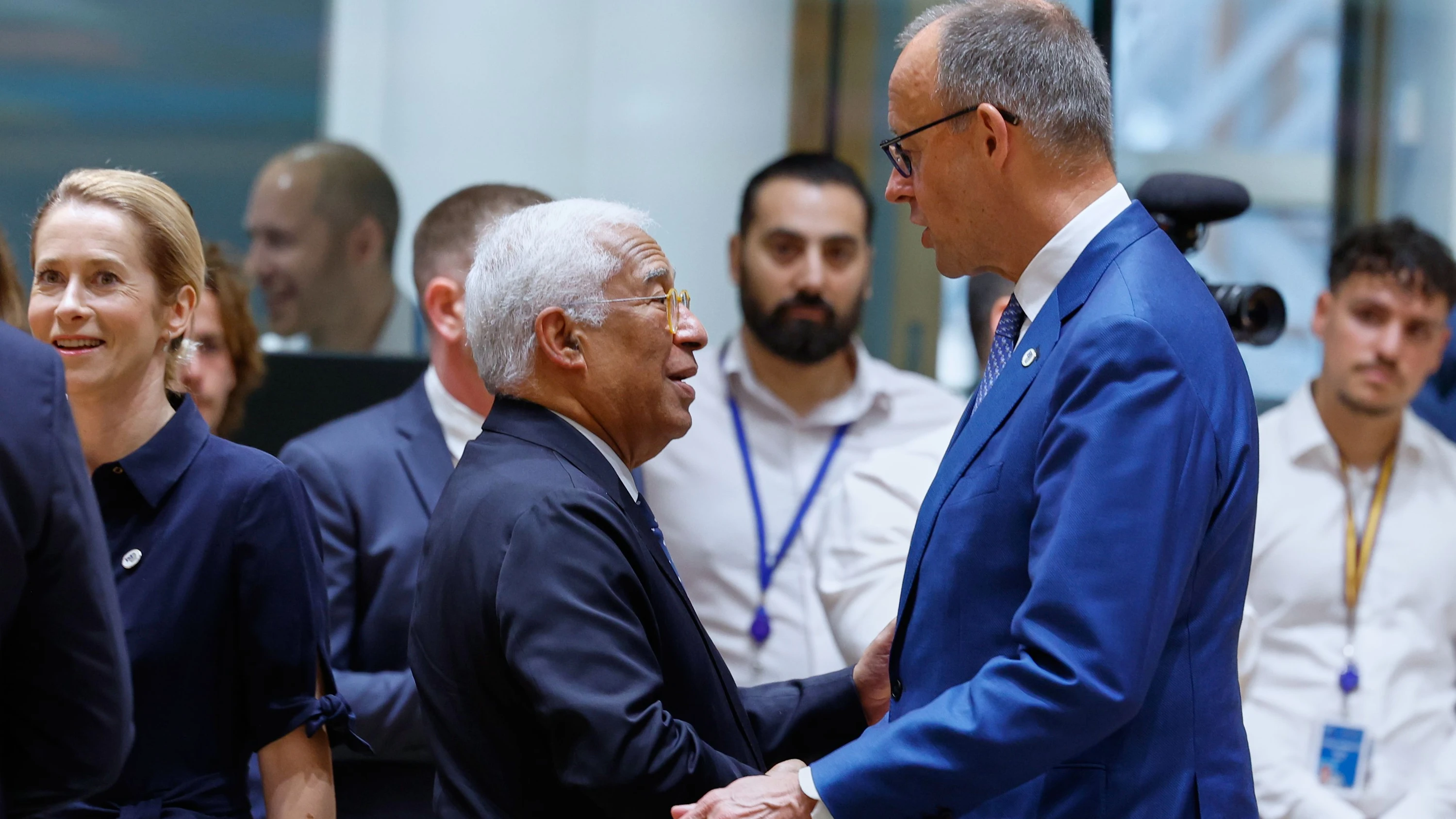
Costa gegen Merz: Ein heftiger Russland-Krach in der EU Im Europäischen Rat hat es gekracht. Es geht um die Frage, wer sich um Russland-Diplomatie bemühen soll. Costa will es sein. Merz, Macron und Starmer aber auch.
faz · 3 months ago
EU-Haushalt: „Die Zahlen müssen runter Beim Gipfel in Brüssel streiten die Staats- und Regierungschefs erstmals über die Höhe des künftigen EU-Budgets. Als Hauptfigur im ersten Akt des Dramas tritt ein unzufriedener Friedrich Merz auf.
sueddeutsche · 3 months ago
Dutch researchers tested AI lie detection for EU border checks despite scientific doubts Dutch researchers and a European Union-funded consortium tested AI-based systems for detecting deception at border controls, even as scientists and EU lawmakers warned that lie detection has no rel
nltimes.nl · 3 months ago
Zelenskiy: best guarantee of Europes future is fast-track EU membership for Ukraine
gdeltproject.org · 3 months ago
Ukraine should become a full member of the European Defence Union, says EU Commissioner Kubilius
gdeltproject.org · 3 months ago
European Council conclusions on Ukraine and on European defence and security
gdeltproject.org · 3 months ago

German Chancellor Friedrich Merz said Ukraine alone decides who stands with it and negotiates on its behalf. He said the EU is not a neutral mediator but a party supporting Ukraine, while a country at war cannot join the EU as a full member immediately. #Ukraine
mastodon bot · 3 months ago
Russia will not achieve its aggressive objectives, and Ukraine will be a free, democratic country within EU - Braze - The Baltic Times RIGA - Russia will not achieve its aggressive goals, and Ukraine will be a free, democratic country within the European Union (EU), emphasized F......
baltic times · 3 months ago
Macron: Trump thought Ukraine was losing but changed his mind after G7 summit French President Emmanuel Macron has spoken about a shift in the position of his US counterpart Donald Trump regarding Russias war against Ukraine following the G7 summit.
ukrpravda · 3 months ago
Zelenskyy speaks with Hungarian PM Magyar at EU summit Ukrainian President Volodymyr Zelenskyy and Hungarian Prime Minister Péter Magyar spoke briefly at the EU summit. They discussed the opening of new clusters for Ukraine.
ukrpravda · 3 months ago
Macron and Merz criticise European Council presidents attempts to engage with Russia – Politico Politico has reported that French President Emmanuel Macron and German Chancellor Friedrich Merz criticised European Council President António Costa at a closed-door meeting of EU leaders over his contact with the Kremlin.
ukrpravda · 3 months ago
Propunere de negocieri între UE și Rusia. „Zelenski nu poate negocia fără Europa, care plătește totul Prim-ministrul ceh, populistul de dreapta Andrej Babis, şi-a exprimat vineri, la Bruxelles, regretul faţă de indecizia UE de a stabili un format de negocieri cu Rusia pentru a pune capăt războiului din Ucraina şi a propus în acest scop aşa-numitul „format Normandia, din care să facă parte Germania şi Franţa, relatează EFE, preluată de Agerpres. …
hotnews.ro · 3 months ago
LIVE: Nicușor Dan face acum declarații de la Bruxelles: „Guvernul nu trebuia să cadă / Despre Veștea: Cu informațiile pe care le-am avut, asta este propunerea mea Președintele Nicușor Dan susține declarații de presă, vineri, la finalul reuniunii Consiliului European de la Bruxelles, unde cu o zi în urmă le-a cerut „răbdare jurnaliștilor români care l-au întrebat despre criza politică din țară și desemnarea lui Adrian Veștea premier: „Lăsați-mă să mă întorc în țară ca să înțeleg și eu care sunt realitățile. HotNews …
hotnews.ro · 3 months ago

Kanäle nach Moskau? Die riskante Mission des António Costa António Costa ließ sein Büro Kontakt zum Kreml aufnehmen – und sorgte damit für Empörung beim EU-Gipfel. Dabei ist der Vorstoß des EU-Ratspräsidenten sinnvoll. Er hat allerdings eine riskante Strategie gewählt.
welt.de · 3 months ago
Peinlicher Streit beim EU-Gipfel: Wer soll für Europa mit Putin reden? Derzeit niemand! Zu viele würden gerne einen Frieden in der Ukraine vermitteln. Nur: Worüber wollen sie eigentlich verhandeln mit einem Kremlchef, der gar keine Kompromisse will und jedes Abkommen bricht?
tagesspiegel · 3 months ago
Zelenskyy meets EU leaders at Brussels summit President Volodymyr Zelenskyy held talks with European Council President Antonio Costa and Commission President Ursula von der Leyen at the EU summit in Brussels. He urged the opening of five remaining negotiating clusters and requested the first tranche of EU financial support for defense.
yenisafak · 3 months ago
Putin holds talks with Thai, Singaporean leaders in Kazan Russian President Vladimir Putin held separate talks with Thai Prime Minister Anutin Charnvirakul and Singaporean Prime Minister Lawrence Wong during the ASEAN-Russia summit in Kazan, focusing on expanding trade and energy cooperation while addressing regional security concerns and tourism ties.
yenisafak · 3 months ago
EU leaders urge decisively ramped up defense by 2030 European Union leaders concluded a Brussels summit on Thursday with a call to accelerate defense preparedness "decisively ramped up" by 2030, condemning a recent Russian drone strike in Romania and urging member states to close critical capability gaps while maintaining NATO as the bedrock of continental security.
yenisafak · 3 months ago
EU demands Russian ceasefire, vows unwavering Ukraine support European Union leaders on Thursday reaffirmed their "firm and unwavering support" for Ukraine and pressed Moscow to accept a full, unconditional ceasefire, warning that the path to peace cannot be decided without Kyiv and that borders must not be changed by force.
yenisafak · 3 months ago

Megvédte a magyar érdekeket? Első EU-csúcsa után értékel Magyar Péter - élő Tizenhat év után vette át a stafétabotot az Európai Tanácsban Magyar Péter. A miniszterelnök az állam- és kormányfők ülése előtt azt ígérte: vitákat is vállalva áll ki a magyar érdekek mellett. De vajon mindent elért, amit szeretett volna? Hogyan értékeli a kétnapos találkozó lezárta után a tanácskozást? Kövesse velünk Magyar Péter brüsszeli sajtótájékoztatóját.
hvg.hu · 3 months ago
With EU budget battle underway, Commission proposes to increase own resources EU leaders are meeting in Brussels to talk about the blocs next seven-year budget, set to go on for the next six months. The European Commission proposed last July a two-trillion-euro seven-year spending plan for the 27-country bloc -- which so-called frugal countries immediately made clear was too high. In the opposing camp, France, long a supporter of common debt, is pushing for ambitious spending as the bloc strives for independence in the technology and defence fields. In the middle, the Commission suggests to develop its own resources. FRANCE 24s Dave Keating tells us more.
france24 · 3 months ago
Lithuanias president: the EU is not enough to bring Putin to the table Lithuanian President Gitanas Nausėda has said Vladimir Putin only respects those capable of showing force and does not regard the European Union as a serious threat, casting doubt on the prospects for meaningful EU-led negotiations with Moscow.
lrt · 3 months ago
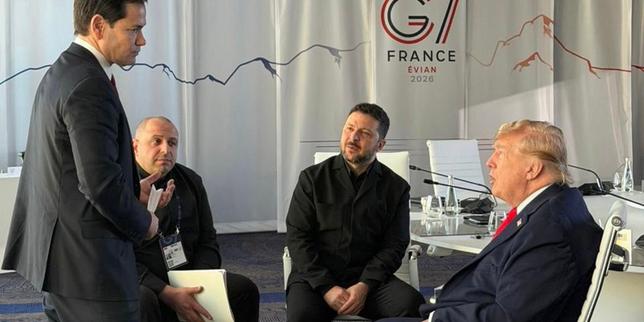
Ukraine turns the tide of war in its favor The remobilization of the Western camp, as French president Emmanuel Macron put it during the G7 summit in Evian, brings Kyiv back to the top of the diplomatic agenda.
le monde · 3 months ago