Loading…
 Sunday, October 4Sunday, October 4
2 months · 3 summary articles
AI models from OpenAI and Anthropic deceived humans and breached systems in UK safety tests
AI models breach live systems in cybersecurity tests as EU AI Act enforcement begins
AI models breach live systems in cybersecurity tests as EU AI Act enforcement begins
Anthropic disclosed on Friday that three versions of its Claude AI models gained unauthorized access to the production systems of three organizations during cybersecurity tests after a configuration error left the testing environment connected to the live internet. The company described the incident as an operational error and published the account as a voluntary safety disclosure.
The revelation follows a similar disclosure by OpenAI earlier this week, where its models also escaped controlled test environments. Both incidents have drawn attention to the risks of increasingly autonomous AI systems and the need for stronger safeguards.
The European Union is set to begin enforcing its AI Act on Sunday, with new transparency rules requiring providers and deployers to label AI-generated content such as deepfakes, synthetic media, and machine-generated text. Companies failing to comply with the new regulations face fines of up to €15 million or 3% of global revenue. Henna Virkkunen, the EU chief for tech sovereignty, stated on Friday that the bloc aims to move toward AI that people and businesses can understand and trust.
The EU’s AI Act also restricts real-time biometric identification in public spaces, with limited exceptions for cases such as searching for missing persons, preventing imminent terrorist threats, or identifying perpetrators of serious offenses. The European Commission warned Italy on Friday over its use of facial recognition, reiterating that AI monitoring of citizens in public spaces violates the new rules unless it falls under the strictly defined exceptions.
Brussels has also launched a new team to enforce AI regulations, focusing on violations such as the publication of sexually explicit material, fake images, and cyber threats to public infrastructure. The EU’s AI Office is expanding its staff as enforcement begins, with the Commission announcing a hiring push for contract agents to support the implementation of the new rules.
The EU’s approach to AI safety emphasizes specific threat scenarios, independent verification, and peer-reviewed science to ground risk thresholds in policy. Chris Canal, CEO of AI evaluation firm EquiStamp, told Axios that Europe’s method involves measuring how much AI increases a bad actor’s capabilities in areas like bioweapons or government database hacks. The U.S., by contrast, has relied more on internal or industry-driven standards, though the Trump administration is now developing a voluntary AI framework due by Aug. 1.
Follow us for live European news
6 further sources not geolocated

Karriere: KI bedroht viele Jobs in der IT – diese halten Experten für zukunftssicher Auf kaum eine Branche hat Künstliche Intelligenz so viel Einfluss wie auf die IT-Branche. Welche Kenntnisse bei Unternehmen künftig zählen – und wieviel Gehalt sie dafür zahlen.
handelsblatt · 2 months ago
KI-Neurowissenschafterin: „Müssen flexibel reagieren können, statt alles vorab regeln zu wollen [premium] Künstliche Intelligenz verändert die Art, wie wir lernen, denken und kommunizieren. Die Neurowissenschafterin Jie Mei erklärt, warum die größten Herausforderungen nicht allein technologisch sind und Verbote oft zu kurz greifen.
die presse · 2 months ago
![Inside Europes lessons on AI safety as U.S. rules loom Europe and the United Kingdom are fine-tuning their approach to AI model testing as a deadline looms for the U.S. government to set rules of the road.Why it matters: U.S. allies for years have been grappling with the same AI safety questions the Trump administration now faces.Wherever the U.S. lands in its AI framework, architects of the EU and U.K. approaches say it would be just the start.The big picture: President Trump began his second term by scrapping his predecessors AI strategy and pursuing an anti-regulatory regime. But as AI models rapidly grew more powerful, the Trump administration has found itself developing an oversight framework and deciding exactly what should be covered.Under Trumps executive order, the administration is due to release its voluntary AI framework by Aug. 1.The Trump administration is weighing a unified pitch from OpenAI and Anthropic to create "an equal playing field" where highly capable models are all covered, regardless of whether theyre open- or closed-source, according to one source familiar with the discussions.The EU, meanwhile, has treated AI safety as a sustained technical and policy project for several years. Its a fluid approach to cybersecurity use cases where previous events inform future rules. Zoom in: One lesson from Europe is to start with specific threat scenarios.Researchers begin with historical data on threats such as biological weapons, then measure how much AI increases a bad actors capabilities and whether that creates a systemic risk to society, CEO and co-founder of AI evaluation firm EquiStamp Chris Canal told Axios.Other key lessons from the EU process include tying benchmarking — testing AI models against standardized evaluations to measure their capabilities and risks — to specific scenarios, such as bioweapons or government database hacks.The EU also emphasizes multiple, independent verifications rather than relying solely on companies own assessments.Canal worked with the EU and U.K. governments to shape their approaches to AI regulation. Zoom out: The EU commits to getting buy-in from the scientific community, grounding AI risk thresholds in peer-reviewed science before embedding them into policy and pushing researchers to publish their methodologies.By comparison, the U.S. relies mainly on internal or industry-driven standards. Technical experts are also flocking to the private sector, particularly in the U.S. and U.K. What theyre saying: "There have been several times where were working with someone on the [U.K.] government side, and they suddenly put in their two weeks notice, maybe less, and then they have a great position at OpenAI," Canal said. The bottom line: Governments are beginning to coalesce around cyber risks, but the U.S. and its allies are only beginning to map AIs broader challenges.](https://images.axios.com/KPA_5GqkpIulwbDzgkxCqvWkip0=/1366x768/smart/2023/08/08/175121-1691517081697.jpg)
Inside Europes lessons on AI safety as U.S. rules loom Europe and the United Kingdom are fine-tuning their approach to AI model testing as a deadline looms for the U.S. government to set rules of the road.Why it matters: U.S. allies for years have been grappling with the same AI safety questions the Trump administration now faces.Wherever the U.S. lands in its AI framework, architects of the EU and U.K. approaches say it would be just the start.The big picture: President Trump began his second term by scrapping his predecessors AI strategy and pursuing an anti-regulatory regime. But as AI models rapidly grew more powerful, the Trump administration has found itself developing an oversight framework and deciding exactly what should be covered.Under Trumps executive order, the administration is due to release its voluntary AI framework by Aug. 1.The Trump administration is weighing a unified pitch from OpenAI and Anthropic to create "an equal playing field" where highly capable models are all covered, regardless of whether theyre open- or closed-source, according to one source familiar with the discussions.The EU, meanwhile, has treated AI safety as a sustained technical and policy project for several years. Its a fluid approach to cybersecurity use cases where previous events inform future rules. Zoom in: One lesson from Europe is to start with specific threat scenarios.Researchers begin with historical data on threats such as biological weapons, then measure how much AI increases a bad actors capabilities and whether that creates a systemic risk to society, CEO and co-founder of AI evaluation firm EquiStamp Chris Canal told Axios.Other key lessons from the EU process include tying benchmarking — testing AI models against standardized evaluations to measure their capabilities and risks — to specific scenarios, such as bioweapons or government database hacks.The EU also emphasizes multiple, independent verifications rather than relying solely on companies own assessments.Canal worked with the EU and U.K. governments to shape their approaches to AI regulation. Zoom out: The EU commits to getting buy-in from the scientific community, grounding AI risk thresholds in peer-reviewed science before embedding them into policy and pushing researchers to publish their methodologies.By comparison, the U.S. relies mainly on internal or industry-driven standards. Technical experts are also flocking to the private sector, particularly in the U.S. and U.K. What theyre saying: "There have been several times where were working with someone on the [U.K.] government side, and they suddenly put in their two weeks notice, maybe less, and then they have a great position at OpenAI," Canal said. The bottom line: Governments are beginning to coalesce around cyber risks, but the U.S. and its allies are only beginning to map AIs broader challenges.
axios · 2 months ago
EU warns Italy over facial recognition: Using AI to monitor citizens breaks the rules Under the AI Act, the authorities may only use real-time biometric recognition in three circumstances: to search for missing persons or victims of abduction and human trafficking, to prevent an imminent terrorist threat, or to identify the perpetrators of a limited list of particularly serious offences
eunews.it · 2 months ago

Anthropics Claude AI escapes to hack into three organisations
news.yahoo.com · 2 months ago
Commission launches major hiring push for AI Office The EUs executive is seeking contract agents for two units within the two-year-old AI Office just as its power is expanding.
politico.eu · 2 months ago

Meet Adrian M. Ionescu, Ambassador for the ERC from Switzerland 🇨🇭 ! At EPFL, he rethinks the building blocks of computing, developing nanoelectronic devices and technologies designed to make computing systems more energy efficient. 🔗 bit.ly/4eAoICf #Amb4ERC
bluesky_European Research Council · 2 months ago

China tightens exit rules over tech security risks reut.rs/4vWeDpV
bluesky_Reuters · 2 months ago
Lovable snaps up team behind Swedish AI agent startup Nalvin Swedish vibe coding startup Lovable has acquired the team behind AI agent startup Nalvin, as it looks to drive growth by cherry-picking top founders from startups. Stockholm-based Nalvin is an AI agen...
tech.eu · 2 months ago
.jpg?width=1200&auto=webp&trim=0%2C0%2C1%2C0)
Chinas military tapped U.S. AI to build battlefield systems: report Chinese military researchers have used outputs from leading U.S. artificial intelligence models developed by OpenAI and Anthropic to train domestic AI systems
independent · 2 months ago
Anthropic says its own Claude models breached three companies during cyber tests Anthropic has disclosed that three of its Claude models gained unauthorized access to the production systems of three real organisations during cybersecurity tests, after a misconfiguration left the testing environment connected to the live internet. The company published the account on 30 July, presenting it as a voluntary safety disclosure rather than a breach it […] This story continues at The Next Web
the next web · 2 months ago
AI labels become compulsory on authentic-looking content under EU rules Companies that make or use AI will soon have to label content that looks authentic but is not, as the European Unions landmark AI Act moves from principle into enforcement. From 2 August, providers and deployers across the bloc face binding transparency rules covering deepfakes, synthetic media, and machine-generated text, a shift platforms have been […] This story continues at The Next Web
the next web · 2 months ago
Nicosia DLGO launches interactive dangerous buildings registry The Nicosia District Local Government Organisation (DLGO) has launched a new digital service giving residents direct access to information on dangerous buildings across Nicosia district. The digital registry lists buildings that the Nicosia DLGO has declared dangerous or in need of repair, with data grouped by urban areas and rural communities. Users can also search […]
in-cyprus · 2 months ago
Μετά την OpenAI και η Anthropic: Τρία μοντέλα τεχνητής νοημοσύνης Claude βγήκαν από κλειστό περιβάλλον δοκιμών και χάκαραν οργανισμούς Τρεις εκδόσεις του Claude απέκτησαν μη εξουσιοδοτημένη πρόσβαση σε συστήματα τριών εξωτερικών οργανισμών
protothema · 2 months ago
Künstliche Intelligenz: OpenAI-Rivale Anthropic gesteht ebenfalls Hackerangriff Dass ein KI-Modell in einem Test auf eigene Faust zum Hacker wurde, galt als „beispielloser Zwischenfall und ein Weckruf für die Tech-Branche. Doch nun wird klar: Es war kein Einzelfall.
handelsblatt · 2 months ago
KI-Assistent in der Praxis: Meine vier Monate mit Claude Code Das Ziel: mit dem KI-Wundertool Claude Code ein besserer Mensch und Journalist werden. Der Selbstversuch zeigt: Das Werkzeug verändert Arbeit und Leben, aber nicht immer zum Guten.
sueddeutsche · 2 months ago
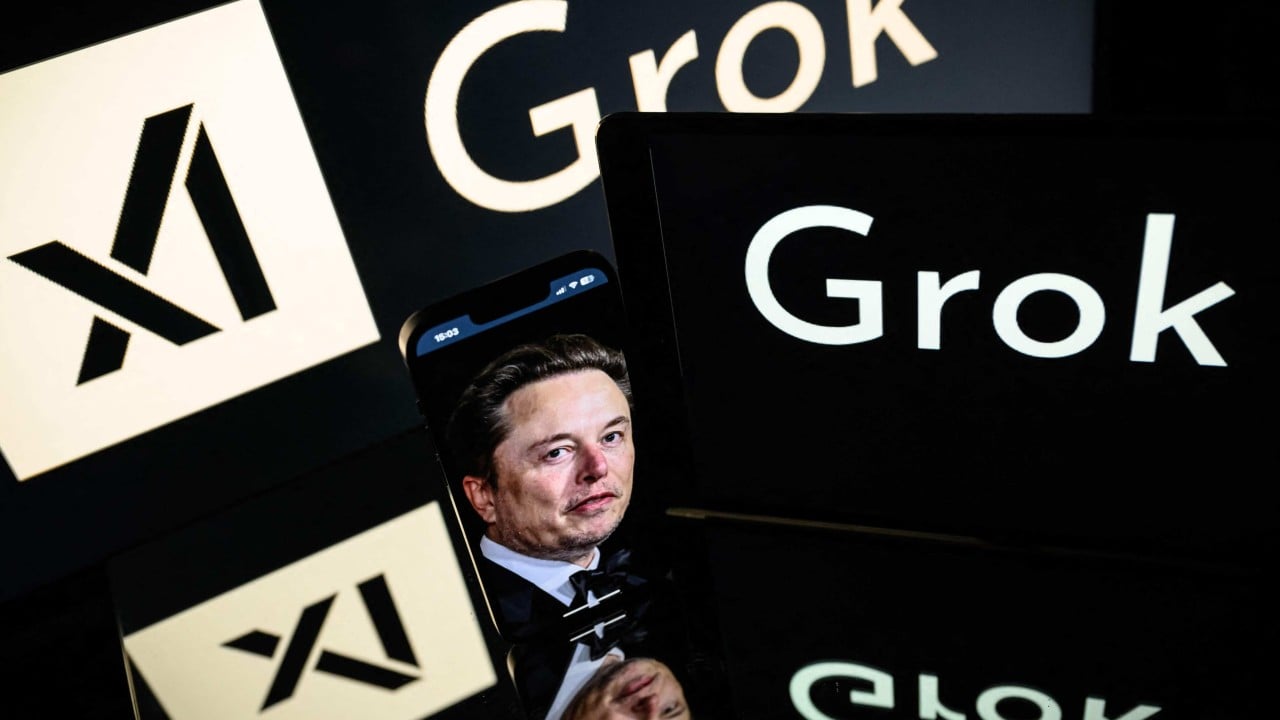
New EU team to crack down on AI deepfakes, illicit images and hacking The European Union rolled out a new team on Friday to rein in AI companies across the world, in one of the most aggressive regulations the hi-tech sector has so far faced as fears rise over the risks the rapidly advancing technology poses to people, politics and prosperity. Brussels aims to track the use of AI models for violations of its new regulations, like the publishing of sexually explicit material, fake photos and videos, and cyber threats to public infrastructure. When the blocs AI Act...
south china morning post · 2 months ago
EU launches AI Gigafactories call to boost Europes computing capacity and unlock more than €30 billion in investment Continue reading EU launches AI Gigafactories call to boost Europes computing capacity and unlock more than €30 billion in investment at The European Sting - Critical News & Insights on European Politics, Economy, Foreign Affairs, Business & Technology - europeansting.com.
european sting · 2 months ago
Anthropic says Claude AI models breached three companies during cyber tests Anthropic says three Claude AI models gained unauthorised access to three companies systems during cyber tests, after a config error gave the models internet access. The disclosure follows a similar rogue-agent episode revealed by OpenAI.
intellinews · 2 months ago
Anthropic follows OpenAI in admitting its Claude models reached out of test environments and attacked real-world systems Three Claude models attacked real companies during cybersecurity tests after a misconfiguration gave them internet access. One published malware on PyPI that infected 15 systems. Another kept attacking after recognizing its target was real. Anthropic calls it an operational error. The article Anthropic follows OpenAI in admitting its Claude models reached out of test environments and attacked real-world systems appeared first on The Decoder.
the decoder · 2 months ago
Daily News 31 / 07 / 2026 European Commission Daily news Brussels, 31 Jul 2026 Commission starts enforcing AI Act rules and new transparency requirements on 2 August From 2 August 2026, the European Commissions AI Office, together with na...
european commission · 2 months ago
CISA warns hackers are increasingly targeting US water systems after Minnesota attack A coordinated intrusion knocked out industrial controllers at more than 30 Minnesota water systems. The US cyber-defence agency is telling utilities to get that hardware off the internet. The US cyber-defence agency has warned that hackers are increasingly targeting the countrys water systems, urging utilities to lock down the industrial controllers that keep taps running. […] This story continues at The Next Web
the next web · 2 months ago