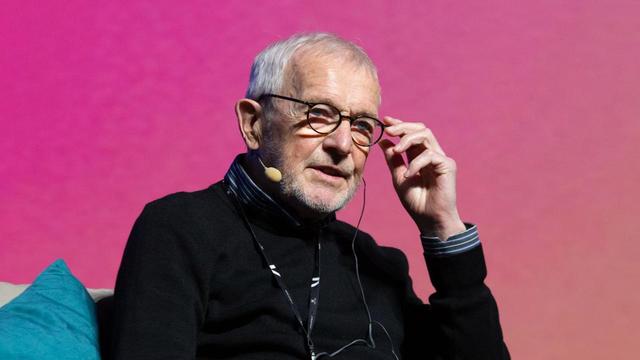
Francis Halzen, a Belgian-American physicist at the University of Wisconsin–Madison, won the 2026 Nobel Prize in Physics for his decisive contributions to the IceCube Neutrino Observatory and the discovery of high-energy cosmic neutrinos, the Royal Swedish Academy of Sciences announced on Oct. 6.
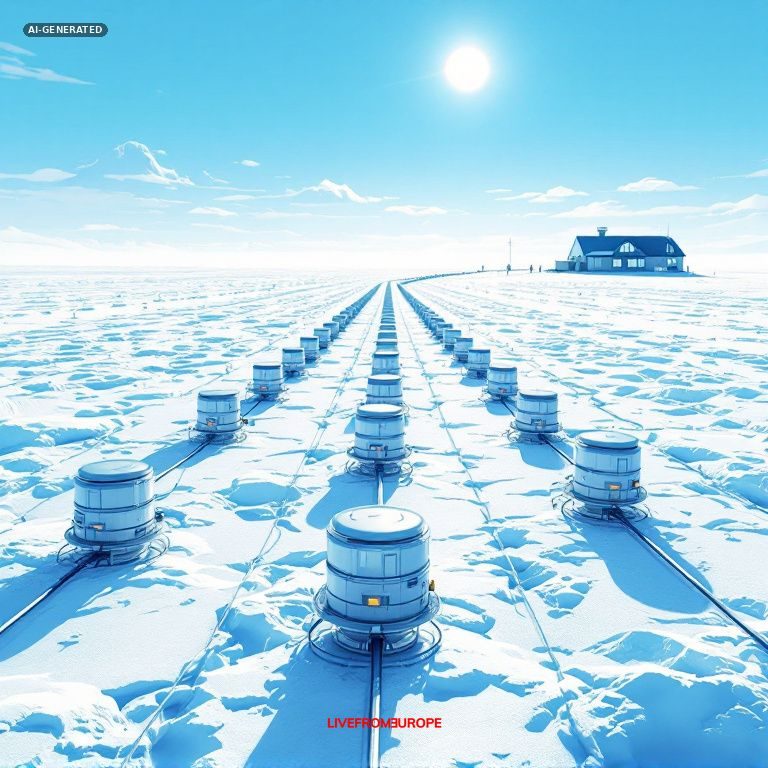
The IceCube observatory, buried in a cubic kilometer of Antarctic ice near the Amundsen-Scott South Pole Station, uses over 5,000 sensors to detect the rare interactions of neutrinos—subatomic particles that traverse the universe almost undisturbed. These "ghost particles" carry information from violent cosmic events like exploding stars and black hole collisions, offering a new window into the universe, according to Eva Olsson of the Academy.
Halzen, 82, first proposed the concept in 1988 and led its development from the AMANDA prototype to the full-scale IceCube, completed in 2011. He acknowledged the risk of the project, noting that few believed it would succeed. "No respectable conservative physicist would have joined me," he said, crediting the "courageous people" who did .
The observatory’s sensors capture the blue light emitted when neutrinos occasionally collide with atomic nuclei in the ice, allowing scientists to trace their origins. Mark Pearce, chair of the Nobel Committee for Physics, praised Halzen’s "tenacity and scientific vision" for enabling this new field of astronomy .