
Millions march in Tehran as Khamenei funeral procession begins: burial set for Thursday

Story Timeline
2 months · 3 summary articles
Iran buries Supreme Leader Khamenei at Mashhad shrine as US-Iran clashes erupt
Follow-upMillions march in Tehran as Khamenei funeral procession begins: burial set for Thursday
Thousands mourn as Iran begins six-day state funeral for Supreme Leader Khamenei
Follow-up
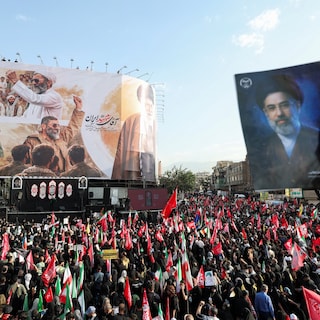
Millions of Iranians surged through the streets of Tehran on Monday as a funeral procession for the late Supreme Leader Ayatollah Ali Khamenei began, carrying his flag-draped coffin and those of his family members killed in a February airstrike. The procession, which started in eastern Tehran and wound westward through the capital’s central artery, marked the third day of state mourning that will culminate on Thursday with burial at the Imam Reza shrine in Mashhad, Khamenei’s birthplace. Three of his four sons were seen praying beside the coffins on Sunday, but the new Supreme Leader, Mojtaba Khamenei, remained conspicuously absent from the ceremonies, fueling speculation about his health and whereabouts .
Iranian authorities shut down streets, airspace, and daily life across Tehran for the mourning period, which began on Saturday and will last until Thursday. Mehrabad and Imam Khomeini airports suspended flights during the procession, and further restrictions were announced for Tuesday . Mourners, including soldiers, seminary students, and ordinary citizens, filed into Tehran’s Grand Mosalla to pay their respects, while chants calling for revenge against the United States and Israel echoed through the crowds .
Pakistan’s Prime Minister Shehbaz Sharif led a high-level delegation to the funeral, reaffirming Islamabad’s solidarity with Tehran. Sharif, accompanied by Deputy Prime Minister Ishaq Dar and Army Chief Asim Munir, praised Khamenei’s leadership and said Pakistan stood with Iran in grief . The visit underscored Pakistan’s role as a mediator between the U.S. and Iran, which brokered a ceasefire in April and the Islamabad Memorandum of Understanding last month, formally ending months of hostilities despite ongoing allegations of violations .
The absence of Mojtaba Khamenei, who was appointed as Iran’s new Supreme Leader a week after his father’s death, has raised questions about his condition. Iranian state television described him as a “war-wounded” figure but provided no further details, and it remains unclear whether he will appear during the burial in Mashhad . In Tehran, the 97-year-old Grand Ayatollah Jafar Sobhani led the funeral prayers, while in Qom and Mashhad, other senior clerics, including the 99-year-old Ayatollah Makarem Shirazi and the 101-year-old Nuri Hamedani, are expected to preside over the final rites .
The funeral has also served as a display of political unity, with high-ranking officials and military leaders making their first public appearances since the war began. However, the absence of prominent reformists has drawn criticism, highlighting internal divisions within Iran’s leadership .
Meanwhile, tensions flared in southern Lebanon as Israeli forces launched airstrikes on Nabatieh, defying a U.S.-brokered agreement with Lebanon signed last month to end hostilities . The strikes came as the U.N. Security Council confirmed the withdrawal of its peacekeepers from Lebanon by the end of the year, raising concerns about a potential resurgence of violence in the war-torn region .
As the funeral procession moves through Tehran, the symbolic power of Khamenei’s absence—both as a leader and a father—has become a focal point. Analysts suggest that the narrative of a leader destined to return may reinforce Mojtaba Khamenei’s authority, despite his current invisibility .
Follow us for live European news
- 2
- 2
- 1
- 1
- 1
- 1
- 1
- 1
4 further sources not geolocated
Articles

Trump: US paused Iran talks to let Khamenei funeral proceed President Donald Trump said the US paused negotiations with Iran to allow for the late Supreme Leader Ali Khameneis funeral, claiming Tehran is dying to settle. Speaking at Mount Rushmore for the US independence anniversary, he also warned against communism and touted Americas military strength.
yenisafak · about 2 months ago
Pakistan stands with Iran, Sharif says at Khamenei funeral Prime Minister Shehbaz Sharif, accompanied by Deputy Prime Minister Ishaq Dar and Army Chief Asim Munir, attended the funeral of Irans late Supreme Leader Ayatollah Ali Khamenei in Tehran. Sharif said Pakistan stands with Iran in grief and praised Khameneis wisdom and leadership.
yenisafak · about 2 months ago

DIRECT - Guerre au Moyen-Orient: le cortège funèbre dAli Khamenei traverse Téhéran Suivez en direct les informations de ce lundi 6 juillet 2026 concernant le conflit au Moyen-Orient. ...
la libre · about 2 months ago
Live - Begrafenisstoet Ali Khamenei van start gegaan in Teheran
de morgen · about 2 months ago
Tehran airspace to close Monday for Khamenei funeral procession Iran will fully shut Tehrans airspace on Monday during the main public funeral procession for slain Supreme Leader Ayatollah Ali Khamenei, state media reported. Flights will continue normally on Sunday, but Mehrabad and Imam Khomeini airports will be suspended during the ceremonies.
yenisafak · about 2 months ago
Iran war live: Khameneis funeral procession under way in Tehran The funeral procession is expected to last 10-12 hours and has drawn crowds of hundreds of thousands of mourners.
aljazeera · about 2 months ago

Where is the ayatollah? Sons mourn, but Irans successor is still missing
bluesky_The Times · about 2 months ago
Luftraum gesperrt: Trauerzug mit Chameneis Leichnam führt durch Teheran Rund vier Monate nach seiner Tötung soll Irans Staatsoberhaupt Ajatollah Ali Chamenei beerdigt werden. In der Millionenmetropole Teheran soll sein Leichnam durch die Stadt geführt werden.
tagesspiegel · about 2 months ago
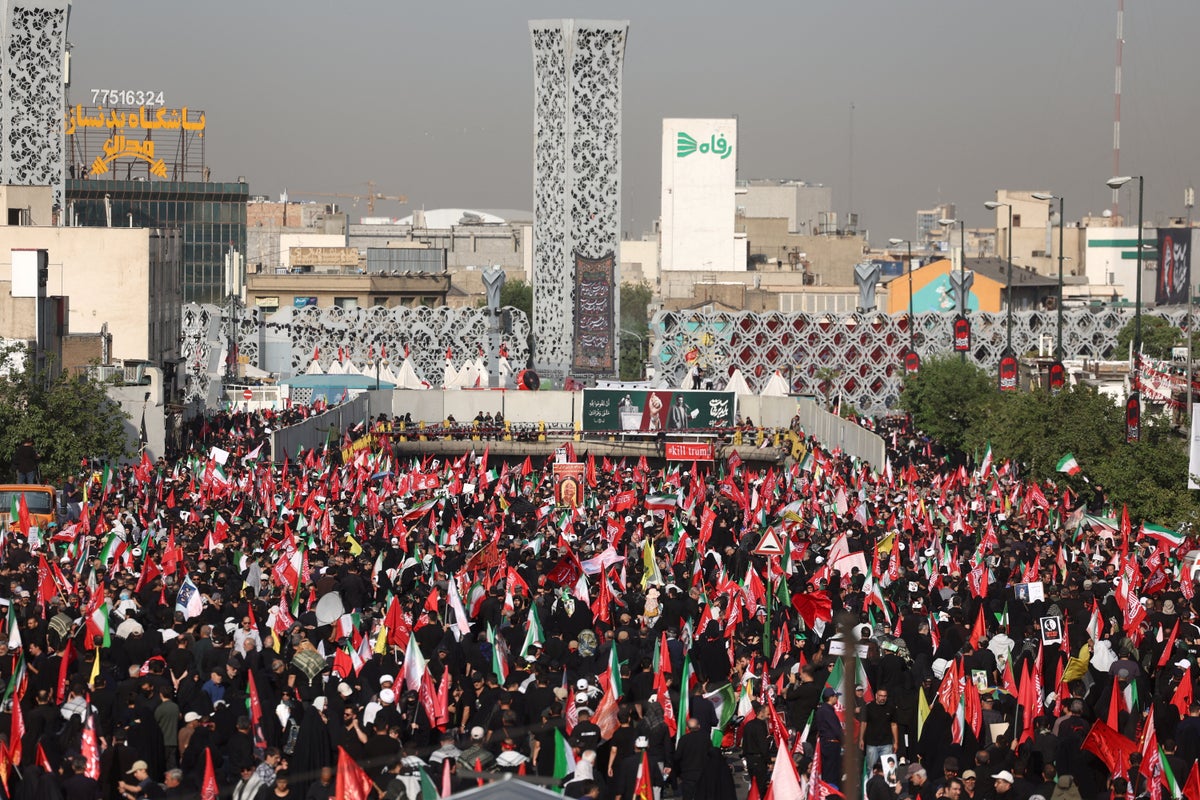
Iran-US war latest: Khameneis funeral procession begins in Tehran as US tracks threats against Trump Thousands gathered to mourn Khamenei as Trump boasts one shot could take all the regimes leaders out
independent · about 2 months ago
Mourners, including soldiers, seminary students and ordinary men and women filed into Tehrans Grand Mosalla to pay their respects to late Supreme Leader Ali Khamenei and his family.
bluesky_Reuters · about 2 months ago

LIVE: Millions walk in funeral procession for Khamenei Millions of Iranians take part in a funeral procession and offer prayers for late Supreme Leader Ali Khamenei. www.youtube.com/watch?v=iTHt...
bluesky_Reuters · about 2 months ago
+++ Iran-Krieg +++: Iran nimmt Seehandel mit Katar wieder auf – Mordaufrufe bei Totengebet für Chamenei Trauerzug mit Chameneis Leichnam führt durch Teheran +++ Zweiter Tag der umfassenden Trauerfeiern in Teheran +++ Spekulationen um Chameneis Sohn Modschtaba +++ Der Newsblog.
handelsblatt · about 2 months ago
Getötetes Staatsoberhaupt: Trauerzug mit Chameneis Leichnam führt durch Teheran Rund vier Monate nach seiner Tötung soll Irans Staatsoberhaupt Ajatollah Ali Chamenei beerdigt werden. In der Millionenmetropole Teheran soll sein Leichnam durch die Stadt geführt werden.
handelsblatt · about 2 months ago
Three sons of slain Iranian leader Ayatollah Ali Khamenei prayed beside his coffin and those of four other family members on July 5, but Mojtaba, the son who has succeeded him as Irans supreme leader, did not make an appearance. reut.rs/4f1Kort
bluesky_Reuters · about 2 months ago
Iran. Trei dintre fiii lui Ali Khamenei, prezenţi la funeralii. Care a fost marele absent de la ceremonii Trei fii ai liderului iranian asasinat, ayatollahul Ali Khamenei, s-au rugat duminică lângă sicriul acestuia şi lângă cele ale altor patru membri ai familiei. Cineva însă a fost absent din fotografie, relatează Reuters.
digi24 · about 2 months ago
Funerale di Khamenei celebra la vittoria e manda messaggio di forza: non cè spazio per dissenso Lo scrittore iraniano Kader Abdolah: Lidea di un leader assente, ma destinato a tornare, è parte della cultura iraniana: non implica la perdita di autorità. Può anzi rafforzare laura simbolica di Mojtaba
corriere · about 2 months ago
Iran war live: Tehran prepares for Ali Khameneis funeral procession Millions expected at funeral procession for Irans slain supreme leader in Tehran today.
aljazeera · about 2 months ago
Sons of Irans leader Ali Khamenei attend funeral, but Mojtaba is absent Massive crowds gathered in Tehran to mourn Khameneis death, with chants calling for revenge against the US and Israel.
aljazeera · about 2 months ago
Thousands gather in Tehran as week-long Khamenei funeral rites begin Thousands of mourners gathered at Tehrans Imam Khomeini Mosalla Grand Mosque on Saturday as week-long funeral rites for Irans late Supreme Leader Ayatollah Ali Khamenei began. Foreign dignitaries including Turkish Vice President Cevdet Yılmaz and Pakistani Prime Minister Shehbaz Sharif attended the state ceremony.
yenisafak · about 2 months ago
Khamenei, lIran giura vendetta: È un diritto del nostro popolo Nella Grande moschea di Mosalla, presenti tre figli del leader ucciso. Assente il quarto, Mojtaba, nuova Guida suprema
corriere · about 2 months ago
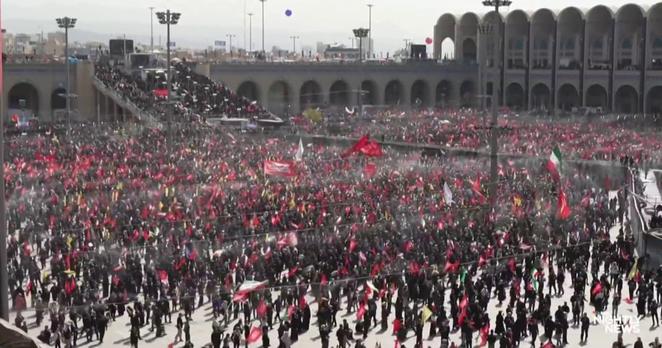
🔴 BREAKINGIranians mourn former Supreme Leader Ayatollah Ali KhameneiIranians gathered for a funeral to honor late Supreme Leader Ayatollah Ali Khamenei. Three of his four sons attended the service, while questions remain regarding the new supreme leader who was notably absent from the proceedings.📰 #Geopolitics #GeoWire
mastodon bot · about 2 months ago
Sohn fehlt bei Chameneis Beisetzung Zehntausende Iraner haben am Wochenende Abschied von dem getöteten langjährigen Machthaber Ajatollah Ali Chamenei genommen. Sein Sohn und Nachfolger Modschtaba Chamenei fehlte jedoch auch am Sonntag, dem zweiten Tag der offiziellen Trauerfeierlichkeiten in Teheran. Er ist seit dem Tod seines Vaters bei US-israelischen Angriffen am 28. Februar nicht öffentlich in Erscheinung getreten.
orf.at · about 2 months ago
Emotionaler Abschied: „Unfassbar schwer: Katy Karrenbauer trauert um ihre Mutter Mit persönlichen Erinnerungen und Dank richtet sich die Schauspielerin an ihre Mutter – und spricht über den schweren letzten Weg.
tagesspiegel · about 2 months ago
Funeraliile lui Ali Khamenei: „De ce nu l-am ucide pe criminalul imamului nostru? Ar fi o rușine să nu o facem Lângă sicriul fostului lider suprem iranian Ali Khamenei, asasinat, într-o sală de rugăciune arhiplină din Teheran, s-au auzit duminică îndemnuri la uciderea lui Donald Trump.
digi24 · about 2 months ago

Three sons of Irans slain leader Khamenei appear at funeral, not his successor
news.yahoo.com · about 2 months ago