Loading…
 Saturday, August 29Saturday, August 29
2 months · 15 summary articles
Thousands of students across Europe received their final secondary-school grades on Thursday as national exams and assessment systems face growing scrutiny over their relevance in the age of artificial intelligence. In Belgium, the Hogeschool Odisee announced it will scrap its bachelor’s thesis requirement, arguing that traditional assessments no longer measure the skills students truly need in a world transformed by AI. The decision follows a broader debate over whether current grading systems adequately reflect competence in critical thinking, creativity, and adaptability.
In Norway, three education directors have called for the immediate cancellation of this year’s final-year certificates (*vitnemål*), arguing that the grading system fails to capture the competencies students actually require. “The current assessment model is no longer fit for purpose,” they wrote in a joint op-ed published on Thursday . Around 70,000 Norwegian students are receiving their diplomas this week, but the directors warn that the system’s reliance on traditional exams risks undervaluing the skills most needed in an AI-driven economy.
Meanwhile, in Romania, the Ministry of Education released the official solutions to this year’s National Assessment (*Evaluare Națională*) mathematics exam, providing students with clarity after weeks of uncertainty. Professor Alin-Mihai Munteanu, a mathematics educator, published detailed explanations for each problem, helping pupils understand where they may have lost marks .
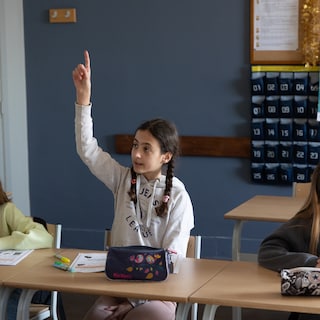
The upheaval in assessment methods comes as Flemish primary-school tests reveal persistent weaknesses in mathematics, with officials warning that foundational gaps in numeracy are holding back students from an early age. A report published on Thursday highlights arithmetic as a recurring stumbling block, raising concerns about long-term educational outcomes .
In Greece, the long-awaited results of the 2026 Panhellenic university entrance exams were released electronically on Thursday, allowing candidates to check their scores via a dedicated platform or SMS. The announcement clears the way for students to finalize their university applications, a process that will shape their academic and professional trajectories for years to come .
The convergence of these developments underscores a continent-wide reckoning with how education systems measure success. As AI tools reshape both the classroom and the workplace, institutions are being forced to rethink what it means to be “qualified.” The Hogeschool Odisee’s decision to abandon its thesis requirement—citing AI’s disruptive impact on traditional assessment—signals a potential shift toward project-based or competency-based evaluation. Yet the debate remains unresolved: Can new models of assessment keep pace with the rapid evolution of skills demanded by the labor market, or will they merely replace one set of outdated metrics with another?
Follow us for live European news

results.it.minedu.gov.gr: Βγήκαν οι βαθμολογίες για τις Πανελλαδικές 2026 Ηλεκτρονικά μέσω ειδικής πλατφόρμας και με SMS η ενημέρωση των υποψηφίων - Ανοίγει ο δρόμος για τη συμπλήρωση του μηχανογραφικού δελτίου
protothema · 2 months ago
Vlaamse toetsen tonen zwakke plek in basisonderwijs: wiskundige problemen blijven struikelblok
de morgen · 2 months ago

Hogeschool Odisee schrapt bachelorproef door AI en slaagcijfers: Wat studenten maken, moet er echt toe doen
de morgen · 2 months ago
Rezolvare subiecte Matematică Evaluare Națională 2026. Profesorul Alin-Mihai Munteanu explică ce trebuia făcut la fiecare subiect
digi24 · 2 months ago
Svolta storica alle Olimpiadi, il Cio rompe con la tradizione: non solo i medagliati, ogni atleta qualificato riceverà un contributo economico Il Comitato Olimpico Internazionale ha introdotto una misura destinata a segnare una svolta storica nel mondo dei Giochi Olimpici: tutti gli atleti che prenderanno parte alle Olimpiadi riceveranno un contributo economico di 10mila dollari, a prescindere dai risultati ottenuti nelle competizioni. Lannuncio è stato ufficializzato durante il 146esimo Congresso del Cio in corso a Losanna. […] Larticolo Svolta storica alle Olimpiadi, il Cio rompe con la tradizione: non solo i medagliati, ogni atleta qualificato riceverà un contributo economico proviene da Il Fatto Quotidiano.
il fatto quotidiano · 2 months ago
Dagens vitnemål bør annulleres I disse dager får rundt 70.000 elever vitnemål fra videregående. Men karakterene måler i for liten grad den kompetansen elevene faktisk trenger, skriver tre opplæringsdirektører.
aftenposten · 2 months ago
Ce se întâmplă după Evaluarea Națională 2026: Există sau nu o notă minimă pentru repartizarea la liceu? După Evaluarea Națională 2026, admiterea la liceu devine principala preocupare pentru absolvenții clasei a VIII-a. Una dintre cele mai frecvente întrebări este dacă există o notă minimă necesară pentru participarea la repartizarea computerizată și ce șanse au elevii care nu obțin media dorită.
digi24 · 2 months ago