Loading…
 Saturday, September 26Saturday, September 26
3 months · 4 summary articles
Bolivia’s 90-day state of emergency took effect on Saturday as lawmakers from the ruling party and opposition blocs endorsed President Rodrigo Paz’s decree, easing a crisis that had paralysed the country for seven weeks with road blockades and violent protests. The emergency measure, announced on Friday and ratified by Congress on Saturday, suspends constitutional rights, authorises military deployment to clear barricades, and bans public gatherings, ending a standoff that had left 14 dead and choked supply routes for food, fuel and medicine .
Military engineers began clearing the last major blockades on Saturday morning, using bulldozers to reopen the crucial Santa Cruz–Cochabamba highway, a key artery for food shipments to La Paz and El Alto. Defence Minister General Marina Vargas told reporters that troops would remain deployed until all routes are fully operational and order is restored. “The emergency is necessary to prevent further loss of life and to guarantee the delivery of essential goods,” Vargas said, flanked by army engineers working under heavy police escort .
The crisis erupted on 1 May after Paz’s government cut fuel subsidies, triggering nationwide protests led by the Central Bolivian Workers’ Union (COB), transport cooperatives and Indigenous organisations. Blockades spread across six departments, halting intercity traffic for 51 consecutive days and forcing hospitals to ration oxygen and dialysis supplies. At least 14 civilians died in clashes with security forces, while hundreds were injured, according to local human-rights monitors cited by *Público* .
Paz had attempted to negotiate a truce with COB leader Orlando Gutiérrez, but the agreement collapsed on Thursday when protesters refused to lift blockades until the subsidy cuts were fully reversed. The emergency decree, which suspends constitutional guarantees for 90 days, was approved by Congress late on Saturday after tense negotiations, with opposition lawmakers accusing Paz of using the crisis to consolidate power .
International travel advisories were issued on Saturday, warning citizens against non-essential travel to Bolivia. Romania’s foreign ministry urged its nationals to leave the country immediately, citing “violent protests, roadblocks and restricted movement” .
Analysts warn that while the emergency may restore supply chains, it risks deepening political polarisation. “This is a moment of maximum tension,” said political scientist Carla Mendoza of the Universidad Mayor de San Andrés. “The government has bought time, but the underlying grievances over living costs and democratic accountability remain unresolved.”
Follow us for live European news
1 further source not geolocated

Bolivia crisis begins to ease after lawmakers back state of emergency reut.rs/4enMXVx
bluesky bot · 3 months ago

Rubio reaffirms US support for Lebanon, stresses Hezbollah disarmament Secretary of State Marco Rubio reaffirmed US support for Lebanon in a call with President Joseph Aoun, stressing the need to disarm Hezbollah. Aoun called for a comprehensive ceasefire ahead of next weeks US-brokered talks with Israel.
yenisafak · 3 months ago
Bolivia declares state of emergency amid blockades and protests President Rodrigo Paz has declared a state of emergency following weeks of protests and road blockades that caused shortages of food, fuel, and medical supplies. The measure allows military deployment to restore order and reopen roads, as anti-government demonstrations intensify over living costs.
yenisafak · 3 months ago
Bolívia entra em estado de emergência para pôr fim a 51 dias de estradas bloqueadas Ao fim de sete semanas de greves e protestos, acordo entre o Governo de Rodrigo Paz e os principais sindicatos não foi suficiente para levantar bloqueios. Estado de emergência vigora por 90 dias.
publico · 3 months ago
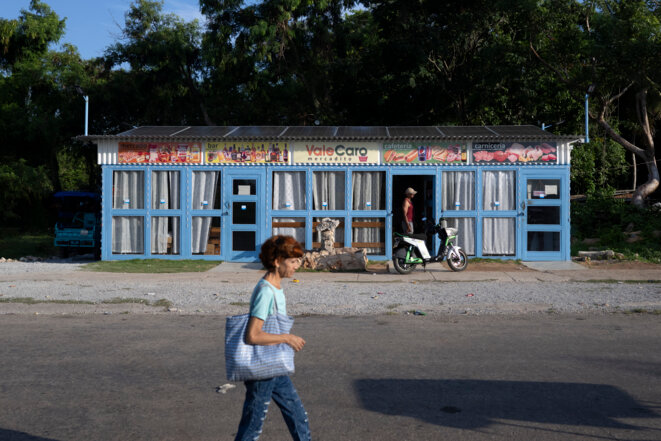
À Cuba, des réformes économiques spectaculaires et des questions sur leur faisabilité Le Parlement cubain a approuvé 176 mesures économiques pour sauver léconomie sclérosée du pays. Dans un contexte de crise et de mécontentement social sans précédent, ce plan durgence renforcerait singulièrement le secteur privé. Sa mise en œuvre reste incertaine.
mediapart · 3 months ago
Colombian President Petro urges Israelis to end Lebanon strikes Colombian President Gustavo Petro called on Israeli citizens Saturday to demand their government halt strikes on Lebanon, expressing full support for a recent US-Iran memorandum of understanding and criticizing the continuation of violence that has claimed thousands of lives since early March.
yenisafak · 3 months ago
Alertă de călătorie pentru Bolivia. MAE: Stare de urgență pentru 90 de zile, proteste violente și blocaje în mai multe regiuni Ministerul Afacerilor Externe îi avertizează pe românii care se află sau intenționează să călătorească în Bolivia că, din 20 iunie, autoritățile locale au instituit starea de urgență pentru 90 de zile, pe fondul tulburărilor interne și al protestelor care au dus la blocaje rutiere, incidente violente și restricții de circulație.
digi24 · 3 months ago
Karm seadusemuudatus Venemaal: algab agressiivne laenamine Venemaa parlament võttis kiirkorras vastu seadusemuudatuse, mis annab valitsusele õiguse suurendada eelarvekulutusi ja riigivõlga ilma parlamendi täiendava heakskiiduta.
postimees · 3 months ago