 Sunday, June 7Sunday, June 7
US and Iran exchange strikes as diplomatic talks persist amid regional escalation
The US military has conducted self-defense strikes on Iran’s Qeshm Island after intercepting Iranian ballistic missiles and drones targeting Kuwait and Bahrain, marking a sharp escalation in hostilities despite ongoing diplomatic negotiations. US Central Command (CENTCOM) confirmed on Tuesday that it repelled multiple Iranian attacks, including two missiles that fell short of Kuwait and three intercepted over Bahrain, while also destroying three drones aimed at civilian vessels in regional waters.
Iran’s Islamic Revolutionary Guard Corps (IRGC) launched the attacks in retaliation for earlier US actions, including a Hellfire missile strike on an Iranian tanker attempting to breach the American blockade of the Strait of Hormuz, according to *The Guardian* . CENTCOM reported no US casualties but warned of continued vigilance amid the fragile ceasefire .
Despite the military exchanges, US President Donald Trump stated on Monday that diplomatic talks with Iran continue "at a rapid pace," contradicting earlier reports that Tehran had suspended contact via mediators in protest of Israeli strikes in Lebanon . The White House has not clarified whether the negotiations address the latest clashes, which threaten to unravel the tenuous Gulf ceasefire brokered in May.
Background tensions remain high, with Iran accusing the US of enabling Israeli aggression and Washington framing its strikes as defensive. The Strait of Hormuz, a critical chokepoint for global oil shipments, has become a flashpoint, with both sides reinforcing military postures in the region. Analysts warn that miscalculation could trigger broader conflict, even as backchannel diplomacy persists.
US strikes Iran after missile attacks on Kuwait and Bahrain

Trump says talks with Iran continue at rapid pace US President Donald Trump said on Monday that diplomatic exchanges with Iran are continuing "at a rapid pace," despite earlier reports that Tehran had suspended contact with Washington via mediators to protest Israeli attacks in Lebanon following a fragile ceasefire in the Gulf.
yenisafak · 4 days ago
🇮🇷❌🇺🇸🇰🇼 — CENTCOM claims that multiple drones attempting to strike US military infrastructure in Kuwait were intercepted some time ago, after the earlier IRGC attack against US interests in Kuwait and Bahrain. @GeoPWatch
telegram bot · 4 days ago
Iran war live: US hits Irans Qeshm, says Tehran targeted Kuwait, Bahrain US President Trump reported to lash out at Israeli PM Netanyahu over Israels threat to strike Beirut suburbs.
aljazeera · 4 days ago
US says it attacked Irans Qeshm Island; Tehran targets Kuwait, Bahrain The US military says it carried out self-defence strikes on Irans Qeshm Island.
aljazeera · 4 days ago
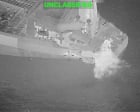
US and Iran launch fresh strikes amid stalled ceasefire talks US military says it struck tanker and sites on Irans Qeshm Island and defended Kuwait and Bahrain from missile attacks The US and Iran have exchanged fresh missiles and drone strikes, further jeopardising efforts by Washington to secure a new ceasefire agreement with Tehran.US forces fired a Hellfire missile to disable a tanker attempting to break through the American blockade of the strait of Hormuz on Tuesday, and later said they repelled Iranian reprisal attacks in the region and attacked sites on Irans Qeshm Island. Continue reading...
theguardian · 4 days ago
Middle East war live: US military says it intercepted Iranian missile and drone attacks The US military said on Tuesday that it had intercepted and defeated a series of Iranian missile and drone attacks targeting regional neighbours, including Kuwait and Bahrain, while also carrying out self-defence strikes on Irans Qeshm Island, according to US Central Command. Follow our liveblog for the latest developments.
france24 · 4 days ago
🇺🇸❌🇮🇷- CENTCOM confirms that they have struck Qeshm Island: U.S. forces successfully defeated multiple Iranian ballistic missiles and drones, and conducted self-defense strikes on Qeshm Island in response to attempted attacks by Iran across the Middle East, June 2. Iran launched several ballistic missiles toward regional neighbors; however, all failed to hit their intended targets. Two Iranian missiles fired at Kuwait fell short or broke apart enroute, and three missiles launched at Bahrain were immediately intercepted by U.S. and Bahrain air defense forces. Moments earlier, U.S. Central Command (CENTCOM) forces shot down three one-way attack drones launched by Iran toward civilian mariners that were rightfully transiting regional waters. American forces also conducted self-defense strikes on an Iranian military ground control station on Qeshm Island. No U.S. personnel were harmed. CENTCOM forces remain vigilant and ready to defend against unwarranted Iranian aggression during the ongoing ceasefire.
telegram bot · 4 days ago
🇮🇷❌🇰🇼🇺🇸- Missiles have been launched towards Kuwait. @GeoPWatch
telegram bot · 4 days ago