
US signals arms cuts to Taiwan unless it negotiates with Beijing
Story Timeline
4 months · 3 summary articles
Supreme Court unanimously strikes down federal ban on gun ownership for marijuana users
NATO allies boost defense as U.S. scales back commitments
US signals arms cuts to Taiwan unless it negotiates with Beijing
As Donald Trump’s administration adopts rhetoric echoing Beijing’s stance on Taiwan, Washington’s long-standing policy of strategic ambiguity faces its most acute test since Nancy Pelosi’s 2022 visit. On Tuesday, 09.06.2026, senior US officials confirmed that the White House has privately signalled to Taipei that future arms sales may be scaled back unless Taipei commits to direct negotiations with Beijing—a position indistinguishable from China’s official talking points . The shift comes amid rising military pressure across the Taiwan Strait, where Beijing has conducted daily naval and aerial exercises within 12 nautical miles of Taiwanese territorial waters since May.
Taipei’s foreign ministry summoned the US chargé d’affaires in Taipei on Monday to protest the reported policy reversal, while Japan’s defence ministry issued a rare statement warning that any reduction in US deterrence would “destabilise the entire Indo-Pacific.” The warning follows Japan’s decision last week to pre-position 1,200 additional troops on Yonaguni Island, just 110 km east of Taiwan, in response to Chinese amphibious drills conducted on 03.06.2026 .
In Washington, Democratic lawmakers accused the administration of abandoning Taipei without a coherent strategy. “There is no timeline, no red line, and no plan,” said Senator Bob Menendez, chair of the Senate Foreign Relations Committee. “This is how autocracies win.” The criticism echoes concerns raised by European allies, where German Vice-Chancellor Lars Klingbeil declared in Berlin on Monday that Berlin would “prefer to win against the US” rather than accept a unilateral retreat from global norms .
The policy shift also complicates Trump’s domestic agenda. In South Carolina, a January 6 rioter pardoned by Trump in 2024 is now campaigning for a congressional seat on a platform that minimises his role in the Capitol breach. “Violence was never the goal,” he told supporters in Greenville on Sunday, echoing Trump’s own rhetoric that the 2020 election was “stolen without violence” .
Analysts warn that the administration’s approach risks entrenching authoritarian structures in Venezuela as well. Democratic lawmakers have demanded clarity from Senator Marco Rubio, the administration’s point man on Latin America, after Maduro’s regime extended its grip on power following elections in March. “Four months after Maduro’s capture, we still lack a strategy,” said Representative Gregory Meeks .
As the global trade war intensifies—now spanning Europe, Asia, and Latin America—Trump’s absence from the new front lines underscores a broader retreat from multilateral engagement. European Commission officials confirmed on Monday that the US has not participated in any of the five emergency summits convened since April to coordinate responses to China’s economic coercion .
Follow us for live European news
- 2
- 1
- 1
- 1
- 1
- 1
2 further sources not geolocated
Articles

Gracié par Trump, cet émeutier du Capitole brigue un mandat de député : Le but principal nétait pas dêtre violent En Caroline du Sud, un émeutier gracié par Donald Trump brigue un mandat de député. Il nest pas le premier à vouloir faire son entrée dans le même bâtiment quil a envahi il y a cinq ans. ...
la libre · 4 months ago

„Ich gewinne gerne gegen die USA: Klingbeil merkelt, menschelt und teilt gegen Trump aus Bei der ARD-Arena am Montagabend gerät der Vizekanzler nur aus einem Grund ins Schwitzen. Bärbel Bas nimmt er in Schutz, Karin Prien weniger, und zwischen Merz und Söder will er sich nicht entscheiden.
tagesspiegel · 4 months ago
Democratic lawmakers press Rubio for Venezuela strategy details Senior Democrats on House and Senate foreign affairs committees have demanded clarity from the Trump administration on its Venezuela strategy. They criticised the absence of a defined election timeline and warned that current US engagement risks entrenching authoritarian structures four months after Maduros capture.
yenisafak · 4 months ago

South Carolina Republicans try to extend winning streak as Sen. Lindsey Graham seeks fifth term
news.yahoo.com · 4 months ago
Theres a new front in the global trade war, and Trumps not part of it
gdeltproject.org · 4 months ago
Opinion: The future of the China-US-Russia triangle after Pelosis visit to Taiwan Since February 24, 2022, the international communitys focus was concentrated entirely on the war in Ukraine and the growing Russia – West confrontation. It seemed that nothing could change the situation until the end of hostilities in Ukraine. However, on August 2 and 3, almost everyones attention shifted from Ukraine to Taiwan. As the Speaker of the US House of Representatives, Nancy Pelosi, stated her intention to visit Taiwan, up to half a million people were watching the trajectory of her plane on air flight tracking sites. The negative reaction of China, including the warning of President Xi during his conversation with President Biden that those who played with fire would be perished by it, created hype around this visit. Many were discussing the possibility of Chinese military jets closing the airspace over Taiwan and preventing Pelosis plane from landing in Taiwan, while some enthusiasts were even contemplating the possibility of a US-China direct military clash. As Pelosi landed in Taiwan and met with the Taiwanese President, the global social media was full of amateur assessments about the strategic victory of the US and the confirmation of the US global hegemony. However, as the dust settles down, and information noise and manipulation eventually decreases, a more serious assessment is needed to understand the real consequences of this visit.
commonspace · 4 months ago
Voter support for Trump is near a record low According to a Reuters/Ipsos poll, support for US President Donald Trump is near his current terms lowest level, at 35 percent. This follows voter dissatisfaction over the war against Iran, which caused gasoline prices to rise. Additionally, only 22 percent of respondents support Trumps handling of the cost of living for Americans, while 70 percent […]
cphpost · 4 months ago
Will Trump abandon Taiwan? The threat across the Strait is rising. But the US president appears to have adopted Chinese talking points, raising questions about arms sales
financial times · 4 months ago
Trump critic Doug Ford urges president to get a deal with Canada Pugnacious Ontario premier who has sparred with the president takes diplomatic tone on Washington visit
financial times · 4 months ago
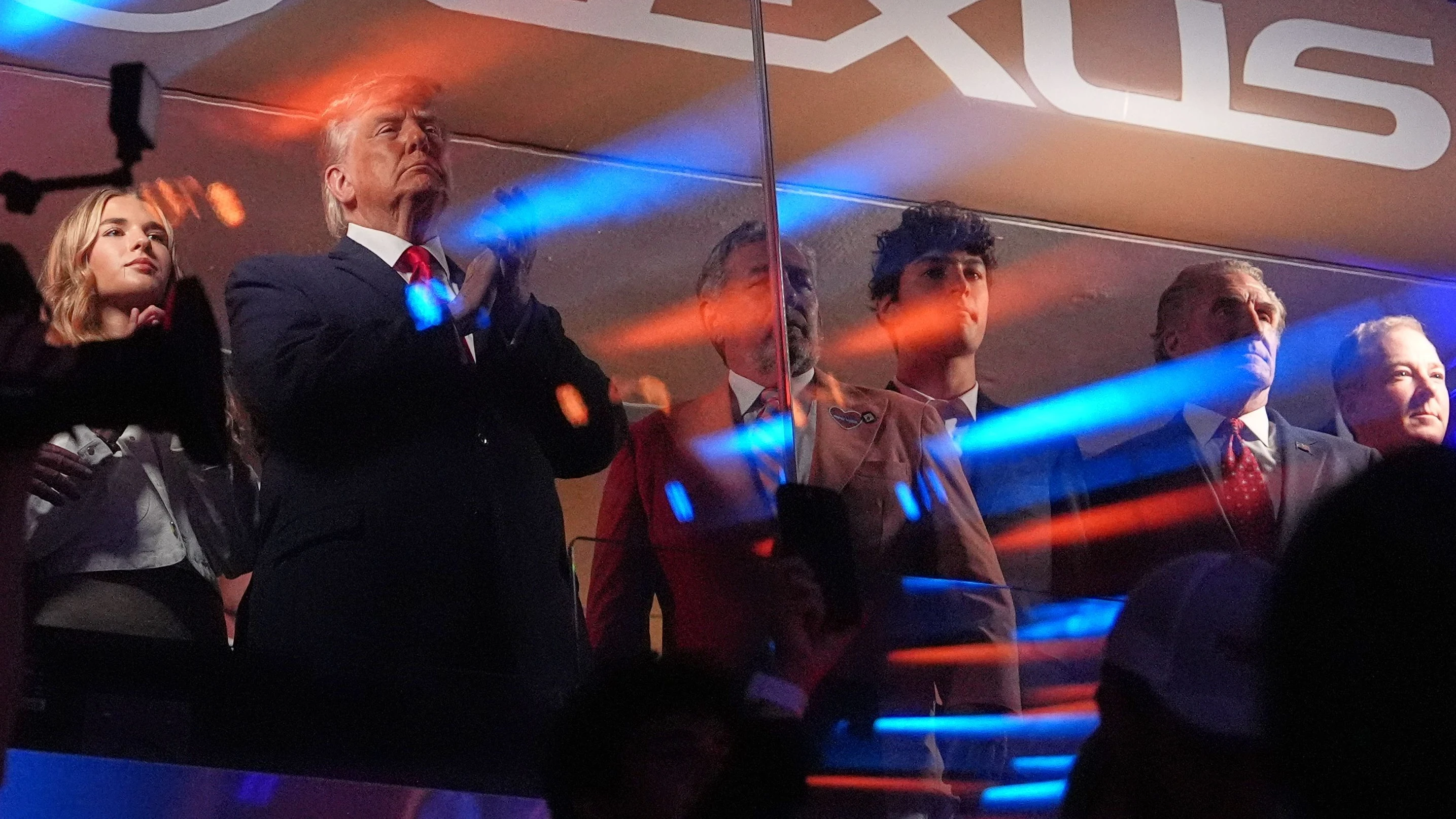
USA unter Trump: Fans seines Lieblings-NBA-Vereins buhen Trump aus Liveticker zur US-Politik unter Donald Trump aktuell: Aktuelle News & Nachrichten von heute ► Jetzt lesen im Liveticker der FAZ
faz · 4 months ago