Loading…
 Saturday, September 26Saturday, September 26
4 months · 21 summary articles
NATO Secretary General Mark Rutte confirmed on Wednesday that the United States has reduced its military commitments under NATO command, but stressed that Washington remains committed to the alliance as European members step up to fill the gaps. Speaking at a NATO defence ministers’ meeting preview, Rutte described the overall response as “looks very good” , while acknowledging that European and Canadian allies will need to shoulder greater conventional defence burdens in the absence of U.S. contributions.
Rutte’s remarks follow multiple confirmations across European outlets that Washington has withdrawn certain troop and capability pledges previously earmarked for NATO’s rapid-reaction forces. Austrian broadcaster ORF first reported the cuts on Tuesday , a claim echoed by German and Estonian media citing NATO statements. Rutte sought to downplay concerns, telling reporters in Brussels that “the overall picture looks good” as other allies—including those that previously fell short of the alliance’s 2% GDP defence spending target—have significantly increased their contributions .
The shift comes amid broader European efforts to reduce dependence on U.S. security guarantees. Dutch Foreign Minister Tom Berendsen told an international security summit in The Hague that Europe must cut reliance on American military support by 2030, with the Netherlands planning to implement a joint European strategy over the next four years . Several NATO members, including Albania, the Czech Republic, and Slovenia, which missed the 2% target last year, now pledge to raise spending to as high as 5% of GDP .
Analysts warn that Russia’s expanding nuclear-capable long-range systems are exerting pressure on Europe to bolster its own deterrent without U.S. support. A report by the European Council on Foreign Relations published Wednesday argues that Europeans must “plug the gaps” in their nuclear capabilities to maintain strategic deterrence . Meanwhile, Ukraine has accelerated its domestic missile programme, with Defence Minister Mykhailo Fedorov stating that funding is secured for ballistic weapons capable of striking deep into Russian territory .
At the G7 summit in Évian, France, German Chancellor Friedrich Merz announced that G7 members will produce long-range missiles and air-defence systems under licence in Ukraine, marking a further deepening of European defence industrial cooperation . Rutte described the move as “a very strong commitment,” signalling a new phase in European strategic autonomy.
Follow us for live European news
1 further source not geolocated

🇺🇸🌏- The U.S. Department of Defense has announced that U.S. Indo-Pacific Command will revert to its original name, U.S. Pacific Command (PACOM), restoring a designation it held for over seven decades before being renamed in 2018 under Defense Secretary James Mattis. @GeoPWatch
telegram bot · 3 months ago
HIMARS rocket artillery system to be upgraded to double its munition firing capacity The US defence company Lockheed Martin has unveiled a concept for upgrading the HIMARS multiple-launch rocket system. The new FLEX variant will be capable of firing twice as many rounds.
ukrpravda · 3 months ago

"Un élément dengagement très fort" : des pays du G7 vont produire "sous licence" en Ukraine des missiles longue portée Les Etats-Unis et des Européens du G7 vont produire "sous licence" en Ukraine des missiles de longue portée et des systèmes de défense antiaériennes, ont annoncé mercredi une source diplomatique puis le chancelier allemand Friedrich Merz au sommet du G7 à Evian. ...
la libre · 3 months ago
„Vielen Generälen ist bewusst, die eigentliche Herausforderung beginnt erst nach dieser Nato-Übung Bei der Nato-Übung „Rammstein-Flag 26 trainieren Luftstreitkräfte aus 18 Ländern flexible Verteidigung und offensive Operationen. Über 200 Flugzeuge sind beteiligt. WELT-Auslandskorrespondentin Carolina Drüten berichtet.
welt.de · 3 months ago
Mark Rutte: Nato-Chef bestätigt US-Streichungen bei Streitkräfteplanung Die USA halten künftig weniger militärische Fähigkeiten unter Nato-Kommando bereit. Nato-Generalsekretär Mark Rutte versucht, Sorgen zu zerstreuen.
handelsblatt · 3 months ago
Ukraine and Germany to jointly develop Freyja anti-ballistic missile system The German defense company Hensoldt and the Ukrainian company Fire Point have signed a memorandum of understanding regarding the joint integration of components into the FREYJA ground-based air defense system, designed to detect and intercept ballistic missiles.
ukrinform · 3 months ago
Domestic ballistic missile program to change war and Ukraines global standing, DM Fedorov says The deployment of Ukrainian-made ballistic weapons will transform the course of the Russia-Ukraine war and elevate Ukraines status on the world stage, according to Defense Minister Mykhailo Fedorov. He also said that funding for the development of ballistic missiles is fully secured.
ukrinform · 3 months ago
European missile manufacturer to join development of new version of Neptune cruise missiles European missile manufacturer MBDA and the Ukrainian Luch Design Bureau have signed a memorandum of understanding regarding further development of the Neptune cruise missile and the creation of its new version, Neptune-2.
ukrinform · 3 months ago
Rutte, despre golurile lăsate de SUA în cadrul forțelor NATO de intervenție în situații de criză: „Imaginea de ansamblu arată bine Alți membri ai NATO și-au majorat contribuțiile la forțele de intervenție ale alianței pentru a acoperi multe dintre lacunele lăsate de reducerile angajamentelor asumate de SUA, a declarat miercuri Mark Rutte, relatează Reuters.
digi24 · 3 months ago
Zbrojenie v Európe naberá na obrátkach. Viaceré štáty NATO cielia až na päť percent HDP na obranu Albánsko, Česko a Slovinsko vlani nesplnili cieľ dvoch percent HDP na obranu, teraz však sľubujú nápravu. Rutte hovorí o ohromujúcom náraste výdavkov.
aktuality.sk · 3 months ago
NATO-Chef Rutte bestätigt geringere US-Beiträge zur Bündnisverteidigung Für die Europäer und Kanadier könnte das bedeuten, dass sie im konventionellen Bereich mehr leisten müssen.
die presse · 3 months ago
NATO bestätigt US-Streichungen bei Streitkräften in Europa
orf.at · 3 months ago
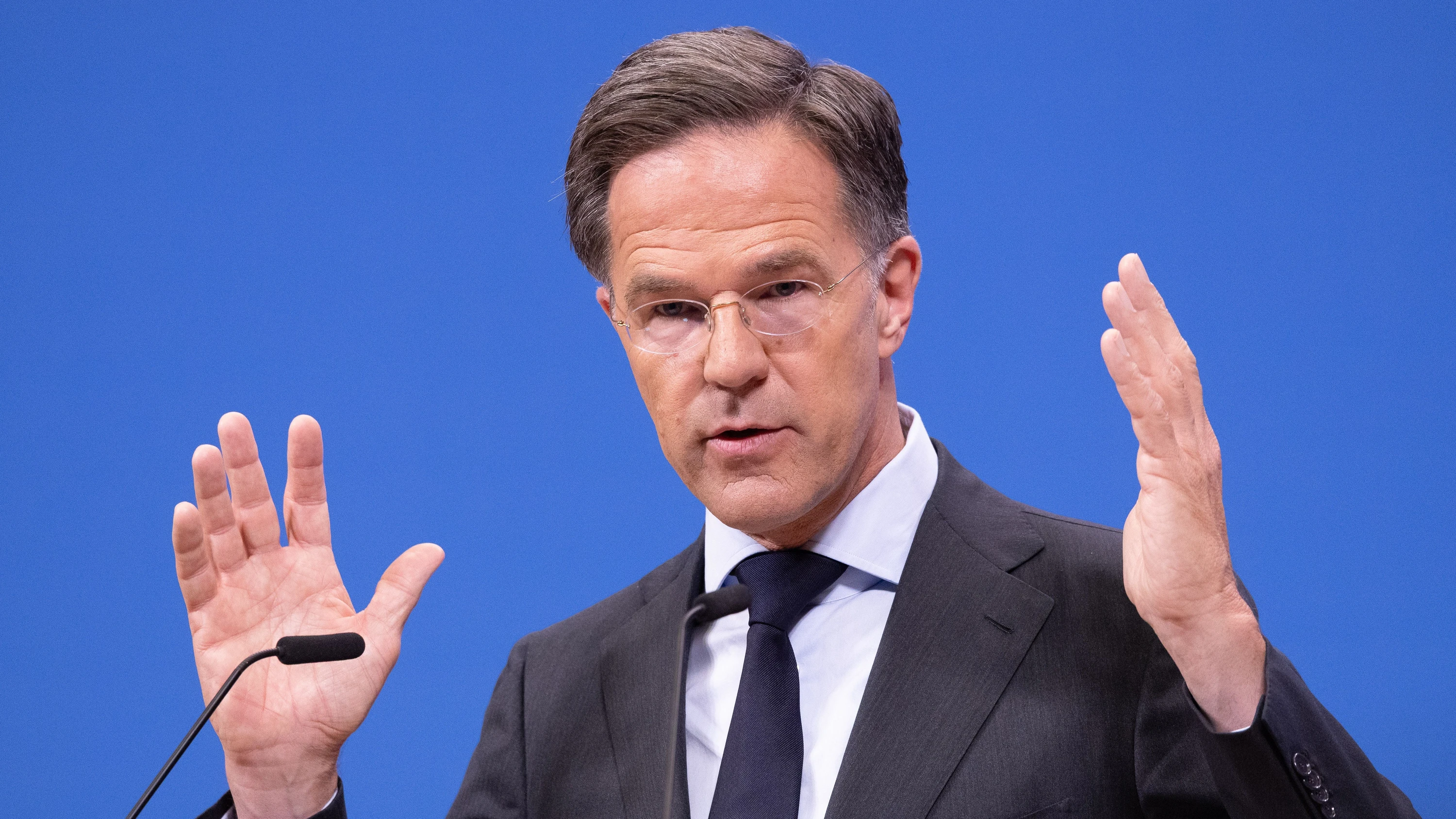
Nach US-Rückzug: Rutte: Europäer können mehr für ihre Verteidigung tun Die USA haben der NATO ihre Zusage für militärische Beiträge entzogen. Doch der NATO-Generalsekretär betont: Amerika wendet sich nicht ab.
faz · 3 months ago
Netherlands aims to cut dependence on U.S. security guarantees, new strategy says The Dutch government aims to begin implementing a joint European plan over the next four years to sharply reduce reliance on the United States for the defense of the Netherlands, according to a new
nltimes.nl · 3 months ago
Dutch FM: Europe must quickly reduce reliance on U.S. military by 2030 The Netherlands and Europe need to rapidly decrease their dependence on the United States for their security, Minister Tom Berendsen of Foreign Affairs said in an international security s
nltimes.nl · 3 months ago
Looks very good, NATO chief says as Europe takes on bigger alliance role
gdeltproject.org · 3 months ago
End of an Era: Facing an increasingly adversarial US, Europe embraces proactive defence strategy François Picard is pleased to welcome François Heisbourg, Chair of the International Institute for Strategic Studies. He argues that the apparent Iran-related "peace deal" announced by Donald Trump remains opaque, incomplete, and potentially unstable, with crucial details unresolved.
france24 · 3 months ago
EU welcomes US-Iran peace deal The EU has warmly welcomed the agreement reached between the US and Iran. This, it goes on to say, follows sustained diplomatic effort by several partners. The priority now, cautions the EU, is its swift and full implementation by all parties. The war began with US and Israeli strikes across Iran on 28 February, prompting Iran […]
brussels morning · 3 months ago
The bear with the bomb: Russian nuclear coercion and the future of European deterrence Russia is expanding its nuclear-capable, long-range weapon systems to press Europe and fracture NATO. Europeans need to plug the gaps in their nuclear capabilities and create a strategic deterrent that can function without US support
european council · 3 months ago

Nato - Chef bestätigt US - Streichungen bei Streitkräfteplanung
gdelt bot · 3 months ago
Rutte lubab: liitlased täidavad NATO kriisivägedes USA-st jäävad lüngad Teised NATO liikmesriigid on suurendanud oma panust alliansi kriisijõududesse, et täita lüngad, mis tekivad USA kohustuste vähendamise tõttu, ütles NATO peasekretär Mark Rutte kolmapäeval.
postimees · 3 months ago
NATO secretary general says no plans for NATO-Ukraine Council meeting at Ankara summit NATO Secretary General Mark Rutte has said there will be no separate NATO-Ukraine Council meeting during the summit in Türkiye.
ukrpravda · 3 months ago
Lastenteilung: Nato-Chef bestätigt US-Streichungen bei Streitkräfteplanung Die USA halten künftig weniger Streitkräfte unter Nato-Kommando bereit. Nato-Generalsekretär Mark Rutte versucht, Sorgen zu zerstreuen.
handelsblatt · 3 months ago
NATO Secretary General previews defence ministers meeting: Building a stronger Europe in a stronger NATO
gdeltproject.org · 3 months ago
Ucraina va produce rachete de croazieră capabile să lovească Moscova, cu ajutorul dezvoltatorului temutelor rachete Storm Shadow Grupul european de rachete MBDA a semnat un memorandum de înțelegere cu biroul de proiectare ucrainean „Luch privind extinderea cooperării în domeniul sistemelor de atac cu rază lungă de acțiune. MBDA este considerat cel mai mare producător european de armament de rachetă. Printre cele mai cunoscute dezvoltări ale sale se numără rachetele de croazieră Storm Shadow/SCALP.
digi24 · 3 months ago