
China expands Tiangong space station and unveils massive reusable rocket plans

Story Timeline
3 months · 11 summary articles
China on Tuesday unveiled plans to expand its Tiangong space station, signalling a new phase of scientific and technical ambition as Beijing accelerates its civil and military space programmes. The China Manned Space Agency said the expansion would add new modules to increase research capacity and support longer crewed missions, according to a report published by Observador on 23 June 2026 .
The move coincides with evidence that China is developing 7-metre-diameter reusable rockets, a scale that would double the payload capacity of its current Long March family. State procurement documents, stainless steel forgings delivered to contractors, and launch-pad planning cited by SpaceNews on 23 June 2026 indicate that the new launcher is intended for rapid reusability and heavy-lift missions . Such rockets would allow larger space-station modules, lunar cargo, and eventually crewed lunar landings.
The expansion of Tiangong and the heavy-lift launcher programme come as Washington grapples with how to deter hostile acts in orbit. A Mitchell Institute workshop reported by SpaceNews on 23 June 2026 found “little consensus” among US experts on where competition ends and conflict begins, especially as China’s counterspace capabilities grow . The debate underscores the strategic stakes: Beijing’s civilian programmes are tightly coupled to military modernisation, a linkage highlighted in policy discussions from Brasilia to Brussels.
China’s broader technological push extends to supercomputing. On 23 June 2026 Reuters reported that a Chinese system has overtaken the US machine used for nuclear stockpile stewardship, though analysts caution that the ranking reflects Beijing’s drive for self-sufficiency in high-performance computing rather than an immediate lead in artificial-intelligence training . Meanwhile, CATL, the world’s largest electric-vehicle battery maker, said it will install more than thirty battery-swap stations for trucks across Europe by 2035, using China as an export base to deepen its presence in the continent’s logistics sector .
Diplomatically, President Lula da Silva of Brazil pledged on 23 June 2026 to partner with China in order to balance global geopolitics, framing the alliance as a counterweight to existing power structures . The announcement follows China’s call for the US and Iran to maintain peace talks, with Foreign Minister Wang Yi stating that Beijing is ready to “jointly defend the independence and strength of the Global South” .
Follow us for live European news
- 2
- 1
- 1
- 1
- 1
- 1
4 further sources not geolocated
Articles

China pede manutenção das conversações entre EUA e Irão China está disposta a "defender conjuntamente a independência e o fortalecimento do Sul Global", afirmou Wang Yi
observador · 2 months ago

Chinesa JD prevê substituição de 700 mil estafetas por robôs O presidente da gigante chinesa do comércio eletrónico JD.com alertou que os cerca de 700 mil estafetas da empresa serão substituídos por robôs "mais cedo ou mais tarde".
observador · 2 months ago

CATL quer instalar mais de 30 estações de troca de baterias A chinesa CATL, maior fabricante mundial de baterias para veículos elétricos, planeia instalar mais de 30 estações de troca de baterias para camiões na Europa até 2035.
observador · 2 months ago

Companhia chinesa retoma voo direto entre Pequim e Lisboa A companhia aérea chinesa Beijing Capital Airlines inaugurou uma nova rota direta entre o Aeroporto Internacional de Pequim Daxing e Lisboa que vai operar durante cerca de três meses.
observador · 2 months ago

China quer expandir estação espacial e capacidade científica A China prevê iniciar uma nova fase de expansão da sua estação espacial Tiangong
observador · 2 months ago

Un model chinez a depășit cel mai rapid supercomputer din lume, folosit de SUA pentru arsenalul nuclear China a depășit Statele Unite pentru a ocupa primul loc în clasamentul de referință al celor mai rapide supercomputere din lume, însă experții cred că performanța spun probabil mai multe despre dorința Beijingului de a demonstra autosuficiența în domeniul sistemelor de calcul decât despre poziția sa în cursa globală pentru inteligența artificială, relatează Reuters. Sistemul …
hotnews.ro · 2 months ago
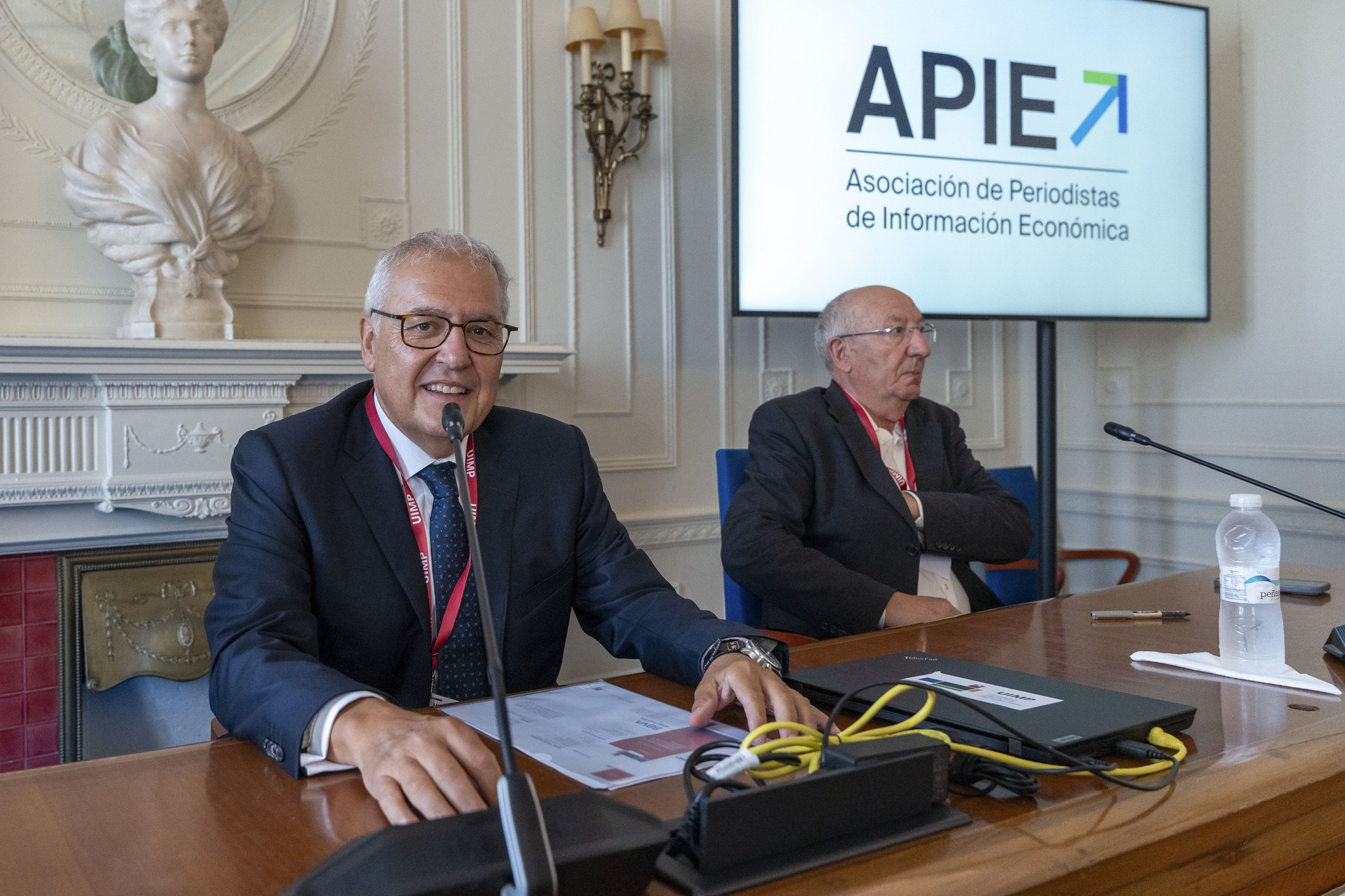
Panduro (Indra Space) apuesta por fusiones en el sector espacial español y europeo, pero "sin matar al resto de la industria" Afirma que se siente "bastante cómodo" tras los cambios en la cúpula de Indra y apunta que el nuevo plan estratégico no debería suponer un cambio radical en la actividad espacial del grupo. Leer
expansion · 2 months ago
Report: U.S. needs framework for responding to hostile acts in space Mitchell Institute workshop participants found little consensus on where competition ends and conflict begins as China expands counterspace capabilities The post Report: U.S. needs framework for responding to hostile acts in space appeared first on SpaceNews.
spacenews · 2 months ago
China appears to be developing 7-meter-diameter reusable rockets A state-funded tender for tank tooling, a delivered stainless steel forging and launch pad planning suggest that China is developing 7-meter-diameter reusable rockets. The post China appears to be developing 7-meter-diameter reusable rockets appeared first on SpaceNews.
spacenews · 2 months ago
Lula pledges partnership with China to balance global geopolitics
gdeltproject.org · 2 months ago

Orion CMC in advanced discussions for three Asian partnerships reut.rs/4aQO8dV
bluesky bot · 2 months ago

China beats US with worlds fastest supercomputer, but race not geared for AI work reut.rs/4g2ahJS
bluesky bot · 2 months ago
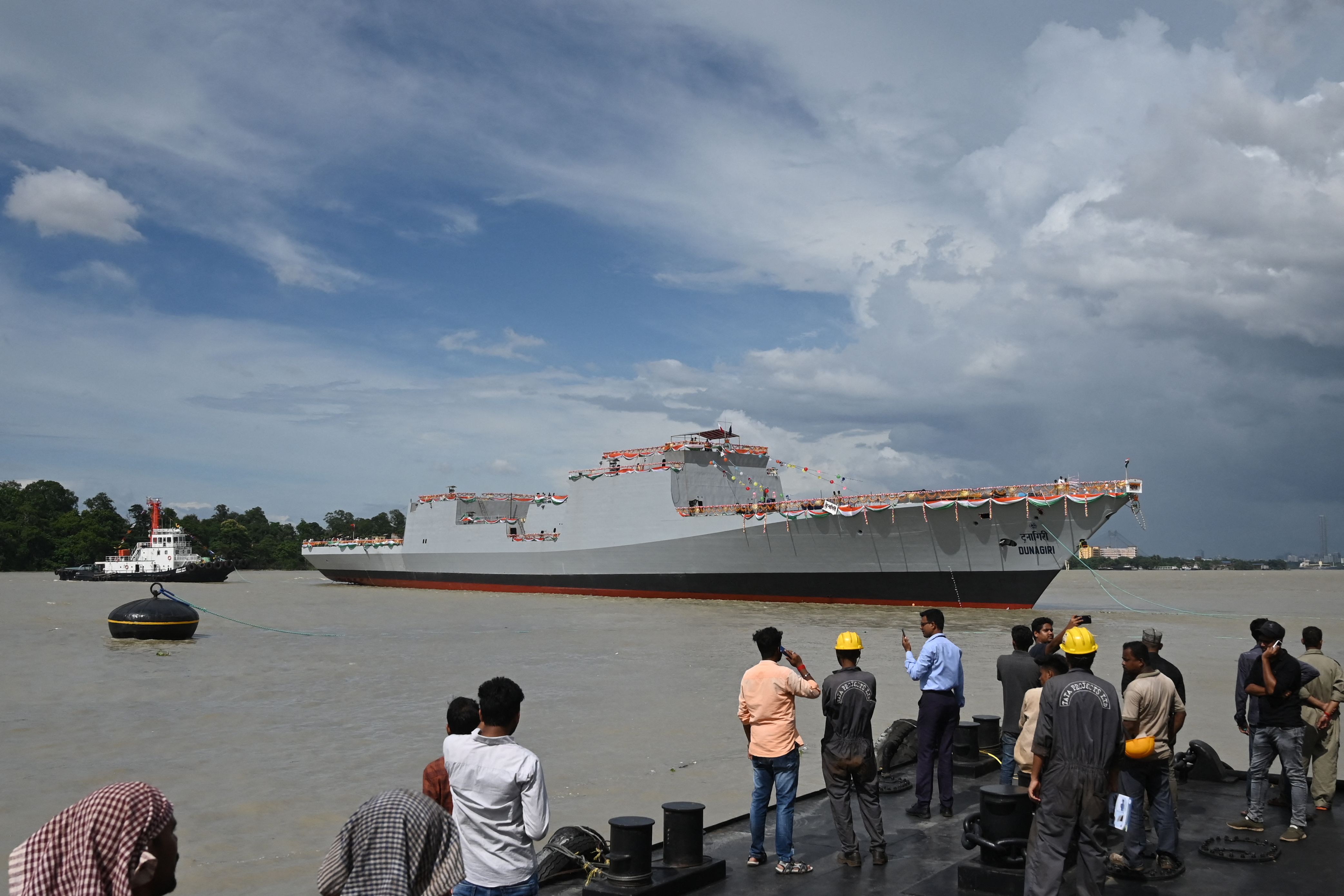
Indias three new naval ships boost maritime firepower The country has made strides in constructing complex naval platforms but remains dependent on foreign suppliers for key technologies.
defense news · 2 months ago
Νέα ακαδημαϊκή συνεργασία μεταξύ Παντείου και Columbia για τη μελέτη της σύγχρονης Κίνας Η συνεργασία σηματοδοτεί ένα σημαντικό βήμα διεθνοποίησης για το Πάντειο και ενισχύει τη συμμετοχή του σε κορυφαία διεθνή ακαδημαϊκά δίκτυα
protothema · 2 months ago
Nutzfahrzeuge: Chinesischer Lkw-Riese meldet erfolgreiche Tests des Natrium-Ionen-Akkus Der staatliche Nutzfahrzeughersteller FAW hat Schwerlaster mit einer neuartigen Batterietechnologie erprobt. Die Testergebnisse könnten die Elektrifizierung des Güterverkehrs beschleunigen.
handelsblatt · 2 months ago

Volkswagen enters Uzbekistan using China as export base
news.yahoo.com · 2 months ago

What the West Can Learn From China—Without Becoming It Plus, how export controls can backfire unless allies move in lockstep.
wsj · 2 months ago
Europe as science superpower: what it will take to rival the US and China
gdeltproject.org · 2 months ago