Loading…
 Saturday, September 26Saturday, September 26
4 months · 9 summary articles
China launched a maritime law enforcement operation east of Taiwan on Sunday, prompting Taipei to deploy coast guard vessels in response, as tensions escalate over recent maritime boundary talks between Japan and the Philippines. Beijing described the move as a “special law enforcement operation” in waters it claims as its own, while Taiwan’s government condemned the action as a violation of international law.
The Chinese operation follows a joint announcement by Tokyo and Manila on Friday that they would begin negotiations to delineate their exclusive economic zones and continental shelves in the region. Chinese state media framed the deployment as a direct response to these discussions, which Beijing views as an infringement on its maritime sovereignty. Taiwan’s coast guard confirmed it had dispatched ships to the area, citing the need to “safeguard national interests” and uphold maritime order .
Taipei’s foreign ministry issued a statement late Saturday calling the Chinese operation “unilateral and provocative,” arguing that it contravenes the United Nations Convention on the Law of the Sea. “Such actions undermine regional stability and are inconsistent with international norms,” a ministry spokesperson said. The coast guard ships are operating under heightened readiness protocols, with officials monitoring the situation closely.
The timing of the operation coincides with a rare state visit by Chinese President Xi Jinping to Pyongyang, his first since 2019, where he is expected to meet North Korean leader Kim Jong-un. The visit comes as North Korea’s nuclear status remains a flashpoint, with Kim Yo-jong, the influential sister of Kim Jong-un, reaffirming on Sunday that Pyongyang’s nuclear arsenal is “non-negotiable” and an “irreversible reality.” Her remarks, delivered hours before Xi’s arrival, underscore the regime’s defiance amid international pressure .
Meanwhile, South Korea has taken a step toward political renewal, with President Lee Jae-myung nominating Han Seong-sook as the country’s first female prime minister in two decades. The nomination, pending parliamentary approval, reflects a broader shift in Seoul’s domestic agenda amid regional security challenges.
Analysts warn that the simultaneous escalation in the Taiwan Strait and the Korean Peninsula could strain diplomatic channels. “The convergence of these events is not coincidental,” said a senior fellow at the Berlin-based Mercator Institute for China Studies. “China is signaling resolve on multiple fronts, from maritime boundaries to alliance-building with North Korea.”
As the situation develops, regional capitals are bracing for further reactions. Japan’s defense ministry has increased surveillance flights over the East China Sea, while the U.S. Seventh Fleet has maintained its standard patrol schedule in the region. The European Union, through its foreign policy chief, called for restraint and dialogue, emphasizing the need to avoid miscalculation in waters already fraught with competing claims.
Follow us for live European news

VANGERDUS KESKPANGAS ⟩ Eesti Pank sai pühapäeval uue presidendi Eesti Panga presidendina alustab pühapäevast tööd Ülo Kaasik, kes on Estonia puiesteel ametis olnud juba 31 aastat.
postimees · 4 months ago
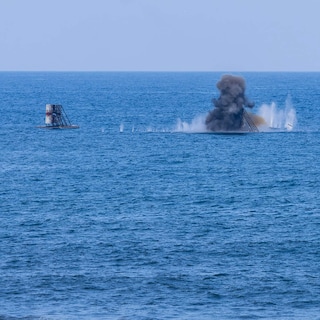
Spanningen rond Taiwan lopen op: Chinese handhavingsoperatie leidt tot inzet van Taiwanese kustwacht
de morgen · 4 months ago
Absage an nukleare Abrüstung in Nordkorea: Kims Schwester nennt Status als Atommacht „nicht verhandelbar Kim Jong Uns Schwester nennt Nordkoreas Atomstatus eine „unumkehrbare Realität. Ihre Aussage erfolgt nur wenige Stunden vor dem ersten Staatsbesuch des chinesischen Präsidenten seit 2019.
tagesspiegel · 4 months ago
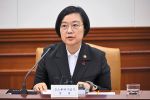
Erstmals seit 20 Jahren südkoreanische Ministerpräsidentin nominiert Für das Amt hat Präsident Lee Jae-myung die Ministerin Han Seong-sook vorgeschlagen. Das Parlament muss der Personalie noch zustimmen
der standard · 4 months ago
Streit um Seegrenzen: Taiwan entsendet Schiffe nach chinesischem Einsatz In den Gewässern östlich von Taiwan sind chinesische Schiffe im Einsatz. Hintergrund sind Gespräche zur Festlegung einer Seegrenze. Die Küstenwache Taiwans reagiert.
die zeit · 4 months ago
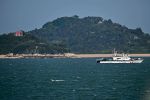
Reaktion auf Chinas "Sicherheitseinsatz": Taiwan entsendet Schiffe Nach Ansicht Taipehs verstößt Chinas Einsatz "gegen das Völkerrecht". Hintergrund sind Gespräche zwischen Japan und den Philippinen über ihre Seegrenzen
der standard · 4 months ago
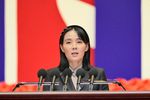
Kim Yo-jong hält an Nordkoreas Status als Atomwaffenmacht fest Geht es nach der Schwester von Nordkoreas Machthaber Kim Jong-un, sollten feindliche Kräfte ihre "Tagträume von einer Denuklearisierung aufgeben"
der standard · 4 months ago
China anunță începerea unei operațiuni speciale navale în apropierea Taiwanului China a anunțat lansarea unei operațiuni speciale de aplicare a legii maritime în apele situate la est de insula Taiwan, după ce Japonia și Filipine au declarat că vor începe discuții privind delimitarea zonelor economice exclusive și a platoului continental în regiune.
adevarul · 4 months ago
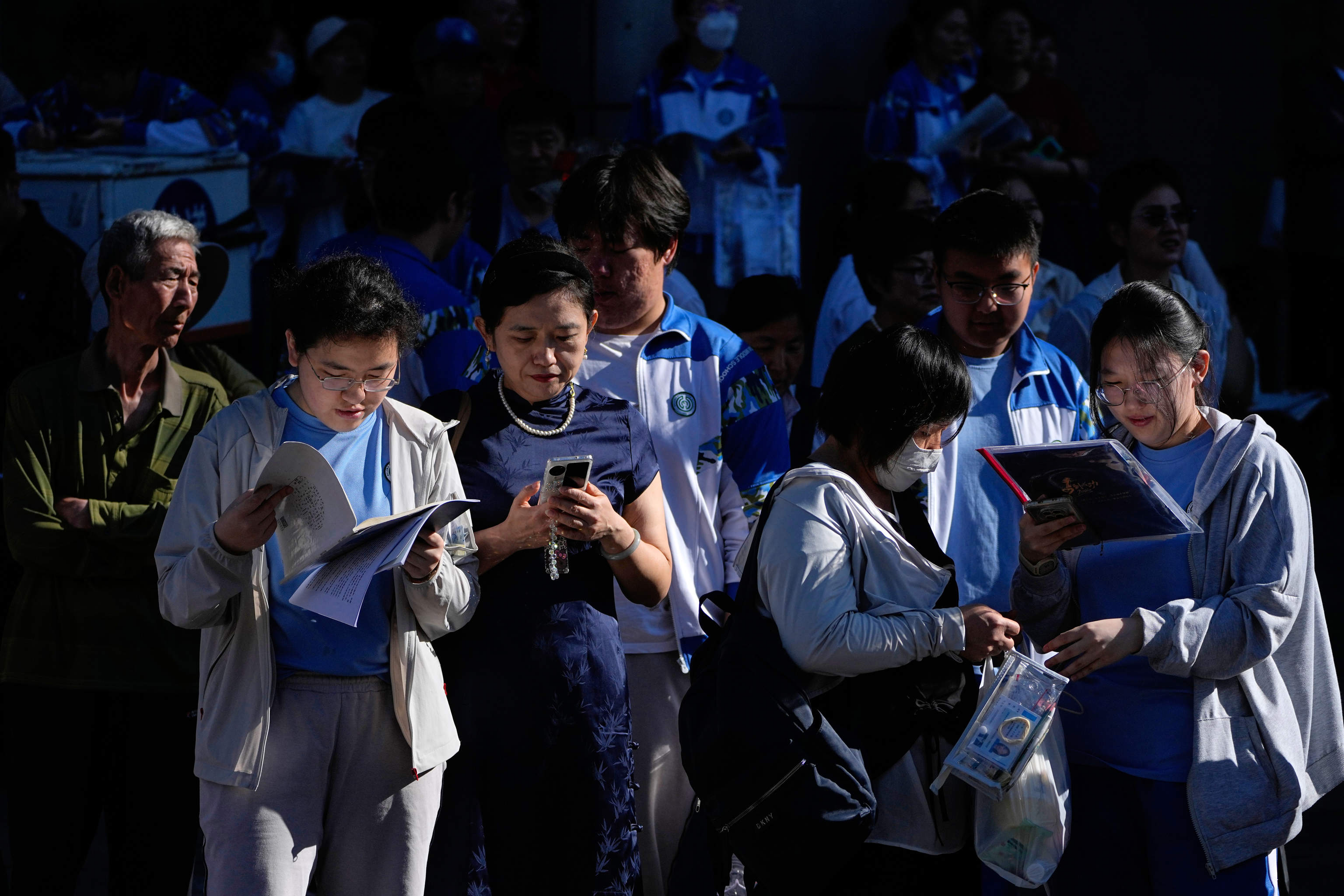
El examen que paraliza China: 12,9 millones de estudiantes compiten por un billete hacia la élite El gaokao sigue determinando el acceso a las mejores universidades mientras las autoridades intentan blindarlo frente a las gafas inteligentes y la IA Leer
elmundo · 4 months ago
Can China Really Lead the World on Climate?
gdeltproject.org · 4 months ago

South Korea nominates Han as countrys first female prime minister in two decades reut.rs/43mjntj
bluesky bot · 4 months ago
„Nu se negociază! Sora lui Kim Jong-un blochează orice discuție despre programul nuclear al Coreei de Nord Programul nuclear al Coreei de Nord este „absolut nenegociabil, a afirmat Kim Yo Jong, sora influentă a liderului Kim Jong-un, citată duminică de agenţia de presă sud-coreeană Yonhap, în ajunul vizitei în ţară a preşedintelui chinez Xi Jinping. Sora mai mare a lui Kim Jong-un ocupă oficial doar funcţia de directoare a departamentului de afaceri generale al Partidului Muncitorilor din Coreea, aflat la putere, dar este considerată o figură-cheie în domeniul comunicării şi al politicii externe a ţării.
digi24 · 4 months ago
Escaladare în Strâmtoarea Taiwan: China a lansat o operațiune maritimă „de aplicare a legii. Cum a reacționat Taipeiul China a organizat o „operaţiune de aplicare a legii în apele din estul Taiwanului, ca răspuns la recentele discuţii dintre Japonia şi Filipine privind frontierele lor maritime, potrivit mass-media de stat chineză, în timp ce Taipei a anunţat, la rândul său, trimiterea unor nave ale pazei de coastă în zonă, relatează AFP.
digi24 · 4 months ago

„Entweder wir wehren uns, oder China macht Teile unserer Industrie platt EVP-Chef Manfred Weber sagt, Europas „Zeit der Naivität gegenüber China sei vorbei. Er fordert einen härteren Kurs. Der CSU-Vize sieht eine Blaupause in den EU-Zöllen auf chinesische Autos.
welt.de · 4 months ago

Chinesischer „Spezialeinsatz – Taiwan entsendet Schiffe und wittert Verstoß gegen Völkerrecht Östlich von Taiwan führen chinesische Schiffe einen „Sicherheitseinsatz durch. Hintergrund sind Gespräche über Seegrenzen, die in Peking für Unmut sorgen. Taiwans Küstenwache reagiert.
welt.de · 4 months ago
Why is Chinese President Xi Jinping visiting North Korea now? The Chinese leader is making his first trip to Pyongyang in seven years amid significant military developments.
aljazeera · 4 months ago
Xi Jinping bezoekt Noord-Korea: Kim Jong-un wil profiteren De Chinese president Xi Jinping komt morgenochtend aan in de Noord-Koreaanse hoofdstad Pyongyang voor een tweedaags bezoek. Voor leider Kim Jong-un komt het bezoek op een gunstig moment: de banden met zowel China als Rusland worden hechter, waardoor zijn positie internationaal sterker lijkt dan het in jaren is geweest.
rtl nieuws · 4 months ago