
Eugen Tomac faces two-week deadline to break Kosovos 16-month deadlock
Kosovo’s ruling party, Vetëvendosje, led by Prime Minister Albin Kurti, secured 43.6% of the vote in Sunday’s snap parliamentary elections, according to final results from 99% of polling stations, but the outcome leaves the government still dependent on coalition talks to break a 16-month institutional deadlock. The result marks a sharp decline from December 2025, when Kurti’s party won 50.6%, and turnout fell to 36%, underscoring voter fatigue amid persistent political paralysis.
Eugen Tomac, the president’s designated candidate for prime minister, now faces a two-week deadline to assemble a governing majority after President Vjosa Osmani tasked him with forming a new cabinet. Tomac, leader of the Democratic Alliance of Hungarians in Romania (UDMR), has begun critical negotiations with parliamentary parties, including PNL, USR, and PSD, aiming to secure the 61-seat threshold needed for parliamentary confidence. “The consultations will determine whether Kosovo can exit its prolonged crisis,” Tomac told reporters in Pristina on Monday, as he outlined plans to present a governing program to lawmakers within the constitutional timeframe.
Analysts warn the path forward remains fraught. Vetëvendosje’s loss of seven percentage points reflects growing dissatisfaction with Kurti’s handling of governance, economic stagnation, and stalled EU accession talks. “The election underscores a fragmented parliament where no single party can govern alone,” said political scientist Florin Popescu at the University of Bucharest. “Tomac’s success hinges on brokering a coalition that balances reformist ambitions with ethnic minority representation.”
The election, Kosovo’s third in 18 months, was triggered after Vetëvendosje’s previous coalition collapsed in March over disputes on minority rights and budget allocations. International observers, including the EU’s Election Observation Mission, noted procedural irregularities but deemed the vote “generally well-administered.” Turnout, however, dropped from 45% in December to 36%, signaling voter disillusionment with repeated elections amid unmet promises.
With Tomac’s consultations underway, Kosovo’s political class faces pressure to deliver stability before the summer recess. Failure to form a government could trigger another snap election, deepening institutional fatigue. “Kosovo cannot afford another election cycle without tangible progress,” warned EU foreign policy chief Josep Borrell in a statement on Monday. The bloc has tied further integration to governance reforms, including anti-corruption measures and minority protections.
As Tomac meets party leaders this week, the stakes extend beyond Pristina. A prolonged impasse risks emboldening nationalist factions and complicating Kosovo’s NATO-backed security arrangements. For a nation still grappling with its post-independence identity, the coming days will test whether its fractured political class can prioritize governance over gridlock.
Follow us for live European news
- 2
- 2
- 2
- 2
- 2
- 1
- 1
- 1
- 1
- 1
- 1
2 further sources not geolocated
Articles

La situation des Engagés est en trompe-lœil, ils sont sauvés par les mécontents du MR La récente enquête dopinion menée par lULB et lUniversité dAnvers montre que le parti dYvan Verougstraete et de Maxime Prévot – stable dans les intentions de vote – est en train de sinstaller durablement au centre-droit de léchiquier politique, allant jusquà se revendiquer du libéralisme. ...
la libre · 2 months ago

Schulze will sich zum Ministerpräsidenten wählen lassen – unabhängig vom Wahlergebnis Nur wenige Monate vor der Landtagswahl in Sachsen-Anhalt steht die AfD in der jüngsten Umfrage bei 42 Prozent, die CDU liegt mit 24 Prozent abgeschlagen dahinter. Für den CDU-Kandidaten Sven Schulze sind die Wahlergebnisse offenbar zweitrangig.
welt.de · 2 months ago

Aziz Yıldırım elected Fenerbahçe president in comeback victory Former Fenerbahçe president Aziz Yıldırım has been re-elected as club president after defeating Hakan Safi in an extraordinary general assembly. Yıldırım, who previously led the club from 1998 to 2018, received 17,245 votes against Safis 9,927.
yenisafak · 2 months ago
South Korea election victory marred by ongoing ballot crisis An unprecedented administrative failure by election authorities left thousands of voters without ballots, triggering violent street demonstrations and allegations of systematic electoral fraud.
intellinews · 2 months ago
Vetëvendosje leads Kosovo snap elections as turnout falls to 36 Albin Kurtis Vetëvendosje secured 43.6 of the vote in Kosovos third general election since February 2025.
intellinews · 2 months ago
Cum se formează noul Guvern. Pașii pe care trebuie să îi parcurgă Eugen Tomac și viitorii miniștri După desemnarea lui Eugen Tomac de către președinte pentru funcția de prim-ministru, acesta are la dispoziție un termen clar pentru a alcătui echipa guvernamentală și programul de guvernare cu care se va prezenta în fața Camerelor reunite ale Parlamentului pentru obținerea votului de încredere.
adevarul · 2 months ago
Consultări pentru viitorul Guvern. Premierul desemnat Eugen Tomac se întâlnește luni cu reprezentanți PNL, USR și PSD Eugen Tomac începe, luni, seria consultărilor politice cu partidele parlamentare. Premierul desemnat speră să obțină susținere pentru validarea în Parlament a guvernului pe urmează să-l propună.
adevarul · 2 months ago
Krise könnte anhalten: Regierungspartei von Kurti gewinnt Kosovo-Wahl Nach Auszählung von mehr als 99 Prozent der Stimmen liegt Vetevendosje bei 43 Prozent, bleibt aber für eine neue Regierung auf Koalitionspartner angewiesen.
faz · 2 months ago
European capitals push for talks but Putin remains unmoved Also in this newsletter: Kosovos ruling party wins a second snap election in six months
financial times · 2 months ago
„A Fidesz már nem fog megfiatalodni Sulyok Tamásért tüntettek vasárnap: Huth Gergely mérges kishörcsögnek nevezte Magyar Pétert, Pócs János elmondta, a Fidesz „az ördöggel is cimborálni fog, hogy megőrizze a demokráciát, Havasi Bertalan pedig amiatt szomorkodott, hogy a hírhamisításról elhíresült Papp Dániel lemondott.
444.hu · 2 months ago
Draget – om Demokraterna vinner: Utreda så många som möjligt Demokraterna planerar en rivstart om de vinner mellanårsvalet i höst.Mängder av Trumps allierade kan vänta sig att utredas – och kanske åtalas.– Det är en hård kamp om vem som är den största skurken, säger Juan Vargas, demokratisk ledamot i representanthuset.Expressens nyhetsapp ger dig alla nyheter – ladda ned den här
expressen · 2 months ago
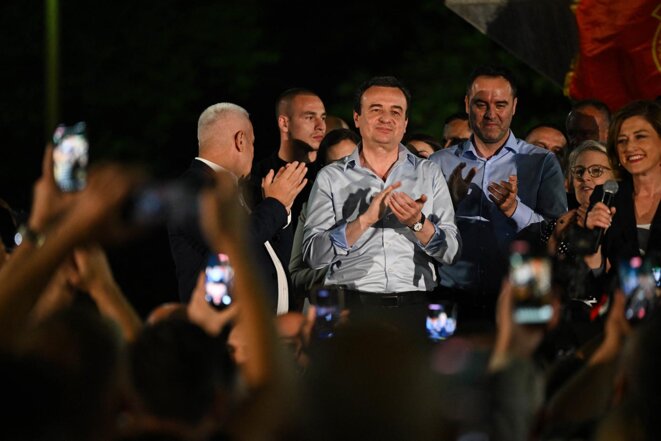
Kosovo: la formation dAlbin Kurti remporte les législatives, mais en recul Le score en recul du premier ministre laisse présager des négociations compliquées sur la nouvelle majorité, alors que le petit pays des Balkans est confronté depuis seize mois à une paralysie institutionnelle.
mediapart · 2 months ago
Premierul desemnat Eugen Tomac începe azi negocierile decisive cu liderii partidelor pentru Guvern. Programul consultărilor Premierul desemnat Eugen Tomac începe, luni, consultările politice cu formaţiunile parlamentare, pentru a construi o majoritate care să asigure susţinerea în Legislativ a viitorului Guvern.
digi24 · 2 months ago
Tweede week corona-enquête: burgemeester Bruls en topambtenaar worden gehoord De parlementaire enquête naar het coronabeleid gaat maandag de tweede week in. Deze week komen veel kopstukken langs, onder wie vrijdag oud-premier Mark Rutte en de toenmalig…
nrc · 2 months ago
Kosovo: le parti du Premier ministre Albin Kurti en tête des législatives malgré un net recul Le parti du Premier ministre sortant Albin Kurti obtient 43 des suffrages exprimés aux élections législatives de ce dimanche. Un résultat en forte baisse par rapport à celui obtenu en décembre 2025. La participation a aussi beaucoup baissé.
rfi.fr · 2 months ago
Initial results show Prime Minister Kurtis party won most votes in early election in Kosovo
gdeltproject.org · 2 months ago
Trump Is Doing What FDR Could Not But the presidents success at purging his party could cost the GOP in the long term.
foreignpolicy.com · 2 months ago

Top chefs back Andy Burnham for prime minister to cut VAT on hospitality Tom Kerridge says whole of hospitality should get behind Burnham who has called for VAT cut from 20 to 10Chefs and restaurateurs have said they hope Andy Burnham becomes prime minister after he backed calls to cut VAT tax for hospitality businesses.Burnham, who is standing as the Labour candidate in the Makerfield byelection and is expected to launch a challenge to Keir Starmers leadership if he wins, has called for the rate to be cut from 20 to 10 to be in line with European rates. Continue reading...
theguardian · 2 months ago
Der verwegene Plan der CDU im Osten Mit Blick auf die entscheidenden Landtagswahlen im September in Sachsen-Anhalt und Mecklenburg-Vorpommern, wo die AfD in Umfragen bei rund 40 Prozent liegt, wächst der Druck auf Friedrich Merz massiv. Seine am Wochenende geäußerte, an Angela Merkel erinnernde Formel „Wir schaffen das ist ein Wahlkampf-Fingerzeig an die Landesverbände. Im 200-Sekunden-Interview: Sachsen-Anhalts CDU-Ministerpräsident und Spitzenkandidat Sven Schulze […]
politico.eu · 2 months ago

Le pire des scénarios pour la démocratie, ce serait quil y ait une rupture au MR et que sa frange la plus radicale crée un nouveau parti LEnquête nationale, menée par lULB et lUniversité dAnvers et diffusée par la RTBF, laisse entrevoir une reconfiguration du paysage politique francophone. Décryptage avec Jean-Benoît Pilet, politologue à ULB. ...
la libre · 2 months ago
Jersey (UK Crown Dependency) election: chief minister (head of government) Lyndon Farnham (Ind.-*) has been re-elected on the senatorial ballot. Centre-left Reform Jersey (RJ-*) leader Sam Mézec failed to win a seat on the ballot, and has therefore lost his seat in the parliament. #JerseyElection2026
telegram bot · 2 months ago