One in five people across the Balkans lives at risk of poverty or struggles to cover basic needs, according to national statistical agencies, with pensioners, single parents, and young adults aged 18 to 24 most vulnerable.
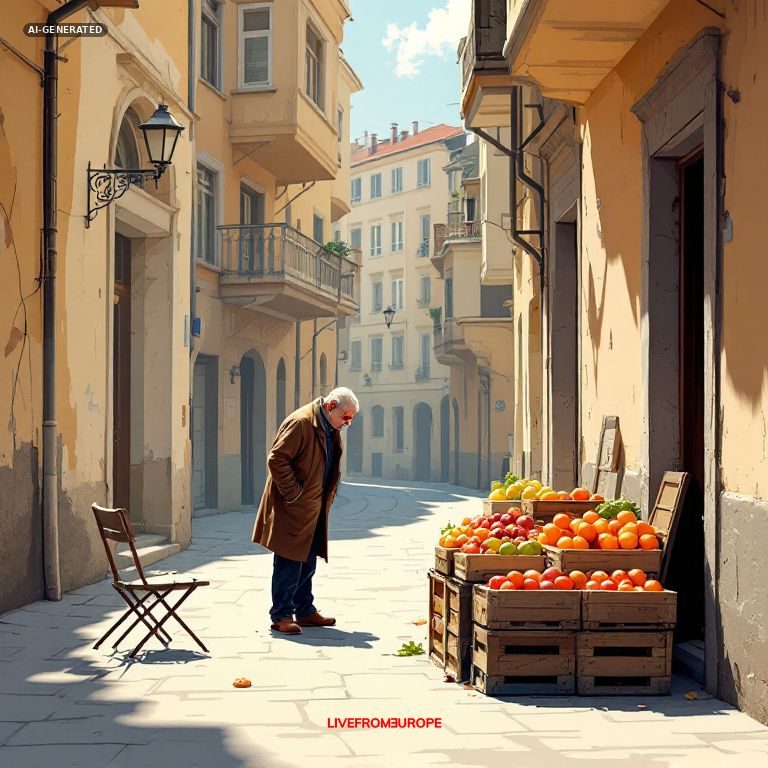
In Serbia, 19.6% of the population faced poverty risk in 2025, with the threshold set at 45,674 dinars monthly for a single-person household. Pensioner Dragica Živić, 70, sells fruit at a makeshift stall in Belgrade because her 31,000 dinar pension fails to cover expenses. “I don’t know what the numbers say, but my pocket is empty,” she told BBC News na srpskom . Near Pristina, Kosovo, Ćazim Zuškoli supports 11 family members on social aid of 250 euros, supplemented by collecting recyclables. “I earn between 10 and 30 euros, sometimes nothing. Prices jump, but what can we do? Nothing,” he said .
Official data show seniors over 65 face the highest poverty risk in nearly every Western Balkan country. In Serbia, 23.4% of pensioners were at risk in 2025, while nearly half of unemployed adults and 13% of self-employed workers also faced poverty, according to the Republic Statistical Office . Mihail Arandarenko, professor at Belgrade’s Faculty of Economics, linked poverty to income inequality, noting that subjective hardship aligns with national wealth disparities, citing Moldova, Serbia, Greece, and Bulgaria compared to Sweden or Germany .
Globally, 1.2 billion people live in absolute poverty, an increase of 51.5 million since 2025, marking the first rise since 2010, according to United Nations data . In Serbia, experts estimate around 500,000 people live in absolute poverty, though official tracking ceased in 2021 . Žarko Šunderić, director of the Center for Social Policy, criticized Serbia’s outdated 2011 social protection law and lack of a concrete poverty reduction strategy .