Loading…
 Saturday, August 29Saturday, August 29
2 months · 3 summary articles
Tens of thousands march in Budapest for first Pride parade in years after ban ends
Tens of thousands march in Budapest Pride parade after years of ban ends
Budapest holds first legal Pride march in years as thousands march in heat
Tens of thousands of Hungarians braved a record heatwave on Saturday to celebrate the first Budapest Pride march in years, marking a symbolic end to Viktor Orbán’s 16-year crackdown on LGBTQ+ rights. The event, held under a scorching 38°C sun, proceeded without police interference after a new government granted the permit—a stark reversal from 2025, when Orbán’s administration banned the parade under a law targeting queer communities .
The march, which began at the Opera House and ended at Vérmező Park, drew participants from across Hungary and Europe, many carrying rainbow and EU flags. Organizers hailed it as a “new era” for LGBTQ+ rights in the country, though the new Prime Minister, Péter Magyar, did not attend. His ambiguous stance on queer issues—avoiding the topic during his election campaign and recently stating that “nobody should be stigmatised because of the way they love”—left activists cautious about future policies .
Hungarian police confirmed the event’s legality just minutes before it started, a sharp contrast to last year’s ban. The reversal came after Budapest Mayor Gergely Karácsony received legal confirmation of the march’s permit, ending months of uncertainty . Despite the extreme heat, participants described the atmosphere as “liberated,” with many celebrating the end of Orbán’s era of restrictions.
EU officials also weighed in, with European Commission President Ursula von der Leyen praising the march as a sign of progress. “All of Europe is proud of Budapest Pride,” she said, adding that the LGBTQ+ community could finally march “without fear” . Meanwhile, Belgium’s EU Commissioner for Equality, Hadja Lahbib, attended the event and met with members of Hungary’s new government to discuss LGBTQ+ rights.
The march’s success came despite lingering legal uncertainties. A 2025 law used to ban the parade remains in place, though authorities this year allowed the event to proceed. Organizers warned that the fight for full equality is far from over, with some activists vowing to return to the streets if the new government fails to deliver on promises .
Follow us for live European news

„Ha hurrikán lenne akkor is kijönnék dragbe – ilyen volt a Budapest Pride Míg tavaly voltak akik szorongva vagy félve jöttek ki, a résztvevők idén már sokkal felszabadultabban tudták élvezni a felvonulást, még a hőségriadó ellenére is. A menetelőket többek között arról kérdeztük, hogy hiányolják-e Magyar Pétert a felvonulásról.
444.hu · 2 months ago
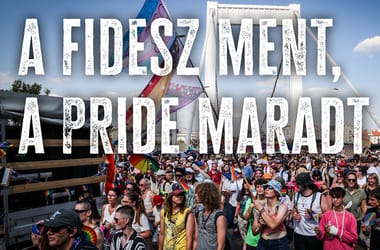
Ha az új kormány sem változtat, akkor megint az utcára megyünk – Videóriport a Pride-ról Hőkupola alatt, közel negyven fokos hőségben zajlott a kormányváltást követő első Pride. Felszabadult az LMBTQ-közösség? Hogyan ítélik meg Ruszin-Szendi Romulusz kiszólását? És Magyar Péterét? Riport a menetről.
hvg.hu · 2 months ago
Schlein al Pride di Milano nel ricordo di Mirko: Lomotransfobia uccide Centinaia di migliaia di persone alla parata. La leader dem: Odio e discriminazione portano alla violenza. In piazza anche Sala
corriere · 2 months ago
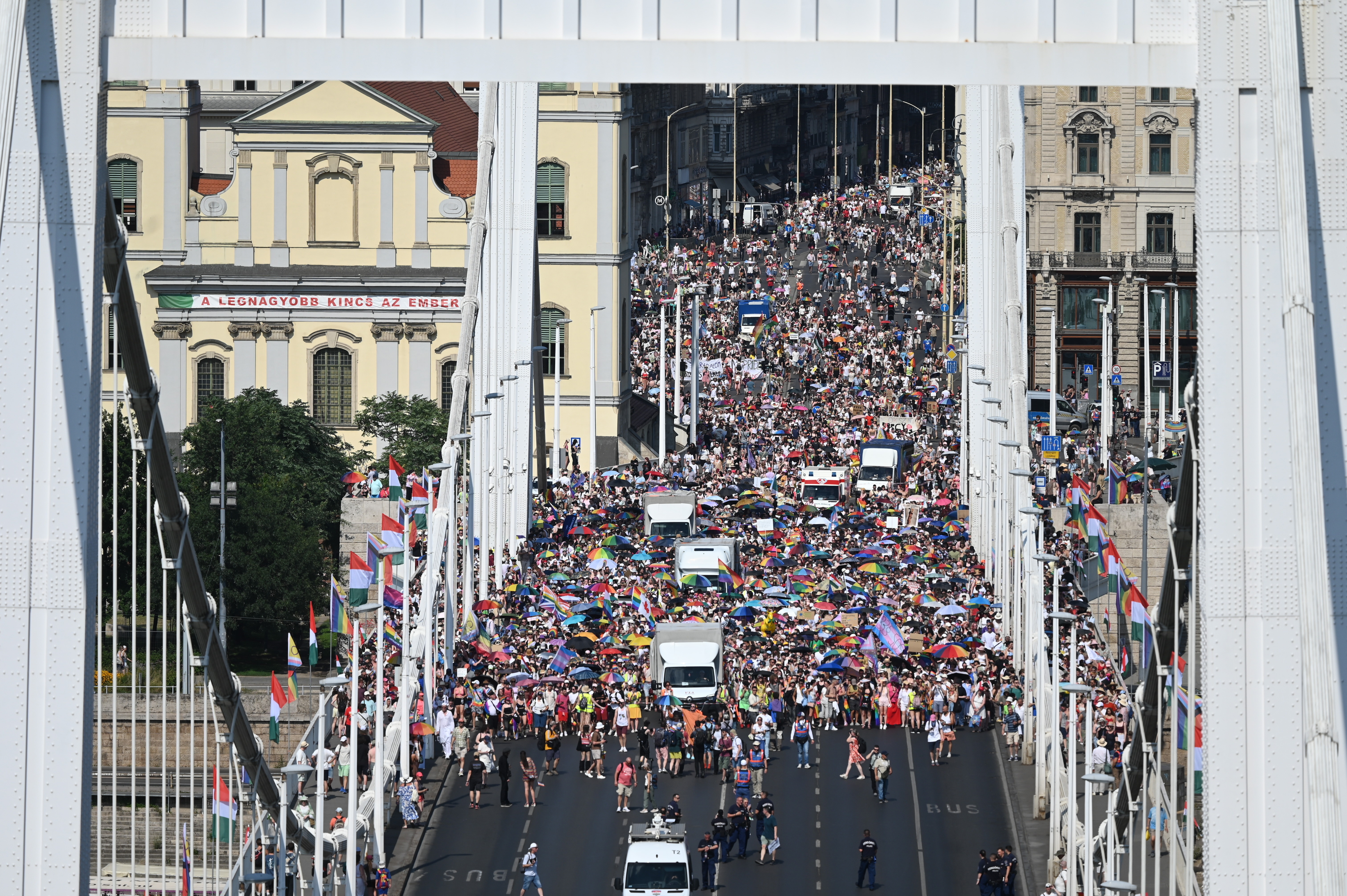
Tens of thousands march in first Budapest Pride since Orbán ouster
gdelt bot · 2 months ago
NEW - Thousands march in the first Budapest Pride since Orbán left office. Read here: @disclosetv
telegram bot · 2 months ago
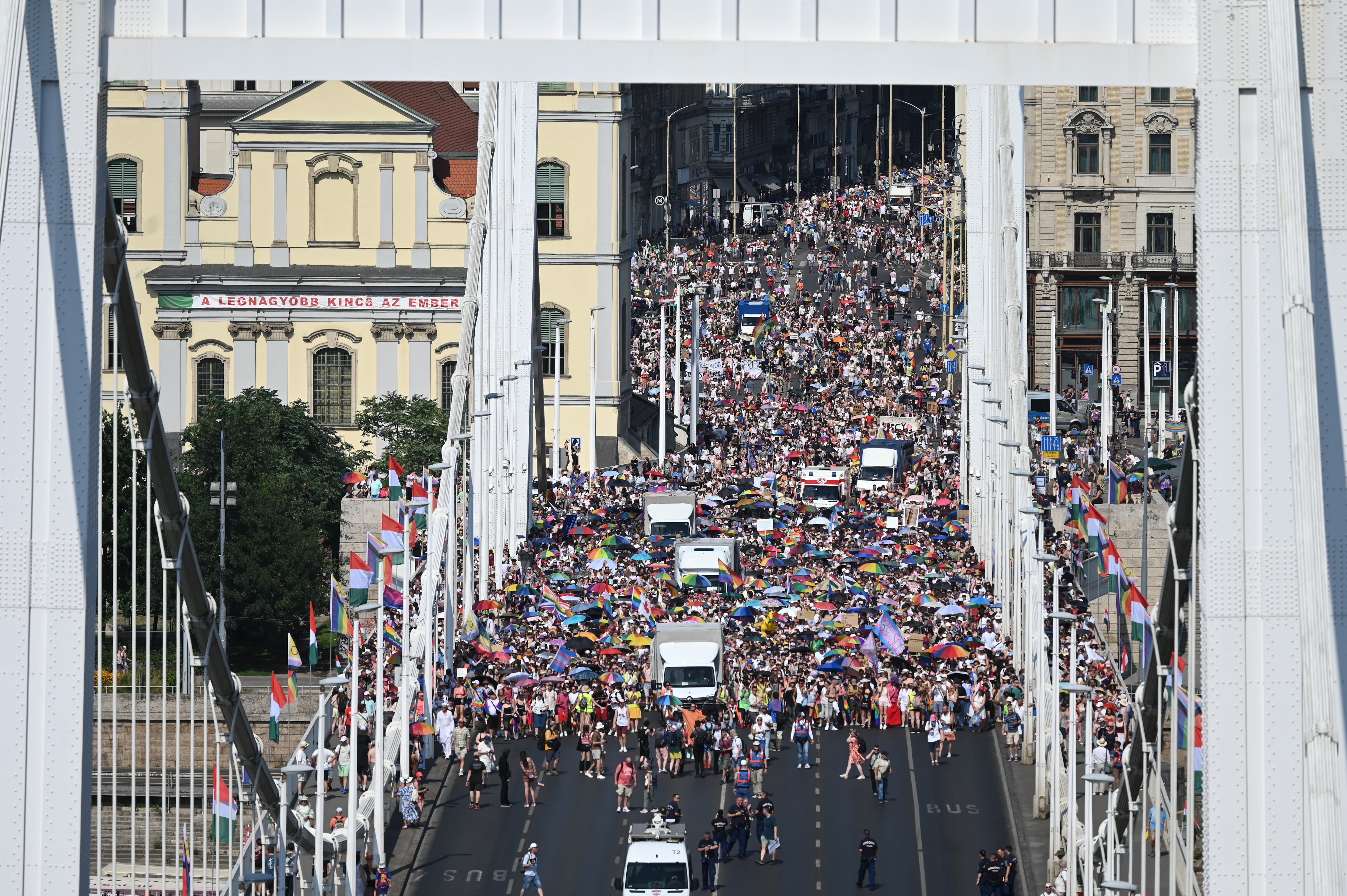
Hungarians turn out in thousands for first Pride march since Viktor Orbán was voted out
gdelt bot · 2 months ago
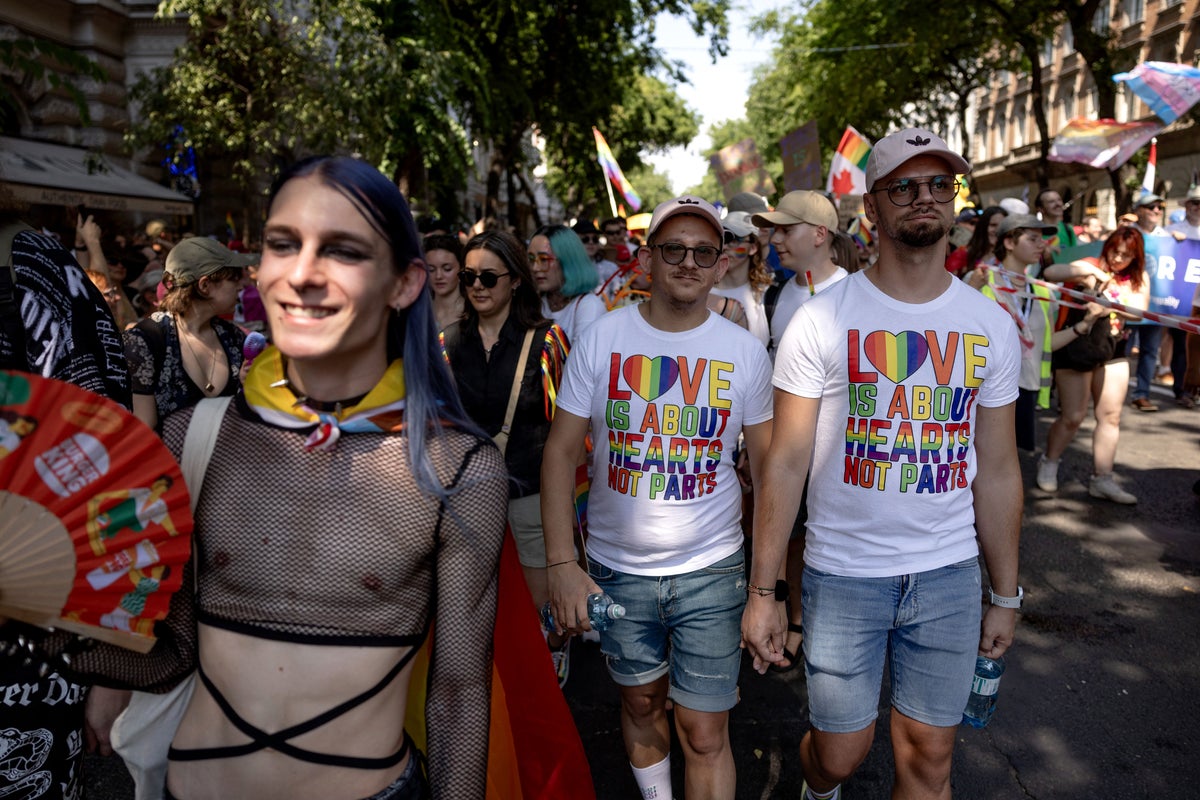
Tens of thousands brave record heatwave to celebrate Pride in Budapest Viktor Orban tried to ban the march as part of his wider policies targeting LGBTQ+ rights
independent · 2 months ago
Három embert állítottak elő a rendőrök Budapest Pride-on Két férfival szemben garázdaság, eggyel szemben közerkölcs megsértése miatt indult eljárás.
hvg.hu · 2 months ago
Pontosan ilyennek kell lennie egy Pride-nak Hosszú idő után először nem a félelem és a düh, hanem a jó érzés, a szolidaritás és a felszabadultság vitte ki az embereket az utcára.
444.hu · 2 months ago

Az Európai Bizottság elnöke szerint egész Európa büszke a Budapest Pride-ra Ursula von der Leyen boldog, hogy a magyar LGBTQ-közösség végre félelem nélkül vonulhatott.
hvg.hu · 2 months ago
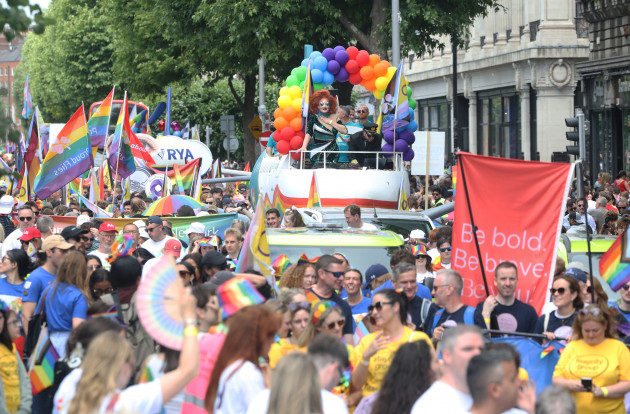
Dublin celebrates Pride with parade, performances and packed city streets A number of events and club nights are taking place across the city.
thejournal · 2 months ago
Förra årets parad förbjöds – i dag hålls Budapest Pride lagligt Förra året förbjöd Orbán-regeringen prideparaden i Budapest. Det här året, efter ett maktskifte i Ungern, ser det annorlunda ut.– Idag kommer vi fira att hbtqi-personer kommer få ett bättre liv här i Ungern, säger Benjamin Dousa (M), Sveriges bistånds- och utrikeshandelsminister, som är på plats för att gå paraden.
expressen · 2 months ago
Canti e balli al Pride di Milano, gli organizzatori: Siamo 350mila. Lo striscione per Vannacci: Abbiamo diritti? Sì anche di essere ammazzati Decine di migliaia di persone hanno partecipato al corteo del Pride di Milano, che ha attraversato il centro della città fino allarrivo allArco della Pace dovè in programma il concerto finale. Secondo gli organizzatori sono stati 350mila i partecipanti. Intorno alle 19,30 la testa del corteo non era ancora arrivata allArco della Pace. Tanta musica, […] Larticolo Canti e balli al Pride di Milano, gli organizzatori: Siamo 350mila. Lo striscione per Vannacci: Abbiamo diritti? Sì anche di essere ammazzati proviene da Il Fatto Quotidiano.
il fatto quotidiano · 2 months ago
Rekordné horúčavy ani roky represií ich nezastavili. Budapešť zažila prvý Pride po konci vlády Viktora Orbána Budapeštiansky Pride po páde Orbána zaplnil ulice desaťtisícmi ľudí aj v 38 stupňoch. Účastníci hovoria o uvoľnenej atmosfére a nádeji na zmenu.
aktuality.sk · 2 months ago
Ungarn: Zehntausende demonstrieren bei Pride Parade in Budapest Trotz Hitze gehen Zehntausende in Budapest für die Rechte queerer Menschen auf die Straße. Im Vorjahr war die Veranstaltung unter der Regierung Orbáns verboten worden.
die zeit · 2 months ago
Micsoda véletlen! A Pride indulása előtt pár perccel kapott levelet Karácsony Gergely a bíróságtól Az áll benne, hogy a tavalyi felvonulás megszervezése miatt ellene indított büntetőeljárást megszüntették.
444.hu · 2 months ago
Zeci de mii de persoane, în ciuda caniculei, la primul marș Pride din Budapesta după era Orban Zeci de mii de persoane au participat sâmbătă la marșul Pride de la Budapesta, desfășurat pentru prima dată după încheierea celor 16 ani de guvernare ai lui Viktor Orbán. În ciuda caniculei, participanții au celebrat un nou început pentru comunitatea LGBTQ+ din Ungaria, după ani marcați de politici restrictive promovate de fostul premier.
digi24 · 2 months ago
Elindult a Pride, a menetet már nem a kormányváltó düh mozgatja Persze, hogy kevesebben vannak a tavalyinál, nem kell már tiltakozni semmi ellen, és baromi meleg van.
444.hu · 2 months ago
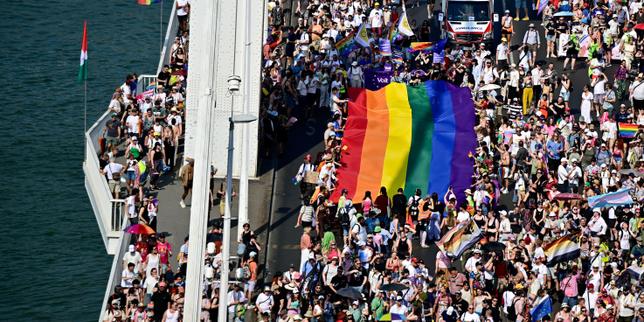
En Hongrie, première Pride de laprès-Orban, qui avait multiplié les politiques anti-LGBT+ Les organisateurs de la Pride avaient décidé de maintenir la marche malgré la chaleur écrasante, tout en conseillant aux personnes fragiles de ne pas venir. Les températures ont atteint les 38 degrés à Budapest.
le monde · 2 months ago
Milhares celebram Orgulho LGBTI+ em Budapeste, na primeira marcha pós-Orbán As altas temperaturas não impediram mais de dez mil pessoas de encherem as ruas de Budapeste carregando bandeiras com as cores do arco-íris, da Hungria e da União Europeia.
publico · 2 months ago
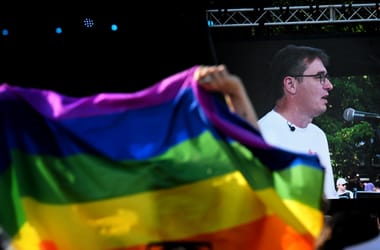
Karácsony Gergely: Én akarok lenni az első, aki összeadja az első azonos nemű párt Budapesten, és nem akarok sokat várni A 31. Budapest Pride-on felszólalt a főpolgármester, aki beszédében kiállt az azonos neműek házassága mellett.
hvg.hu · 2 months ago
Pride | Helsingin keskusta täyttyi väristä, kun Pride-kulkue marssi kaupungin läpi Kulkue lähti liikkeelle Senaatintorilta kohti Kaivopuistoa, jossa tapahtuma jatkui puistojuhlalla.
helsingin sanomat · 2 months ago
Napoli Pride più forte del caldo. Siamo più di centomila, la nostra risposta alla destra Otto carri preceduti da un gruppo di motocicliste aprono la parata 30 anni dopo la prima volta al Sud, proprio in città. Da Porta Capuana a piazza Dante per lo show conclusivo. Lafa colpisce i fragili: malore per la novantenne Tarantina, che poi si riprende
corriere · 2 months ago
Al via il Pride di Milano, cè anche Elly Schlein: Lomotransfobia ha ucciso Mirko Il caldo record non ha scoraggiato i tanti manifestanti. La leader del Pd nel corteo a sorpresa
corriere · 2 months ago
Non solo musica: i cantanti al Pride prendono posizione. Paola Turci: Vannacci raccoglie consenso, per questo è necessario essere qui Non basta più cantare. Non basta salire su un palco, esibirsi e andarsene. Nel giorno in cui il Milano Pride attraversa la città, levento finale allArco della Pace diventa anche un luogo di presa di posizione. Perché, dopo settimane segnate dalle dichiarazioni del leader di Futuro Nazionale Roberto Vannacci contro la comunità LGBTQIA+, dallomicidio transfobico […] Larticolo Non solo musica: i cantanti al Pride prendono posizione. Paola Turci: Vannacci raccoglie consenso, per questo è necessario essere qui proviene da Il Fatto Quotidiano.
il fatto quotidiano · 2 months ago

Alföldi Róbert: A Pride azokért is kell, akik még ezen a napon sem lehetnek boldogok A színész-rendező meggyőződése, hogy a zászlóhajigálók is csak azt tudják, amit a szélsőséges politikusok szajkóznak.
hvg.hu · 2 months ago

Were here, organised, and not going anywhere: thousands participate in Dublin Pride Pride is not just visibility for LGBTQ+ community, its solidarity and resistance, pre-parade gathering told
irish times · 2 months ago
Mii de persoane la primul marș Pride de la Budapesta după înfrângerea lui Viktor Orban Mii de persoane au participat sâmbătă la marșul anual Pride din capitala Ungariei, prima manifestație de acest gen după înfrângerea suferită de fostul premier Viktor Orban la alegerile generale din aprilie, a scris Reuters. Viktor Orban încercase să interzică marșul Pride de anul trecut, ca parte din măsurile sale împotriva comunității LGBTQ+, însă manifestația de …
hotnews.ro · 2 months ago
Milano Pride, migliaia in corteo sfidano il caldo torrido: Retorica negazionista sdoganata, esserci oggi è un atto politico Non è bastato il caldo torrido a fermare il Milano Pride. Con la partenza posticipata alle 17 per limitare gli effetti delle alte temperature, migliaia di persone stanno attraversando le vie della città per quella che, a 25 anni dalla prima edizione, è diventata una delle manifestazioni più partecipate del capoluogo lombardo. Bandiere arcobaleno, musica […] Larticolo Milano Pride, migliaia in corteo sfidano il caldo torrido: Retorica negazionista sdoganata, esserci oggi è un atto politico proviene da Il Fatto Quotidiano.
il fatto quotidiano · 2 months ago
Zehntausende feiern Versammlungsfreiheit bei Pride in Budapest
orf.at · 2 months ago