Loading…
 Saturday, August 29Saturday, August 29
3 months · 7 summary articles
ETF newcomers face a paradox: what looks simple in theory—building wealth through low-cost index funds—often proves trickier in practice, as a fresh Handelsblatt analysis reveals. In a first-person account published today, an author admits that while exchange-traded funds promise effortless retirement planning, the reality of choosing the right mix, timing contributions, and resisting emotional trades demands discipline most beginners underestimate .
The same day, Martin Weber, the behavioural-finance scholar who spent decades studying investor behaviour, told Handelsblatt readers that even retirees can tolerate 100 % equities—provided they accept volatility as the price of higher long-term returns. Weber, whose research underpins many German retail-investor guides, cautioned against two persistent myths: that age automatically lowers risk tolerance and that market timing works .
Meanwhile, Germany’s impending capital-rent system, slated to launch in 2028, is already shaping savings strategies. Handelsblatt calculations show that a 30-year-old earning €50,000 today could accumulate up to €393,000 in additional retirement capital if she contributes the maximum allowable amount every year until retirement, assuming a 4 % real return .
The ETF landscape itself is shifting. Active ETFs—once a niche product—have more than doubled in number over the past 18 months, Handelsblatt reports. Yet performance data for the first half of 2026 suggest that roughly two-thirds of actively managed ETFs in the euro-zone large-cap segment have underperformed their passive benchmarks after fees, raising questions about whether “active” branding delivers genuine alpha .
For investors tempted by historical curiosities, a 150-year-old logarithmic market-cycle chart—popularised in 2026 analyses—currently signals a sell signal for equities. The pattern, first published in 1876, has anticipated every major bear market since, but critics note it missed the 2020 rebound and warn that macro liquidity conditions today differ sharply from the gold-standard era .
Across the Channel, the Financial Times’ Stuart Kirk advised readers today that the surest route to compounding wealth remains boring consistency: low-cost global ETFs, automatic contributions, and a 20-year horizon. “The best portfolio is the one you never look at,” he wrote in reply to reader questions .
Follow us for live European news
1 further source not geolocated

Where should I invest? You asked, Stuart Kirk answered The author of the FTs Skin in the Game column replied to reader questions
financial times · 2 months ago
The ever weirder world of venture capital Why the Power Law remains a guiding principle of the high-risk, high-reward VC game
financial times · 2 months ago
Untethered Goose Game Just SoftBank doing SoftBank things
financial times · 2 months ago

Qué esperar del bitcoin en la segunda mitad del año A menos de una semana para el cambio de semestre, los analistas consultados coinciden plenamente a la hora de anticipar los catalizadores clave para el bitcoin en la segunda mitad del año. Estas referencias determinan las previsiones que trasladan sobre los niveles en los que podría moverse el bitcoin en los seis últimos meses del año. Leer
expansion · 2 months ago
Geldanlage: Zehn Dinge, die ich als Anfänger über ETFs gelernt habe Aus dem Handelsblatt-Archiv: Unser Autor befasst sich zum ersten Mal in seinem Leben mit ETFs – und stellt fest, dass Altersvorsorge damit in der Theorie einfacher ist als in der Praxis.
handelsblatt · 2 months ago
Rente: Bis zu 393.000 Euro extra möglich: Diese Zahlen zeigen, wie viel Kapitalrente Sie bekommen könnten 2028 soll die Kapitalrente starten. Das Handelsblatt hat für vier Altersgruppen mit verschiedenen Szenarien berechnet, wie viel Geld sich mit der Zusatzrente ansparen lässt.
handelsblatt · 2 months ago
Geldanlage: Kann eine 150 Jahre alte Grafik die Börsenkurse vorhersagen? Aus dem Handelsblatt-Archiv: Eine Kurve aus dem 19. Jahrhundert sagt erstaunlich präzise die Entwicklung der Märkte voraus. Für 2026 empfiehlt sie, Aktien zu verkaufen. Wie verlässlich das wirklich ist.
handelsblatt · 2 months ago

Start im Herbst: Das Preisrätsel um GTA VI hat ein Ende Endlich ist bekannt, wie viel „Grand Theft Auto VI kosten soll. Analysten gehen deswegen von hohen Umsätzen für den Verleger Take-Two aus. Anleger freuen sich.
faz · 2 months ago
BulkQuant: An AI trading robot platform helping beginners explore fully managed crypto, forex, and stock trading in 2026 London, United Kingdom, June 2026 — BulkQuant, an AI trading robot platform focused on fully managed automated trading, is helping beginners explore crypto, forex, and stock market automation through AI-powered trading systems, expert oversight, flexible trading plans, and a simplified platform workflow. As digital asset markets continue to operate around the clock and global financial […]
cyprus mail · 2 months ago
Geldanlage: Aktive ETFs erleben einen Boom – doch wie aktiv sind sie wirklich? Die Zahl aktiver ETFs hat sich in 18 Monaten mehr als verdoppelt. Das Handelsblatt zeigt, wie sich die Renditen im Vergleich zu ähnlichen Fonds entwickeln und worauf Anleger achten sollten.
handelsblatt · 2 months ago
Geldanlage: „Auch eine Rentnerin kann 100 Prozent Aktien vertragen Martin Weber hat über Jahrzehnte das Verhalten von Anlegern erforscht. Im Gespräch erklärt er, worauf es beim Aufbau eines Depots ankommt und welchem Irrglauben Anleger nicht anhängen sollten.
handelsblatt · 2 months ago
Geldanlage: Geld ohne Arbeit: Mit diesem Rechner planen Sie Ihr passives Einkommen Länder-ETFs, Immobilien-ETFs oder gar Einzelaktien? Der neue Handelsblatt-Rechner ermöglicht Ihnen, Ihre Strategie für ein passives Einkommen zu finden.
handelsblatt · 2 months ago

Wandelanleihe von Tonies: Das kritische Wertpapier der Berenberg-Bank Streit über Eigenhandel führte zwischen Prüfer und Bankenaufsicht einerseits und Geschäftsleitung andererseits zu deren Abgang. Haben sie sich über die Tonies-Wandelanleihe zerstritten? War Berenberg der einzige Investor?
faz · 2 months ago
Reden wir über Geld: „So schnell, wie ich das Geld gewonnen habe, habe ich es auch wieder verloren Niels Nauhauser warnt Menschen seit über 20 Jahren vor Nepp, Betrug und schlechten Angeboten der Finanzindustrie. Nun spricht der Verbraucherschützer darüber, was ihn am meisten frustriert hat und wie er sein Geld anlegt.
sueddeutsche · 2 months ago
Rüstungsunternehmen: Hat Rheinmetall zu viel versprochen? Nach dem Aus des Fregattenprojekts „F126 knickt der Aktienkurs von Rheinmetall erst einmal gehörig ein. Der Konzern hatte sicher mit dem Auftrag gerechnet und damit geworben.
sueddeutsche · 2 months ago
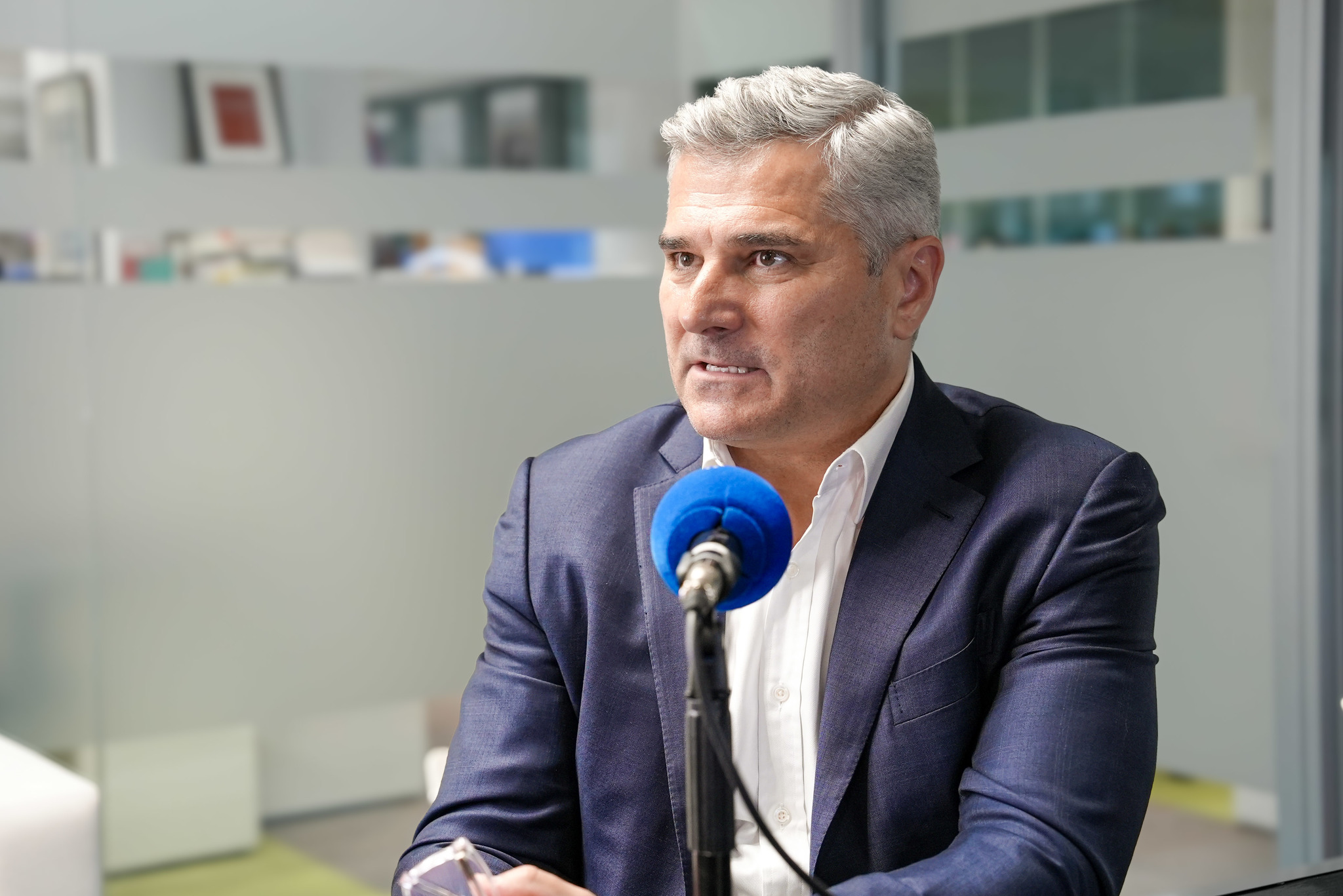
Pedro Escudero (Silverway): así invierte el gestor de Wall Street que quiere triunfar en España Tras 30 años en Wall Street, Pedro Escudero acaba de abrir su gestora de fondos en España para acercar la Bolsa americana a los inversores españoles. Leer
expansion · 2 months ago
Geld: Der Millionenerbe, der die Millionen nicht will Kai Viehof hat den Großteil seines Erbes ausgeschlagen, auch vom Rest will der Enkel des Allkauf-Gründers das meiste weggeben. Über einen Mann, dessen Beruf es ist, sinnvoll Geld loszuwerden.
handelsblatt · 2 months ago