Loading…
 Saturday, August 29Saturday, August 29
3 months · 22 summary articles
NATO leaders gathering in Ankara on Sunday will reaffirm their commitment to collective defence under Article 5 while pledging €70 billion ($80 billion) in annual military aid to Ukraine for 2026 and 2027, according to draft summit texts approved by ambassadors on 3 July. The final declaration, to be finalised on Saturday, will also label Russia as a direct threat to Euro-Atlantic security, marking a sharp escalation in NATO’s stance amid ongoing tensions with Moscow.
European allies have moved to bridge divisions with US President Donald Trump ahead of the two-day summit, with German Chancellor Friedrich Merz and Baltic leaders pledging stronger deterrence against Russia and increased support for Kyiv. Merz defended Germany’s NATO spending after Trump called it “ridiculous,” while European Commission President Ursula von der Leyen announced five new major defence projects to boost EU-wide military cooperation.
The summit comes at a turbulent time for transatlantic relations, with Trump’s administration signalling a reduced US footprint in Europe. NATO’s Deputy Supreme Allied Commander Europe, John Stringer, confirmed that European allies have “definitely stepped up” to replace most US force cuts, easing concerns over Washington’s pivot away from the continent.
Turkey has positioned itself as a key mediator, with President Recep Tayyip Erdoğan and Italian Prime Minister Giorgia Meloni discussing defence ties and regional security ahead of the summit. Meloni, seen as a potential bridge between Trump and European allies, has also signalled a shift in Italy’s stance on Ukraine aid, despite earlier reservations.
Meanwhile, Lithuania’s decision to lift its constitutional ban on nuclear deployments reflects growing unease over Russia’s aggression, with Joschka Fischer, former German foreign minister, warning that the US may be “on the way out” of NATO. Fischer urged Europe to build an independent nuclear deterrent with France and the UK if Washington’s commitment wavers.
As NATO prepares to test its unity, the summit will also address broader challenges, including Iran’s nuclear ambitions and Arctic security, with South Korea’s president set to deliver a keynote speech. The alliance’s ability to reconcile Trump’s demands for greater burden-sharing with Europe’s push for strategic autonomy will define the summit’s outcome.
Follow us for live European news
2 further sources not geolocated

Canada, Europe to vow major support for Ukraine at NATO summit
gdeltproject.org · about 2 months ago
Nato, stress test con Trump. Per Meloni la sponda di Erdoğan Dopo il burden sharing, il burden shifting. Giorgia Meloni sa bene che il vertice Nato in programma ad Ankara il 7 e 8 luglio si avvia a certificare un nuovo...
il sole 24 ore · about 2 months ago
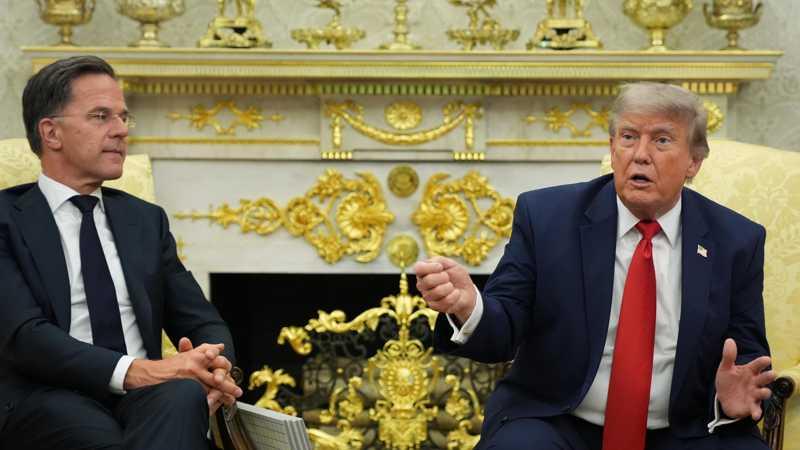
Trump Says Its Ridiculous for U.S. to Maintain Current NATO Support as Rift Widens Ahead of SummitSince his first term, Trump has accused European allies of not investing enough in their own militaries and relying too heavily on U.S. contributions. #News #NATO #US #Trump
mastodon bot · about 2 months ago
Dutch Advisory Council calls for long-term support for Ukraine The Dutch Advisory Council on International Affairs has called on Europe to prepare now for the creation of security assurance forces for Ukraine and for strengthening Ukrainian and European defense capabilities.
ukrinform · about 2 months ago
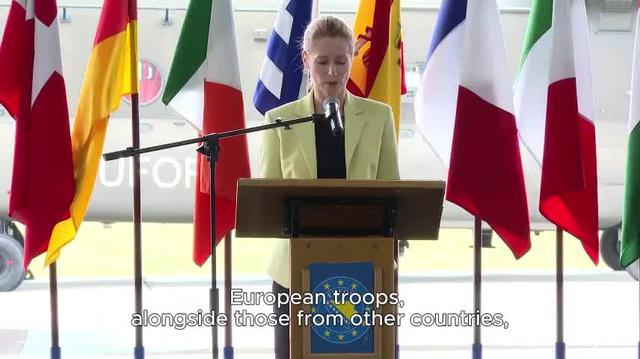
Kaja Kallas@kajakallas.bsky.socialThe EU will always support the security of Bosnia and Herzegovina and the stability of the region. Here at EUFOR Althea, we help strengthen the countrys defence capabilities. (1/2)Extract of my address to troops at EUFOR Althea ↓#EU #NATO
mastodon bot · about 2 months ago
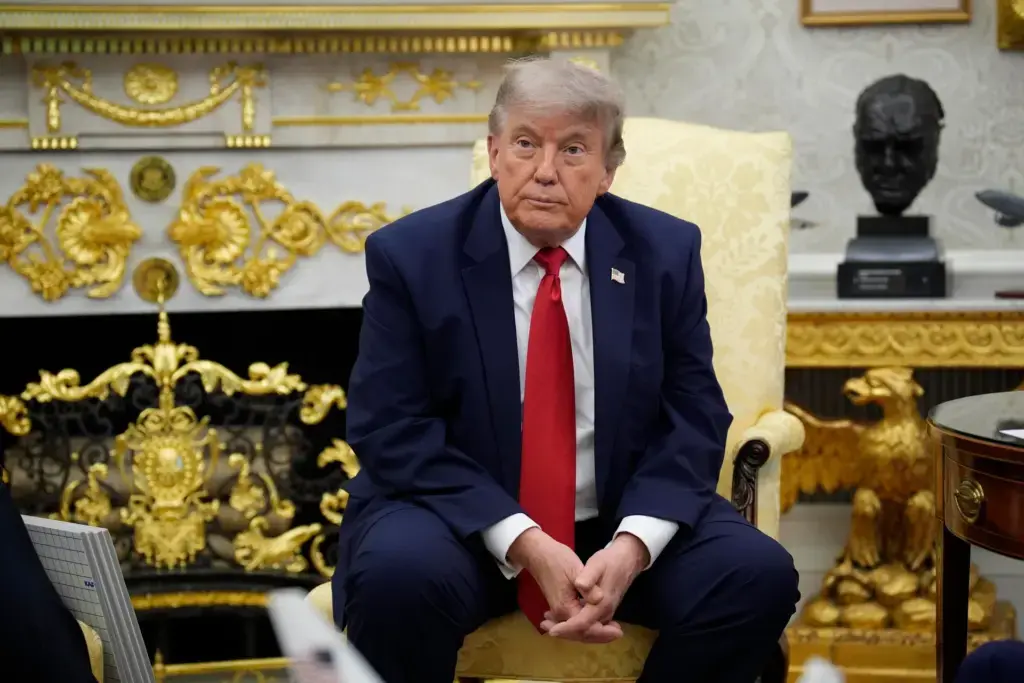
Europe has replaced most US cuts within Nato, top commander says #Europe #NATO #UnitedStates
mastodon bot · about 2 months ago
South Korean president to attend NATO summit in Türkiye President Lee Jae Myung will attend the NATO summit in Ankara and deliver a keynote speech at the invitation of Secretary General Mark Rutte. He will also participate in a defence industry forum, marking South Koreas continued engagement with the alliance.
yenisafak · about 2 months ago
Swedish PM says NATO summit in Ankara comes at turbulent time Swedish Prime Minister Ulf Kristersson said NATOs upcoming summit in Ankara will convene during a "turbulent time" for European and global security, as allied leaders prepare to discuss boosting defense industrial capacity and maintaining long-term military assistance to Ukraine.
yenisafak · about 2 months ago
Bulgarian PM vows to defend national interest on EU Russia sanctions Bulgarian Prime Minister Rumen Radev said on Friday that Sofia will introduce reservations on the European Unions proposed 21st sanctions package against Russia, citing concerns over energy security and potential arbitration costs involving Russian oil major Lukoil.
yenisafak · about 2 months ago
Fidan meets KRG deputy PM in Ankara for talks Turkish Foreign Minister Hakan Fidan held talks with Qubad Talabani, deputy prime minister of Iraqs Kurdish Regional Government, in Ankara. Talabani expressed satisfaction with Türkiyes commitment to the peace process with the PKK and reaffirmed the PUKs full support for its success.
yenisafak · about 2 months ago

Is Russia Planning an Attack on Poland to Test NATO Resolve? – Novinite.com #Europe #NATO
mastodon bot · about 2 months ago
World News: European leaders hope to end rift with Trump at Natos summit in Ankara
gdeltproject.org · about 2 months ago
Erdoğan, Meloni discuss defense ties and NATO summit President Recep Tayyip Erdoğan and Italian Prime Minister Giorgia Meloni held a phone call to discuss bilateral relations and regional issues. Erdoğan said Ankara seeks closer cooperation with Italy, particularly in the defense industry, and expressed hope that next weeks NATO summit in Ankara will strengthen allied unity.
yenisafak · about 2 months ago
Tranziția spre NATO 3.0: SUA vor prezenta la Ankara mai multe măsuri care să atenueze impactul reducerii forțelor din Europa Întrucât se ridică din ce în ce mai multe întrebări despre viitorul NATO, înaintea summitului cheie de la Ankara, de pe 7-8 iulie, e de așteptat ca Washingtonul să folosească evenimentul pentru a prezenta o serie de inițiative menite să atenueze impactul politic al unei amprente reduse a SUA în Europa, transmite Euractiv.
digi24 · about 2 months ago
European NATO allies replace most U.S. force cuts, commander says
gdeltproject.org · about 2 months ago
Ankara tightens security, air traffic for NATO summit Türkiye has ramped up security in Ankara ahead of the July 7-8 NATO summit, deploying more than 56,000 police and gendarmerie personnel. Temporary flight restrictions will be in place at Esenboğa Airport, with exemptions for aircraft carrying foreign leaders and official delegations.
yenisafak · about 2 months ago

KYIV POST: UK Vows to Defend NATO Territory After Reports of Russian Provocation Plan Against Poland The UK vowed to defend NATO territory after reports that US intelligence warned Poland of a possible Russian provocation designed to test the alliance. #World #Europe #EasternEurope
mastodon bot · about 2 months ago
Nordatlantikpakt: Joschka Fischer sieht die USA auf dem Weg aus der Nato Droht wegen Donald Trump ein Bruch der Nato? Der ehemalige Grünen-Außenminister Fischer ist jedenfalls nicht sehr optimistisch. Und sagt, was Europa aus seiner Sicht in einem solchen Fall tun müsste.
handelsblatt · about 2 months ago

Canada, NATOs EU members vow major support for Ukraine #Europe
mastodon bot · about 2 months ago
Ukraine backers to vow major support at NATO summit NATOs European members and Canada will pledge to give Ukraine 70 billion euros ($80 billion) in military aid both this year and next at the alliances summit in…
japantoday · about 2 months ago

NATO allies are set to meet in Ankara next week. Are all 32 members committed to supporting Ukraine and opposing Irans pursuit of a nuclear weapon? Read more from @euronews: #Politics #News
mastodon bot · about 2 months ago
Turkish defense products to be showcased at NATO summit Türkiyes Defense Industries Secretariat will host a high-level reception at Turkish Aerospace Industries as part of the NATO Defense Industry Forum. Indigenous air platforms will perform demonstration flights, and senior allied officials will attend.
yenisafak · about 2 months ago
Erdogan, Trump share strong will to lift CAATSA sanctions: Fidan Turkish Foreign Minister Hakan Fidan said on Thursday that President Recep Tayyip Erdogan and US President Donald Trump share a "strong will" to lift sanctions imposed on Türkiye under the Countering Americas Adversaries Through Sanctions Act (CAATSA), adding that both governments are taking steps to resolve the issue.
yenisafak · about 2 months ago
Former NATO chief proudest of Sweden, Finland accession Former NATO Secretary General Jens Stoltenberg has told Anadolu that Sweden and Finlands entry into the alliance was the decision he is most proud of during his decade‑long tenure. He thanked President Erdoğan for his cooperation and said his main expectation for the Ankara summit is to demonstrate unity.
yenisafak · about 2 months ago
Belgian defense minister: NATO needs Türkiye, praises Turkish tech Belgian Defense Minister Theo Francken has told Anadolu that Türkiye is a very important ally and should be included in Europes defense programs. He praised Turkish technology, said Europe can learn a lot from Ankara, and stressed that unity is essential ahead of the NATO summit.
yenisafak · about 2 months ago
Germanys Merz rejects Trumps NATO burden-sharing criticism Chancellor Friedrich Merz has pushed back against President Trumps claims that Germany is not contributing enough to NATO defense. Merz said Germany is doubling its defense budget within four years and making its largest-ever military investment, insisting we have nothing to be ashamed of.
yenisafak · about 2 months ago
Merz tells Trump Germany ready for more NATO responsibility Chancellor Friedrich Merz told President Donald Trump that Germany is prepared to take on greater responsibility for European security, as NATO becomes more European to remain transatlantic. The two leaders agreed to continue discussions at next weeks Ankara summit.
yenisafak · about 2 months ago
Polish FM: NATO summit will signal unity to Putin Polish Foreign Minister Radosław Sikorski has said the upcoming NATO summit in Ankara will demonstrate Western unity to President Putin, warning Moscow against staging a false-flag provocation against Poland or another alliance member.
yenisafak · about 2 months ago
European Conservatives Bring Unity Message to US: Ukraine Matters. Iran Does, Too As NATO leaders prepare to gather for next weeks summit, a group of senior European conservative lawmakers visited Washington with a message they hope will resonate inside the Trump administration: Support for Ukraine and concern over Iran are not mutually exclusive.
radio free europe · about 2 months ago
NATO leaders to reaffirm Article 5 commitment at Ankara summit amid Ukraine aid pledge and debate over US troops in Europe
gdeltproject.org · about 2 months ago