
NATO leaders in Ankara focus on Ukraine air defense and defense spending tensions

Story Timeline
2 months · 3 summary articles
NATO summit in Ankara avoids major conflict but leaves tensions over defense spending and Ukraine aid unresolved
ContinuationNATO leaders in Ankara focus on Ukraine air defense and defense spending tensions
NATO leaders in Ankara to affirm ironclad defence pledge amid transatlantic tensions
Follow-up
NATO leaders gather in Ankara as Ukraine war dominates summit agenda
NATO’s 32 member states convened in Ankara on Monday for a two-day summit dominated by urgent calls for stronger support to Ukraine, record defense spending pledges, and growing transatlantic tensions over burden-sharing. Secretary-General Mark Rutte opened the gathering by warning that allies must deliver on commitments to deter Russian aggression, while Ukrainian President Volodymyr Zelensky pressed for immediate air defense reinforcements ahead of a scheduled meeting with U.S. President Donald Trump.
Speaking at a press conference in Ankara, Rutte emphasized that Ukraine’s battlefield needs—particularly air defense systems—remain the alliance’s top priority. “Ukraine is changing the dynamics on the battlefield, but it needs our continued support, especially in air defense,” he said. “Allies and partner countries must give Ukraine what it needs.” Rutte added that the summit would unveil multibillion-euro contracts to “deter and defend,” though he did not specify figures.
Zelensky’s urgency was underscored by Russia’s overnight missile strike on Kyiv, which killed at least ten civilians and highlighted Ukraine’s critical shortage of Patriot interceptor missiles. In a statement ahead of the summit, Zelensky demanded “concrete measures” to bolster Ukraine’s air defenses, warning that without additional systems, Russian strikes would continue unchecked. “It is critically important that the NATO summit in Ankara results in new, concrete steps to strengthen Ukraine’s air defense,” he said.
The summit’s agenda also reflects deepening divisions over defense spending, with European allies under pressure to meet a 5% of GDP target—a goal set last year under Trump’s insistence. Rutte noted that European NATO members and Canada have already increased spending by 20% in 2025, reaching an average of 4% of GDP. “A stronger Europe in a stronger NATO,” Rutte declared.
However, the U.K. admitted it lacks a long-term plan to meet the 5% target, with Defence Secretary Dan Jarvis calling the pledge “mission critical.” Jarvis, speaking aboard the HMS Prince of Wales near the Arctic Circle, acknowledged that allies are under “hard pressure” from Trump to deliver. “Those were the assurances I was giving to NATO partners in Brussels,” he said.
Trump’s role looms large over the summit, with reports indicating he will present Zelensky with his vision for a peace agreement during their July 8 meeting. A senior Ukrainian official told the Kyiv Independent that Zelensky aims to capitalize on shifting Russian public opinion and economic strain to pressure Putin into negotiations. “Everyone can see the war is changing,” the official said. “One of the reasons is the growing sentiment in Russia—people want Putin to end the war.”
Turkey, hosting the summit, has positioned itself as a key mediator, with President Recep Tayyip Erdogan chairing the North Atlantic Council. Erdogan’s government is also leveraging the event to showcase Turkey’s burgeoning defense industry, hoping to attract European orders amid rising demand for indigenous military hardware.
Yet underlying tensions persist. European officials fear U.S. disengagement, with reports suggesting Washington is delaying defense contracts to prioritize its own stockpiles after the Iran war. A Chatham House analysis warned that the summit risks becoming a “theatre for division,” with Trump’s erratic leadership exacerbating strains over Iran and defense procurement.
As leaders gather, the alliance faces a defining moment: balancing immediate support for Ukraine with long-term strategic cohesion. Rutte struck an optimistic note, calling the summit a chance to “turn higher spending into real battlefield capabilities.” But with Trump’s unpredictable approach and Europe’s defense budgets under strain, the path forward remains fraught with uncertainty.
Follow us for live European news
- 2
- 1
- 1
- 1
- 1
- 1
7 further sources not geolocated
Articles

⚡️Exclusive: Trump, Zelensky to discuss strategy to pressure Russia into peace talks. President Volodymyr Zelensky and U.S. President Donald Trump will exchange ideas on how to end Russias awar against Ukraine during a July 8 meeting at the NATO summit in Ankara.
bluesky_Kyiv Independent · about 2 months ago

LIVE: NATOs Rutte holds press conference ahead of Ankara summit www.youtube.com/live/pxzwBZ8...
bluesky_Reuters · about 2 months ago

#Ukraine #USA #Russia Ukrainian President Volodymyr Zelenskyy emphasized the critical need for more interceptor missiles to effectively defend against Russian ballistic threats, urging NATO allies to make strong commitments at the upcoming summit in Ankara to enhance Ukraines air defense capabilities. Subscribe to @OSINTdefender Chat room
telegram_OSINTdefender · about 2 months ago
NATO summit in Ankara must demonstrate the alliances unity - Rinkevics - The Baltic Times RIGA - At the NATO summit in Ankara, the alliance must demonstrate that, despite discussions and disputes, it is capable of standing united, Pre......
baltic times · about 2 months ago
Turkeys media watchdog warns broadcasters it is monitoring NATO summit coverage Turkeys broadcasting watchdog has told media outlets to cover this weeks NATO summit in Ankara from a national security perspective and warned that their broadcasts are being monitored, raising fresh concerns over media pressure ahead of the high-profile gathering. According to Turkish Minute, The Radio and Television Supreme Council (RTÜK) issued the warning before the […] The post Turkeys media watchdog warns broadcasters it is monitoring NATO summit coverage appeared first on Stockholm Center for Freedom.
stockholm center for freedom · about 2 months ago
Erdoğan meets Bulgarian president Radev in Ankara President Recep Tayyip Erdoğan held a closed-door meeting with Bulgarian President Rumen Radev at the Presidential Complex in Ankara on the sidelines of the NATO summit. The two leaders discussed bilateral relations, regional developments, and cooperation in trade, energy, and defence.
yenisafak · about 2 months ago
Ukraine must get the support it needs: allies prepare for NATO summit "Allies must ensure that Ukraine receives the support it needs in its war with Russia" according to NATO chief Mark Rutte, ahead of a summit set to take place in Ankara, Turkey. He has also said allies will be announcing contracts worth tens of billions to "deter and defend". FRANCE 24s Kethevane Gorjestani tells us what to expect from the summit, and what it means for Ukraine.
france24 · about 2 months ago

Britain targets Russias barbaric chemical weapons with fresh sanctions on those who helped create Novichok for Salisbury poisonings and toxin used to poison Alexei Navalny It comes ahead of this weeks NATO summit in Ankara, Turkey, when Britain and its allies will discuss how to further combat the threat posed by Russia.
dailymail · about 2 months ago
Nato summit will reveal how alliance plans to manage European security as US cuts back its support
gdeltproject.org · about 2 months ago
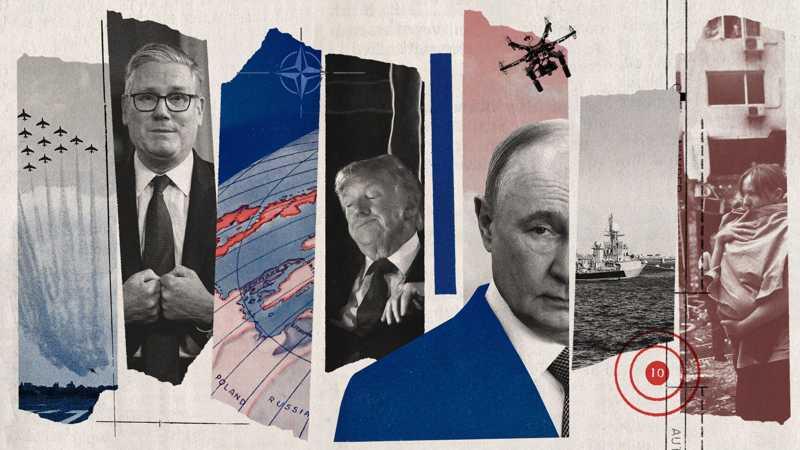
Nato summit: the most consequential in a generation?Donald Trump thought to be planning to reward or punish countries based on their defence spending #News #Nato #US #Trump
mastodon bot · about 2 months ago
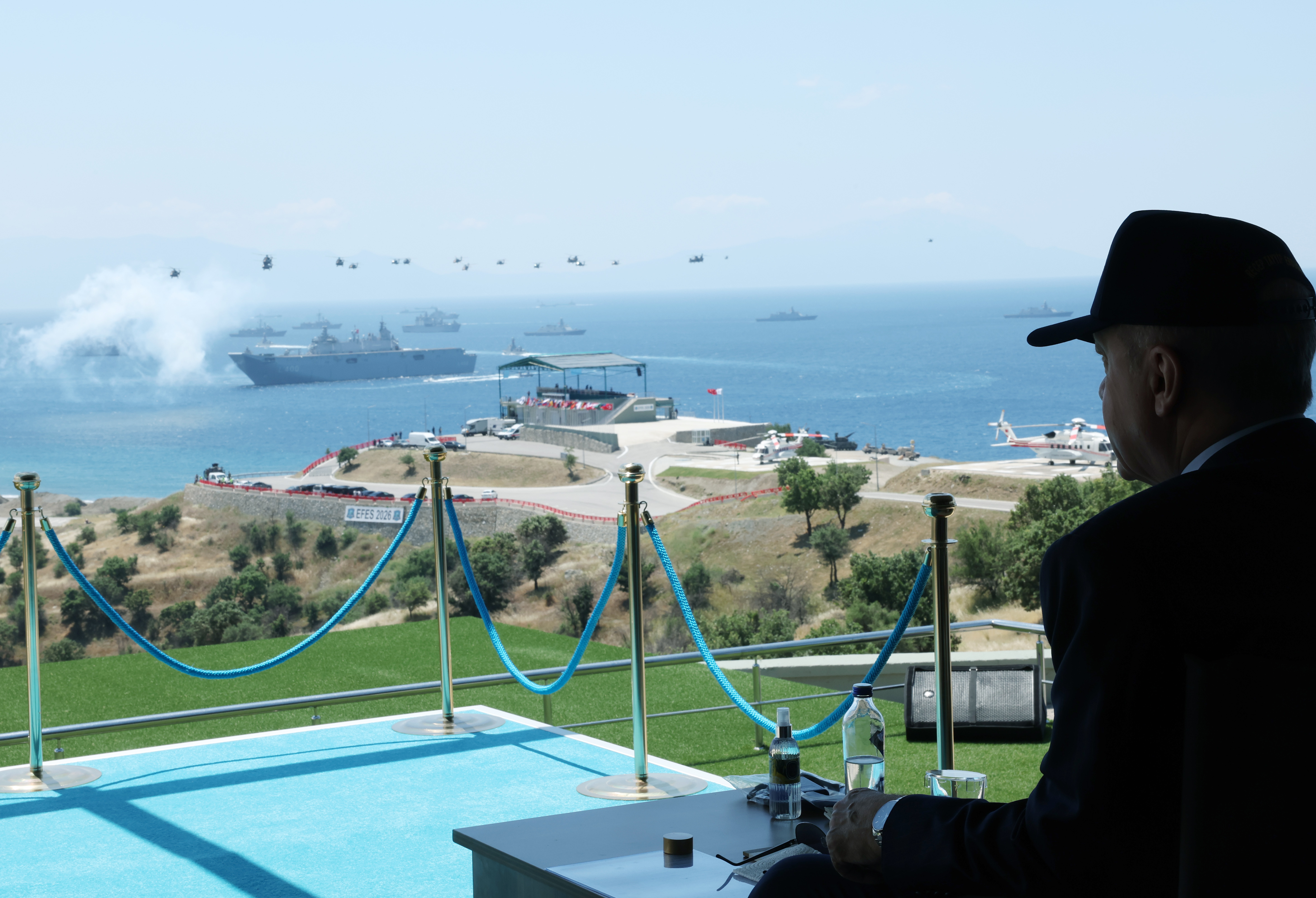
NATO summit host Turkey sees its alliance clout rising amid war raging nearby Government leaders hope to show off the countrys burgeoning defense industry at the alliance event.
defense news · about 2 months ago
Trump tells Putin US ready to help end Ukraine war The Kremlin said late Saturday that US President Donald Trump reaffirmed his readiness to facilitate an end to the war in Ukraine during a phone call with Russian President Vladimir Putin, noting that the leaders also discussed the upcoming NATO summit in Ankara and efforts to de-escalate tensions with Iran.
yenisafak · about 2 months ago
NATO summit in Ankara to address defense spending, Euro-Atlantic threats Türkiyes Communications Director Burhanettin Duran said NATO leaders will convene in Ankara on July 7-8 to examine defense investment plans and Euro-Atlantic security challenges, as first lady Emine Erdogan will host a reception for visiting leaders and President Recep Tayyip Erdogan chairs the North Atlantic Council meeting the following day.
yenisafak · about 2 months ago
Lithuania hails Türkiye as key NATO ally with strong military Lithuanian Prime Minister Inga Ruginiene praised Türkiye as an important NATO ally with strong military capabilities and strategic geographic position, highlighting Vilniuss appreciation for Ankaras contributions to Baltic security ahead of the alliances summit in Ankara.
yenisafak · about 2 months ago
Dutch defense chief says Türkiyes NATO role to grow as US scales back Dutch Chief of Defense Gen. Onno Eichelsheim told Anadolu that Türkiyes importance within NATO will increase as the United States reduces its military footprint in Europe, adding that he was impressed by Turkish defense capabilities and sees strong potential for bilateral industrial cooperation ahead of the alliances Ankara summit.
yenisafak · about 2 months ago
Türkiye to host NATO Summit after 22 years Türkiye will host the 36th NATO Summit in Ankara this week for the first time in 22 years, bringing together leaders from 32 member states and Indo-Pacific partners in a high-stakes gathering focused on burden-sharing, defense cooperation, and the alliances role in an era of strategic uncertainty.
yenisafak · about 2 months ago
NATO countries economies and defense spending The North Atlantic Treaty Organization (NATO), which set out in 1949 with 12 founding members against the Soviet threat, is today experiencing a period of its highest budget and widest borders with 32 members. So, on the eve of this weeks critical leaders summit in Ankara, what is the state of the Alliances economic strength, internal dynamics, and defense spending? A Defense Partnership from the Baltic to the Mediterranean Founded in 1949 with the US, the United Kingdom, France, Italy, Canada,
yenisafak · about 2 months ago
Turkish communications director highlights gastrodiplomacy ahead of NATO summit Communications Director Burhanettin Duran hosted international journalists in Ankara, presenting Türkiyes culinary heritage as a strategic diplomatic tool ahead of the NATO summit. He emphasised that shared meals can convey more than formal documents, while international reporters praised Turkish hospitality and the nations pivotal role in regional security.
yenisafak · about 2 months ago
Trump to meet Zelenskyy, Syrias Sharaa during Ankara NATO summit President Donald Trump will hold bilateral meetings with Ukrainian President Volodymyr Zelenskyy and Syrian President Ahmad al‑Sharaa during the NATO summit in Ankara. He will also meet Turkish President Erdoğan on Tuesday evening before joining working sessions on Wednesday.
yenisafak · about 2 months ago
Allies in Ankara event to run alongside NATO summit Türkiye will host the Allies in Ankara programme on the sidelines of the NATO summit, featuring 45 side events with senior officials and international stakeholders. The two-day event at Ankara Palas will cover defence, security, technology, and regional developments, including Ukraine, the Black Sea, and the Middle East.
yenisafak · about 2 months ago
Türkiyes first lady hosts NATO spouses at Ankara summit Emine Erdogan will welcome more than 20 spouses of NATO leaders at the Cankaya Presidential Mansion on Tuesday for a roundtable on childrens digital safety, aiming to strengthen allied cooperation on protecting minors from online risks while showcasing Turkish cultural heritage through traditional cuisine and Anatolian handicrafts.
yenisafak · about 2 months ago
Türkiye to host $70T economic bloc at NATO Ankara summit Sekib Avdagic said more than 40 countries representing a combined $70 trillion in economic output will gather in Ankara this week for the NATO summit, underscoring Türkiyes central role in transatlantic security and highlighting the growing importance of its domestic defense industry ecosystem.
yenisafak · about 2 months ago
Ankara NATO summit will shape alliance future, communications chief says Turkish Communications Director Burhanettin Duran said on Monday that the upcoming NATO summit in Ankara will prove critical for the alliances future and the global security architecture, noting that the July 7-8 gathering is expected to draw record high-level participation.
yenisafak · about 2 months ago
NATO chief says Ankara summit to focus on delivery NATO Secretary-General Mark Rutte said Monday that the upcoming leaders meeting in Ankara will focus on delivering commitments made at last years Hague Summit, with discussions covering credible spending plans to ensure allies reach the 5 defense target and maintain robust support for Ukraine.
yenisafak · about 2 months ago
Türkiyes Erdoğan to host NATO leaders at 36th alliance summit President Recep Tayyip Erdoğan will host leaders from NATOs 32 member states in Ankara on July 7-8 for the alliances 36th summit, holding bilateral talks with counterparts including US President Donald Trump and French President Emmanuel Macron while addressing defense investment and regional security challenges.
yenisafak · about 2 months ago
Tensions between the US and Europe loom large over NATO summit Tensions between the US and Europe loom large over NATO summit Expert comment thilton.drupal 6 July 2026 Disagreements over the Iran war and defence procurement threaten to turn the annual summit into another theatre for division and distract from the threat from Russia. The upcoming NATO summit in Ankara is not the first meeting at which the alliances members have had to navigate internal tensions. Recent summits involving the Trump administration have often been tense, most famously in 2018, when President Donald Trump first began to threaten to leave NATO if other allies did not increase their level of defence spending. However, tensions ahead of Ankara are at a much higher level than in previous years. This is because the Trump administration has become serious about reducing its level of involvement in European security, which has major ramifications for NATO. It is also partly a result of NATO moving to annual summits in response to the intensification of the threat level in Europe after the full-scale Russian invasion of Ukraine in 2022, which has created a stage for tensions to play out publicly. NATO members will arrive in Turkey with several different points of disagreement between them. President Trump remains upset that other allies did not support the US war in Iran to the extent that he had desired. For his administration, this is an example of what they see as European security freeloading, as they believe that their action in the Middle East will benefit global security overall. President Trump has also let his disappointment over Iran turn into significant disagreements with several European leaders, including the UKs Prime Minister Keir Starmer, Italys Prime Minister Giorgia Meloni and Germanys Chancellor Friedrich Merz. All three of these leaders were relatively close with President Trump and were praised by him, but he has now publicly criticized them. With only days to go until the NATO summit, Merz has defended Germanys defence spending record, Meloni has significantly distanced herself from Trump, and Starmer has focused on connecting with other European leaders to provide a counterbalance to the US. Transatlantic defence tensionsThis reflects the wider mood in Europe: 2025 was already a difficult year for the transatlantic relationship, but 2026 has been even more difficult to date. The confusing US threats against Greenland in January and February shocked those who had not thought that the US would truly turn its back on NATO. Europe has become much more wary about Washingtons intentions. The US is now seen as an inconsistent ally with a short memory that does not remember Europeans support when the US called for Article 5 assistance after the 9/11 attacks. Related work Europe watches the next American revolution take shape US officials have also reportedly privately warned several European allies that their orders from American defence contractors will likely be delayed as Washington prioritizes replenishing its own stockpile after the Iran war, deepening the sense of the US turning away from Europe. These allies include the UK, Poland, Lithuania, Estonia and Germany, who are now put in a difficult position, especially given pre-existing concerns that Russia could pose a threat to NATO years before European states have sufficiently improved their military capabilities.For Europeans, this shift justifies their focus on rebuilding European defence industrial capabilities. This will allow them to reduce their dependence on the US when it comes to new procurement contracts in the future. However, this increasing independence will undoubtedly exacerbate tensions between the US and European allies in the future: While the US has encouraged its European allies to spend more on defence, there also seems to be an expectation that this will be in the form of them continuing to purchase American equipment. If the number of European orders reduces over time, the US might then not be so keen on a more independently secure Europe. 2025 was already a difficult year for the transatlantic relationship, but 2026 has been even more difficult to date. Washingtons announcements that it would be reducing troop and equipment deployments in Europe has also caused concern among allies that the USs extended deterrence guarantee to the continent is no longer as firm. The US is reportedly planning to affirm its ongoing commitment to Article 5 and extended deterrence at the summit in Ankara. However, it is legitimate to question the extent to which potential adversaries will continue to perceive NATOs deterrence posture as credible if they can see the US disengaging from the continent. After all, a crucial tenet of Cold War thinking was that the US would not risk becoming involved in a nuclear war in Europe if it did not have any skin in the game; the same logic could also apply today.Divide over managing TrumpBeyond the tensions between the US and European allies, inter-European tensions will also require careful management. As the US has become a more erratic ally, European views on how to manage the relationship with the US have diverged.Ahead of the NATO summit in The Hague in 2025, there was some reluctance about NATO Secretary General Mark Ruttes approach to managing Trump, which has been characterized by flattery. But the overwhelming view remained that if his methods led to results then the ends justified the means.
chatham house · about 2 months ago
NATO Summit to Shape the Future of US Military Presence in Europe NATO leaders will gather in Turkey on the 7th and 8th of July for a summit expected to focus on Europes growing defense responsibilities, continued military support for Ukraine, and the alliances effort to turn higher spending into real battlefield capabilities. According to diplomatic sources, the talks will center on the implementation of NATOs new […]
greek reporter · about 2 months ago
Europe prays for uneventful NATO summit: No news is great news
gdeltproject.org · about 2 months ago
Ahead Of High-Stakes NATO Summit, Ex-US Envoy To OSCE James Gilmore Says Alliance Is Renewing Itself
gdeltproject.org · about 2 months ago
Is NATO at breaking point as it meets in Turkiye? NATO leaders gather in Ankara to tackle US-Europe tensions, defence gaps and support for Ukraines military resilience.
aljazeera · about 2 months ago