Loading…
 Saturday, August 29Saturday, August 29
2 months · 7 summary articles
A new 1,500-page legal assessment released on Thursday concludes that Germany’s far-right Alternative for Germany (AfD) party is “demonstrably unconstitutional,” giving fresh political and legal impetus to a long-debated federal ban. The independent study, commissioned by the civil-rights group Gesellschaft für Freiheitsrechte and shared with the *Süddeutsche Zeitung*, the *Tagesspiegel* and the *Handelsblatt*, finds that the AfD’s foundational programme, election manifestos, parliamentary motions and public statements by leading figures violate core provisions of the Basic Law, including human dignity, democracy and the principle of party pluralism .
The authors—constitutional-law scholars and political scientists—argue that the AfD’s documented hostility to asylum-seekers, rejection of Germany’s post-war memory culture and flirtation with authoritarian governance structures meet the threshold for a party ban under Article 21 of the Basic Law. “The evidence is overwhelming,” said one of the report’s lead authors, who requested anonymity because the document is still under embargo. The 1,500-page dossier compiles 12 years of party texts, 47 election programmes and 1,200 parliamentary motions, alongside 340 public statements by AfD officials, all of which the experts say demonstrate a consistent pattern aimed at undermining the free democratic order .
Within hours of the report’s circulation, the SPD leadership called for immediate action. “The security authorities now have a clear mandate,” SPD co-chair Kevin Kühnert told reporters in Berlin. “We expect the Federal Office for the Protection of the Constitution to move without delay.” The SPD’s parliamentary group is preparing a formal request to the Bundestag to initiate a ban procedure before the Federal Constitutional Court in Karlsruhe .
The AfD reacted with defiance. “This is a politically motivated smear campaign,” said party co-leader Alice Weidel in a video statement released on Thursday evening. “We will fight any attempt to criminalise our voters.” The AfD’s legal team has already signalled it will challenge the admissibility of any ban motion, arguing that the party’s programme has been misrepresented and that internal reforms are under way .
Public opinion remains sharply divided. A Sunday poll for RBB television, published on Thursday, showed the AfD at 37 % in Brandenburg—higher than the combined total of SPD and CDU—illustrating the party’s growing electoral appeal despite the legal controversy . Meanwhile, a Kreistag in Mecklenburg-Vorpommern voted on Thursday to withdraw from the federal “Democracy Lives!” programme, a move initiated by AfD councillors and supported by parts of the CDU and the BSW, prompting criticism from SPD, Greens and local civil-society groups .
The Federal Constitutional Court has not yet received a formal application. Legal experts caution that even with the new report, the path to a ban remains complex: the court requires a two-thirds majority in the Bundestag and Bundesrat, and any ban could be delayed by years of litigation. Yet the 1,500-page dossier significantly raises the political cost of inaction and may force the government to act before the next federal election in 2029.
Follow us for live European news
3 further sources not geolocated

A ban on the AfD would be successful – this report changes everything! #DE #Deutsch #Deutschsprechenden #Europe
mastodon bot · 2 months ago

US proposes to drop brake pedal requirements for self-driving vehicles reut.rs/4warmpG
bluesky bot · 2 months ago

Riigikogus presidendi äravalimise tõenäosus suurenes, aga riigipea tuleb vist apoliitiline Kui Alar Karise kandideerimisotsuse ootuses olid erakonnad kahtlevad, kas üldse saaks presidendi riigikogus ära valida, siis nüüd saavad poliitikud aru, et kui leida kandidaat, kellele ka riigikogu vanematekogus lai toetus saada, siis pole vaja valijameestekogu peale mõtlema hakatagi.
postimees · 2 months ago

Trabalhadores do cinema e audiovisual criticam SCRI.PT Dos critérios de valoração dos projetos a apoiar "foi obliterado" o da sustentabilidade ambiental
observador · 2 months ago
Εγκαινιάστηκε το myPoint της ΑΑΔΕ στον Κεραμεικό - Πιερρακάκης: Δείχνει τον δρόμο για το πώς μπορεί να μοιάζει το κράτος του 21ου αιώνα 1500 πολίτες εξυπηρετήθηκαν τις πρώτες 15 ημέρες
protothema · 2 months ago
Ολοκληρώνεται η μεγάλη προκήρυξη 1.131 μόνιμων θέσεων γιατρών στο ΕΣΥ, πάνω από 2.000 αιτήσεις
protothema · 2 months ago

Ruben Van Gucht wordt derde presentator van De tafel op Play
de morgen · 2 months ago

La AEB confía en que la CNMC archivará la investigación a los bancos por la guerra hipotecaria La presidenta de la patronal bancaria española, Alejandra Kindelán, descuenta que las seis entidades investigadas han actuado con diligencia y han cumplido con la normativa. Leer
expansion · 2 months ago
Doppio dito medio a RaiNews24, il giornalista Alessandro Baracchini sospeso dalla conduzione del Tg Considerati anche i comunicati sindacali dei tecnici e il risalto avuto dalla vicenda su social e organi di stampa ritengo opportuno, anche a tutela dellimmagine della Testata e del collega, sospendere immediatamente dalla conduzione Alessandro Baracchini. Si aggiorna così la vicenda del noto giornalista e conduttore di RaiNews24, con il comunicato del direttore della testata, […] Larticolo Doppio dito medio a RaiNews24, il giornalista Alessandro Baracchini sospeso dalla conduzione del Tg proviene da Il Fatto Quotidiano.
il fatto quotidiano · 2 months ago
Neues Experten-Gutachten: Juristen sehen gute Chancen für AfD-Verbotsantrag Eine Gruppe von Fachleuten hat das Grundsatzprogramm der AfD, ihre Wahlprogramme und die Parlamentsanträge analysiert. Auch Äußerungen von Funktionären wurden für das Gutachten ausgewertet.
tagesspiegel · 2 months ago
Analyse: Gutachten bewertet Chancen für AfD-Verbotsantrag als gut Die AfD ist laut einem neuen juristischen Gutachten verfassungswidrig. Die SPD-Spitze fordert Konsequenzen aus dem Papier und sieht vor allem die Sicherheitsbehörden am Zug.
handelsblatt · 2 months ago
Debatte über Social-Media-Verbot: Weimer will Plattformen in die Pflicht nehmen Um Jugendliche vor riskanten Inhalten zu schützen, schlägt die Familienministerin eine Altersgrenze vor. Der Kulturstaatsminister sieht das anders. mehr...
taz.de · 2 months ago
Neos-Wissenschaftssprecherin: „Müssen mehr Commitment von Studierenden fordern [premium] Martina von Künsberg Sarre, bei Neos für Wissenschaft zuständig, will die Mindeststudienleistung hinaufschrauben. Es gebe in Österreich zu viele Unis und Studienrichtungen.
die presse · 2 months ago
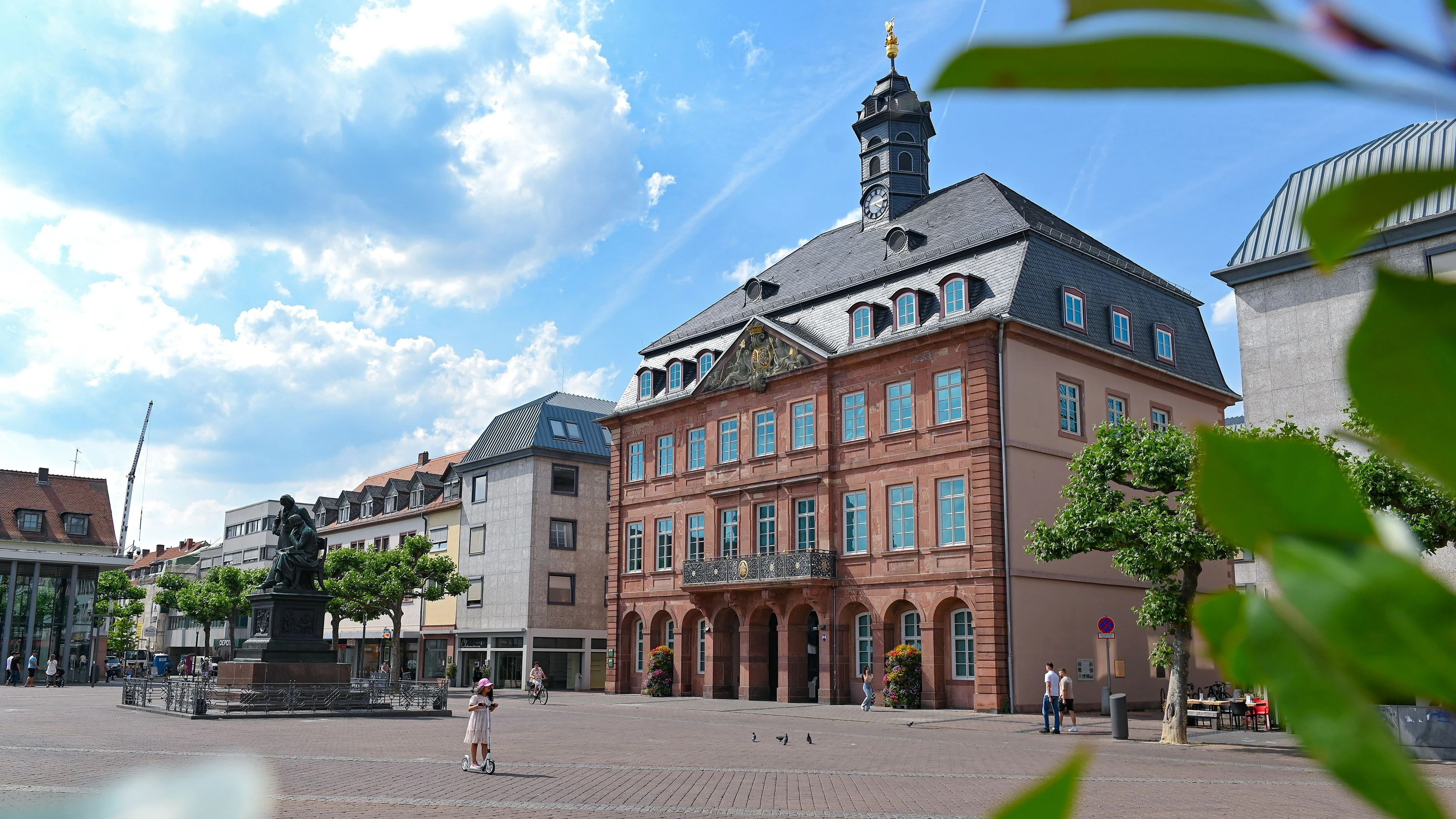
Volkszählung 2022: Zensus-Berechnungen für Gutachter nicht nachvollziehbar Hanau klagt gegen die Berechnungen des Statistischen Landesamts zum Zensus 2022. Nun liegt ein Gutachten vor, in dem diese scharf kritisiert werden. Fast 300 Kommunen haben die Studie in Auftrag gegeben.
faz · 2 months ago

Antworten auf Fragebögen: Das Verteidigungsministerium zeigt sich zufrieden mit der Wehrerfassung Das Verteidigungsministerium hat sechs Monate nach Wiederaufnahme der Wehrerfassung eine positive Bilanz gezogen: Fast alle beantworten die Fragebögen, viele sind interessiert am Dienst in der Bundeswehr.
faz · 2 months ago

Amendment to include goods produced in part in Occupied Territories voted down at committee The amendment sought to ban all goods produced in whole or in part in the Occupied Territories, as opposed to goods originating from there.
thejournal · 2 months ago

Texas is pushing forward with plans to make the parts of the Bible required reading in public classrooms A new proposal would include Bible stories in required reading lists for more than 5 million public school students in Texas
independent · 2 months ago
Pentagon review asks Congress to fence off $5B over 5 years to rebuild deteriorating labs The armed services raid lab funding for more urgent needs like barrack repairs, the study says, leaving researchers in aging, outdated labs that pose documented safety risks.
breaking defense · 2 months ago
Ab 2027 – Die Post steigt aus dem Patientendossier EPD aus Ab 2027 werden 70000 Dossiers nicht mehr unterstützt, Grund ist die Neuausrichtung des Bundes.
srf.ch · 2 months ago
Kritik am Bund und Sorge um Vertrauen: Wie Brandenburgs Parteien auf die jüngste Sonntagsfrage reagieren Eine Umfrage des RBB zog Bilanz nach 100 Tagen Landesregierung: Würde am Sonntag im Land gewählt, wäre die AfD mit 37 Prozent der Wählerstimmen stärker als SPD und CDU zusammen. Die Reaktionen.
tagesspiegel · 2 months ago
Anpassung statt Verbote: Social-Media-Altersgrenze 13? Experten sehen bessere Hebel Familienministerin Karin Prien setzt auf eine Altersgrenze von 13 Jahren für soziale Medien. Experten sehen andere Maßnahmen als entscheidend an.
handelsblatt · 2 months ago
Spendenfinanzierte Analyse: Gutachten: Chancen für AfD-Verbotsantrag stehen gut Eine Gruppe von Experten hat das Grundsatzprogramm der AfD, ihre Wahlprogramme und die Parlamentsanträge analysiert. Auch Äußerungen von Funktionären wurden für das Gutachten ausgewertet.
handelsblatt · 2 months ago
AfD-Verbotsantrag: Experten sehen gute Erfolgschancen für AfD-Verbot Fachleute haben Wahlprogramme und Parlamentsanträge der AfD analysiert. Ihre Einschätzung: Ein Verbotsantrag hätte vor dem Verfassungsgericht gute Chancen auf Erfolg. mehr...
taz.de · 2 months ago
Korruption in Österreich: Ein halbes verlorenes Jahrzehnt Fünf Jahre nach dem österreichischen Antikorruptionsvolksbegehren wurde lediglich ein kleiner Bruchteil der Forderungen umgesetzt. mehr...
taz.de · 2 months ago
Sähköautot | Moni epäilee kiinalaisautoja – vilkaisimme kolmivuotiaan auton pohjaa 80 000 kilometriä ajettu kiinalainen sähköauto päätyi piinapenkkiin. Satunnaisesti valittu testiyksilö sai asiantuntijalta armahduksen, mutta hän varoitti saumoissa kytevästä uhasta.
helsingin sanomat · 2 months ago
«Damer i blått» skaper Pride-debatt i sosiale medier Norske flagg eller regnbueflagg? Jannicke Almenning (30) skaper debatt i sosiale medier.
aftenposten · 2 months ago
Marine Tondelier révèle avoir effectué en Belgique un diagnostic pré-implantatoire dans son parcours de PMA, test interdit en France La secrétaire nationale des Ecologistes a reconnu, dans un podcast dICI avoir fait un DPI-A, censé évaluer la viabilité dembryons avant une fécondation in vitro. Lexamen est strictement encadré dans lHexagone.
liberation · 2 months ago
Grundgesetz: Gutachten sieht gute Chancen für ein AfD-Verbot Die Partei sei „nachweislich verfassungswidrig. Zu diesem Schluss kommen Juristen der Organisation Gesellschaft für Freiheitsrechte und begründen das auf 1500 Seiten.
sueddeutsche · 2 months ago

AfD-Initiative erfolgreich – Kreistag stimmt für Aus der „Demokratie leben-Förderung Der Kreistag der Mecklenburgischen Seenplatte steigt aus dem Bundesprogramm „Demokratie leben! aus. Neben der AfD sollen auch Teile der CDU und der BSW dafür gestimmt haben. Kritik kommt von SPD, Grünen und lokalen Projektträgern.
welt.de · 2 months ago