Loading…
 Saturday, September 26Saturday, September 26
4 months · 2 summary articles
Austrian Chancellor Stocker signals compromise on military service extension amid sweeping reforms
Austria tightens training-leave rules: Women face biggest cuts under new 150m scheme
Austria’s new *Weiterbildungszeit* programme, launched on Monday to replace the outgoing *Bildungskarenz*, caps annual spending at €150 million and tightens eligibility rules, labour officials confirmed. The reform, announced by the labour ministry in Vienna, requires applicants to enrol in certified training of at least 20 hours per week and limits support to 12 months within any five-year period. “We need to ensure public funds go to genuine upskilling, not prolonged breaks,” a ministry spokesperson told *Die Presse* .
The stricter criteria mark a sharp departure from the previous scheme, which let workers take up to two years off with only minimal training requirements. Under the old rules, nearly 40,000 Austrians used *Bildungskarenz* annually; officials now expect demand to fall by a third because of the shorter duration and tighter checks. The budget ceiling of €150 million—roughly one-third less than the outgoing scheme’s average annual outlay—reflects broader fiscal caution as Vienna seeks to balance labour-market flexibility with debt reduction.
Labour economists warn the changes could disproportionately affect women, who made up 62 % of *Bildungskarenz* users in 2025. “Women often use these breaks for care work and then upskill later,” said labour-market researcher Christine Mayrhuber at the Austrian Institute of Economic Research. “If the training must be full-time and continuous, many will struggle to participate.” The government counters that the new rules include provisions for part-time study and childcare subsidies, but has not published updated participation forecasts.
The reform arrives as Austria’s apprenticeship system faces its own crisis: the number of training firms fell 8 % in 2025, leaving 12,000 apprenticeship places unfilled . Critics argue the *Weiterbildungszeit* should have been paired with incentives for firms to hire and train apprentices, not just subsidise adult learners. “We risk creating a two-tier system where mid-career workers get upskilling support while young people can’t find any training at all,” warned trade-union economist Markus Marterbauer.
With the first applications opening next week, the labour ministry has launched an awareness campaign targeting sectors with high female participation, such as healthcare and social services. Officials say they will review the programme’s impact after six months and adjust the budget cap if uptake is lower than expected. For now, the message is clear: Austria’s era of open-ended training leave is over.
Follow us for live European news
1 further source not geolocated

Uuring: iga teine otsib lisatööd ja just niipalju on vaja teenida hästi hakkama saamiseks CVKeskus.ee ja Palgainfo Agentuuri 6301 vastajaga tööturu-uuring näitab, e pea iga teine töötaja otsib aktiivselt tööd või jälgib tööpakkumisi. Samal ajal hindab 44 protsenti vastajatest oma toimetulekut halvemaks kui aasta tagasi ning 41 protsenti ei ole rahul oma põhipalgaga.
postimees · 4 months ago
Încrederea economică a populației a atins un minim rareori văzut în timp de pace, arată un nou sondaj Față de luna precedentă, procentul celor care declară că au redus cumpărăturile pentru consumul curent a crescut de la 55 la 61, arată datele unui sondaj IRSOP, transmis luni dimineață. Sondajul economic realizat de IRSOP în mai 2026 – pe un eșantion reprezentativ de 500 de adulți – oferă o radiografie a relației dintre cetățeni …
hotnews.ro · 4 months ago
EY-Umfrage: Weniger Studierende rechnen mit erfolgreichem Jobeinstieg Die Sicherheit unter Studierenden, schnell nach dem Studium den passenden Job zu finden, schwindet. Das zeigt eine Umfrage. Ein Faktor ist nun auch wichtiger als das Gehalt.
tagesspiegel · 4 months ago

Sibling rivals at exam time: You will be unfairly treated... When its your turn the same will apply to you Psychotherapist Colman Noctor would much prefer to see a child approaching the exams in a chilled fashion, rather than stressed out of it
irish times · 4 months ago

Hairdresser to HR, biochemistry to accountant: Choose the career you want, not the one you think you should have Afraid you have made the wrong choice? Dont worry – there are ways to change direction
irish times · 4 months ago
37 år kvar tills kvinnors inkomst är ikapp Kampen för jämställdhet går allt långsammare – i alla fall när det gäller kvinnors och mäns plånböcker. Först 2063 förväntas män och kvinnors arbetsinkomster vara likvärdiga.
svenska dagbladet · 4 months ago
:format(jpg)/f.elconfidencial.com%2Foriginal%2F4a7%2F737%2Fb9b%2F4a7737b9b71248bd8ae1a774373be027.jpg)
Ni Ingeniería Biomédica ni Fisioterapia: estas son las carreras con la nota de corte más alta de Aragón Las notas de acceso vuelven a poner el foco en las titulaciones más competitivas de la Universidad de la región. Algunas carreras muy demandadas quedan por detrás de otros grados que exigen expedientes todavía más altos
el confidencial · 4 months ago
:format(jpg)/f.elconfidencial.com%2Foriginal%2F507%2Fe28%2F5be%2F507e285be0655ace0aa227d4f9ec9f00.jpg)
Los ricos valencianos seguirán pagando el IRPF más alto de España pese a la rebaja de Pérez Llorca La reforma del Consell reduce la presión en salarios medios-altos para entrar en la puja de profesionales con Madrid o Cataluña, pero lejos aun de sus tipos. Los bajos sueldos del territorio y la demanda de servicios dejan las cuentas al límite
el confidencial · 4 months ago
Bildungskarenz-Nachfolgemodell startet Der Nachfolger der Bildungskarenz, die Weiterbildungszeit ist mit 150 Millionen Euro pro Jahr gedeckelt. Die Kriterien für den Bezug der Weiterbildungszeit und Weiterbildungsteilzeit wurden im Vergleich zur Bildungskarenz deutlich verschärft.
die presse · 4 months ago
How ambient technology can benefit workers Debate around worker compensation focuses on regulation. Far less attention is paid to the technology required to implement fair systems. The future of work is one of the defining debates of our time. As artificial intelligence transforms labour markets, a central question is emerging: how do we know what work is, who is doing […] How ambient technology can benefit workers was originally published on Emerging Europe.
emerging europe · 4 months ago

¿El cine expulsa a las madres? Las mujeres del audiovisual reclaman conciliar sin que les cueste la carrera
la vanguardia · 4 months ago
Gehaltsreport 2026: 1,3 Millionen Gehaltsdaten im Vergleich: Gehören Sie zu den Besserverdienern in Deutschland? Das Gehalt gehört nach wie vor zu den Tabuthemen in Deutschland. Finden Sie heraus, wie gut Sie im Vergleich in einzelnen Berufen, Branchen und Bundesländern verdienen.
handelsblatt · 4 months ago

Plötzlich 50 – zahlt sich eine Pensionsvorsorge jetzt noch aus? Rückt die Pension näher, stellt sich oft auch die Frage nach der finanziellen Fitness im Alter. Was man sich als Spät-Starter vom Kapitalmarkt noch holen kann
der standard · 4 months ago
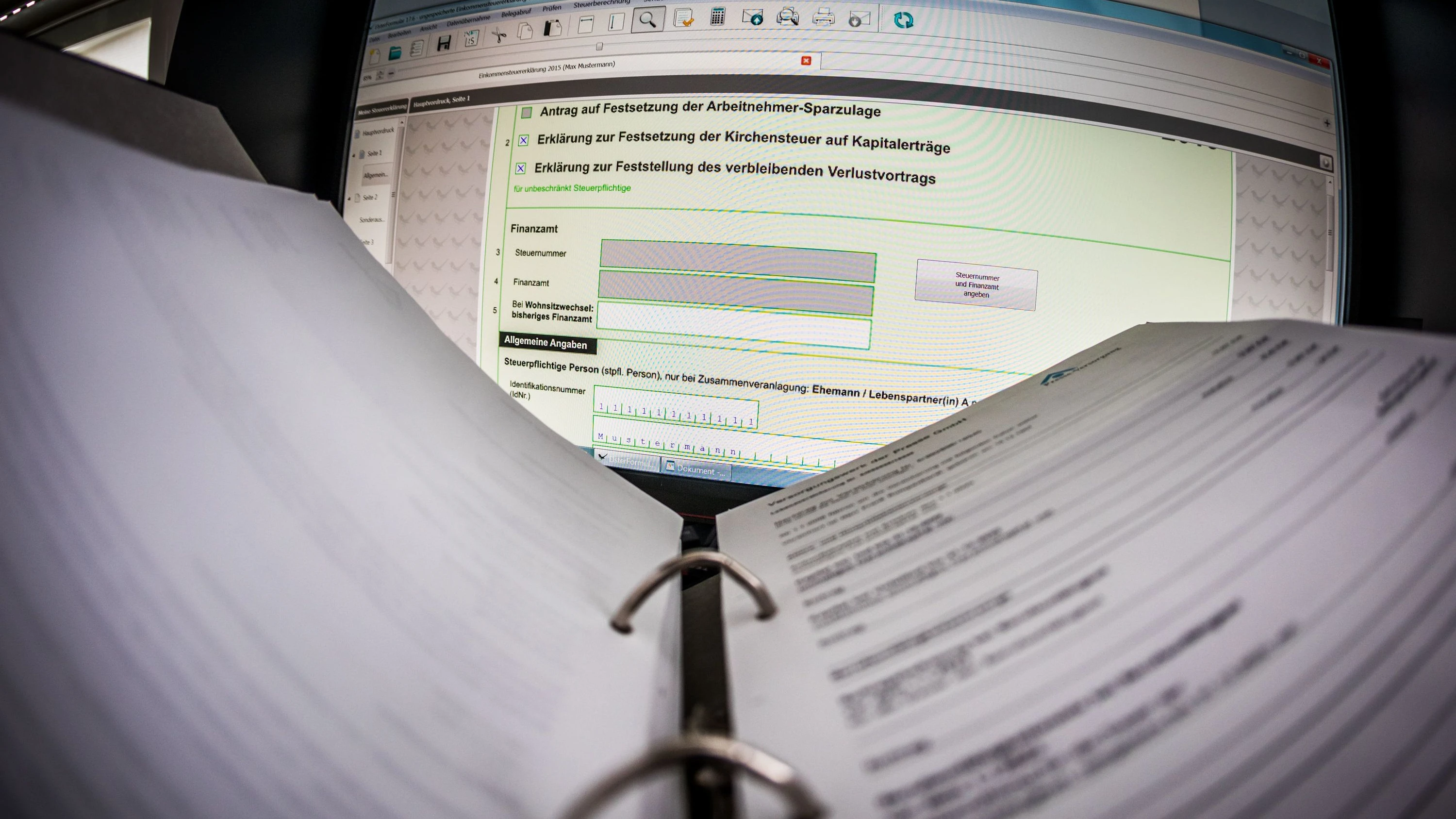
Steuerberater spricht Klartext: „Das deutsche Steuerrecht ist eine Katastrophe Holger Jenzen ist Sprecher der Prüfungs- und Beratungsfirma RSM Ebner Stolz. Wie blickt er auf den rasanten Wandel der Branche, die komplizierten Paragraphen und den Fachkräftemangel?
faz · 4 months ago

UK companies opting to hire temporary workers over permanent staff, recruitment firms say Report blames Middle East conflict and rising business costs for fragile jobs market and steep fall in recruitmentUK companies are increasingly hiring temporary workers instead of permanent staff because of low confidence in the economy and higher cost pressures, according to a report.Recruiters reported a strong increase in offers of temporary roles in May, according to new research from KPMG and the Recruitment and Employment Confederation (REC). Continue reading...
theguardian · 4 months ago
Sicherheit im Zug: Rund ein Drittel der Bahn-Kundenbetreuer trägt Bodycams Die Bahn sucht Wege, um ihr Personal besser vor Übergriffen zu schützen, etwa durch Angebote zu Selbstbehauptungsschulungen und das Tragen von Bodycams. Nun werden erste Ergebnisse präsentiert.
tagesspiegel · 4 months ago
Fehlen Lehrlinge, wird das Handwerk zum goldenen Niemandsland [premium] Hintergrund. Österreich rühmt sich für seine Lehrlingsausbildung. Doch es kriselt massiv: weniger Lehrlinge, weniger Ausbildungsbetriebe und Ausbilder, die besser ausgebildet sein sollten.
die presse · 4 months ago
Job kündigen: »Heute denke ich oft: Hätte ich damals einfach durchgehalten« Viele Menschen kündigen aus einem Impuls heraus. Doch nicht immer bringt eine neue Stelle, was sie verspricht. Hier erzählen Menschen, warum sie ihren Jobwechsel bereuen.
die zeit · 4 months ago
EY-Umfrage: Weniger Studierende rechnen mit erfolgreichem Jobeinstieg Die Sicherheit unter Studierenden, schnell nach dem Studium den passenden Job zu finden, schwindet. Das zeigt eine Umfrage. Ein Faktor ist nun auch wichtiger als das Gehalt.
handelsblatt · 4 months ago