Loading…
 Saturday, September 26Saturday, September 26
4 months · 5 summary articles
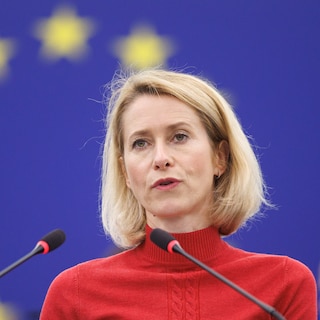
Israel severs diplomatic ties with EU foreign policy chief Kaja Kallas on Thursday, escalating a bitter dispute hours before an EU summit after Israeli Foreign Minister Gideon Saar accused her of comparing Israel’s policies to apartheid-era South Africa.
Saar announced the immediate suspension of all contact with Kallas, the European Union’s High Representative for Foreign Affairs and Security Policy, citing a media report that alleged she had drawn the comparison in remarks about Israel’s actions in the West Bank and Gaza. “We will not engage with someone who makes such statements,” Saar told reporters in Jerusalem . The decision marks the most severe diplomatic rupture between Israel and the EU in years and comes as EU leaders prepare to convene in Brussels for a two-day summit starting Friday.
Kallas, who has not publicly denied the reported remarks, responded by reaffirming the bloc’s commitment to constructive relations with Israel. “The European Union remains dedicated to a positive and constructive partnership with Israel,” she said in a statement released by her office . Her office did not provide further details on the alleged comments, and no transcript or recording has been made public.
The controversy has drawn swift criticism from European capitals. German Chancellor Friedrich Merz publicly distanced himself from Kallas’s remarks, calling them “wrong” and stressing that the EU must maintain balanced dialogue with all parties . Merz’s intervention underscores growing unease within the EU over the escalation, particularly as the bloc seeks to present a unified front on Middle East policy.
Saar’s move follows a series of sharp exchanges between Israel and EU officials over the past week. On Wednesday, German Foreign Minister Annalena Baerbock warned that unilateral actions by Israel risked undermining regional stability, while Israeli officials accused the EU of bias in its criticism of settlement expansion and military operations in the West Bank .
Analysts suggest the timing of the dispute—just before the EU summit—could complicate efforts to adopt a unified stance on the Middle East, where divisions between member states have widened in recent months. The EU has repeatedly called for a two-state solution and condemned settlement activity, but internal disagreements persist over the appropriate level of pressure on Israel.
For now, the rupture appears confined to diplomatic channels. The EU’s foreign policy chief retains her institutional role, and the bloc has not indicated plans to recall her. However, the episode highlights the fragility of EU-Israel relations amid a volatile regional landscape and underscores the challenges facing Kallas as she navigates a fractured international landscape.
Follow us for live European news
3 further sources not geolocated

Kaja Kallas: Friedrich Merz kritisiert Israel-Äußerungen von EU-Außenbeauftragter Wegen eines mutmaßlichen Apartheid-Vorwurfs hat Israel die Beziehungen zu Kaja Kallas gekappt. Auch der Bundeskanzler hält die Äußerungen der EU-Beauftragten für falsch.
die zeit · 3 months ago
Israel says its cutting ties to EUs Kaja Kallas Israels foreign minister says he is severing contact with the EUs foreign affairs chief Kaja Kallas. Gideon Saar attributed the move to a media report alleging that Kallas compared Israel to apartheid-era South Africa.
deutsche welle europe · 3 months ago

Israels Saar rejects EUs Kallas response, contact cut remains
news.yahoo.com · 3 months ago

⚡ NEWSIsrael severs diplomatic ties with EU foreign policy chief Kaja KallasIsraels Foreign Minister Gideon Saar announced the severing of contact with EU foreign affairs chief Kaja Kallas. The decision follows a media report alleging that Kallas compared Israels policies to apartheid-era South Africa, marking a significant...📰 #EU #Diplomacy #Geopolitics #GeoWire
mastodon bot · 3 months ago
Live - Israël verbreekt contact met EU-buitenlandchef na veronderstelde opmerkingen over apartheid • Meer dan duizend doden in Gaza sinds staakt-het-vuren
de morgen · 3 months ago

Israel bricht Kontakt zur EU-Außenbeauftragten ab – „Werden darüber zu sprechen haben, sagt Merz Konflikt mit Brüssel: Israels Außenminister Gideon Saar will nicht mehr mit der EU-Außenbeauftragten Kaja Kallas sprechen. Auslöser sind Berichte über ihre Äußerungen zum Gazakrieg und zum Westjordanland.
welt.de · 3 months ago
Israel und die EU: Israel bricht Kontakt zu EU-Außenbeauftragter ab Kaja Kallas soll Israels Vorgehen im Westjordanland mit dem südafrikanischen Apartheidregime verglichen haben. Das hat Konsequenzen – direkt vor dem EU-Gipfel. mehr...
taz.de · 3 months ago
Israelul anunţă întreruperea contactelor cu şefa diplomaţiei UE. Ce reacție a avut Kaja Kallas Ministrul israelian al afacerilor externe a anunţat joi întreruperea contactelor cu şefa diplomaţiei Uniunii Europene, Kaja Kallas, reproşându-i că a comparat ţara sa cu fostul regim rasist din Africa de Sud. În replică, Kallas a declarat blocul comunitar rămâne angajat faţă de o relaţie constructivă cu Israelul.
digi24 · 3 months ago

Le ministre des Affaires étrangères israélien rompt les relations avec la cheffe de la diplomatie de lUE Jeudi 18 juin, Gideon Saar, le ministre des Affaires étrangères israélien, a annoncé quil rompait ses relations diplomatiques avec Kaja Kallas, la haute représentante de lUE pour les affaires étrangères. Saar reproche à Kallas davoir comparé lÉtat hébreu à lAfrique du Sud au temps de lapartheid.
courrier international · 3 months ago

Israeli Foreign Minister Gideon Saar has vowed to cut contact with top EU diplomat Kaja Kallas, triggering a public spat that Kallas later tried — and failed — to defuse.
bluesky bot · 3 months ago