
EU fails to agree on sanctions against Israels Ben-Gvir amid settlement trade debate
Story Timeline
4 months · 8 summary articles
The European Union on Monday failed to reach a consensus on imposing sanctions against Israel’s far-right National Security Minister Itamar Ben-Gvir, EU High Representative for Foreign Affairs Kaja Kallas confirmed, as divisions among member states deepened over both the minister’s conduct and broader trade measures linked to Israeli settlements in the West Bank.
Speaking after a meeting of EU foreign ministers in Brussels on Monday, Kallas said there was “no unanimity” among the 27 member states to sanction Ben-Gvir, whose recent actions—including a widely criticized video mocking detained activists aboard a Gaza-bound aid flotilla—have intensified calls for EU action. “That there was no unanimity was in the air; now it has been officially confirmed by the High Representative,” Italian daily *Il Fatto Quotidiano* reported .
The failure to agree on sanctions against Ben-Gvir comes amid broader, contentious discussions over whether to restrict trade with Israeli settlements in the occupied West Bank. Several EU member states, including France and Spain, have pushed for a total or partial ban on imports from settlements, which the EU considers illegal under international law. However, Germany has publicly opposed sanctions, complicating efforts to adopt a unified position. “Many member states favored a ban, but the German government rejects sanctions,” Berlin-based *Tagesspiegel* reported .
The debate also reflects growing frustration in Europe over Israel’s settlement expansion and treatment of Palestinian civilians. A recent investigation cited by Portuguese outlet *Observador* found that agricultural products from settlements are often mislabeled as originating from Israel proper when exported to Europe, a practice NGOs say enables the settlements to bypass EU import restrictions .
While the EU remains divided on direct sanctions against Ben-Gvir, Kallas indicated that discussions on a broader framework to harden the bloc’s stance on Israel are ongoing. “Europe debates framework to harden position on Israel,” *The National* noted Monday, as diplomats seek a compromise that balances human rights concerns with geopolitical realities .
The lack of consensus underscores the EU’s struggle to present a united front on one of the most polarizing issues in its foreign policy, even as public pressure mounts following Ben-Gvir’s provocative actions and reports of ongoing abuses in the West Bank. With no immediate resolution in sight, the bloc’s foreign policy chief has effectively deferred further action, leaving the door open for future negotiations—but also for continued criticism over its perceived inaction.
Follow us for live European news
- 1
- 1
- 1
- 1
- 1
- 1
- 1
2 further sources not geolocated
Articles

UE sem consenso para sancionar ministro israelita Ben-Gvir Outro dos temas que foi esta segunda-feira discutido pelos ministros dos Negócios Estrangeiros da UE relacionava-se com a restrição total ou parcial do comércio com os colonatos israelitas na Cisjordânia
observador · 3 months ago

Európska únia trvá na zachovaní sankcií voči Iránu. Požaduje konkrétne zmeny Predsedníčka Európskej komisie zdôraznila, že sankcie voči Iránu zostávajú v platnosti, pokiaľ sa nezmení jeho správanie v oblasti ľudských práv a jadrového programu.
aktuality.sk · 3 months ago
EU fails to agree on sanctions for far-right Israeli minister Ben-Gvir EU diplomacy chief Kaja Kallas confirms EU remains divided on sanctioning Israel
aljazeera · 3 months ago

ONG denuncia rotulagem indevida de produtos de colonatos A Europa é o maior mercado de Israel, e a União Europeia o seu principal parceiro comercial, representando quase 30 das exportações
observador · 3 months ago
Δώδεκα ισραηλινές εταιρείες αποκλείστηκαν από την αμυντική έκθεση Eurosatory στη Γαλλία Μια τεχνολογία προστατεύει το αεροσκάφος του προέδρου Μακρόν και τα περισσότερα αεροσκάφη ηγετών σε όλον τον κόσμο, σήμερα όμως δεν επιτρέπεται να παρουσιαστεί, δήλωσε ενοχλημένος ο πρεσβευτής του Ισραήλ στη Γαλλία
protothema · 3 months ago
Illegale israelische Siedlungen im Westjordanland: EU erwägt Importverbot für Produkte Viele Mitgliedstaaten befürworteten ein Verbot, sagte die Außenbeauftragte Kaja Kallas. Die Bundesregierung lehnt Sanktionen hingegen ab.
tagesspiegel · 3 months ago
Europese Commissie wil sancties tegen Iran voorlopig niet opheffen
de volkskrant · 3 months ago
Europe debates framework to harden position on Israel
gdeltproject.org · 3 months ago
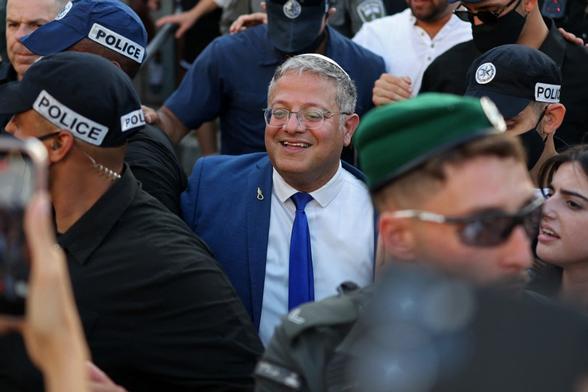
KYIV POST: No EU Consensus on Sanctioning Israeli Minister Ben Gvir: Kallas The EUs top diplomat said theres no consensus from the bloc to sanction far-right Israeli national security minister Itamar Ben Gvir. Calls to blacklist Ben Gvir grew after he published a video last month of himself mocking bound activists seized by Israeli soldiers on a Gaza-bound aid flotilla. #MiddleEast #World #Europe
mastodon bot · 3 months ago
Nessun accordo in Ue sulle sanzioni al ministro israeliano Ben Gvir: manca lunanimità degli Stati membri Nemmeno le torture e lumiliazione di cittadini europei ha smosso Bruxelles. Che non ci fosse lunanimità era nellaria, adesso è stata lAlta rappresentante per la Politica Estera dellUe, Kaja Kallas, a ufficializzare che i ministri degli Esteri dei 27 Stati membri non hanno, di nuovo, trovato un accordo per sanzionare il ministro della Sicurezza Nazionale […] Larticolo Nessun accordo in Ue sulle sanzioni al ministro israeliano Ben Gvir: manca lunanimità degli Stati membri proviene da Il Fatto Quotidiano.
il fatto quotidiano · 3 months ago