
Marine Le Pen launches fourth presidential bid after court clears her to run

Story Timeline
3 days · 5 summary articles
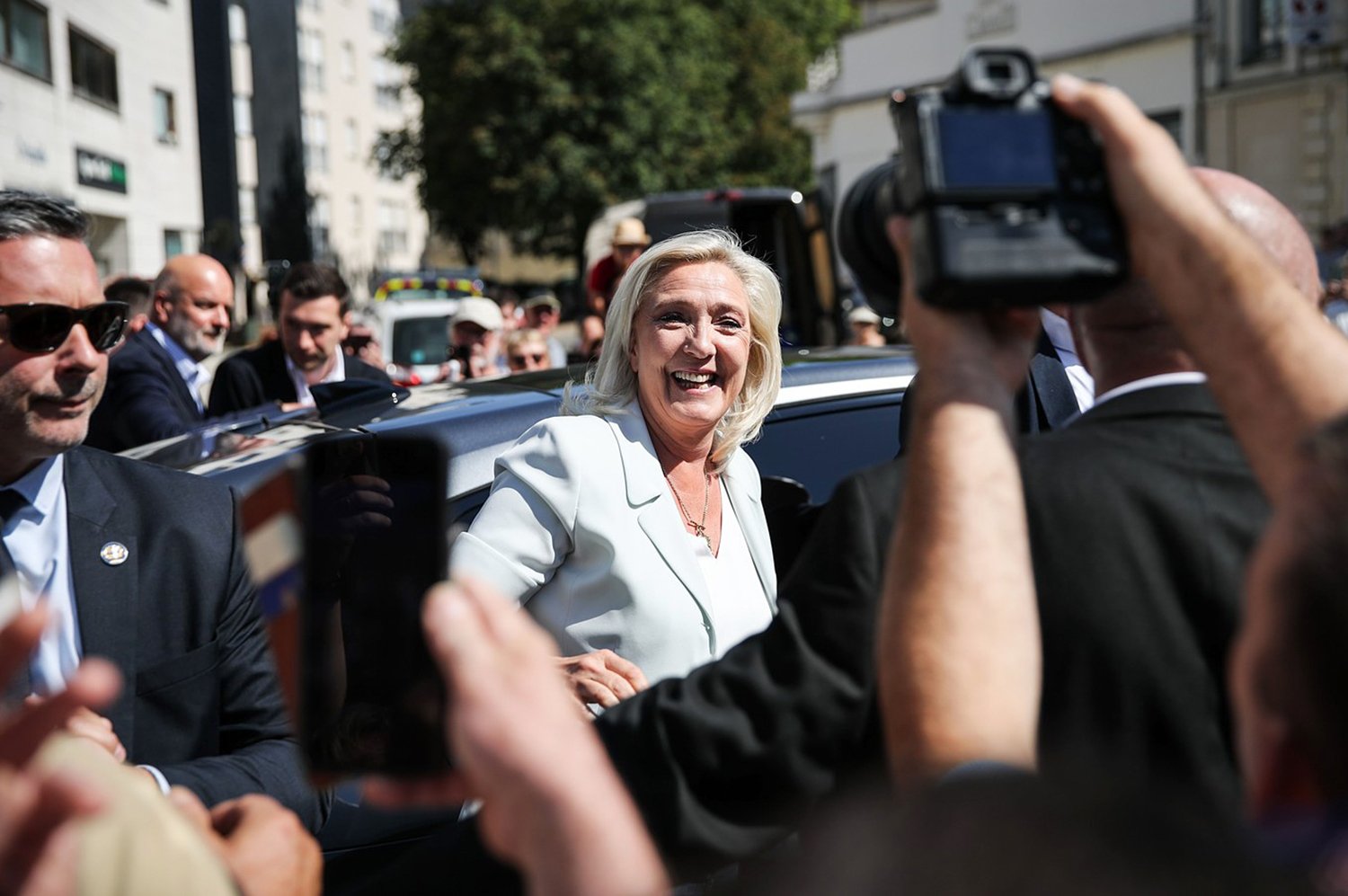
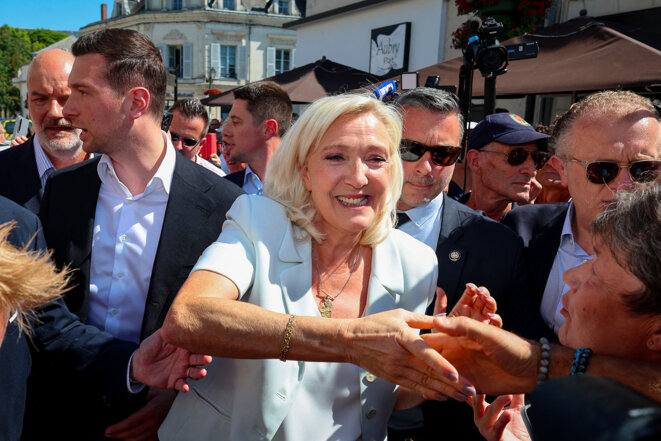
Marine Le Pen launched her fourth bid for the French presidency on Wednesday, seizing on a Paris appeals court ruling that cleared her to run despite upholding her conviction for embezzling €2.9 million in European Parliament funds. The far-right National Rally leader appeared in the Loire Valley town of La Flèche, where she pledged to revive “France’s sovereignty, justice, security and education,” hours after the court reduced her ineligibility ban to 15 months and suspended two of her three-year sentence, leaving her under electronic monitoring for one year.
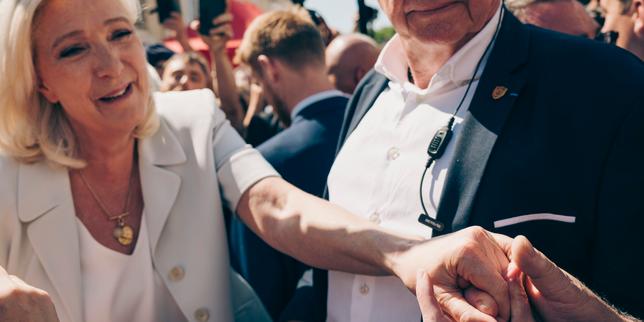
The court’s decision to allow Le Pen to stand in the 2027 election hinged on her immediate appeal to France’s highest civil court, the Cour de Cassation, which said it would rule by early April 2027—weeks before the first round on April 18. Until then, the case hangs over her campaign, with the possibility that a final guilty verdict could force her to wear an ankle monitor during the final stretch of voting. “I’m not going to spend my whole campaign analysing legal matters,” Le Pen told reporters, brushing aside questions about Tuesday’s verdict as supporters clamoured for selfies.
Reactions to her candidacy were sharply divided. In La Flèche, a longtime left-wing bastion that elected a 25-year-old RN mayor in March, some jeered “Give the money back!” and “Go to jail!” while others chanted “Marine, president!” The RN’s campaign website went live hours after the ruling, featuring a photograph of Le Pen with outstretched arms and the slogan “For France, Revival.” Her team also announced that Jordan Bardella, the 28-year-old RN president and her preferred successor, would run alongside her as a potential prime minister, though tensions between the two have grown in recent months.
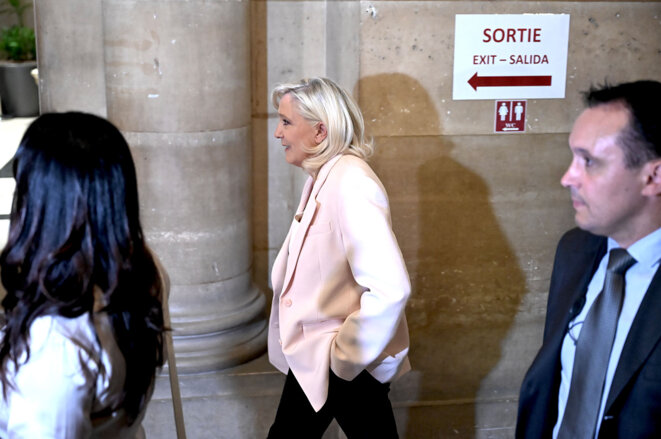
Le Pen’s legal saga began in March 2025, when she was convicted of diverting EU funds to pay party staff between 2004 and 2016. The appeals court on Tuesday upheld the conviction but reduced her ineligibility from five years to 15 months, with 30 months suspended, and sentenced her to a €100,000 fine. Her decision to run defies the expectations of some in Brussels who had hoped she might step aside for a younger, more palatable figure.
The campaign is shaping up to be a referendum on the role of the judiciary in French democracy. Le Pen has framed her legal troubles as “lawfare,” portraying herself as a victim of a politically motivated establishment. Her allies in Europe, including Italy’s Matteo Salvini and former US president Donald Trump, have echoed the narrative, with Salvini comparing her to Martin Luther King and Trump calling the case a “left-wing witch hunt.” Critics argue that her candidacy risks normalising corruption, noting that she was convicted not for her political views but for misusing funds belonging to French taxpayers.
Polls currently place Le Pen as the front-runner, but her legal cloud could deter moderate voters she would need to win a runoff. The two-round system means centre voters may ultimately face a choice between two extremes in April 2027, potentially paving the way for a far-right victory.
Follow us for live European news
- 5
- 2
- 2
- 1
- 1
- 1
- 1
- 1
- 1
- 1
2 further sources not geolocated
Articles

What does Le Pens presidential bid mean for relationship with Bardella? French hard-right leader Marine Le Pen has decided to run for president despite her conviction on embezzlement charges and she is counting on her political heir Jordan Bardella to run alongside her, casting him as her future prime minister. But how aligned are Marine Le Pen and Bardella? Do they think alike? Increasingly, the answer is no and the number of issues they express differences on is growing.
france24 · about 4 hours ago
France 2027 Elections: A clash of two extremes could lead to easy Le Pen win 🇫🇷 "You have a built-in danger in the system." The Financial Times Victor Mallet argues #Frances two-round system could leave centre voters choosing between two extremes in #2027elections, potentially opening the door to a far-right #LePen victory over the far-left. More on #F24Debate ➡️
france24 · about 4 hours ago
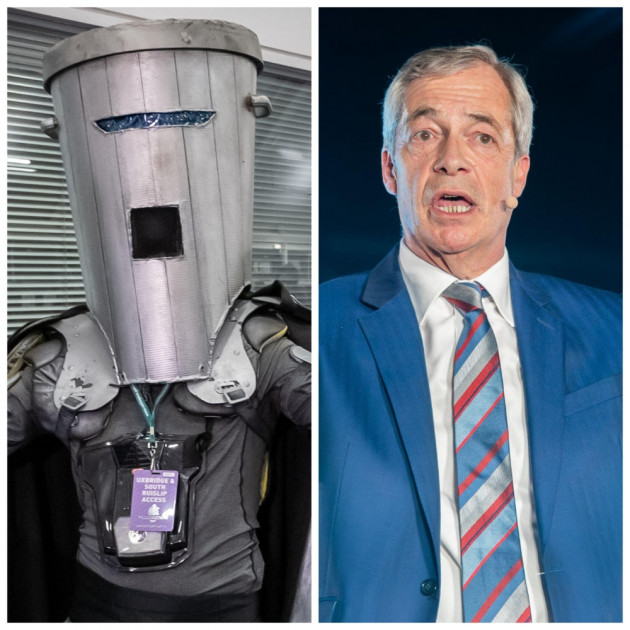
Nigel Farages main byelection rival looks like its going to be a guy dressed as a bin With other major parties not fielding a candidate it looks like the establishment Farage faces is Count Binface.
thejournal · about 4 hours ago

Farage vs Count Binface: how UK hard-right leaders poll gambit could backfire British anti-immigrant politician Nigel Farage faces the embarrassing prospect of going head-to-head with perennial joke candidate Count Binface in a by-election after he decided to quit parliament. His surprise move threatened to backfire on Wednesday after other heavyweight parties confirmed they would not contest the vote for Farages seat in southeast England. Count Binface, a self-described intergalactic space warrior, is the only other person to have said so far that they would run. In a...
south china morning post · about 4 hours ago
Le Pen revives presidential bid echoing Trump French far-right leader portrays herself as a modern-day Joan of Arc going against the political establishment
financial times · about 4 hours ago
Le Pen, Farage and the peoples verdict The two rightwing leaders seek salvation through the ballot box
financial times · about 4 hours ago
Far-right leader Le Pen starts campaign, faces mixed reactions in France A court ruling has allowed Le Pen to campaign despite embezzlement conviction, sparking heated debates across France.
aljazeera · about 4 hours ago
Marine Le Pen cleared to run in Frances 2027 Presidential election A French court ruling has reopened Marine Le Pens path to the 2027 presidential election.
aljazeera · about 4 hours ago
Farage and Le Pen try Trumps trick of turning scandal to their advantage The godparents of Europes populist right seek to brazen their way out of trouble, hoping voters will agree the establishment is conspiring to stitch them up.
politico.eu · about 4 hours ago

Farages Resignation Risks Becoming Farce as U.K. Parties Boycott Clacton By-Election Under investigation over an undisclosed gift, the right-wing leader Nigel Farage may end up in a special election against a candidate dressed as a trash can.
new york times · about 4 hours ago

Le Pen Launches Presidential Campaign, in a Twist for French Politics The day after a court decided the far-right leader Marine Le Pen could run for office again, cheers and boos met her campaign kickoff in a rural stronghold.
new york times · about 4 hours ago

🇫🇷 ⚖️ 🗳️ EXPLAINED: Why is Marine Le Pen now able to run for the French presidency? After more than a year of uncertainty, a court ruling means the French far-right politician can run in the countrys 2027 presidential election. How has the situation been resolved, at least for now?
bluesky_AFP English · about 4 hours ago

Frances highest court has said it would rule on far-right presidential candidate Marine Le Pens latest appeal of an embezzlement conviction by early April, before voters head to the polls.
bluesky_Politico Europe · about 4 hours ago

🎙️ Et Marine Le Pen donna le coup denvoi de la présidentielle @anthonylattier.bsky.social débat avec @pausr.bsky.social, @ebertholomey.bsky.social, @sarah-paillou.bsky.social du premier rebondissement de la campagne. A écouter ici : www.politico.eu/podcast/play...
bluesky_Politico Europe · about 4 hours ago

In London Playbook PM: 🗳️ Nigel Farage is no longer an MP and the Clacton by-election could happen on Aug. 6. 🗑️ Westminster is mulling whether Count Binface could beat the Reform UK leader. 💷 The Reform donation revelations keep coming. Dig in👇
bluesky_Politico Europe · about 4 hours ago

Marine Le Pen and Nigel Farage are following Donald Trumps playbook: deny wrongdoing, cast themselves as victims of the establishment and turn legal scrutiny into a political asset. The question is whether it will work in Europe.
bluesky_Politico Europe · about 4 hours ago

Marine Le Pen is running for French president again. Her decision has ended cautious optimism among some in Brussels that she might cede her place to a younger and potentially more amenable successor. 🔗 www.politico.eu/article/mari...
bluesky_Politico Europe · about 4 hours ago
Marine Le Pen si jde pro prezidentské křeslo. S náramkem na noze, nebo bez něj Krajní pravice by už v dubnu mohla ovládnout druhou největší ekonomiku EU. Příchod „druhé Meloni to ale pro blok zřejmě znamenat nebude
respekt · about 4 hours ago

Marine Le Pen a montré quelle a clairement le leadership du RN Pour le politologue Luc Rouban, le parti est conscient des limites du candidat Jordan Bardella. ...
la libre · about 4 hours ago

Le Pen pleitte ooit voor levenslange onverkiesbaarheid bij fraude. Nu wil ze zelf president worden na miljoenenfraude
de morgen · about 4 hours ago
Marine Le Pen neemt enorme gok in vierde gooi naar Frans presidentschap Marine Le Pen kondigde aan dat ze zal meedoen aan de Franse presidentsverkiezingen van volgend jaar, slechts enkele uren nadat het hof in Parijs haar groen licht had gegeven. Daarmee neemt ze een enorme gok, stellen experts.
nu.nl · about 4 hours ago

"Marine, cest Marine" : dans le bassin minier, des électeurs RN prêts à tout pardonner à leur candidate
lexpress · about 4 hours ago
Après sa condamnation, Marine Le Pen veut braquer la présidentielle En annonçant un pourvoi en cassation après sa condamnation en appel pour détournement de fonds publics, le 7 juillet, la candidate du RN a repris le contrôle de son calendrier judiciaire. La cheffe de file de lextrême droite va tout faire pour empêcher que son sort soit scellé avant le premier tour de la présidentielle.
mediapart · about 4 hours ago
Jugement Le Pen: les preuves dune clémence judiciaire La cour dappel de Paris a fait une fleur à Marine Le Pen en la rendant de nouveau éligible tout en la condamnant. Une faveur dont nont pas bénéficié dautres élus condamnés pour des atteintes à la probité.
mediapart · about 4 hours ago

Condamnation de Marine Le Pen: à gauche, des protestations sans traduction politique La condamnation de Marine Le Pen ouvre à la gauche un boulevard pour mettre les sujets de probité et déthique au cœur de la campagne présidentielle. Pour linstant, le boulevard est dépeuplé et les réactions sommaires.
mediapart · about 4 hours ago
Présidentielle 2027 : Marine Le Pen abrège un premier déplacement de campagne chahuté Au lendemain de sa condamnation par la cour dappel de Paris, la cheffe de file de lextrême droite a écourté, mercredi, sa venue à La Flèche, dans la Sarthe, perturbée par la mobilisation dune soixantaine dopposants.
le monde · about 4 hours ago
French appeals court clears Le Pen for 2027 presidential election The Paris Court of Appeal on Tuesday shortened National Rally leader Marine Le Pens ineligibility ban to 45 months with 30 suspended, clearing the way for her to run in the 2027 presidential election while serving her prison sentence under electronic monitoring for misuse of European Parliament funds.
yenisafak · about 4 hours ago
Frances Le Pen confirms 2027 presidential bid after conviction upheld Marine Le Pen confirmed on Tuesday she will run for the French presidency in 2027, hours after an appeal court upheld her conviction for embezzling €2.8 million in EU funds but ruled she could remain eligible to stand in the election while she appeals to Frances highest civil court.
yenisafak · about 4 hours ago

Nigel Farage et Marine Le Pen lancent la grande bataille électeurs vs institutions Les deux dirigeants populistes, en tête des sondages au Royaume-Uni et en France, entendent se soumettre au suffrage des électeurs pour contrecarrer leurs démêlés politiques et judiciaires. Une stratégie éprouvée, en particulier par Donald Trump aux États-Unis, mais potentiellement limitée, décrypte la presse étrangère.
courrier international · about 4 hours ago

Marine Le Pen prend la campagne présidentielle en otage En Espagne, le journal de centre gauche El País sindigne quune personnalité politique de premier plan si lourdement condamnée puisse se présenter à la fonction politique suprême. Une perspective qui discrédite le processus électoral et affaiblit les institutions du pays, selon cet éditorial.
courrier international · about 4 hours ago