 Thursday, May 21Thursday, May 21
China-Russia Relations and Putin’s Beijing Visit Vladimir Putin’s recent two-day visit to Beijing underscored the deepening strategic alignment between Russia and China, with both leaders publicly emphasizing their strong bilateral ties. The visit marked the 25th anniversary of the China-Russia friendship treaty and the 30th year of their strategic partnership, which Xi Jinping and Putin described as reaching its "highest level in history" in a joint statement . However, despite the rhetoric of cooperation, Putin failed to secure a firm commitment from Xi on the Power of Siberia 2 pipeline, a critical project for Russia to export natural gas to China. The pipeline, intended to transport gas from northwestern Russia, remains unresolved, with Xi keeping Putin "waiting" and avoiding a definitive agreement . Analysts suggest this reflects China’s cautious approach to energy deals, particularly as it balances relations with the West and its long-term strategic interests.
The visit followed closely on the heels of Donald Trump’s trip to Beijing, with Putin’s arrival seen as part of a broader effort by China and Russia to present a united front amid shifting global dynamics. While the two nations signed multiple bilateral agreements, the lack of progress on the pipeline highlighted Russia’s growing dependence on China, with some European media framing Putin’s role as more of a "supplicant" than an equal partner . The summit also occurred against the backdrop of Trump’s controversial stance on Taiwan, further complicating the geopolitical landscape.
Trump’s Planned Call with Taiwan’s President and U.S.-China Tensions U.S. President Donald Trump has announced plans to speak directly with Taiwan’s President Lai Ching-te, a move that would break decades of diplomatic precedent and risk escalating tensions with China. Since 1979, U.S. presidents have avoided direct communication with Taiwanese leaders to adhere to the "One China" policy, under which Washington recognizes Beijing as the sole legitimate government of China. Trump’s decision to engage in such a call—confirmed by both U.S. and Taiwanese officials—has been described as "unprecedented" and likely to provoke China’s ire .
Lai Ching-te, who has previously expressed willingness to engage with Trump, framed the potential call as a positive development, though its timing—amid heightened U.S.-China competition—raises concerns about further straining relations . Trump’s stance on Taiwan has been inconsistent; while he has warned Taiwan against formally declaring independence, he has also signaled openness to arms sales and high-level dialogue, including the proposed call . The move follows Trump’s recent visit to Beijing, where he reportedly discussed Taiwan with Xi Jinping, though details of those conversations remain unclear. Analysts suggest the call could be part of a broader strategy to pressure China on trade or security issues, though it risks triggering a sharp response from Beijing, which views Taiwan as a core sovereignty concern.
> Background: **Putin and Xi strengthen China-Russia alliance against Western influence.** — *13 hours ago*
More LFE coverage on this topic

Debate: Putin in Bejing: partner or supplicant? Hot on the heels of Donald Trump, Vladimir Putin has paid a two-day visit to Beijing. The Russian president and his host Xi Jinping publicly emphasised the strong ties between their countries. However, the two leaders failed to reach a deal on the construction of a new pipeline to export Russian natural gas. Europes press analyses the international power relations.
eurotopics.net · about 2 hours ago
Trump risks provoking Chinas ire with planned call with Taiwan leader US President Donald Trump said on Wednesday he would speak with Taiwans President Lai Ching-te, an unprecedented move for a US leader that could roil US relations with China. US and Taiwanese presidents have not spoken directly since Washington shifted diplomatic recognition to Beijing from Taipei in 1979. France 24s correspondent in Taiwan Jan Camenzind Broomby takes a look at how likely it is the call will go ahead and what the two leaders might discuss.
france24 · about 3 hours ago
COMMENT: Russia and China deepen strategic alignment as partnership reaches highest level in history Russian President Vladimir Putin and Chinese President Xi Jinping set out an expansive vision for their bilateral relationship in a joint statement issued during a state visit to Beijing this week, marking 30 years of strategic partnership.
intellinews · about 4 hours ago
Taiwans President Lai says he would be happy to speak with Donald Trump US and Taiwan leaders have not spoken since Washington shifted diplomatic recognition from Taipei to Beijing in 1979.
aljazeera · about 4 hours ago
Trump sets tone on Taiwan after Xi summit, signals talks Trump last week issued a warning to Taiwan against formally declaring independence from China.
euronews · about 5 hours ago
Trump says he will speak with Taiwan leader as he weighs potential arms deal Trump last week issued a warning to Taiwan against formally declaring independence from China.
euronews · about 6 hours ago
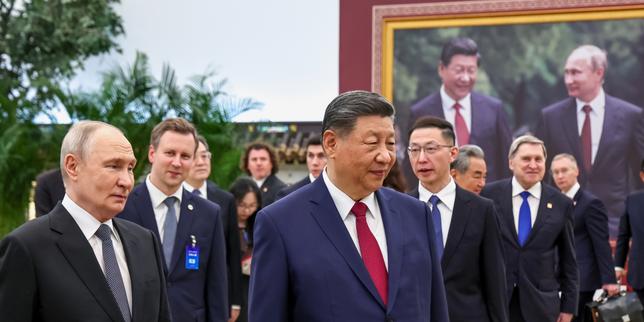
Xi, at the center of global affairs, keeps Putin waiting on the Power of Siberia 2 pipeline Vladimir Putin, who, after Donald Trump, came to Beijing to celebrate the 25th anniversary of the China-Russia friendship treaty, failed to secure the firm commitment he had hoped for from Xi Jinping regarding the pipeline, which is intended to carry gas from northwestern Russia to China.
le monde · about 6 hours ago
Three key takeaways from Putins Beijing trip — and what they reveal about China-Russia ties Putin left Beijing with declarations of enduring friendship with China and a stack of bilateral agreements — but without the energy breakthrough Moscow desperately sought.
cnbc · about 7 hours ago
At the center of global affairs, Xi keeps Putin waiting on the Power of Siberia 2 pipeline In Beijing to celebrate the 25th anniversary of the China-Russia friendship treaty, the Russian president, following in the footsteps of Donald Trump, failed to secure the firm commitment he had hoped for from his Chinese counterpart regarding the pipeline, which is intended to carry gas from northwestern Russia to China.
le monde · about 10 hours ago
Trump claims he will speak to Taiwans president, departing from decades-long diplomatic norms US and Taiwanese presidents have not spoken directly since Washington shifted diplomatic recognition to Beijing from Taipei in 1979US President Donald Trump said on Wednesday he would speak with Taiwans President Lai Ching-te, an unprecedented move for a US leader that could roil US relations with China.US and Taiwanese presidents have not spoken directly since Washington shifted diplomatic recognition to Beijing from Taipei in 1979. Continue reading...
theguardian · about 12 hours ago
China and Russia unite after Trumps Beijing visit Just days after Donald Trumps visit to Beijing, Vladimir Putin arrived in China for a summit with Xi Jinping.
aljazeera · about 17 hours ago
Whats the significance of the Russian presidents visit to China? Xi Jinping hosts Vladimir Putin a week after Donald Trump was in Beijing.
aljazeera · about 17 hours ago