 Saturday, June 13Saturday, June 13
Story Timeline
7 days · 4 summary articles
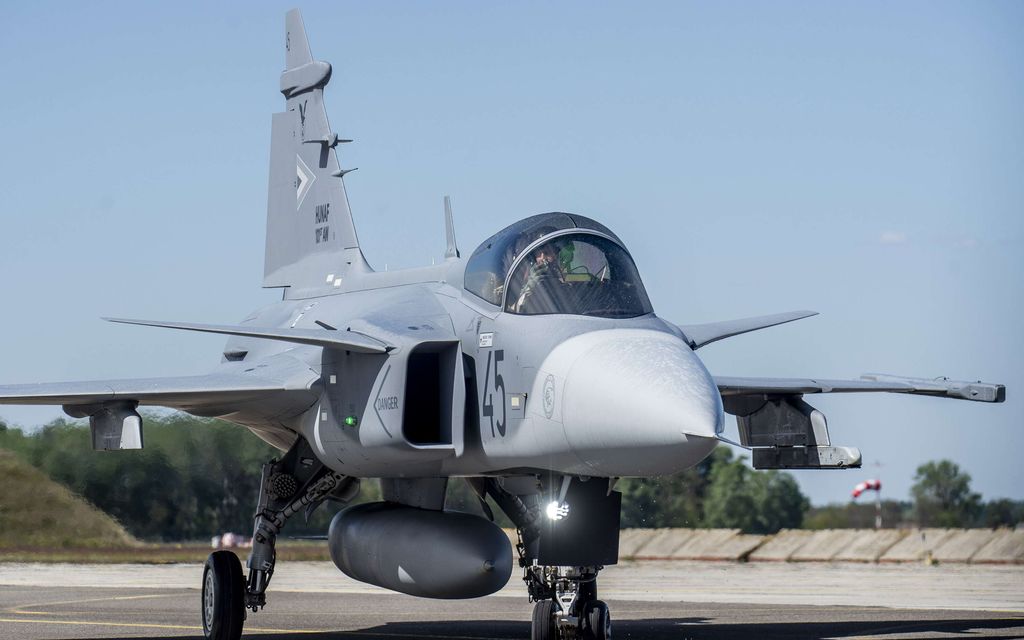
Sweden scrambled two Swedish Air Force JAS 39 Gripens within minutes of each other on Friday after two Russian combat jets approached Swedish airspace over the Baltic Sea, prompting a joint response with a Danish F-16 that underscored the escalating pattern of Russian aerial activity in the region.
The Swedish Armed Forces confirmed that the Russian aircraft were intercepted and escorted away from Swedish airspace, marking the second such incident in 24 hours and the latest in a series of increasingly frequent incursions. “The recurring Russian behaviour over the Baltic Sea is serious,” Swedish Prime Minister Ulf Kristersson wrote on X on Friday evening . Hanna Heurlin, press spokesperson for the Swedish Armed Forces, told *Svenska Dagbladet* that the pattern of Russian flights near Swedish airspace is “serious and follows a recurring pattern” .
According to multiple Swedish outlets, the first Russian aircraft was detected approaching Swedish airspace just after midday on Friday, prompting the immediate launch of a Swedish JAS 39 Gripen from F 17 air base in Ronneby. Minutes later, a second Russian jet triggered a second Gripen scramble from the same base. Danish Defence Command confirmed that a Danish F-16 fighter was also involved in the operation, coordinating with Swedish forces to monitor and intercept the Russian aircraft .
International media also reported the incident, with Austrian broadcaster ORF describing how Swedish fighters were scrambled to intercept Russian combat jets over the Baltic Sea . Finnish newspaper *Ilta-Lehti* likewise highlighted the rapid Swedish response to the Russian aircraft .
The Swedish Armed Forces have not disclosed the type or origin of the Russian aircraft involved, nor their flight path. However, the timing and nature of the intercepts follow a documented trend of Russian military aircraft probing NATO and partner airspace in the Baltic region. Sweden, which is not a member of NATO but participates in the alliance’s enhanced air policing mission, has repeatedly condemned such incursions as provocative and destabilising.
Defence analysts note that the frequency of these incidents has increased in 2026, with Swedish fighters scrambled on multiple occasions to monitor Russian flights near its borders. The latest intercepts come amid broader regional tensions, including heightened military activity in the Baltic Sea and northern Europe.
Swedish authorities have not indicated whether further diplomatic protests will be issued, but the government’s public statements suggest a firm stance. “We are monitoring the situation closely and will continue to act in accordance with international law and our national security interests,” Heurlin said.
1 further source not geolocated

Avioane de vânătoare JAS 39 Gripen, ridicate de urgență de la sol de Suedia pentru interceptarea unor aeronave rusești Suedia a anunțat sâmbătă că a dispus decolarea de urgență a două perechi de avioane de vânătoare JAS 39 Gripen pentru a intercepta două avioane de luptă rusești care survolau Marea Baltică în apropierea spațiului său aerian, scrie AFP. Cele două incidente au avut loc vineri în sudul și nordul Mării Baltice. Avioane NATO au …
hotnews.ro · about 3 hours ago

La Suède intercepte deux chasseurs russes près de son espace aérien La Suède a annoncé samedi avoir fait décoller en urgence deux paires de chasseurs JAS 39 Gripen pour intercepter deux avions de combat russes survolant la mer Baltique à proximité de son espace aérien. ...
la libre · about 3 hours ago
Ruotsi nosti hävittäjät ilmaan – Syynä venäläiskoneet
iltalehti · about 3 hours ago
Det svenske forsvar: Dansk jagerfly involveret i operation mod russiske jagerfly i Østersøen
dr.dk · about 3 hours ago
Insatser mot ryska flyg Sågs nära svenskt luftrum: Allvarligt
expressen · about 3 hours ago
Svensk insats mot ryska stridsflyg över Östersjön Två ryska stridsflyg närmade sig svenskt luftrum under fredagen.Med bara minuters mellanrum gick Jas 39 Gripen upp för att möta planen.Det återkommande ryska agerandet över Östersjön är allvarligt, skriver Ulf Kristersson på X.
expressen · about 3 hours ago
Sverige i dubbla insatser mot ryska stridsflyg Under fredagen genomförde Försvarsmakten dubbla insatser mot ryska stridsflyg över Östersjön. Det ryska agerandet är allvarligt och följer ett återkommande mönster, säger Hanna Heurlin, presskommunikatör vid Försvarsmakten till SvD.
svenska dagbladet · about 3 hours ago
Dubbla insatser mot ryska stridsflyg över Östersjön
svenska dagbladet · about 3 hours ago
Schweden: Russische Kampfjets über Ostsee abgefangen
orf.at · about 3 hours ago
![[lalibre] La Suède intercepte deux chasseurs russes près de son espace aérien #Europe](https://files.mastodon.social/cache/preview_cards/images/196/471/304/original/531821fa092b4253.jpg)
[lalibre] La Suède intercepte deux chasseurs russes près de son espace aérien #Europe
mastodon bot · about 3 hours ago