
Russia mass-mobilises 80,000 troops near Finland: NATO scrambles contingency plans
Story Timeline
4 months · 8 summary articles
Russia has massed 80,000 troops along its border with Finland, according to a joint investigation published on Tuesday, a deployment that NATO officials say underscores the urgency of European defence planning without automatic reliance on the United States.
Satellite imagery and military data analysed by Nordic and Baltic outlets show new barracks, expanded airfields and intensified drills near the Finnish frontier, including at bases that were mothballed after the Cold War. The build-up, described by SVT and other Nordic media as the largest since 1991, places Russian forces within hours of Helsinki and Stockholm, raising questions about Article 4 consultations and the credibility of NATO’s eastern flank .
The revelation coincides with closed-door NATO discussions in Brussels on contingency plans that would allow European members to respond to a Russian attack even if Article 5 were delayed or blocked. European diplomats told *The Times* that the taboo against contingency planning has lifted as Washington’s commitment under President Donald Trump has become less predictable .
Norway will deploy an additional mechanised company to Lithuania’s Suwałki Gap as early as July, the Norwegian defence ministry confirmed on Wednesday, marking the first permanent reinforcement of the alliance’s eastern border by a non-Baltic state since 2022 .
Public opinion across the EU remains supportive of Ukraine, with 62% of respondents in a European Council on Foreign Relations survey viewing Kyiv as either an ally or a necessary partner for European security. The poll, conducted in May, found majorities in every surveyed country except Hungary, signalling sustained political will for continued military aid and sanctions against Moscow .
Finnish authorities have not publicly revised their threat assessment, but defence minister Antti Häkkänen told parliament on Monday that Helsinki is accelerating procurement of long-range strike systems and accelerating the integration of reservists into regional commands. Sweden, which applied to join NATO in 2022, has quietly extended conscription to 1,000 additional personnel and pre-positioned medical stockpiles in Gotland .
Analysts caution that Russia’s troop surge may be partly symbolic, designed to test NATO cohesion ahead of the alliance’s summit in The Hague next month. Yet the sheer scale of the deployment—reportedly including two motorised rifle divisions, multiple S-400 batteries and electronic-warfare battalions—leaves little room for miscalculation, especially as winter exercises in Karelia are scheduled to begin in September.
Follow us for live European news
- 1
- 1
- 1
- 1
- 1
1 further source not geolocated
Articles

Joint investigation maps Russias military buildup along its NATO border. Finland could now face 80,000 Russian troops.
telegram bot · 4 months ago
Putin rustar upp – nära Sverige: Vår överlevnad Förberedelser för 80 000 soldater och utbyggda militärbaser. Vladimir Putin rustar upp kraftigt vid Natos östra flank, rapporterar SVT och andra nordiska medier. Satellitbilder visar bland annat ökad aktivitet vid flera baser nära Finland.
expressen · 4 months ago
Most Europeans view Ukraine as ally or necessary partner Europeans continue to support Ukraines self-defense against Russia, with majorities across the continent viewing Ukraine either as an ally or as a necessary partner, according to a new survey by the European Council on Foreign Relations.
ukrinform · 4 months ago
Fortăreața Europa face planuri pentru apărarea fără SUA: scenariul coalițiilor NATO regionale, care ar funcționa și fără Articolul 5 Oficialii NATO și europeni analizează o serie de propuneri privind modul în care Europa se poate apăra împotriva unui atac rusesc fără sprijin american. Până de curând, Statele Unite erau considerate atât de dominante și indispensabile în cadrul alianței, încât chiar și discutarea planurilor de contingență despre cum să lupți fără ele era un subiect tabu. Majoritatea aliaților europeni au fost profund reticenți în a-și asuma riscul de a-l înstrăina pe președintele Donald Trump, de a oferi Washingtonului un motiv pentru a retrage trupele și echipamentele sau de a submina descurajarea semnalând că au îndoieli cu privire la coeziunea NATO, potrivit The Times.
digi24 · 4 months ago
Putinin lähettiläs pyytää avaruusolioita hätiin
iltalehti · 4 months ago
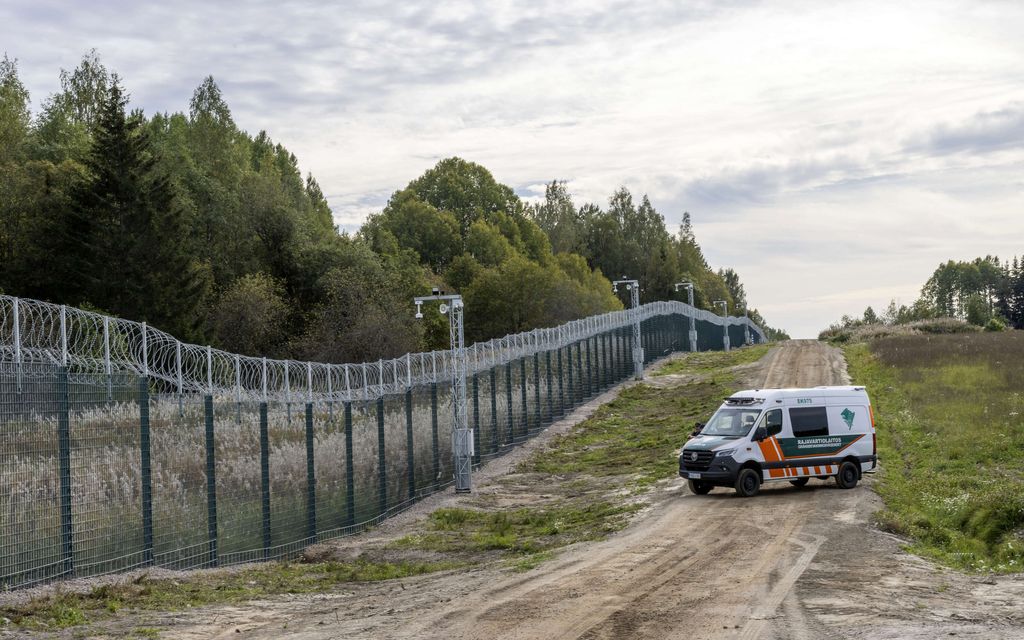
Mediat: Venäjä valmistautuu tuomaan tuhansia sotilaita Suomen rajalle
iltalehti · 4 months ago
Norway Will Send Soldiers to Lithuania against Russia
gdeltproject.org · 4 months ago
Latvia – 20 Years After its Independence - The Nordic Page
gdeltproject.org · 4 months ago
Central and Eastern European Perspectives on International Relations
gdeltproject.org · 4 months ago