
Pope Leo XIV marks U.S. Independence Day with Lampedusa migrant cemetery pilgrimage
Story Timeline
3 months · 4 summary articles
Pope Leo XIV makes bold diplomatic statement by choosing Lampedusa over Washington on U.S. Independence Day
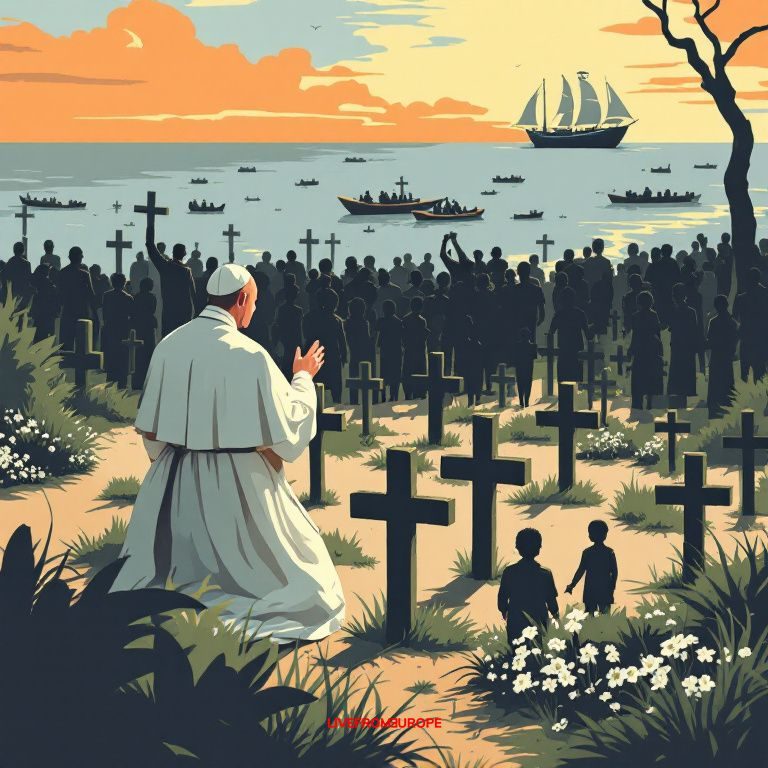
ROME — In a striking display of moral diplomacy, Pope Leo XIV marked the 250th anniversary of American independence not in Washington but on the Sicilian island of Lampedusa, where he knelt in silent prayer at a cemetery for nameless migrants and delivered a searing critique of global indifference to their plight.
The U.S.-born pontiff arrived on the tiny island—just 5.6 miles from Africa—shortly after dawn on Saturday, laying white flowers at graves marked with crosses fashioned from sunken migrant boats. He then walked alone onto jagged jetty rocks, his cassock whipping in the wind, before blessing a plaque dedicated to his predecessor, Pope Francis, who made the same pilgrimage in 2013. “This is a place where gestures speak louder than words,” Leo told gathered survivors and officials. “But for gestures to be human, they need a heart.”
The symbolic choice to forgo Washington’s celebrations and instead honor the tens of thousands who have died attempting the Mediterranean crossing sent a clear message to both Europe and the United States. In a letter to Americans, Leo framed migration as a moral imperative, writing that protecting the unborn and all human life also means “welcoming, protecting and assisting immigrants, whose hopes, sacrifices and contribution have formed part of the history of this country from its very beginning.” He added, “To receive them with compassion and generosity is not only an act of charity, but also a recognition of the dignity that belongs to every human person” .
The visit came as Europe’s new Common Asylum System nears implementation, a response to the ongoing crisis that has seen hundreds of thousands of migrants drown or vanish in the Mediterranean. Yet Leo’s presence underscored the gulf between political rhetoric and humanitarian reality. “Spoke Francis in 2013 of a ‘globalization of indifference,’” noted *Frankfurter Allgemeine Zeitung*, “Leo now decried a ‘global economic system that causes poverty and exclusion.’ Both men met survivors, Leo particularly ostentatiously on the day of America’s independence celebrations, to which he had declined an invitation” .
The gesture was not lost on Italian Prime Minister Giorgia Meloni, whose hardline stance on migration has aligned her with Donald Trump’s administration—until now. Trump’s recent attacks on Leo, calling him “very liberal” and “weak” over his opposition to the Iran war, forced Meloni to distance herself publicly. “Trump’s words about the pope are simply unacceptable,” she declared, as the Vatican’s moral authority collided with geopolitical alliances .
Leo’s visit also carried personal significance. Later Saturday, he met with U.S. Ambassador to the Holy See Brian Burch, a rare papal audience for an envoy. The embassy gifted him a commemorative baseball, apple pie, and a jersey, to which Leo responded that he was “rooting for the U.S. team.” The two discussed “American efforts to pursue peace, religious freedom and the need for moral clarity and courage around the world” .
The Society of St. Pius X, a schismatic traditionalist Catholic group, meanwhile escalated its break with Rome by ordaining four bishops without papal approval, prompting excommunication. A priest from the group, Georg Kopf, told followers in Switzerland that a future pope would welcome them back, invoking the reconciliation achieved under Pope Benedict XVI. “We acted out of love for the Church,” Kopf insisted, though the Vatican called the ordinations a grave violation .
As Europe grapples with its new asylum framework, Leo’s Lampedusa pilgrimage served as both a rebuke and a reminder: that the continent’s soul is measured not by its borders, but by how it treats those who cross them.
Follow us for live European news
- 3
- 2
- 1
- 1
- 1
- 1
- 1
4 further sources not geolocated
Articles

The immorality of world leaders is contagious. Thank heavens for the pope | Simon Tisdall
bluesky_The Guardian · 3 months ago
Wegen „moralischer Werte: Türkei verweigert LGBTQ-Kreuzfahrtschiff das Anlegen Ein Kreuzfahrtschiff mit lesbischen, schwulen und bisexuellen Passagieren an Bord darf in der Türkei nicht anlegen. Die Behörden begründen ihre Entscheidung mit „moralischen Werten.
faz · 3 months ago
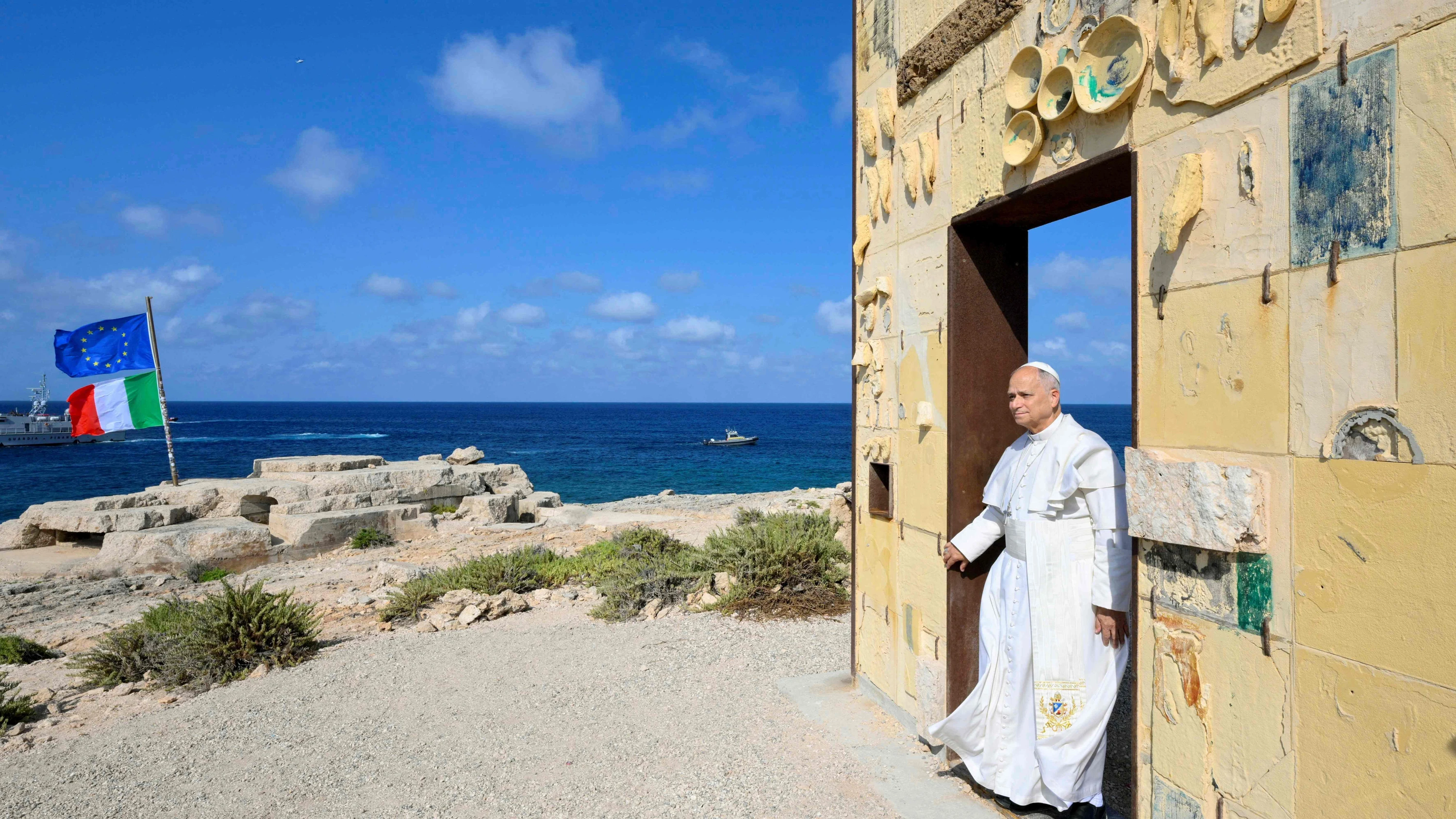
Leo auf Lampedusa: Die Kraft der Barmherzigkeit Der Papst erinnert an das Schicksal der Migranten im Mittelmeer. Aber dieses ist den Europäern nicht gleichgültig.
faz · 3 months ago
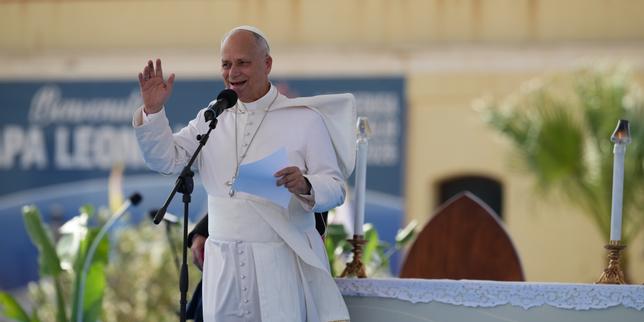
Pope Leo XIV visits Lampedusa, delivers powerful and symbolic message to protect migrants 13 years after his predecessor, Pope Francis, on Saturday, the pontiff traveled to Lampedusa, a small Italian island that symbolizes the tragedy of migrants who die trying to cross the Mediterranean. For Pope Leo XIV, choosing to go there as Donald Trumps US celebrates its 250th anniversary was a statement in itself.
le monde · 3 months ago
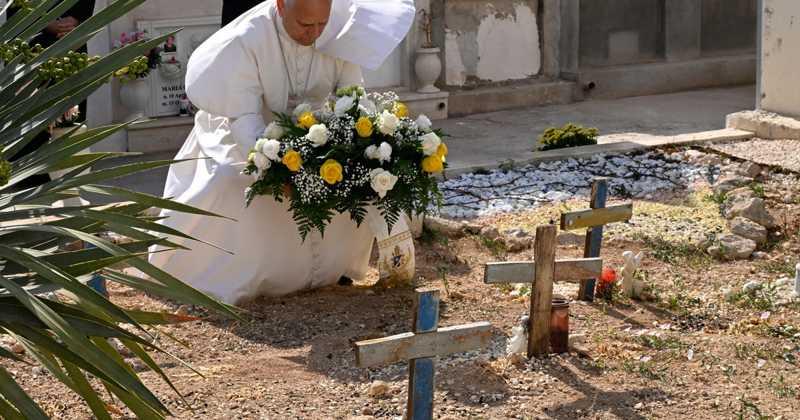
Pope Leo spends July 4th at migrant cemetery in Italy, meets with U.S. ambassadorAfter the popes visit to the Sicilian island of Lampedusa, the U.S. Embassy said the ambassador to the Holy See gave Leo a commemorative baseball, an apple pie and a U.S. World Cup jersey. #News #Leo #Europe #Lampedusa
mastodon bot · 3 months ago

Meloni zwischen dem Papst und Trump: Die goldenen Zeiten sind vorbei Das Thema Migration hat Italiens Rechte und den Vatikan entzweit. Doch nach der Kritik des US-Präsidenten an Papst Leo ist für Meloni Schluss mit lustig. mehr...
taz.de · 3 months ago
Vatikaani | 750 pappia julistettiin pannaan katolisen kirkon skismassa, joka on suurin yli 150 vuoteen Kirkon yhteydestä erotettu konservatiivinen papistoryhmä pitää katolisen kirkon uudistumista harhaoppisena.
helsingin sanomat · 3 months ago
Papst auf Lampedusa: Maria am Tor Europas Papst Leo XIV. besucht Lampedusa, Symbol für Flucht und Hoffnung und erinnert daran, dass politische Entscheidungen hier über Leben und Tod bestimmen. mehr...
taz.de · 3 months ago
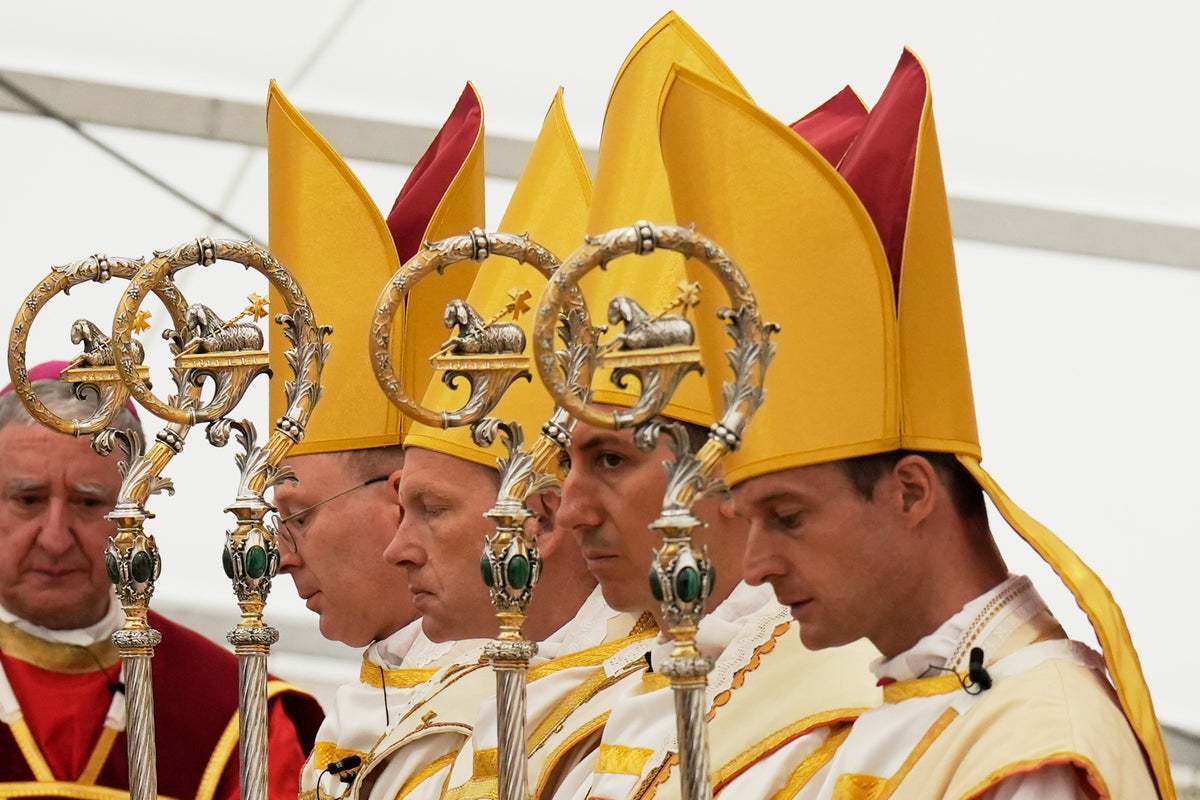
Priest from excommunicated Catholic sect says future pope will open the door to return The Society of St. Pius X was excommunicated after four bishops were ordained without Pope Leos approval on Wednesday
independent · 3 months ago
«Σοσιαλιστές της σαμπάνιας»: Σάλος στις ΗΠΑ με την σύζυγο του Μαμντάνι, πήγε στη Μαγιόρκα εν μέσω της 4ης Ιουλίου για πρόγραμμα πνευματικής ευεξίας €3.000
protothema · 3 months ago
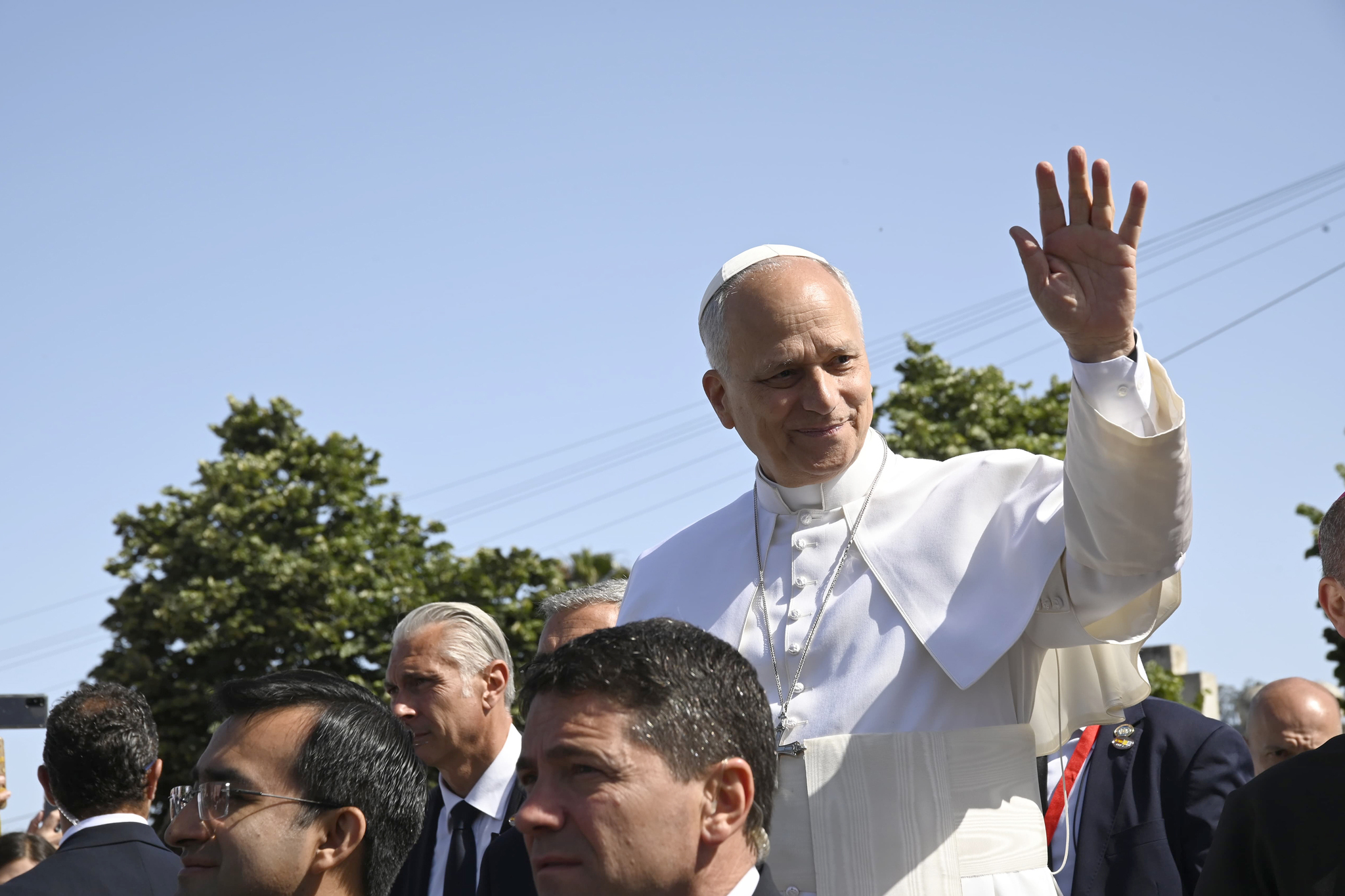
La visita del Papa dejó un impacto económico de 5,7 millones en Santa Cruz de Tenerife La visita del papa León XIV a Santa Cruz de Tenerife el pasado 12 de junio generó un impacto económico total de 5,71 millones de euros y movilizó a unas 47.600 personas en torno a la misa celebrada en el puerto capitalino, según un estudio encargado por el Ayuntamiento. Leer
expansion · 3 months ago
A future pope will welcome us back, says priest from excommunicated Catholic sect A priest from a Catholic splinter sect that was excommunicated earlier this week told worshippers on Sunday that the breakaway group would be welcomed back to the Church under a different pope. The Society of St. Pius X – a rebel group of ultra-conservative Catholics – was excommunicated after four bishops were ordained without Pope […]
cyprus mail · 3 months ago
Pope urges Europe to protect migrants in visit to Island Frontier
gdeltproject.org · 3 months ago
China releases Christian pastor after Trump appeal US president raised case of Protestant church founder Ezra Jin during meeting with Xi Jinping in May
financial times · 3 months ago
Gründer von „Untergrundkirche in China enthaftet
orf.at · 3 months ago
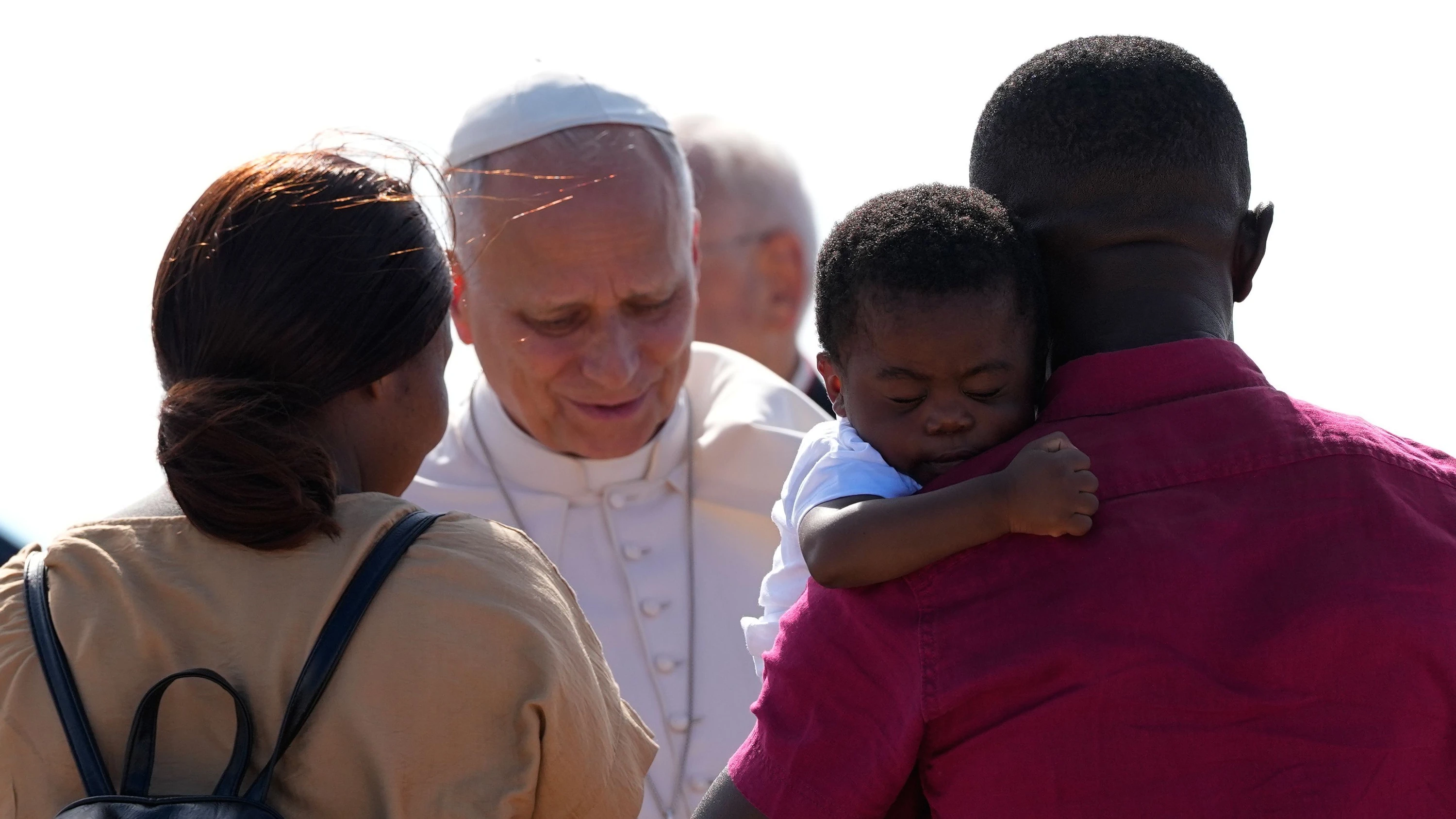
Unabhängigkeitstag der USA: Der Papst entscheidet sich für Lampedusa – und gegen Washington Vance hatte dem Papst eine Einladung des Weißen Hauses übergeben. Doch Leo trifft lieber Migranten auf Sizilien – und geht so auf Distanz zu Trump.
faz · 3 months ago

Wenn sich katholische Schulen für geschlechtliche Vielfalt öffnen – und Eltern rebellieren In Hamburg öffnen sich die katholischen Schulen unter dem Motto „Männlich, weiblich, divers für geschlechtliche Vielfalt. Gläubige Eltern warnen vor einer „identitätspolitischen Agenda. Nun eskaliert ihr Konflikt mit dem Erzbistum.
welt.de · 3 months ago