Loading…
 Saturday, September 26Saturday, September 26
4 months · 18 summary articles
Pope Francis XIV’s six-day visit to Spain has thrust the 82-year-old pontiff into the heart of Europe’s political and humanitarian debates, with his remarks on migration drawing both global praise and sharp criticism. Speaking on the Canary Islands, where thousands of African migrants arrive each year, the Pope described Europe’s approach to migration as an “illusion,” urging leaders to confront the crisis with compassion rather than exclusionary policies . His words, delivered on Sunday, came as Spain’s political establishment grappled with the legacy of the 2025 Jubilee Year, which many analysts now view as a period of quiet consolidation for a pope who has steadily expanded his global influence.
The Spanish tour, which concludes today, has underscored Francis XIV’s emergence as a statesman of unparalleled reach. Italian daily *Il Fatto Quotidiano* noted that “every word of Pope Leone has political weight,” framing his visit as a deliberate intervention in continental affairs . His calls for peace and solidarity with migrants, delivered against the backdrop of Spain’s Canary Islands—a primary entry point for irregular migration—have exposed the gulf between moral exhortation and political feasibility. Critics argue that while the Pope’s rhetoric resonates with humanitarian ideals, it remains disconnected from the hardline stances adopted by many European governments, including Spain’s own.
In Seville, meanwhile, the political fallout from historical memory projects has reached a critical juncture. The PSOE-led central government and Seville’s provincial council announced plans to proceed unilaterally with the exhumation of *Monumento*, the city’s largest mass grave, after accusing the PP-controlled regional and municipal authorities of deliberate obstruction. Javier Fernández, president of the provincial council, accused the PP of “retreating premeditately” due to ideological opposition, citing the refusal of Seville’s city hall to accept a €200,000 grant from the state’s Memory Democracy Secretariat in 2025 . Fernández demanded transparency, asking whether the delays stemmed from ideological, financial, or logistical concerns. “This is not about opening wounds,” he stated. “It is about closing them.”
The impasse has taken on added urgency following the identification of José León Trejo, a former French teacher and city councilor executed by Francoist forces in 1936, as the first of 1,786 victims exhumed from the nearby *Pico Reja* grave. Fernández condemned the systemic failure of Spain’s democracy, pledging an additional €1 million to local memory projects, bringing the total to €2 million for initiatives across 50 municipalities. The central government’s Fernando Martínez echoed the frustration, warning that families of the disappeared “cannot wait any longer.” With no response from the PP-led authorities to repeated requests for a follow-up meeting, the PSOE and provincial council are preparing to assume full control of the *Monumento* project, a move that risks deepening Spain’s political divides over historical reckoning.
Follow us for live European news
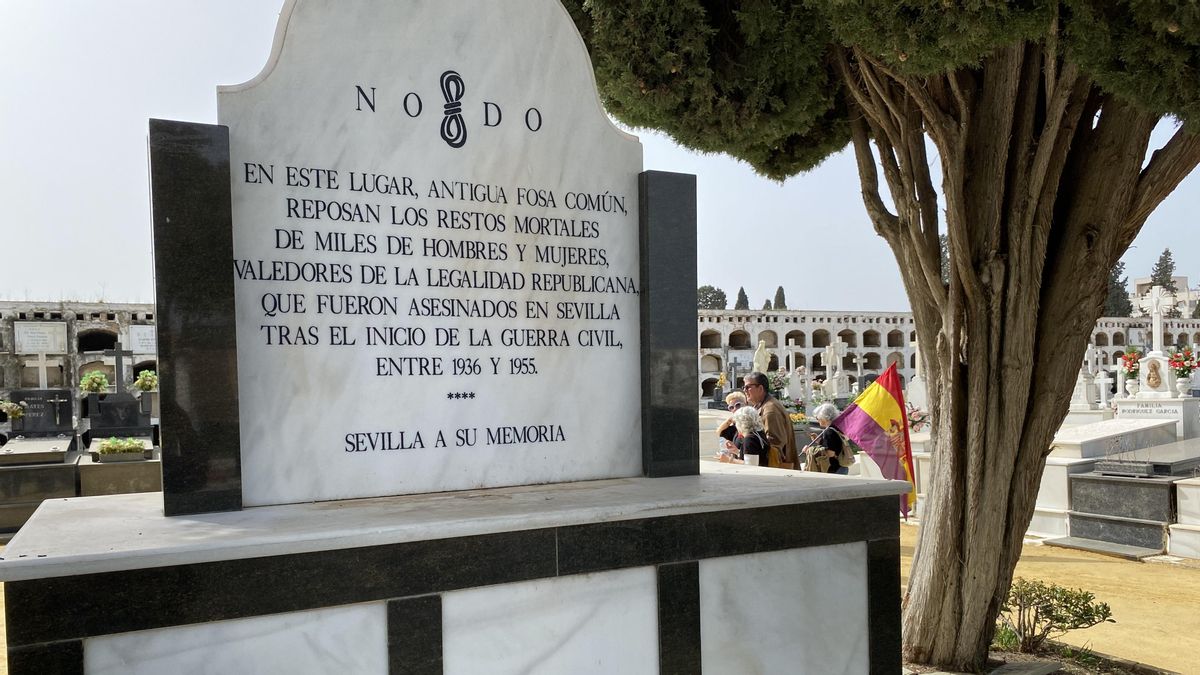
Estado y Diputación plantean exhumar en solitario la mayor fosa de Sevilla para sortear el bloqueo "ideológico" del PP Ambas administraciones, gobernadas por el PSOE, acusan a Junta y Ayuntamiento (en manos de los populares) de "retrasar premeditadamente" por intereses políticos los trabajos en la gran tumba común en la que están sepultados más de 2.600 represaliadosUn profesor que fue concejal en Sevilla, primera víctima franquista identificada de las 1.786 en la fosa común de Pico Reja Gobierno central y Diputación de Sevilla dan por hecho que Junta de Andalucía y Ayuntamiento hispalense se comportan como el perro del hortelano con la fosa franquista Monumento, la mayor de la capital: ni comen ni dejan comer. Así que las dos primeras administraciones (gestionadas por el PSOE) han planteado este lunes, para salvar las contradicciones ideológicas del PP –que gobierna las dos segundas–, hacerse cargo en solitario de los trabajos de exhumación y asumir la totalidad del coste. La propuesta la ha verbalizado el presidente de la institución provincial, Javier Fernández, que ha aprovechado la inauguración de unas jornadas sobre memoria histórica en la Casa de la Provincia (Del olvido a la luz) para cargar contra Junta y Ayuntamiento por retrasar premeditadamente los trabajos en Monumento, donde se calcula que al menos hay 2.613 represaliados frente a los 1.786 localizados en la cercana Pico Reja. La propuesta, cargada de reproche político, llega casi dos años y medio después de un primer acuerdo entre las cuatro administraciones y cuando se va a cumplir un año de la firma del protocolo de actuación. Desde entonces, nada de nada, de hecho el Consistorio hispalense hasta rechazó en 2025 una ayuda de 200.000 euros de la Secretaría de Estado para la Memoria Democrática, cuyo máximo responsable, Fernando Martínez, ha aprovechado el mismo acto para recordar que sigue sin aceptar esta transferencia que supone un primer pago para arrancar una exhumación cuyo coste se reparten las cuatro administraciones a partes iguales. Nosotros dimos el paso que teníamos que dar, y en este sentido ha recordado que es necesario que acepte ese dinero y que es supernecesario firmar el protocolario convenio para echar a andar. No tiene ningún sentido que le sigan dando largas porque hay muchísimas familias que lo están esperando. Un problema de voluntad Javier Fernández, por su parte, ha sido mucho más directo al anunciar la intención de Estado y Diputación de asumir el 100 del proyecto, para lo que ha solicitado la cesión al Consistorio durante temporal de la parcela del cementerio de San Fernando en la que se encuentra la fosa. El gobierno local es el que debe liderar el proyecto –hasta la fecha con escaso entusiasmo– al ser el propietario del terreno. Fernando Martínez y Javier Fernández, ven el vídeo inmersivo que se proyecta en la Casa de la Provincia. De paso, ha instado a Ayuntamiento y a Junta a que si tienen algún motivo, sea ideológico, económico de compromiso para no desarrollar el proyecto, que lo digan claramente. A su juicio, no tiene sentido este continuo retraso, que ha achacado directamente a un problema de voluntad para exhumar a casi 2.700 personas que son de los nuestros, de la sociedad. Y ha insistido en que es una cuestión de justicia, esto no abre ninguna herida, se trata de cerrarlas. Fernández ha enmarcado la falta de iniciativa del PP en un contexto en el que determinadas formaciones están llegando a gobiernos, en alusión a Vox, para poner sobre la mesa cuestiones como prioridad nacional o sentido común. Los acuerdos que se están suscribiendo para ello tienen una letra pequeña que hace que se queden atrás, en el olvido, asuntos como la memoria democrática o el cambio climático, la sociedad debe saber que eso está ahí. Un error sistémico de nuestra democracia El apremio llega poco después de conocerse que en la fosa de Pico Reja, cerrada en 2023 en el camposanto sevillano, se ha producido una primera identificación positiva en una de las 1.786 víctimas exhumadas. Se trata de José León Trejo, que fue profesor de instituto de Francés y concejal del Ayuntamiento de Sevilla, fusilado por los golpistas el 17 de octubre de 1936. Otros dos de sus hermanos también fueron ejecutados. Pero volviendo a Monumento, y además de lamentar que se han perdido los cuatro años del actual mandato municipal, el siguiente paso es plantear la intención de Gobierno central y Diputación de quedarse el proyecto en una reunión de la comisión de seguimiento del protocolo firmado hace un año. De hecho, Fernández asegura que hace dos meses que se ha solicitado esta convocatoria (que compete a la Junta), sin que haya llegado respuesta alguna mientras el gobierno local sigue sin aceptar la subvención estatal. El presidente provincial ha considerado un error sistémico de nuestra democracia que siga habiendo personas en fosas y cunetas, sin que sus familiares les puedan dar paz y dignidad suficientes. Hasta que esto no lo consigamos nuestra democracia no será perfecta, porque esto es una cuestión de justicia democrática, ha apostillado, al tiempo que ha anunciado una modificación presupuestaria en la Diputación para reforzar los proyectos memorialistas en la provincia: se añadirá otro millón de euros al que ya está permitiendo desarrollar 60 iniciativas en 50 municipios.
eldiario.es · 3 months ago
:format(jpg)/f.elconfidencial.com%2Foriginal%2F494%2F4a8%2F7fd%2F4944a87fd69a161fbb0ea10a823dfe5e.jpg)
La paradoja de la Expo de Sevilla: allí está el 11 del PIB local pero su herencia es complicada La decisión de la Junta de revisar los usos del Pabellón de la Navegación da pistas sobre cómo la ciudad no ha sabido asimilar del todo el recinto de la Cartuja, pese a que el parque tecnológico es un pilar económico de la provincia
el confidencial · 3 months ago

Angelita celebra 10 años como referente del buen beber en Madrid Raíces es la última propuesta líquida de la coctelería de Angelita Madrid. Leer
expansion · 3 months ago

Ogni parola di Papa Leone ha una valenza politica. Il viaggio in Spagna lo conferma Il viaggio in Spagna conferma Leone XIV come protagonista di statura internazionale. E come se fosse uscito definitivamente dal suo guscio. Retrospettivamente i mesi di pontificato del 2025 – condizionati dagli appuntamenti del Giubileo – possono essere considerati una sorta di rodaggio. Molti fedeli di varie nazioni dicevano spesso a me questo papa piace, ma […] Larticolo Ogni parola di Papa Leone ha una valenza politica. Il viaggio in Spagna lo conferma proviene da Il Fatto Quotidiano.
il fatto quotidiano · 3 months ago
Leo XIV. in Spanien: Migration als Illusion [premium] Papst-Reise. Auf den Kanarischen Inseln fand Leo eindrucksvolle Worte zur Migration. Sie sind aber weit davon weg, was politisch möglich ist.
die presse · 3 months ago
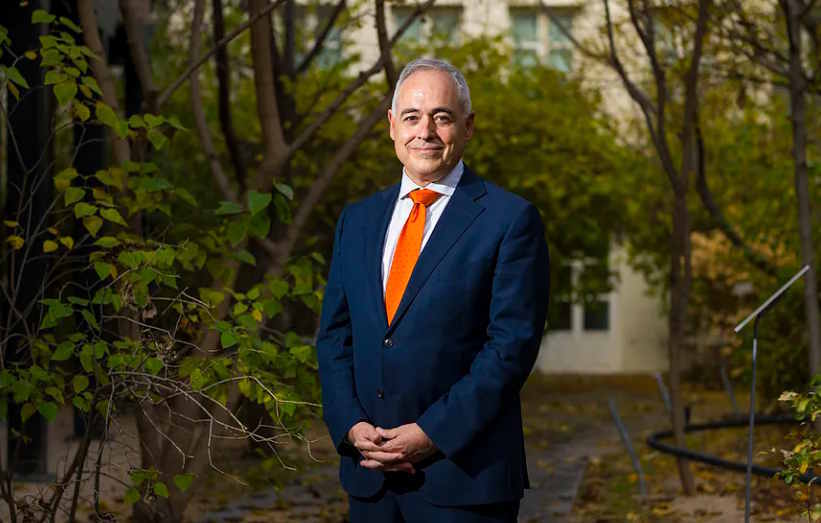
El español Ángel Cabrera se convierte en el primer presidente no estadounidense de Aspen Institute Es especialmente relevante por dos encuentros que organiza todos los veranos: el Aspen Ideas Festival, de carácter cultural, y el Aspen Security Forum, que es la versión estadounidense de la Conferencia de Seguridad de Múnich Leer
elmundo · 3 months ago