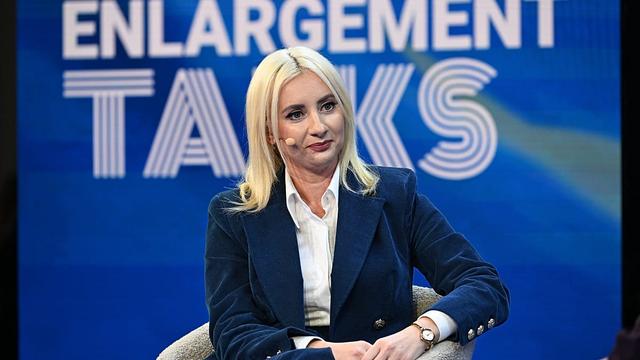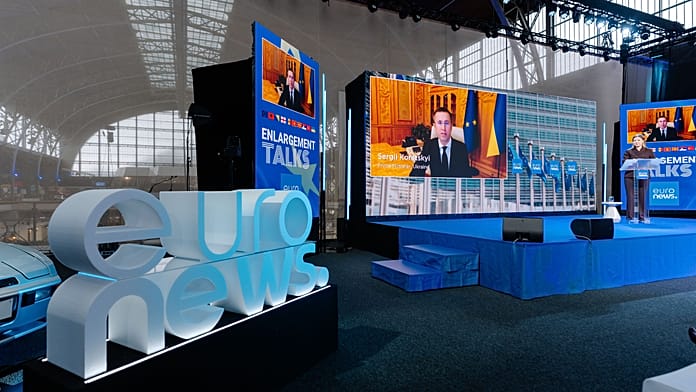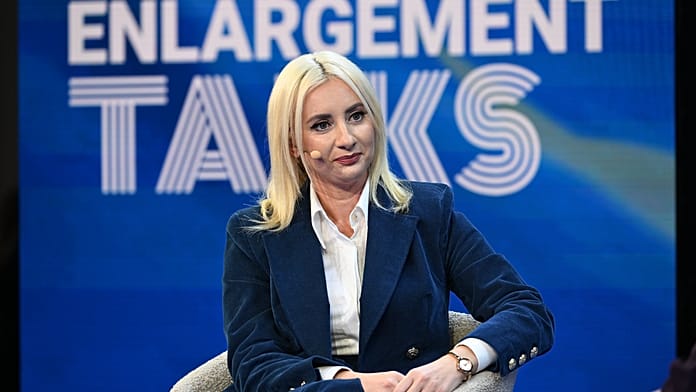
Montenegro, Albania and Moldova pressed for accelerated EU accession at the Euronews Enlargement Summit in Brussels on Tuesday, with Montenegro aiming to close all negotiating chapters this year and join the bloc by 2028.
Montenegro's European Affairs Minister Maida Gorčević said the country was confident all negotiating chapters would close this year. She said Montenegro could join the EU by 2028, becoming the bloc's 28th member. "I'm certain that this goal, 28 by 28, is ambitious. Yes, but it is happening, and we are all witnessing it," she said. She rejected a Commission proposal for a 15-year transition period for new members that could lead to suspension of voting rights. "We don't want second-grade membership inside the European Union, because that wouldn't be fair and that wouldn't be full membership as well," Gorčević said. She added that her government was not against additional safeguards. "If we are for the safeguards to strengthen the European Union and the future membership, yes, we are for that."
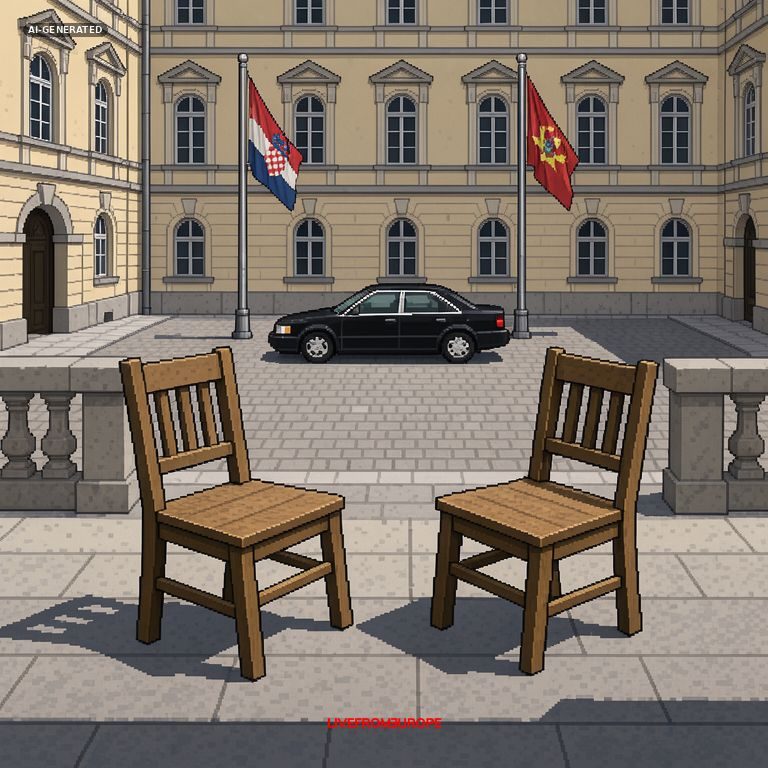
Gorčević also addressed a dispute with Croatia. In October, Zagreb circulated an eight-point paper to other EU countries setting out issues it wants resolved before Montenegro can join. "I'm certain that in the future we don't want to argue with Croatia. We want to solve the bilateral disputes," she said. She added that a solution could come after Montenegro joins the EU. She said the border dispute between Slovenia and Croatia would not be an obstacle to Montenegro joining.
Gorčević said she was hopeful that recent elections in Serbia would help the Western Balkans. In late October, the reformist Serbia's Student List resoundingly defeated the country's longstanding leader Aleksandar Vučić. "This shift can also help a little bit to the region, to have the shift in a good direction," she said.
At the same summit, Albanian Prime Minister Edi Rama delivered a message for Russia. "You can't tell the Moldovans, the Ukrainians, or the Serbs that they will never be part of us," he said. "They are here, and they are part of us." European Council President António Costa told the gathering that enlargement was an investment, not a burden, citing 26 million jobs created since 2004. Moldovan Ambassador to Belgium and NATO Viorel Cibotaru said dialogue with European partners was important for Moldova. It offered the chance to present the country's priorities. It also allowed open discussion about the future of European integration.
Montenegrin President Milatović met with Babiš and thanked him for support for Montenegro's European future. His cabinet said Montenegro was ready to finish its part. It expected the EU to remain consistent with its enlargement policy based on results and fulfilled criteria.