
Ukraine drone strike on Iranian ship in Caspian Sea kills sailor, sparks Tehran military threat

Story Timeline
2 months · 4 summary articles
Ukraine conducted a drone attack on an Iranian merchant vessel in the Caspian Sea on Saturday, July 25, 2026, killing one sailor and injuring another. The attack has escalated tensions between the two nations, with Iran threatening a military response.
According to a report by RIA Novosti, an Iranian official stated that Tehran will "certainly respond militarily" to Ukraine's attack on the Iranian vessel in the Caspian Sea. The incident has drawn international attention amid ongoing conflicts involving Ukraine and Russia.
In a related development, a bipartisan group of U.S. senators announced an agreement on a long-awaited bill that would allow President Donald Trump to impose additional sanctions on major buyers of Russian energy resources and Iran. According to Bloomberg, the bill extends sanctions against Iran and separately addresses exporters of Russian gas and oil. President Trump has signaled support for the measure, and a procedural vote on it is set for late Tuesday.
The legislation empowers the president to impose tariffs against the top five buyers of Russian crude oil and natural gas, as well as against five countries that contribute most to helping Russia evade energy sanctions. However, the bill could jeopardize the already fragile U.S. trade relations with China and India, which are leading buyers of Russian energy resources.
Ukrainian President Volodymyr Zelenskyy has alleged that Russia is providing satellite imagery to aid Iran in its conflict with the United States. According to the Long War Journal, Zelenskyy stated that Russian satellite surveillance has been used to target U.S. military facilities in the Gulf region. He added that there is a clear correlation between Russia’s satellite imagery of these sites and Iranian strikes.
Meanwhile, Iran has rejected a plan proposed by Oman to manage the Strait of Hormuz through a regional mechanism involving voluntary fees. According to Reuters, Iranian Foreign Minister Abbas Araghchi has called for closer regional cooperation to restore stability in the Strait of Hormuz, blaming "U.S. aggression" for the tensions.
The ongoing conflict has also drawn attention to the economic impact on Iran. Despite U.S. sanctions and military pressure, Iran's economy has shown resilience, with analysts noting that the country has managed to absorb economic shockwaves, as reported by Al Jazeera.
On Tuesday, President of Ukraine Volodymyr Zelenskyy met with senators supporting the passage of the bill in Washington.
Follow us for live European news
- 3
- 2
- 1
- 1
- 1
- 1
- 1
8 further sources not geolocated
Articles

📰 US senators reach agreement on new sanctions against Russia, Iran – media🔗 #RussianInvasion #RussianWar #Ukraine
mastodon bot · about 2 months ago

Why has Irans economy not collapsed under US war pressure? Millions in sanctions-hit country keep absorbing economic shockwaves, with analysts saying trend looks set to continue.
aljazeera · about 2 months ago
Iraqi PM visits Turkiye to boost ties despite complex challenges Discussions to focus on strategic cooperation, as well as issues related to security, water and the economy.
aljazeera · about 2 months ago
The Saudi dilemma: How Yemen could shape the next phase of the Iran war As the Houthis attack Saudi ships and infrastructure, Riyadh faces an increasingly difficult choice: absorb the blows to stay out of the Iran war or retaliate and risk a dangerous escalation.
ecfr.eu · about 2 months ago

Ukraines Strike on an Iranian Ship Could Bring Two Wars Closer The attack in the Caspian Sea was an unusually direct encounter between two countries that have been on opposite sides for years.
new york times · about 2 months ago

📰 Ukraine Hits At Iran In The Caspian Sea. And Things Get Even Messier.🔗 #RussianInvasion #RussianWar #Ukraine
mastodon bot · about 2 months ago

Trump cites good talks on Iran, reiterates threat to hit targets reut.rs/3ReY0I4
bluesky_Reuters · about 2 months ago
🇮🇷🇺🇸⚡️ — Iranian conservative newspaper Kayhan: "Do not fall into the trap of the truce proposed by Trump. The enemys weapons arsenals are depleted, and the time has come to break the naval blockade. Returning to the illusion of negotiations would be a mistake. The US military machine in the Persian Gulf has reached a dead end. Trumps retreat is not a result of strength, but a consequence of the depletion of missile stocks and air defense assets. The enemy needs a recovery period to rebuild its military capabilities. Any reliance on Washingtons diplomatic smile would be a mistake. Now is not the time to stop fighting, but a time to cement a new order through decisive strikes and the lifting of the naval blockade. Precisely now, when the US Army is facing a serious shortage of ammunition, the path to achieving stable security lies through decisive military action on the ground." @IntelSlava
telegram_Intel Slava · about 2 months ago
Russia continues to aid Iran in war with US, Ukraine says Russia continues to provide intelligence to help Iran strike American forces, Kyiv alleged over the weekend. Ukraine is also attempting to interdict the transportation of military goods between the two authoritarian powers. The post Russia continues to aid Iran in war with US, Ukraine says appeared first on FDDs Long War Journal.
long war journal · about 2 months ago

Iran urges regional cooperation to restore stability in Strait of Hormuz Iranian Foreign Minister Abbas Araghchi has called for closer regional cooperation to restore stability in the Strait of Hormuz, blaming "US aggression" for the tensions. He made the remarks in phone calls with his Omani and Saudi counterparts.
yenisafak · about 2 months ago

Iraqi PM to focus on investment, water and security in first official Türkiye visit Iraqi Prime Minister Mohammed Ali Al-Zaidi has said he will discuss bilateral cooperation in investment, water resources, regional security and infrastructure projects during his first official visit to Türkiye since taking office in May.
yenisafak · about 2 months ago
US-Iran-Krieg: Mehrere Staaten in Nahost melden Drohnenbeschuss Jordanien, Saudi-Arabien und Israel fangen Drohnen ab. Proiranische Milizen in Irak und die Huthi-Miliz im Jemen stehen im Verdacht, sie abgefeuert zu haben. mehr...
taz.de · about 2 months ago
Istanbul, Dubai fintechs feel heat as US sanctions fire turned on Iranian billionaire Babak Zanjani Sentenced to death in Iran 10 years ago, business magnate and financier has made a comeback at the head of his Dot One conglomerate.
intellinews · about 2 months ago
Trumps trick: Scenario of NATO involvement in war with Iran – 3 scenarios following Caspian strike
gdeltproject.org · about 2 months ago
Iran and Ukraine wars colliding on the worlds biggest lake - Caribbean Broadcasting Corporation
gdeltproject.org · about 2 months ago
Trump says good chance of progress in Iran talks. What we know Negotiators are trying to break the deadlock over transit fees and management of the Strait of Hormuz.
aljazeera · about 2 months ago
Iran rejects Trump frozen funds plan, warns ships of Hormuz transit ban Iran rejected Trumps claim that ships damaged by Iran in the Gulf would be compensated from frozen Iranian funds.
aljazeera · about 2 months ago
The timing of war and peace is not yours to decide, Iran tells US Tehrans foreign ministry said Iran would not allow Washington to determine "the timing of war and peace," as Trump claimed the Islamic Republic had requested negotiations and mediators sought to revive the collapsed interim deal.
euronews · about 2 months ago
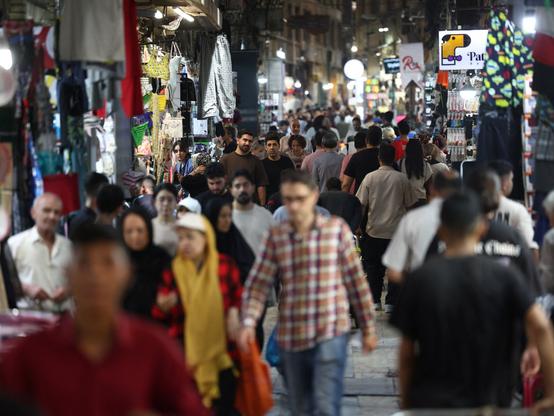
⚡ NEWSIrans economy remains resilient despite US war pressure and sanctionsAnalysts report that Irans economy has not collapsed under the combined pressure of US military strikes and long-standing sanctions. Millions of citizens continue to absorb economic shockwaves, with trends suggesting this resilience is likely to...📰 #USA #Sanctions #Geopolitics #GeoWire
mastodon bot · about 2 months ago
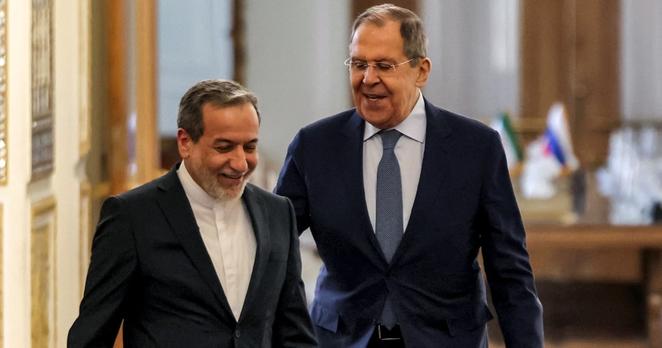
📰 Ukraine And Gulf Conflicts Have Become Increasingly Intertwined, Says Russia-Iran Analyst Nicole Grajewski🔗 #RussianInvasion #RussianWar #Ukraine
mastodon bot · about 2 months ago

Commission confirms delay to EU satellite imagery over Iran war
bluesky_Euractiv · about 2 months ago

Experts believe that a full-scale invasion could involve operations on Irans islands. Here is FPs free guide to Tehrans most strategic territories: foreignpolicy.com/2026/07/27/i...
bluesky_Foreign Policy · about 2 months ago
🇺🇸🇶🇦🇦🇪🇮🇷⚡️ — Latest satellite imagery shows US Air Force tanker and support aircraft dispersed across two regional bases following a partial drawdown from Al Udeid (Qatar) and Al Dhafra (UAE). ➡️ Prince Sultan Air Base, Saudi Arabia: 20 × KC-135R/T / KC-46A tankers, 2 × E-3 AWACS, 2 × E-11A. ➡️ King Hussein International Airport, Jordan: 3 × C-17A transports, 1 × P-8A maritime patrol aircraft, 2 × C-130 transports. ➡️ The drawdown from Al Udeid and Al Dhafra began after July 19, with aircraft redistributed to bases further from the frontline. ➡️ At Prince Sultan — despite being ~600 km from the conflict zone — aircraft are dispersed across taxiways to minimise potential damage from strikes. @IntelSlava
telegram_Intel Slava · about 2 months ago
🇮🇷🇺🇦⚡️ — Ukrainian monitoring channels are reporting that Iran may launch up to three ballistic missiles at Ukraine in the coming days. The Iranian Foreign Minister stated that the attack "cannot go unanswered," and lawmakers have warned that Kiev will "understand" that Iran does not allow such actions to go unpunished. @Intelslava
telegram_Intel Slava · about 2 months ago
Oman presents Iran with Gulf-backed plan for voluntary fees to use Hormuz Oman has presented Iran with a plan backed by Gulf states to manage the Strait of Hormuz, including collecting voluntary fees for using it, a Gulf source and a Western diplomat told Reuters on Tuesday. A senior Iranian source told Reuters that Tehran had yet to respond to the Omani proposals, intended to serve as […]
cyprus mail · about 2 months ago
Ukraines Foreign Ministry rejects accusations over attacks in Iraq, says claims echo Russian propaganda Ukraines Foreign Ministry has rejected as baseless and unsubstantiated the claims made by Iraqi National Security Adviser Qasim al-Aboudi alleging Ukraines involvement in attacks on Iraqi territory.
ukrpravda · about 2 months ago

US officials say sanctions may hurt Iran more than strikes, Axios reports US officials believe sanctions and financial pressure could damage Iran more than military strikes, according to Axios. Iran is reportedly seeking access to frozen assets and sanctions relief amid a deepening economic crisis.
yenisafak · about 2 months ago
Ukraine rejects allegations of alleged involvement in attacks in Iraq The Ukrainian Foreign Ministry has rejected unfounded and unsubstantiated allegations by Iraqi National Security Advisor Qasim al-Aboudi that Ukraine was allegedly involved in unlawful activities on Iraqi territory.
ukrinform · about 2 months ago
US senators reach agreement on bill to expand sanctions against Russia and Iran — Bloomberg A bipartisan group of U.S. senators announced on Tuesday that they had reached an agreement on long-awaited legislation that would authorize President Donald Trump to impose additional restrictions on major purchasers of Russian energy, as well as expand sanctions on Iran.
ukrinform · about 2 months ago
Wie lange Israel im Irankrieg noch außen vor bleiben kann Während die USA den Iran angriffen und der Iran Ziele am Golf beschoss, blieb es in Israel erstaunlich ruhig. Doch das kann sich bald ändern
der standard · about 2 months ago