Loading…
 Tuesday, July 28Tuesday, July 28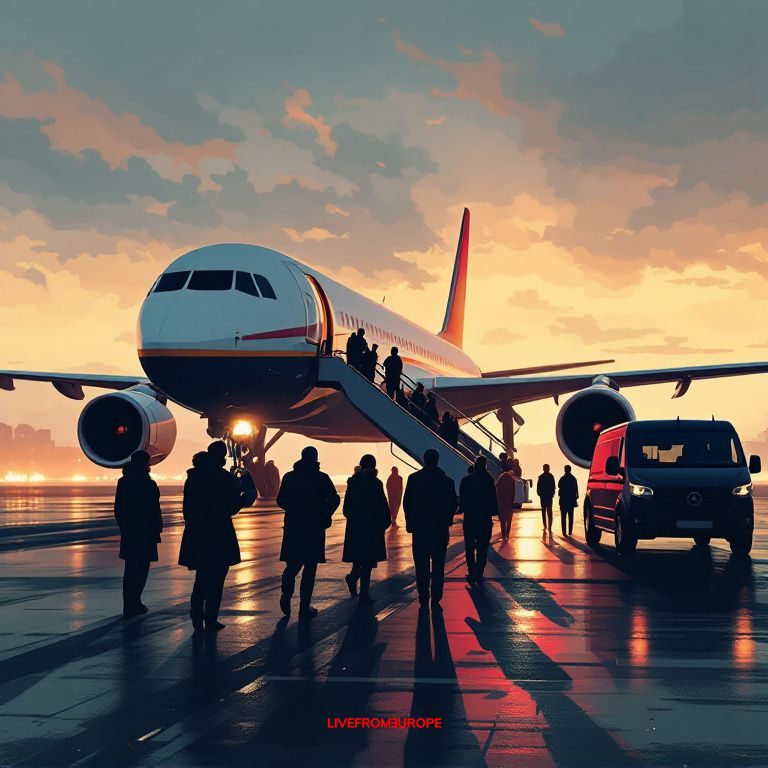
Germany has deported 31 Afghans to Afghanistan, including some who are not criminals. This is the first time since the Taliban took over that Germany has deported someone without a criminal record. The flight took off from Leipzig/Halle airport early Tuesday morning and is expected to fly to Kabul via Trabzon, Turkey.
The deportation is based on a deal with the Taliban regime from early 2026, which allows for mass deportations to Kabul by charter flights, up to three times a month. The previous restriction of deporting only criminals and dangerous individuals has been lifted.
The deportation has sparked criticism from human rights groups. Pro Asyl had already spoken of “unrestricted deportations” before this latest flight.
Meanwhile, at the United Nations, U.S. diplomats walked out as their French counterparts were speaking at the United Nations on Monday after America’s close European ally criticized the Trump administration’s human rights record. The surprise move during a U.N. Security Council meeting on Ukraine followed U.S. opposition to giving U.N. human rights chief Volker Türk another four-year term.
The General Assembly voted 144-10 with 13 abstentions in support of Türk, with the U.S. among the “no” votes. France's U.N. Mission in Geneva tweeted: “The U.S. used to be a beacon of human rights. Not anymore. Today, it stands alongside North Korea, Nicaragua, Mali & Russia, isolated. And the world no longer listens to it.”
Mike Waltz, the U.S. ambassador to the U.N., accused France of coddling “some of the worst human rights abusers.”
The U.S. walkout reflects not only the more strained relations between President Donald Trump and his French counterpart, Emmanuel Macron, but also wider tensions between the U.S. and Europe. These include questions over Trump’s commitment to NATO, possible changes to U.S. troop deployments in Europe, and Trump’s desire to control Greenland, which belongs to NATO member Denmark.
In another diplomatic development, the European Union condemned the aggression against two diplomats of the French embassy in Tehran by Iranian security forces on July 19. The EU called it a "flagrant violation" of the Vienna Conventions and demanded that Iran bring the perpetrators to justice. French Foreign Minister Jean-Noël Barrot called it an "extremely serious act of intimidation" and a "flagrant violation of diplomatic immunity."
The UN Refugee Convention is celebrating its 75th anniversary this week. The convention was drafted in 1951 in response to the horrors of World War II and defined a refugee as a person who needed international protection because of feared persecution or serious threats to their life, physical integrity, or freedom resulting from persecution, armed conflict, violence, or serious public disorder.
The UN refugee agency (UNHCR) insists the convention remains relevant. “Refugee protection remains just as important today as it was 75 years ago,” Elisabeth Tan, the agency’s director of international protection told Swissinfo.
The convention was initially designed to help Europeans displaced by World War II, but has since been adapted to cover refugees from all over the world.
Follow us for live European news
3 further sources not geolocated

Liveblog Irankrieg: EU verurteilt „Aggression gegen französische Diplomaten in Iran Frankreich: Diplomat stundenlang festgehalten und misshandelt +++ Weitere Hinrichtungen in Iran +++ Trump lobt „sehr tiefgreifende Gespräche – und droht Iran +++ Huthi-Angriffe bremsen Schiffsverkehr +++ alle Entwicklungen im Liveblog
faz · about 2 hours ago

UN Refugee Convention turns 75 amid rising political pressures The UN Convention on Refugees is marking its 75th anniversary this week, at a time when migration and asylum are increasingly divisive issues. The UN refugee agency (UNHCR), insists the convention remains relevant. Refugee protection remains just as important today as it was 75 years ago, Elisabeth Tan, the agencys director of international protection told Swissinfo. The UN Convention on Refugees was drafted in 1951 in response to the horrors of the Second World War. It defined a refugee as a person who needed international protection because of feared persecution, or because of serious threats to their life, physical integrity, or freedom resulting from persecution, armed conflict, violence, or serious public disorder. Millions of Europeans had been forcibly displaced, millions had been persecuted and then killed in Nazi concentration camps, many of those fighting had been taken prisoner. Those who survived often returned to find their homes destroyed. With that suffering ...
swissinfo · about 2 hours ago
Washington Cant Keep Ignoring Minab A human rights-centered foreign policy is both a moral imperative and a geopolitical necessity.
foreignpolicy.com · about 2 hours ago

If you cant dispute the facts, attack the storyteller. Welcome to the modern war on investigative journalism — disinformation. In this deep-dive interview, OCCRPs Drew Sullivan and Ilya Lozovsky break down the modern playbook of disinformation: youtu.be/z18d-01PXvo
bluesky_OCCRP · about 2 hours ago
EL mõistis hukka Iraani agressiooni Prantsuse diplomaatide vastu Euroopa Liit mõistis teisipäeval hukka Iraani julgeolekuteenistuste agressiooni kahe Prantsuse diplomaadi vastu, mis leidis aset sel kuul Teheranis.
postimees · about 2 hours ago

Chad se suma a la ola de países que deciden abandonar la Corte Penal Internacional La retirada del país africano coincide con la campaña de presión contra el tribunal emprendida por EE.UU.
la vanguardia · about 2 hours ago
Grüne sprechen von „gefährlichem Irrweg: Deutschland schiebt erstmals Afghanen ohne Straftat ab Zum ersten Mal seit der Machtübernahme der Taliban hat Deutschland einen Afghanen abgeschoben, der keine Straftat begangen hat. Bundesinnenminister Dobrindt verteidigte die Entscheidung.
tagesspiegel · about 2 hours ago

Pentagon launches European force review to shift defense burden to NATO allies The Pentagon has initiated a comprehensive review of US military force posture in Europe aimed at accelerating NATO allies assumption of primary responsibility for conventional defense. The move is intended to build a "stronger, more equitable and sustainable" alliance under the NATO 3.0 vision.
yenisafak · about 2 hours ago

UN rights chief says Israeli violations in Lebanon may amount to war crimes UN Human Rights Chief Volker Türk has said his office has documented large-scale violations of international humanitarian law in Lebanon, some of which may amount to "war crimes." He said the Israeli military continues to kill and injure people amid ongoing operations.
yenisafak · about 2 hours ago
Programm gegen Migration in Südafrika: Zäune und Drohnen sollen afrikanische Zuwanderer fernhalten Südafrikas Regierung steckt Milliarden in die faktische Schließung der Grenzen. Bestehende Ideen zum produktiven Umgang mit Migration wurden vergessen. mehr...
taz.de · about 2 hours ago
Marine Le Pens Kampagne für Klimaanlagen: Autoritär heißt heute, keine Regulierung zu akzeptieren Marine Le Pen stellt ihren „Großen Klimatisierungsplan vor. Die Initiative geht einher mit einem symptomatischen Vorwurf gegen die französischen Grünen. mehr...
taz.de · about 2 hours ago
Abschiebeflug nach Afghanistan: Jetzt trifft es auch die Nichtstraftäter Deutschland schiebt 31 Menschen nach Afghanistan ab, darunter auch erstmals jemand ohne Straftat. Mehrere Hundert Menschen demonstrieren am Flughafen. mehr...
taz.de · about 2 hours ago

Étudier aux États-Unis fait moins rêver quavant Les étudiants étrangers sont moins nombreux à sêtre inscrits dans les facs américaines. Les restrictions sur les visas, dont les conditions dattributions sont devenues drastiques, le coût de la vie et la réduction de la liberté académique expliquent ce désamour.
courrier international · about 2 hours ago
Scontro sul caso dei diplomatici francesi in Iran: lUE denuncia una violazione del diritto internazionale Secondo lAlta rappresentante Kaja Kallas, laccaduto violerebbe larticolo 29 della Convenzione di Vienna sulle relazioni diplomatiche: "La persona dellagente diplomatico è inviolabile"
eunews.it · about 2 hours ago
U.S. walks out on UN meeting following Frances human rights criticism - National
gdeltproject.org · about 2 hours ago
US walks out of UN meeting amid criticism of Americas human rights record
gdeltproject.org · about 2 hours ago

Nu Amerika het Internationaal Strafhof aanvalt, moet Nederland het verdedigen, ook als daar politieke en economische kosten aan verbonden zijn
parool · about 2 hours ago

Türkiye delivers humanitarian aid to 85 countries across five continents Türkiye has delivered humanitarian aid to 85 countries and communities across five continents through AFAD-coordinated efforts. The largest operation was for Gaza, where 109,332 tons of supplies were delivered using 14 aircraft and 21 ships.
yenisafak · about 2 hours ago
La lutte contre le sida menacée par la baisse des budgets daide internationale Alors quune conférence mondiale sur le VIH sest ouverte le 26 juillet au Brésil, le recul des financements internationaux aux Etats-Unis et en Europe met en péril les programmes de prévention.
liberation · about 2 hours ago
Rückführungen: Deutschland schiebt erneut nach Afghanistan ab
sueddeutsche · about 2 hours ago
Bundespolitik: Dobrindt verkündet Abschiebung von 31 Afghanen Vor allem Kriminelle seien in ihr Heimatland gebracht worden, sagt der Innenminister im Kloster Banz. Doch auch die Abschiebung von nicht als Straftäter verurteilten Afghanen sei möglich.
sueddeutsche · about 2 hours ago
Prevention is key | Libération - France
eurotopics.net · about 2 hours ago
Greece, Italy, and France grant Netanyahu overflight permission; EU voices criticism The Israeli Prime Minister flew over European airspace on his way to Washington, despite an arrest warrant issued by the International Criminal Court. Kallass spokesperson said: The European Council is committed to cooperating with the Court."
eunews.it · about 2 hours ago

Germany again deports Afghans to Kabul under agreement with Taliban
news.yahoo.com · about 2 hours ago
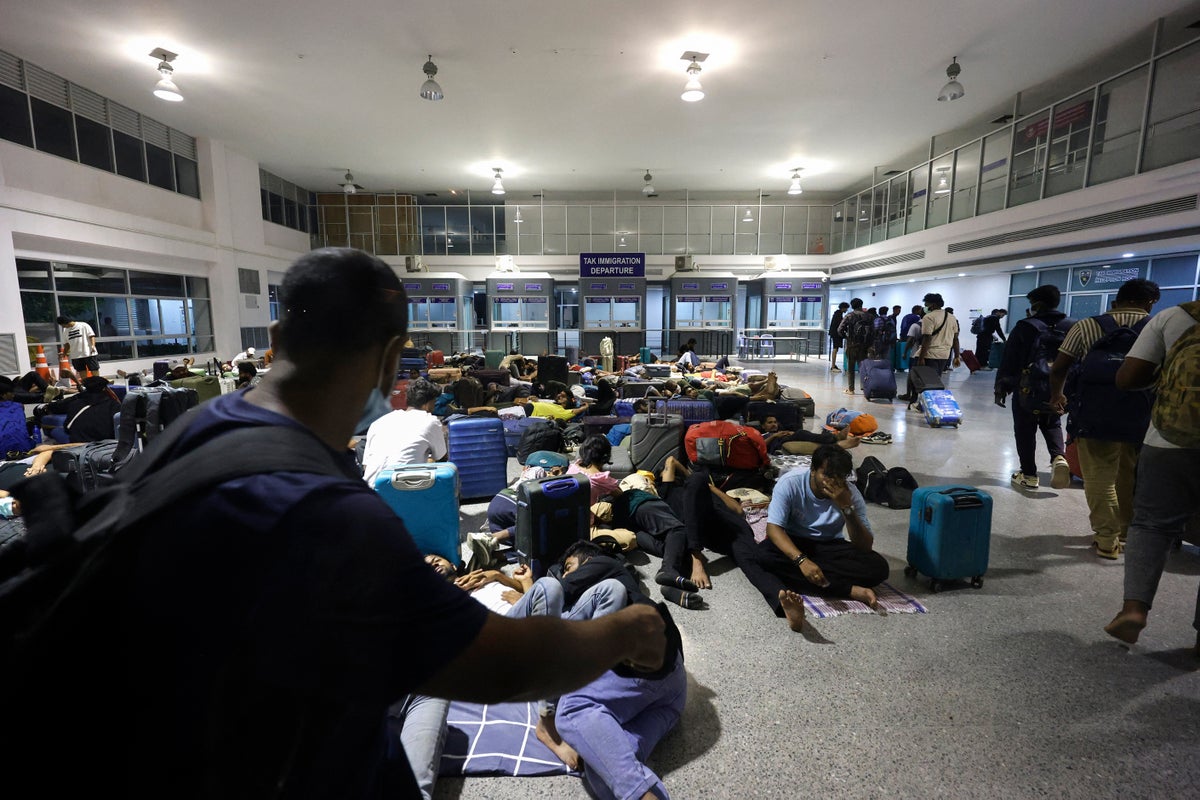
UN warns of huge increase in Asian scam centre human trafficking People from more than 80 countries have been lured in through social media, with some being sexually abused
independent · about 2 hours ago
Curaçao Chronicle | Curaçao Defines Position on International Treaties Ahead of Kingdom Council Meeting
gdeltproject.org · about 2 hours ago

ISCSP cria pós-graduação em Migrações Internacionais O tema é Da Ciência à Ação Política: Coproduzir Conhecimento para Fortalecer Políticas Migratórias
observador · about 2 hours ago
Kivonult az amerikai delegáció az ENSZ Biztonsági Tanácsának üléséről a francia felszólalás alatt Az amerikai delegáció így tiltakozott amiatt, hogy Franciaország ENSZ-képviselete közölte: az Egyesült Államok már nem tekinthető az emberi jogok élharcosának.
444.hu · about 2 hours ago

Comment la Turquie sest positionné comme un acteur majeur sur le continent africain En 25 ans, Ankara a ouvert pas moins de 32 ambassades en Afrique. Elle est passée de 12 à 44. ...
la libre · about 2 hours ago

"Ces pratiques dépassées et cruelles doivent cesser" : une émission culte française dans le viseur de plusieurs associations Lémission Fort Boyard a été interpellée par plusieurs associations qui visent à défendre les animaux. Celles-ci ont adressé une lettre à la présidente de France Télévisions. ...
la libre · about 2 hours ago