
Trump vows to destroy all areas of Iran after U.S. and Israel warn of assassination plot

Story Timeline
3 months · 7 summary articles
U.S. President Donald Trump threatened to “completely decimate and destroy all areas of Iran” on Saturday after Israeli intelligence warned Washington of a new, highly specific plot by Tehran to assassinate him, escalating a crisis that erupted this week when Iranian-backed forces struck Qatari and Saudi tankers near the Strait of Hormuz.
In a series of posts on Truth Social, Trump said 1,000 U.S. missiles were “locked and loaded” and aimed at the Islamic Republic, with “thousands more to immediately follow” if Iran carried out its threat. “Orders have already been given, and the U.S. Military is ready, willing, and able, for a one-year period of time, subject to extension, to completely decimate and destroy all areas of Iran – PRAISE BE TO ALLAH!” he wrote. The warning came hours after funeral processions for Iran’s late Supreme Leader Ayatollah Ali Khamenei saw crowds chanting “Death to Trump” and calling for his killing.
U.S. and Israeli officials confirmed the assassination plot, describing it as “fresh” and “highly specific.” CNN and The Wall Street Journal reported that Israeli intelligence had shared detailed operational information with Washington, prompting the U.S. Secret Service to request that Trump switch planes after the NATO summit in Türkiye earlier this week. A senior U.S. official told Axios that the plot was actively in motion, though no timing or method was disclosed.
Despite the escalation, Trump said the United States had agreed to continue talks with Iran, but declared the provisional ceasefire—reached three weeks ago—was “OVER.” He insisted Washington would not tolerate further attacks on commercial shipping in the Strait of Hormuz, where Iranian forces fired on Qatari and Saudi tankers on Wednesday. In response, the U.S. conducted two nights of airstrikes on Iranian targets, prompting retaliatory missile and drone attacks on U.S.-linked facilities in the region.
Iran’s lead negotiator, Parliament Speaker Mohammad Bagher Ghalibaf, vowed that Tehran would “never surrender” to American demands. Iranian Foreign Minister Abbas Araghchi is scheduled to meet his Omani counterpart in Muscat on Saturday to discuss maritime security in the strait, but U.S. officials said they expect a public statement from Tehran acknowledging the Hormuz is open and committing to halt attacks on commercial vessels. “We want them to publicly say that they will stop shooting at ships and explicitly, or at least implicitly, acknowledge that they screwed up,” one U.S. official told Axios .
The crisis has raised fresh doubts about the viability of a broader nuclear deal between Washington and Tehran, even as U.S. negotiators said they were making progress on the issue. “We are talking to people with authority there who say they want a deal,” one official told Axios, “but not a lot of space and time.” Meanwhile, regional mediators in Qatar and Pakistan have been shuttling between capitals in an attempt to de-escalate tensions.
The Pentagon confirmed that U.S. Central Command had conducted strikes on 170 Iranian targets this week, while Israel signaled it was prepared to launch further strikes if necessary. The European Union and Gulf states have urged both sides to return to dialogue, but the window for diplomacy appears increasingly narrow as both capitals harden their positions.
Trump’s rhetoric and military posture underscore the fragility of the current standoff, with the risk of miscalculation rising as both sides trade threats and counter-threats. The assassination plot, if confirmed, would mark a dramatic escalation in a conflict that has simmered since 2020, when Trump ordered the drone strike that killed Iranian General Qassem Soleimani.
Follow us for live European news
- 3
- 2
- 1
- 1
- 1
- 1
- 1
- 1
- 1
- 1
- 1
- 1
- 1
3 further sources not geolocated
Articles

Trump threatens Iran after chants for his death erupted at Khamenei funeral US president warns the US will decimate Iran amid alleged assassination plots as regional mediators try to save MoU.
aljazeera · about 2 months ago
Trump demands public statement from Iran in ongoing negotiations The U.S. is giving Iran a deadline of Saturday to state the Strait of Hormuz is open.
politico.eu · about 2 months ago
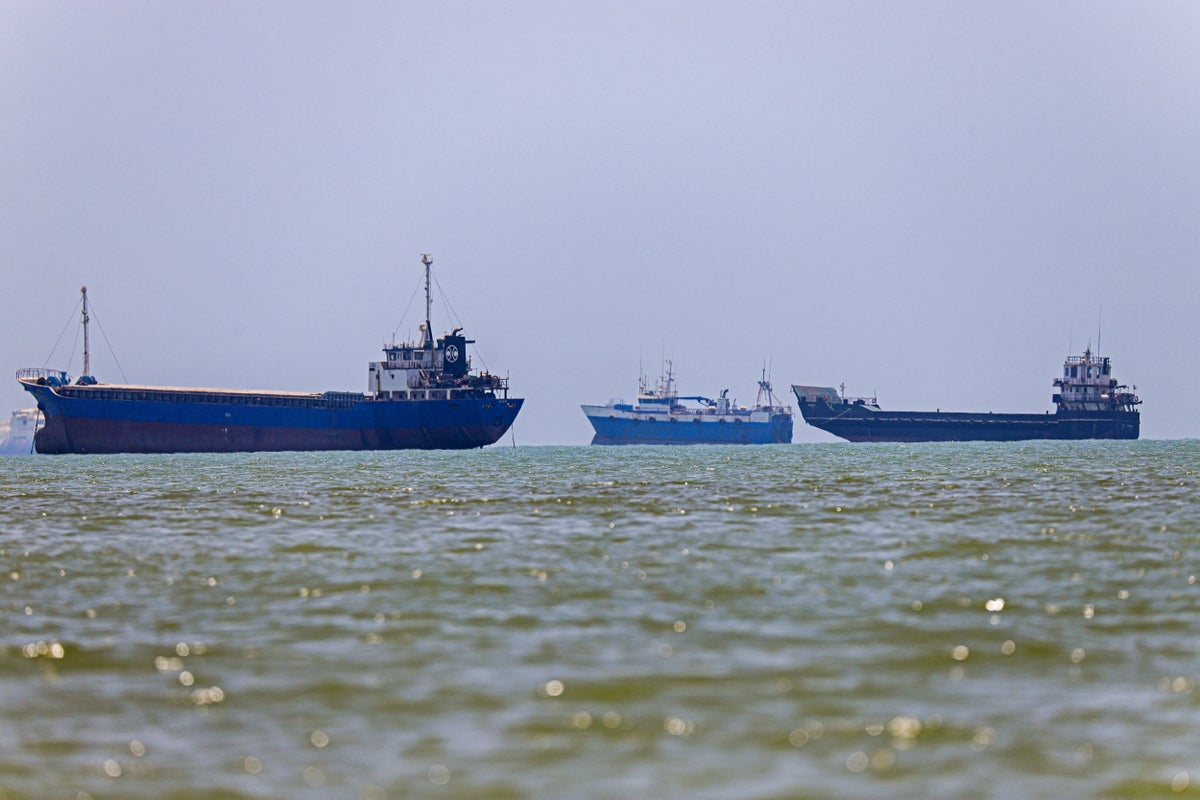
Iran-US war latest: Trump says military will completely decimate and destroy Iran if hes assassinated Just literally bomb them at levels that theyve never seen before, Trump said hes instructed the US to do if Iran assassinated him
independent · about 2 months ago

Trump says missiles aimed at Iran if Tehran targets US president reut.rs/451yzg0
bluesky_Reuters · about 2 months ago
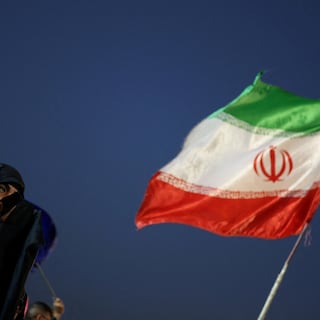
Live - Trump dreigt Iran volledig te verwoesten als het moordpoging op hem onderneemt
de morgen · about 2 months ago
+++ Iran-Krieg +++: Kreise – USA fordern von Iran Öffnung der Straße von Hormus Trump: Iran droht mit meiner Ermordung +++ USA laut Trump auch nach Ende der Waffenruhe bereit zu Gesprächen +++ Vermittler aus Katar offenbar zu Gesprächen im Iran +++ Der Newsblog.
handelsblatt · about 2 months ago
Trump: Iran wird bei Mordanschlag „vollständig vernichtet Die Äußerungen des Präsidenten erfolgten einen Tag nach US-Medienberichten, dass der israelische Geheimdienst Washington diese Woche über einen neuen „konkreten Plan des Irans zur Ermordung von Trump informiert habe.
die presse · about 2 months ago
Iran buries supreme leader Khamenei as regional tensions flare Iran has laid to rest Supreme Leader Ali Khamenei at Mashhads Imam Reza Shrine following weeklong funeral ceremonies attended by millions. The burial coincides with escalating US-Iran military exchanges across the Gulf, raising fears of wider conflict as Tehran strikes American assets in multiple countries.
yenisafak · about 2 months ago
LNG tankers keep sailing through Hormuz despite US-Iran clashes Liquefied natural gas carriers continue to transit the Strait of Hormuz despite renewed US-Iran military exchanges and heightened security risks. At least five LNG vessels have entered the strategic waterway in recent days, while 22 Japan-linked ships exited between July 7-9, signaling sustained commercial traffic through the vital energy corridor.
yenisafak · about 2 months ago
Trump Says 1,000 Missiles Aimed at Iran in Case of Assassination Attempt Against Him U.S. President Donald Trump said on Friday that he had ordered the military to be prepared to launch strikes against Iran if the Iranian government attempted to assassinate him, Reuters reported. 1000 Missiles are Locked and Loaded and aimed at the Islamic Republic of Iran, with thousands of more to immediately follow, should the Iranian […]
greek reporter · about 2 months ago
Trump warns 1,000 missiles locked and loaded if Iran targets him US President Donald Trump said on Friday that 1,000 missiles are "locked and loaded" to strike Iran should Tehran attempt to assassinate him, adding that the military stands ready to "completely decimate" the Islamic Republic following intelligence reports of an alleged Iranian plot.
yenisafak · about 2 months ago
Trump says U.S. agreed to Irans request to continue talks, but ceasefire is over President Donald Trump said on Friday that the United States and Iran had agreed to continue talks despite a recent escalation of hostilities but he flatly declared that…
japantoday · about 2 months ago
Iran denies requesting US talks, warns of reciprocal response Irans Foreign Ministry on Friday rejected claims that Tehran requested negotiations with the United States, warning that any breach of commitments by Washington would trigger reciprocal action from Tehran, while US President Donald Trump claimed earlier the same day that Iran had asked to continue talks.
yenisafak · about 2 months ago
The Cease Fire is OVER! says Trump, but talks continue President Donald Trump said the US and Iran had agreed to continue talks despite an escalation of hostilities this week but he declared that the ceasefire reached between the two sides last month was over. The United States also stepped up demands on Friday that Iran stop attacks on ships in the Strait of Hormuz, where recent hostilities have […]
cyprus mail · about 2 months ago
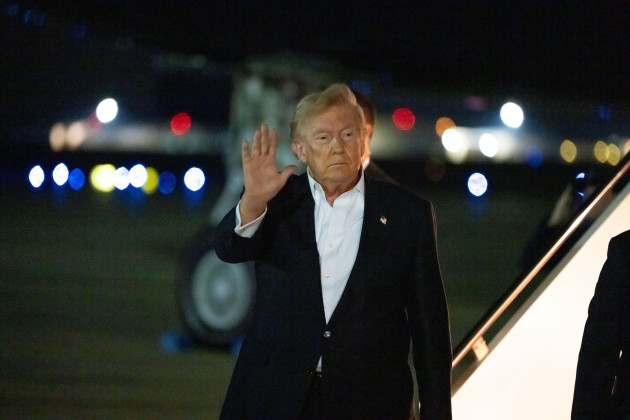
Trump says US will completely decimate Iran if they try to assassinate him The US president had agreed to further negotiations with Iran, even as he repeated his assertion that the ceasefire was over.
thejournal · about 2 months ago
Netanyahu says Iran war has not ended amid new US strikes Israeli Prime Minister Benjamin Netanyahu declared on Thursday that the war with Iran has not ended, warning of new challenges as Washington and Tehran exchanged fresh military strikes in the Strait of Hormuz following the collapse of a Pakistan-brokered truce agreement that US President Donald Trump declared terminated earlier this week.
yenisafak · about 2 months ago
US media reveals Irans alleged assassination plot against Trump Israeli intelligence has reportedly shared information with Washington regarding a new Iranian plot to assassinate President Donald Trump. The Wall Street Journal, citing informed sources, reported the development amid heightened military tensions between Tehran and Washington, though specific details about the plans timing and execution remain undisclosed.
yenisafak · about 2 months ago
Kina forbyr eksport av helium Kina forbyr eksport av helium med øyeblikkelig virkning som følge av opptrappingen av Iran-krigen.
aftenposten · about 2 months ago
Berichte über Anschlagspläne: Trump droht Iran im Fall eines Attentats mit vollständiger Zerstörung Donald Trump reagiert auf Hinweise, dass der Iran einen Anschlag auf ihn plant. Das US-Militär sei bereit, das Land zu vernichten, drohte der US-Präsident.
die zeit · about 2 months ago
Trump threatens Iran after Ayatollah Ali Khameneis funeral saw open calls for his killing U.S. President Donald Trump threatened Iran on Saturday after the funeral of Supreme Leader Ayatollah Ali Khamenei saw open calls for his killing, further underlining the tensions gripping…
japantoday · about 2 months ago
Live: Trump says US will completely decimate Iran if it attempts to assassinate him President Donald Trump said Friday the United States would "completely decimate" Iran if it attempted or succeeded in assassinating the sitting president. "Orders have already been given, and the US Military is ready, willing, and able, for a one year period of time, subject to extension, to completely decimate and destroy all areas of Iran," Trump wrote on his social media platform Truth Social. Read our liveblog to see how the days events unfold.
france24 · about 2 months ago
Iran foreign minister to visit Oman for Hormuz talks Iranian Foreign Minister Abbas Araghchi will travel to Oman on Saturday with a diplomatic delegation for talks focusing on bilateral relations and the Strait of Hormuz, as Tehran and Washington exchanged fresh military strikes across Bahrain, Kuwait, Qatar and Jordan following the collapse of a Pakistan-brokered ceasefire effort.
yenisafak · about 2 months ago

🔴 BREAKINGUS and Iran clash over ceasefire statusTensions escalate as Iranian leaders vow never to surrender, while US President Donald Trump declares the ceasefire is over, raising fears of renewed conflict between the two nations.📰 #USA #Military #Geopolitics #GeoWire
mastodon bot · about 2 months ago
Are the US and Iran at war again? Iranian leaders say theyll never surrender and US President Donald Trump says the ceasefire is over.
aljazeera · about 2 months ago
Trump: USA ödelägger Iran om jag mördas Iran kommer att ödeläggas fullständigt om de mördar eller försöka mörda den sittande presidenten i USA, hotar Donald Trump själv.
svenska dagbladet · about 2 months ago
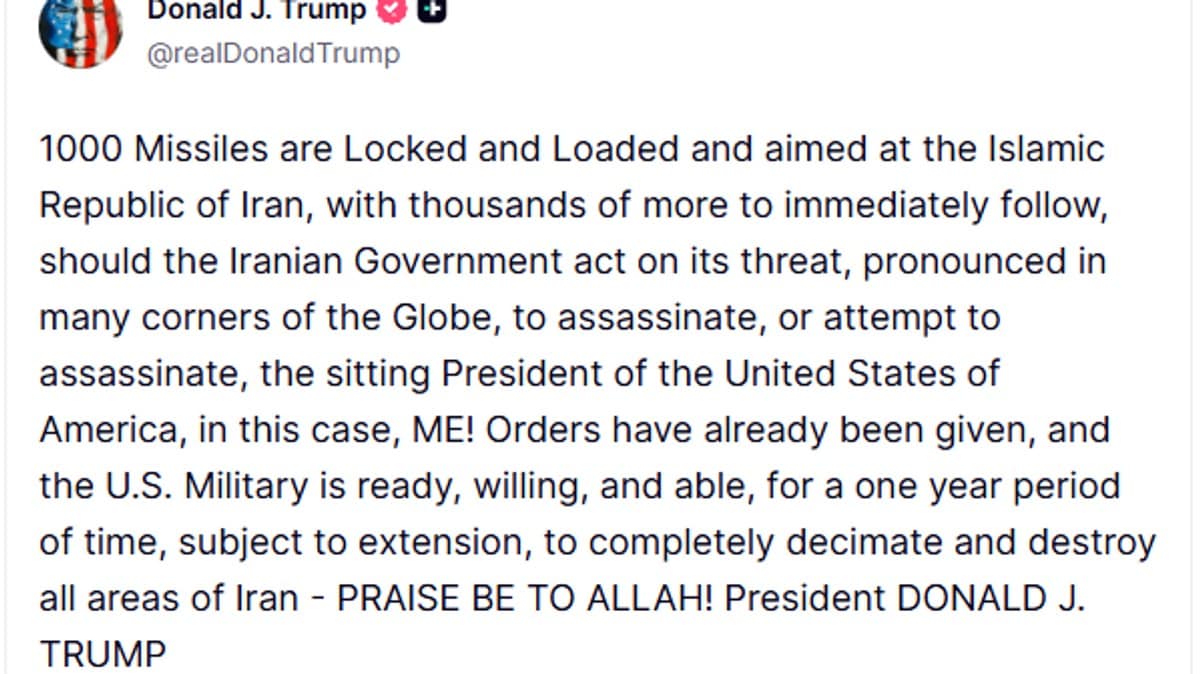
Trump advarer Iran om angrep om de prøver å ta livet av ham USAs president Donald Trump har gitt det amerikanske militæret ordre om å stå klart til massive angrep mot Iran. Bakgrunnen er påståtte iranske planer om å ta livet av presidenten. – 1000 missiler er ferdigladet og rettet mot Den islamske republikk Iran, med tusenvis flere som vil følge umiddelbart, dersom den iranske regjeringen gjør alvor av sin trussel om å drepe, eller forsøke å drepe den sittende presidenten i USA, i dette tilfellet MEG!, skriver Trump på Truth Social lørdag morgen norsk tid. Uttalelsen kommer som en direkte reaksjon etter at amerikanske medier tidligere i uken meldte at Israel har delt etterretning om at ny og konkret iransk plan om å ta livet president Trump.
nrk · about 2 months ago
US issues fresh Iran-related sanctions, website shows The United States on Friday issued new Iran-related sanctions following Irans resumption of attacks on international shipping in the Strait of Hormuz, the Treasury Department said. The sanctions target Ali Ansari, an Iranian banker and businessman based in Dubai who had previously been sanctioned by Britain for his role in financially supporting the activities of […]
cyprus mail · about 2 months ago
Trump: USA ödelägger hela Iran om jag mördas
svenska dagbladet · about 2 months ago

„Gelobt sei Allah, fügt Trump seiner scharfen Drohung an den Iran an Nach den Todesdrohungen gegen Donald Trump bei der Beerdigung des obersten Führers im Iran meldet sich der US-Präsident. Im Ernstfall seien „1000 Raketen geladen. Das US-Militär sei bereit, „alle Gebiete des Iran zu zerstören.
welt.de · about 2 months ago
Trump: USA kommer ödelägga Iran om jag mördas Iran kommer att ödeläggas fullständigt om landet fullföljer hotet om att mörda eller försöka mörda den sittande presidenten i USA – Donald Trump, hotar den amerikanske presidenten själv.
svenska dagbladet · about 2 months ago