
US warns Iran negotiators Israel may target them during Strait of Hormuz talks

Story Timeline
3 months · 17 summary articles
US officials feared Israeli assassination of Iranian negotiators during spring peace talks, newly revealed documents show. American diplomats warned Tehran’s envoys that Israel might target them as Washington and Iran negotiated a temporary peace deal, according to reports published today by *The New York Times*, *The Washington Post*, and European outlets.
High-ranking US officials told *The Washington Post* that the Trump administration, then in office, pushed for a rapid agreement to end the war and reopen the Strait of Hormuz while privately alerting Iranian negotiators to the Israeli threat. Israeli operatives allegedly planned strikes during the sensitive negotiations in Doha, sources familiar with the matter told the paper. The US State Department declined immediate comment when contacted by multiple outlets.
Iran’s Parliament Speaker Mohammad Bagher Qalibaf responded sharply today, declaring that Tehran will not tolerate any US interference in the Strait of Hormuz. Speaking to a senior Chinese delegation in Tehran, Qalibaf also accused Israel of seeking to sabotage the Iran-US memorandum of understanding. “We will not allow foreign powers to dictate terms in our waters,” he said, according to Iran’s state-run media.
The next round of direct US-Iran talks is scheduled for the third week of July in Doha, with Lebanon and the Strait of Hormuz high on the agenda. Tehran is demanding the immediate release of $6 billion in frozen assets held in Qatar, while Washington insists on a phased release tied to implementation of the memorandum, *Yeni Şafak* reported.
Meanwhile, Iran’s envoy to the United Nations told the Security Council today that Washington’s military presence in the Persian Gulf “brings nothing but insecurity,” warning that foreign interference threatens maritime safety as technical talks continue on reopening the strategic waterway. The statement came as Oman navigates a diplomatic tightrope over possible Strait of Hormuz fees, creating legal and market uncertainty.
The revelations follow reports that US officials escorted Iranian negotiators with fighter jets during spring talks, a precautionary measure disclosed by German newspaper *Tagesspiegel*. The layered disclosures—spanning American, European, and Iranian sources—paint a picture of high-stakes diplomacy under shadow threats, with the Strait of Hormuz remaining the most volatile flashpoint in the region.
Follow us for live European news
Articles
![US-Iran. Projection, not prediction.. Whats coming towards you?
I just finished running the latest multi-agent geopolitical simulation model on my personal rig, and the results seem utterly disappointing. As a data analytics/artificial intelligence researcher paid to work at mncs/banks on financial models, my opinion on geopolitics is always personal, I still tried my best to predict geopolitical catastrophes, using every scraping tool and predictive algorithm at my disposal, Ive completely secured my portfolio of investments when I got the opportunity. […]](https://files.mastodon.social/cache/preview_cards/images/198/918/276/original/453ab0f3fde6f19f.jpg)
US-Iran. Projection, not prediction.. Whats coming towards you? I just finished running the latest multi-agent geopolitical simulation model on my personal rig, and the results seem utterly disappointing. As a data analytics/artificial intelligence researcher paid to work at mncs/banks on financial models, my opinion on geopolitics is always personal, I still tried my best to predict geopolitical catastrophes, using every scraping tool and predictive algorithm at my disposal, Ive completely secured my portfolio of investments when I got the opportunity. […]
mastodon bot · about 2 months ago

Ameriški mediji: Izrael načrtoval atentat na iranska pogajalca v času pogajanj z ZDA Po poročanju ameriških časnikov New York Times in Washington Post ameriški uslužbenci menijo, da je Izrael načrtoval izvedbo atentata na iranska pogajalca v času pogajanj med Washingtonom in Teheranom o koncu vojne. ZDA naj bi Iranu poslale opozorilo.
rtv slovenia · about 2 months ago
UD lättar på reseavrådan runt Persiska viken Utrikesdepartementet avråder inte längre från icke nödvändiga resor till Förenade arabemiraten, Qatar och merparten av Saudiarabien.
expressen · about 2 months ago

Un assassinat des négociateurs iraniens par Israël : ce scénario redouté par Washington
lexpress · about 2 months ago
Eskortiert von Kampfjets: USA befürchteten israelischen Anschlag auf iranische Verhandlungsführer Bei den Friedensgesprächen mit dem Iran im Frühjahr rechneten Vertreter der US-Regierung damit, dass Israel versuchen könnte, Teherans Unterhändler zu töten – und warnten sie vor.
tagesspiegel · about 2 months ago
„Real Alien Sh-t: Was hat der im Iran abgeschossene US-Soldat wirklich gesehen? [premium] Der von den Amerikanern gerettete Air Force Colonel berichtet dem Geheimdienst von Drohnen, die sich wie eine Qualle fortbewegten. Nun wird spekuliert, ob der Iran mit seiner Drohnentechnologie weiter ist als bisher angenommen.
die presse · about 2 months ago

⚡ NEWSIAEA says Iran nuclear inspections possible if Tehran allows accessThe UN nuclear watchdog states that inspections of Irans nuclear program are technically feasible. However, the critical obstacle remains whether the Iranian government will grant meaningful access to inspectors, raising questions about compliance and...📰 #Nuclear #Diplomacy #Geopolitics #GeoWire
mastodon bot · about 2 months ago

Two Voices: How Irans State Media Edits Itself Between LanguagesIranian state media runs different content in Farsi and English. The 10-point ceasefire plan of April 2026 is the clearest documented case — and it should… #WorldNews #ForeignPolicy
mastodon bot · about 2 months ago
NYT: USA se obávaly, že Izrael spáchá atentát na íránské vyjednavače Američtí činitelé se obávali, že se Izrael chystá spáchat atentát na íránské vyjednavače, zatímco s nimi Spojené státy na jaře vedly citlivá jednání, při nichž dojednaly dočasnou mírovou dohodu. S odk...
respekt · about 2 months ago
Iran warns US fighter jets over Strait of Hormuz tensions Irans military has issued a warning over the continued presence of US manned and unmanned aircraft in the Strait of Hormuz, saying any interference or breach of its maritime rules will be met with a swift and decisive response. Tehran described the strategic waterway as a red line for national sovereignty and regional security.
yenisafak · about 2 months ago
Syria open to Hezbollah meet if in national interest: FM Syrian Foreign Minister Asaad al-Shaibani said Thursday that Damascus is open to meeting Hezbollah if such contact serves the national interest, while stressing the issue was not raised during his talks with Lebanese Parliament Speaker Nabih Berri in Beirut.
yenisafak · about 2 months ago
Over 2 million ships pass through Turkish Straits in 20 years More than two million vessels have transited the Turkish Straits over the past two decades, underscoring the waterways critical role in global trade and energy security. Minister Abdulkadir Uraloğlu also announced plans to revive the Hejaz Railway as an alternative to the Strait of Hormuz.
yenisafak · about 2 months ago
US, Iran expected to hold direct talks in Doha in third week of July The United States and Iran are expected to hold their next round of direct talks in Doha in the third week of July, focusing on Lebanon and the Strait of Hormuz. Tehran wants the immediate release of $6 billion in frozen assets held in Qatar, while Washington insists on phased release, subject to MoU implementation.
yenisafak · about 2 months ago
Iran envoy tells UN US military in Gulf brings nothing but insecurity Irans ambassador to the United Nations said Washingtons military footprint in the Persian Gulf generates insecurity rather than stability, warning that foreign interference endangers maritime safety while technical talks continue on reopening the strategic Strait of Hormuz.
yenisafak · about 2 months ago
Trump: Iran has agreed to just about everything we need Trump told CNBC that Iranian negotiators have accepted nearly all American demands during ongoing talks, adding that Washington seeks only to prevent nuclear weapons acquisition rather than pursue regime change, even as he defended recent military strikes against the Islamic Republic.
yenisafak · about 2 months ago
Iran: We will not allow US interference in Hormuz Parliament Speaker Mohammad Bagher Qalibaf has declared that Iran will not permit any US interference in the Strait of Hormuz. During a meeting with a senior Chinese delegation in Tehran, he also warned that Israel is seeking to undermine the Iran-US memorandum of understanding.
yenisafak · about 2 months ago
Oman walks a diplomatic tightrope over Strait of Hormuz fees, creating a blind spot for markets Oman is using strategic ambiguity as talks over possible Strait of Hormuz fees raise legal, diplomatic and oil market concerns.
cnbc · about 2 months ago
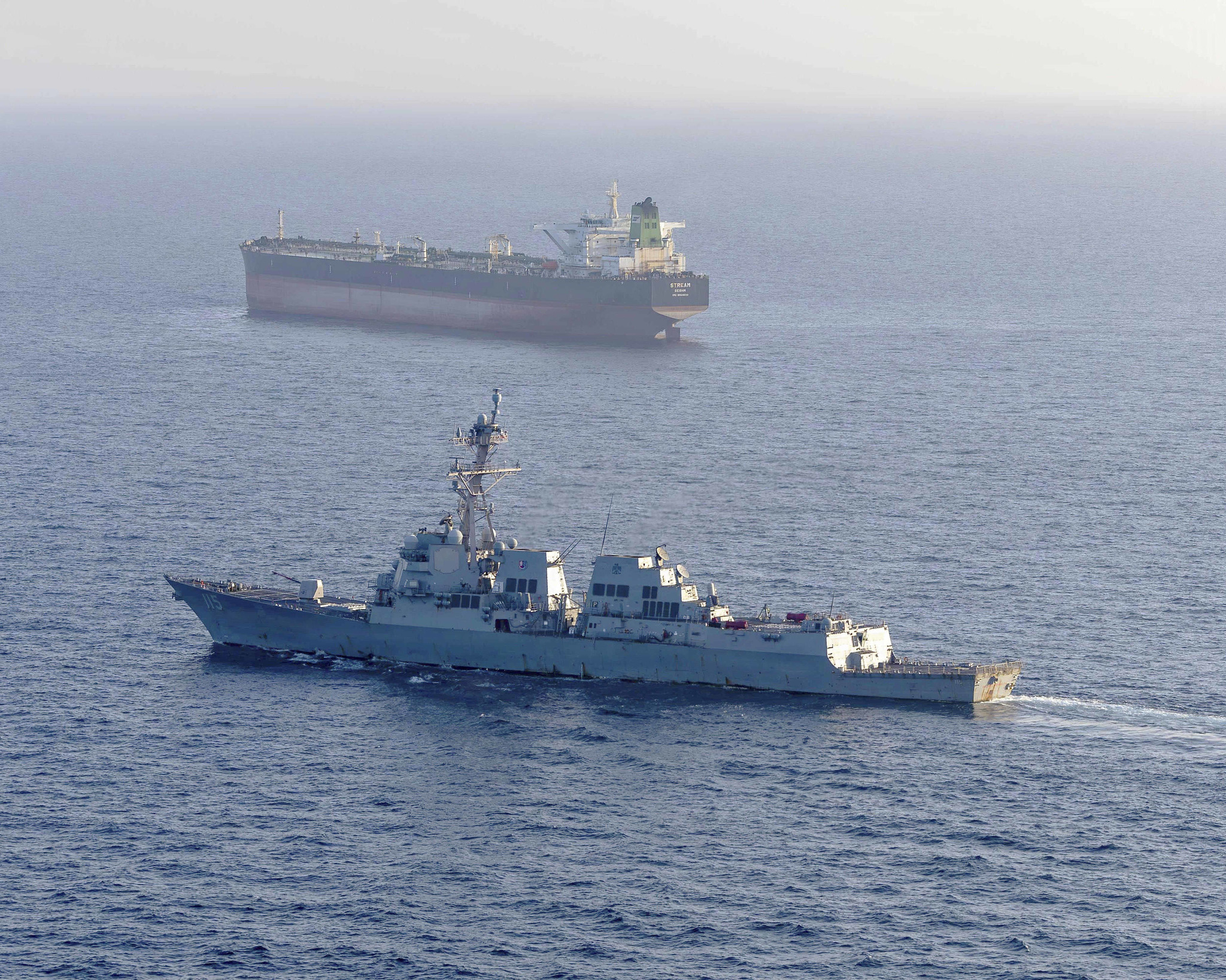
Aumenta el tránsito por el estrecho de Ormuz mientras se mantiene el alto el fuego entre EEUU e Irán El número de buques que transitan por la vía marítima se multiplica por cuatro en la última semana, mientras los petroleros regresan aunque mantienen la cautela. Leer
expansion · about 2 months ago
Cum ar fi putut Israelul să compromită negocierile dintre SUA și Iran pentru un acord. Mișcarea din culise a Washingtonului Înalți oficiali americani se temeau că Israelul intenționa să-i asasineze pe principalii negociatori iranieni, în timp ce administrația Trump urmărea încheierea unui acord important pentru a pune capăt războiului și redeschiderea Strâmtorii Ormuz, au declarat actuali și foști oficiali familiarizați cu această chestiune, relatează Washington Post.
digi24 · about 2 months ago