
Near-total lunar eclipse to darken 96.2% of moons surface late Thursday across Americas, Europe
Story Timeline
2 days · 2 summary articles
Near-total lunar eclipse to darken 96.2% of moons surface late Thursday across Americas, Europe
Partial lunar eclipse to peak at dawn in Prague as Europe sees mixed late-summer weather
Continuation
A near-total partial lunar eclipse will darken the moon late Thursday into early Friday, with Earth’s shadow covering up to 96.2% of the lunar surface at its peak, according to NASA and astronomical observers.
The eclipse begins at 9:23 p.m. ET on Thursday as the moon enters Earth’s outer shadow, with the partial phase starting at 10:33 p.m. ET. The maximum obscuration occurs at 12:12 a.m. ET on Friday, when 96.2% of the moon’s diameter lies in Earth’s umbra, creating a deep reddish or coppery hue as sunlight filters through Earth’s atmosphere. The event concludes at 3:01 a.m. ET as the moon exits Earth’s shadow .
Viewers across North and South America will have the best conditions, with the entire eclipse visible from most of the continental U.S., Mexico, and parts of South America. Peak times vary by location: New York at 12:14 a.m., Chicago at 11:14 p.m., Los Angeles at 9:14 p.m., and Buenos Aires at 1:14 a.m. local time .
In Europe, the eclipse will be partially visible but constrained by dawn and the moon’s low position. In London, the peak occurs at 5:12 a.m., while in Spain, the breaking day and low altitude will make observation difficult. German regions face additional challenges: in North Rhine-Westphalia, thick cloud cover and potential rain are expected, according to the German Weather Service, while in Rhineland-Palatinate, the moon will set shortly after the 6:13 a.m. peak .
Unlike solar eclipses, no eye protection is required. Nicole Sehrig of Bochum Observatory and Carolin Liefke of the Association of Star Friends noted that the event is safely visible to the naked eye, though binoculars or telescopes can enhance the view. Observers should seek locations with unobstructed western horizons, such as open fields or elevated vantage points, to maximize visibility before moonset .
The eclipse coincides with August’s full moon, traditionally known as the Sturgeon Moon in North American folklore, a name tied to the historical fishing season for sturgeon in the Great Lakes region. In Romania, the full moon phase and partial eclipse overlap, though the most spectacular phase will occur near moonset .
This lunar eclipse follows the Aug. 12 total solar eclipse that darkened skies over parts of southern Europe, Greenland, Iceland, and northern Russia. Solar and lunar eclipses often occur in pairs due to the alignment of the sun, Earth, and moon .
Follow us for live European news
Articles

How to See the Partial Lunar Eclipse and Blood Moon on August 27 The eclipse will obscure about 93 percent of the moons surface. Here are the peak times and tips for the best viewing experience.
wired.com · about 3 hours ago
Astronomie: Wann und wo man die Mondfinsternis in Sachsen-Anhalt sieht
die zeit · about 4 hours ago
Himmelsspektakel am 28. August: Was man zur partiellen Mondfinsternis wissen muss
die zeit · about 5 hours ago
Naturphänomen in der Nacht: Wolken im Norden: Wo man die Mondfinsternis sehen könnte
die zeit · about 6 hours ago
Luna Sturionului din august aduce o eclipsă spectaculoasă. Când și cum poate fi văzută din România Luna plină din august 2026 va aduce un spectacol astronomic deosebit în noaptea de 27 spre 28 august. Cunoscută tradițional drept Luna Sturionului, Luna plină din această lună va coincide cu o eclipsă parţială, în timpul căreia Pământul va acoperi cu umbra sa o mare parte din discul lunar.
adevarul · about 6 hours ago
Astronomie: Mondfinsternis für Frühaufsteher: Tipps für die beste Sicht
die zeit · about 7 hours ago
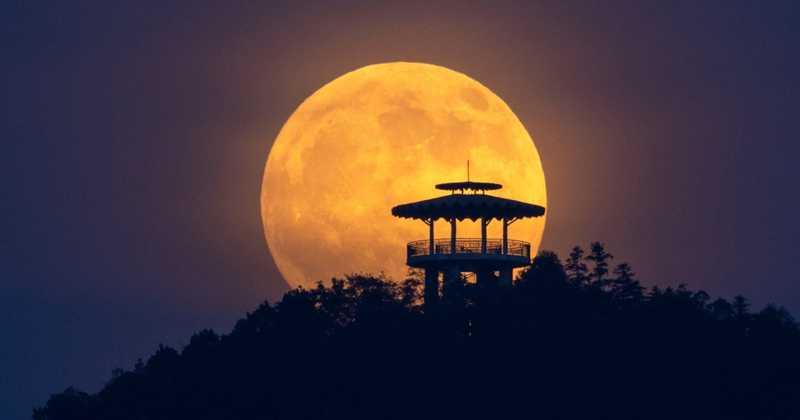
A near-total lunar eclipse will be visible across the U.S. Thursday nightEarths shadow will appear reddish orange on the lunar surface — the reason a lunar eclipse is also known as a blood moon. #News #Earth #Europe #Africa
mastodon bot · about 8 hours ago