
Europe faces fuel, water and climate crises as geopolitical shocks deepen shortages
Story Timeline
4 months · 2 summary articles
Global food crisis deepens: El Nio and Iran war drive prices to record highs
Europe faces fuel, water and climate crises as geopolitical shocks deepen shortages
The Strait of Hormuz blockade and the war in Gaza are exposing Europe’s energy and water vulnerabilities just as the continent braces for a technical recession and extreme weather swings. On Friday, the European Union’s transport commissioner, Apostolos Tzitzikostas, told reporters in Brussels that Europe faces no jet fuel shortage in the coming months despite soaring prices driven by Middle East tensions. “There are no signs that Europe will lack jet fuel,” he said, adding that the bloc’s priority is now managing cost inflation rather than supply disruption .
Yet the same geopolitical shocks are tightening their grip elsewhere. In Gaza, where food and medicine are already scarce, shortages of engine oil, spare parts and cooking gas are grinding daily life to a halt. Bakeries cannot operate, water pumps fail, and hospitals warn of imminent generator collapse as sewage floods streets and disease risks rise. The main hospital in central Gaza reported electrical failure over the weekend, deepening a humanitarian crisis that has seen the enclave’s infrastructure collapse under prolonged blockade and military control .
Across Central Asia, water scarcity is reaching a breaking point. Five countries are racing to coordinate responses after years of over-extraction and climate-driven drought left reservoirs at historic lows. Meanwhile, in southern Spain, record winter rainfall has doubled reservoir levels on the Segura river compared with last year, offering a rare respite for a basin long plagued by chronic water stress .
The energy crunch is also reshaping Europe’s climate agenda. Switzerland, heavily dependent on oil and gas imports that transit the Strait of Hormuz, has seen its vulnerability laid bare by the Iran war. A coalition of Swiss NGOs, including the Swiss Energy Foundation, has urged federal authorities to accelerate the phase-out of fossil fuels, warning that centralised energy systems are dangerously exposed to geopolitical shocks .
Against this backdrop, the United Nations is pushing for accelerated renewable deployment ahead of COP31 in Antalya this November. The UN resident coordinator in Türkiye warned that the Strait of Hormuz blockade has exposed global energy vulnerabilities and reinforced the case for a rapid shift to renewables .
From Gaza’s collapsing infrastructure to Europe’s strained grids and Central Asia’s shrinking rivers, the converging crises of fuel, climate and water are redefining the continent’s immediate priorities—and exposing the fragility of systems that once seemed resilient.
Follow us for live European news
- 2
- 1
- 1
- 1
- 1
- 1
- 1
- 1
- 1
- 1
2 further sources not geolocated
Articles

Destroying the environment = crime Environmental crime is the 4th largest criminal activity worldwide. But new rules, applying from 21 May in the EU, are introducing stronger penalties and a longer list of environmental offences. Find out more: link.europa.eu/nNK3gk
bluesky bot · 4 months ago

UN official warns energy vulnerability fuels COP31 renewables push The UN resident coordinator in Türkiye said geopolitical tensions including the Strait of Hormuz blockade have exposed global energy vulnerabilities and reinforced calls to accelerate the shift to renewables, as Ankara prepares to host the COP31 climate summit in Antalya this November.
yenisafak · 4 months ago
Israel to expand Gaza yellow line, squeezing Palestinian space Israeli Prime Minister Benjamin Netanyahu disclosed plans last week to expand military control over the Gaza Strip from 60 to 70, warning that the so-called "yellow line" will soon confine hundreds of thousands of Palestinians to increasingly overcrowded areas with collapsing infrastructure.
yenisafak · 4 months ago
Furtunile au provocat probleme la alimentarea cu apă în Prahova. Mai multe localități sunt afectate Ploile torenţiale din ultimele zile au provocat probleme în ceea ce priveşte alimentarea cu apă în unele zone din judeţul Prahova. În zona municipiului Câmpina, presiunea apei este redusă din cauza turbidităţii ridicate, iar în alte trei localităţi furnizarea apei a fost oprită, din cauza colmatării captărilor.
digi24 · 4 months ago
:format(jpg)/f.elconfidencial.com%2Foriginal%2F135%2F491%2Fb44%2F135491b442135534e8ef90fea5f65778.jpg)
Cifras de récord tras un invierno lluvioso: los embalses del río Segura doblan las cifras del año pasado El agua ganaba terreno en los pantanos españoles tras meses de lluvias abundantes y deja una fotografía muy distinta a la del año pasado. Una de las cuencas que más preocupa por su presión hídrica registra ahora una recuperación notable
el confidencial · 4 months ago
Commission decides to refer Ireland to the Court of Justice of the European Union for failing to comply with the Environmental Impact Assessment Directive regarding peat cutting projects Continue reading Commission decides to refer Ireland to the Court of Justice of the European Union for failing to comply with the Environmental Impact Assessment Directive regarding peat cutting projects at The European Sting - Critical News & Insights on European Politics, Economy, Foreign Affairs, Business & Technology - europeansting.com.
european sting · 4 months ago

Bardzo silne opady deszczu i wiatr w porywach do 80 km/h. IMGW ostrzega przed burzami Instytut Meteorologii i Gospodarki Wodnej wydał w piątek rano ostrzeżenia I i II stopnia przed burzami obejmujące pas wschodni Polski. Również Rządowe Centrum Bezpieczeństwa (RCB) wysłało alert do mieszkańców województwa podlaskiego oraz części warmińsko-mazurskiego.
gazeta.pl · 4 months ago
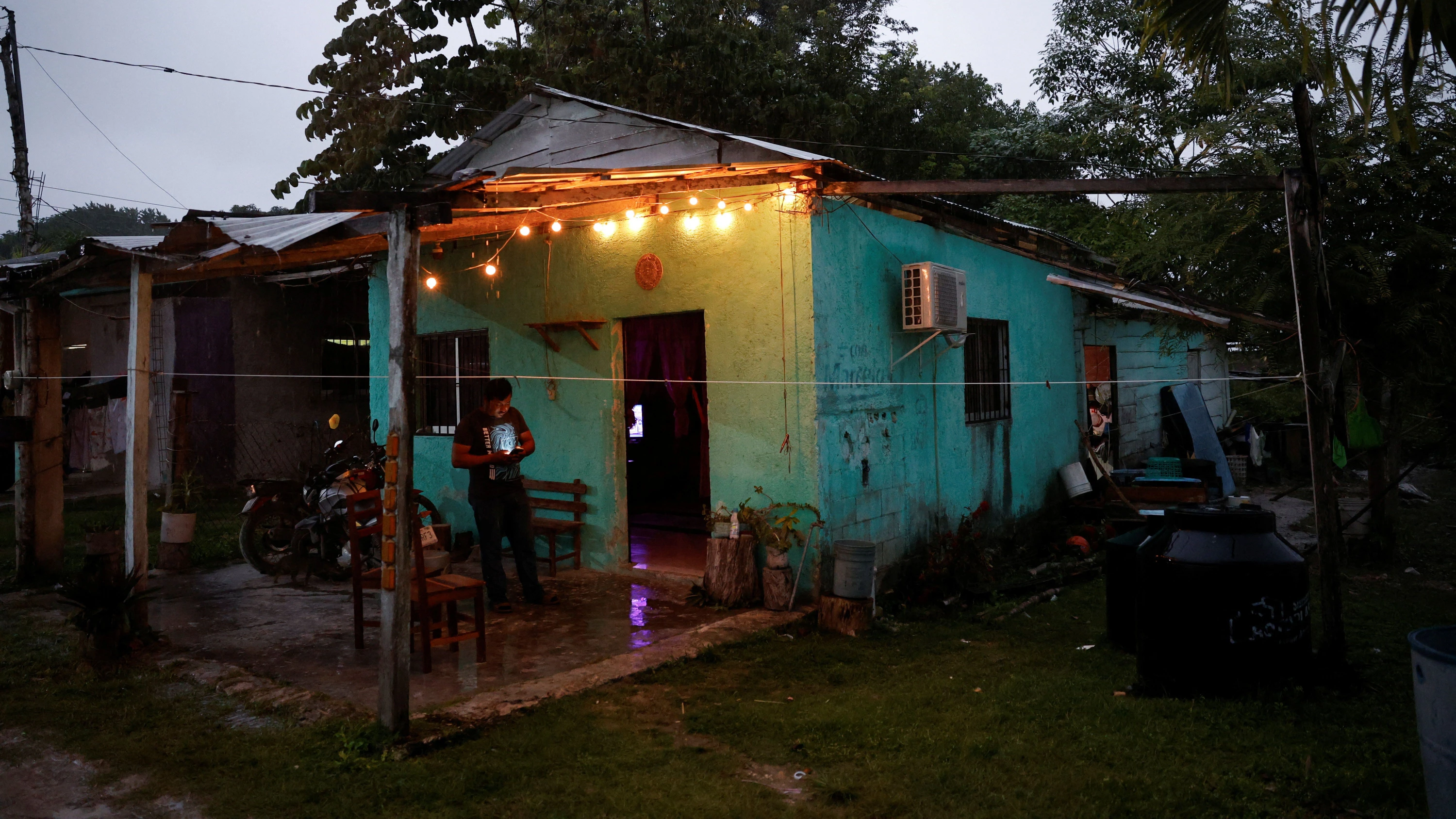
Zugstrecke in Yucatan: Endstation Irrelevanz Der mexikanische Maya-Zug sollte den verarmten Süden des Landes in eine neue Ära führen. Zwei Jahre nach der Eröffnung fahren die Züge fast leer, den Hotels fehlen Gäste, und die Menschen entlang der Strecke warten immer noch auf Strom und Wasser.
faz · 4 months ago
Cameroon faces major drinking water shortages despite boosted production In Cameroon, national drinking water production is estimated at 1.17 million cubic meters per day, according to Camwater, through its 103 stations spread across the country. Despite this volume, the drinking water deficit remains very significant in major cities. In Yaounde, demand exceeds 300,000 cubic meters per day, while supply is capped at 215,000 cubic meters . As a result, for thousands of households, obtaining drinking water is a real struggle.
france24 · 4 months ago
Japan steps up efforts on cooking oil in race for sustainable aviation fuel Japanese homemaker Maki Watanabe carefully pours into a plastic bottle the oil she used to cook her deep-fried aubergines, doing her part in her Tokyo kitchen for a national effort to ramp up production of eco-friendly jet fuel. Her contribution is pooled at a nearby supermarket that is among roughly 300 participants in a public-private project dubbed "Fry to Fly", as the Iran war squeezes energy supply and raises costs for the resource-poor country.
france24 · 4 months ago
How a shortage of gas, engine oil and spare parts is grinding Gaza to a halt With food and medicine already scarce, emergency services, bakeries and water supplies are increasingly being pushed to the brinkPalestinians in Gaza already grappling with limited supplies of food and medicine face new threats to their day-to-day existence: shortages of engine oil, spare parts and gas. The knock-on effects are impacting everything from bread production to water supplies and emergency response efforts, producing one fresh crisis after another.Over the weekend, the main hospital in central Gaza warned of an imminent health disaster as its electrical generators failed. Continue reading...
theguardian · 4 months ago

A disease of deforestation: how Ebola is linked to the smartphone in your pocket As demand for cobalt, gold and other minerals grows, mining is accelerating deforestation in the Congo basin – and increasing the risk of deadly Ebola outbreaksFor decades after the discovery of Ebolavirus in 1976, outbreaks of the disease were relatively small and contained, affecting a few hundred people at most.Not any more. In recent years, outbreaks of Ebola have been much larger, affecting thousands and even tens of thousands of people across multiple countries. The 2014 outbreak of Ebola in West Africa infected over 28,000 people in 10 countries on three continents. The current eruption, which began in early May and shows no signs of abating, has caused 363 confirmed cases in Democratic Republic of the Congo and has crossed into Uganda.Sonia Shah is the author of five books including Pandemic: Tracking Contagions, from Cholera to Ebola and Beyond, and writes the newsletter Cross Pollinations on Substack Continue reading...
theguardian · 4 months ago

I almost forgot how to date | The Global Dating Crisis: episode 3 – video In many countries, dating seems to be on the decline, with many young people either dating less, or finding it harder to have meaningful relationships. In 2024, one in five of South Koreas 52 million citizens were living alone. In the third episode of our series, reporter Haeryun Kang is in Seoul on a journey to find out whats stopping people from coupling up. Continue reading...
theguardian · 4 months ago

Met Éireann issues status yellow rain warnings for Cork and Waterford Cold blob: Climate scientists have posited a new theory as to why an area of the north Atlantic is cooling while the rest of the globe is warming
irish times · 4 months ago
Developing countries get more support for climate action as EIB reaches first agreement with UN Green Climate Fund Continue reading Developing countries get more support for climate action as EIB reaches first agreement with UN Green Climate Fund at The European Sting - Critical News & Insights on European Politics, Economy, Foreign Affairs, Business & Technology - europeansting.com.
european sting · 4 months ago
Feeling the heat: Women and climate change In a special edition, we examine how climate change is affecting the lives of women as rising temperatures and increasingly extreme weather events continue to impact communities worldwide. This as the world is also facing a warming El Nino climate pattern in the coming months. We report from India where a series of recent intense heatwaves has pushed temperatures to dangerous levels and posed a particularly serious risk to pregnant women. Annette Young also talks to UK author, Natasha Walter, whose latest book is entitled Feminism for a World on Fire, who says a feminist approach is badly needed to address the climate crisis. Plus, how for millions of women, heatwaves are not just about the rising temperatures. It also puts them at risk of harassment in public as they wear lighter clothes such as shorts or sleeveless dresses and tops, according to French data.
france24 · 4 months ago
Why Switzerland depends heavily on fossil fuels The energy crisis triggered by the conflict in the Middle East has highlighted the extent to which Switzerland continues to rely on oil and natural gas. Here are answers to key questions concerning Swiss dependence on fossil fuels. The conflict in the Middle East created the largest supply disruption in the history of the global oil market, according to the International Energy Agency. About 20 of the worlds crude oil trade passes through the Strait of Hormuz in the Persian Gulf. Its blockade has had global repercussions: higher energy prices, slower economic growth and renewed geopolitical tensions. The war in Iran clearly shows that dependence on fossil fuels is harmful because centralised energy systems are vulnerable, argues a group of Swiss NGOs working on climate and environmental protection, including the Swiss Energy Foundation (SES). At the end of April, they called on the federal authorities to rapidly abandon oil and natural gas. Switzerland, while widely regarded as ...
swissinfo · 4 months ago
Swiss river and lake levels remain low despite rain Switzerland is facing drought conditions, with water levels in many rivers and lakes unusually low for this time of year, despite some temporary relief from this weeks rain. Lake Constance and Lake Zug are particularly affected. + Get the most important news from Switzerland in your inbox Despite recent rain, many watercourses in the central Plateau region are low for this time of year, measurements by the Federal Office for the Environment (FOEN) show. The levels of the High Rhine, the Reuss and the Limmat rivers are still below the usual values for this time of year. Meanwhile, the levels of Lake Constance and Lake Zug are at a "very low level", a FOEN hydrologist told the Keystone-SDA news agency. This can be attributed to the drought of recent months and above-average temperatures which increased evaporation. Fluctuations between high and low water At the beginning of June, the water level in the western part of Lake Constance fell to a historic low, with consequences for ...
swissinfo · 4 months ago
EU sees no aviation fuel shortage in coming months EU Commissioner for Sustainable Transport and Tourism, Apostolos Tzitzikostas, stated there are no signs that Europe will lack jet fuel in the coming months. Although the war in the Middle East and the closure of the Strait of Hormuz have driven up prices, making rising costs the primary concern, Europe currently has no acute shortage […]
cphpost · 4 months ago
Why half-measures wont solve Europes data-centre energy crisis Demand for electricity and grid access is surging as AI and data centres expand. European policymakers must urgently set energy-performance standards and keep their low-carbon transition goals on track
european council · 4 months ago
Gaza water crisis deepens as sewage floods streets, disease risks rise A view of a wastewater puddle is seen in Gaza City as the water crisis deepens due to severe infrastructure damage caused by ongoing Israeli attacks despite a ceasefire. The absence of a sewage system in western Gaza City is leading to foul odors, rodent proliferation, and environmental pollution.
yenisafak · 4 months ago
No jet fuel shortage in Europe, transport chief says; eurozone on brink of technical recession – business live Rolling coverage of the latest economic and financial newsUK shoppers return to high street as warm weather brings respite from shadow of warAfter rising in recent months, global food commodity prices stabilised in May.The UNs Food and Agriculture Organisation has reported that its Food Price Index was stable last month, showing that the cost of a basket of food commodities dipped by 0.2 in May. Continue reading...
theguardian · 4 months ago