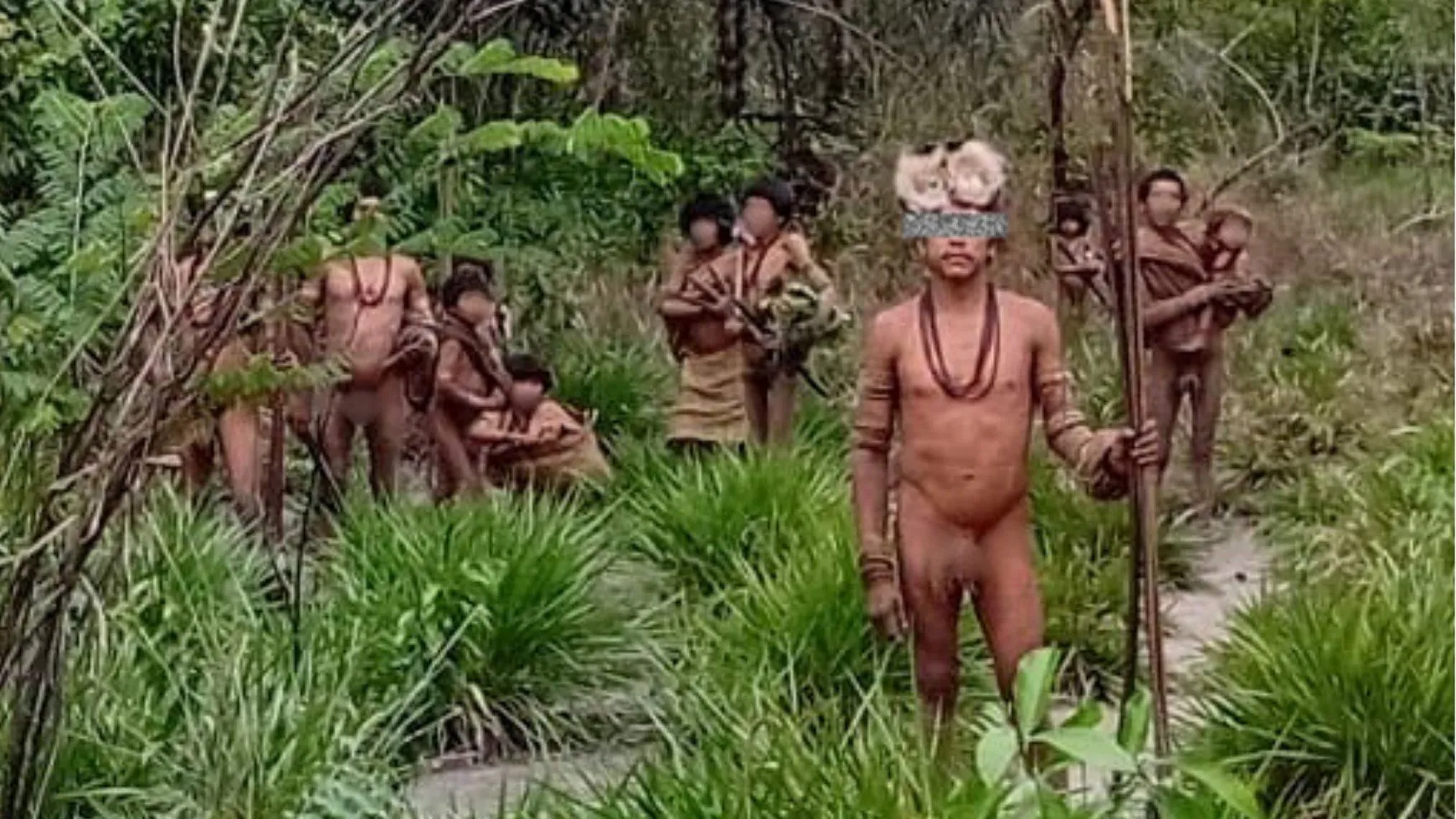
On Monday, about 20 members of the isolated Awá people emerged from Brazil's Amazon rainforest to ask a neighboring Indigenous village for food, in a rare encounter that has raised concerns over their safety.
The encounter began on Monday near a government access control post and the Guajajara village of Tawari in the Arariboia Indigenous Territory, Maranhão, according to Brazil's Ministry of Indigenous Peoples. Footage recorded by Guajajara members shows about 20 Awá adults and children, some armed with bows and arrows and wearing feathered headdresses, asking for yams before returning to the forest. Guajajara leaders said some Awá, especially children and older people, appeared very thin. The Awá are a Tupi-Guarani people from northwestern Maranhão who remain in voluntary isolation.
This is the first time in decades that the Awá of Arariboia have made such close contact with other people, according to Sarah Shenker, director of Survival International Brazil. The encounter occurred in November, when the Awá typically have more water and animals to hunt. The Arariboia territory has faced decades of pressure from illegal loggers, hunters and ranchers.
Shenker called the encounter "a crisis moment really and a wake-up call," urging Brazilian authorities to crack down on illegal intrusions. She said some people are saying the Awá came out of hunger. Caroline Pearce, Survival International's director, said the uncontacted Awá are under extreme pressure as intruders encroach from all sides, driving them into an ever-smaller island of rainforest surrounded by destruction.
Brazil's Indigenous affairs agency, Funai, said technical teams are monitoring the situation. It has activated a contingency plan to ensure agencies are prepared to respond to any developments, especially regarding health and safety. The Ministry of Indigenous Peoples stressed that its policy is not to encourage contact but to protect the Awá's right to remain isolated. Funai personnel and Indigenous health workers are now in the area, and authorities have activated an emergency coordination mechanism to assess health risks.
Survival International has estimated that around 100 Awá remain uncontacted, though that is not necessarily a current population count. Indigenous peoples living in isolation can be particularly vulnerable to infectious diseases because of limited previous exposure to pathogens. Shenker warned that anything the Awá might catch from people they contacted could be fatal.
The images were released at the request of the Guardians of the Amazon, an Indigenous group that campaigns against illegal loggers and ranchers. Shenker said she would rather be without the images and videos if it meant the Awá could live in peace in their forest in the way they choose.