
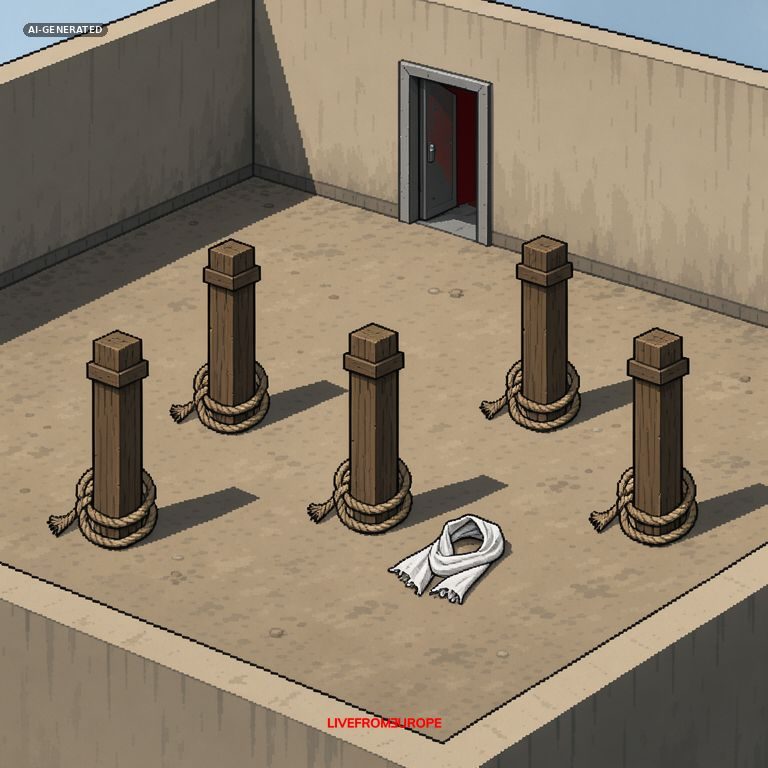
Iranian authorities flogged singer Parastoo Ahmadi and four band members 74 times each on Monday for performing without a headscarf, the United Nations said. [1]
The 29-year-old and her musicians were lashed at an office in Qom, south of Tehran, local media reported citing her lawyer. [2] They were sentenced in June to 74 lashes each for a December 2024 concert. [1] The video was streamed on YouTube and viewed more than three million times. [3]
UN Human Rights Chief Volker Türk called the flogging "abhorrent" in a post on X. [1] He said flogging is "a form of torture or other cruel, inhuman or degrading punishment, absolutely prohibited under international law in all circumstances." [1] He urged Iran to "abstain from carrying out other flogging sentences and eradicate this practice from its laws." [1]
France's foreign ministry expressed "abhorrence" at the "cruel and inhuman" punishment. [2] It said the penalty "sends a deadly message to all Iranian women seeking freedom and equality." [2] Germany's Culture Minister Wolfram Weimer called the punishment a "barbaric act of state oppression." [4]
Amnesty International said the floggings "amount to torture, a crime under international law." [2] The group called on states to support international criminal justice measures against Iranian officials implicated in crimes under international law. [2]
In the YouTube video, Ahmadi performed in an empty hall in Qom. [3] She wore a long strappy gown and deep red lipstick without a hijab. [1] She was accompanied by a pianist, drummer, guitarist and bassist all dressed in black. [5] In the caption, she wrote that she wanted to "sing for the people I love" and that this was "a right I could not ignore." [3]
The five were also banned from artistic activities and from leaving Iran for two years. [3] They faced charges of "insulting public decency" and producing "obscene and vulgar content." [5] Ahmadi was held for two weeks before being released on bail. [5]
In Iran, women are banned from singing in public and must wear the hijab and modest dress. [1] Since the death in custody of Mahsa Amini in September 2022, increasing numbers of Iranian women have appeared without hijab. [1] Since late 2024, stricter morality laws have allowed the death penalty, long prison sentences and heavy fines for not wearing a headscarf. [3]